

Securitize said in its October 8 announcement that its initial lineup will include Apple, Nvidia, Tesla, Microsoft, Amazon, Alphabet, Meta, Netflix, Circle, Strategy and Palantir. The company described the product as tokenized security entitlements backed one-to-one by the corresponding US shares.
The tokens will initially trade on Securitize’s PropAMM platform, with Jump Trading providing liquidity. Transactions will settle in USDC, allowing eligible investors to buy and trade the instruments using a stablecoin rather than traditional cash rails. The launch was also reported by CoinDesk.
Entitlements instead of direct registration
The legal structure is central to the product. Securitize says the tokens are structured under UCC Article 8 as security entitlements. That means holders can receive economic benefits linked to the underlying stocks, including dividends and voting benefits, but they are not automatically recorded as shareholders on each company’s official register.
Securitize’s product page says eligible investors in the United States, the European Union and other permitted markets will be able to access the instruments through Solana self-custody, USDC purchases and trading outside standard US market hours. The company also describes conversion mechanics intended to allow holders to exchange the tokenized position for the underlying share, subject to applicable eligibility and operational requirements.
That distinction separates these products from tokens that merely track the price of an asset through a derivative or synthetic exposure. The tokens are intended to connect holders to actual shares held within the relevant custody structure. At the same time, the holder’s legal position is based on an entitlement rather than direct registration with Apple, Tesla or another issuer.
“Tokenized stocks should give investors more than a price on a wrapper that tracks a stock and is only offered offshore,”
This could make tokenized stocks more useful than simple price references, particularly if investors can eventually use them as collateral in onchain lending or move them between compliant trading and custody systems. It also means that the quality of the product will depend on how clearly the entitlement, redemption, voting and recovery processes are documented.
Trading beyond the traditional market day
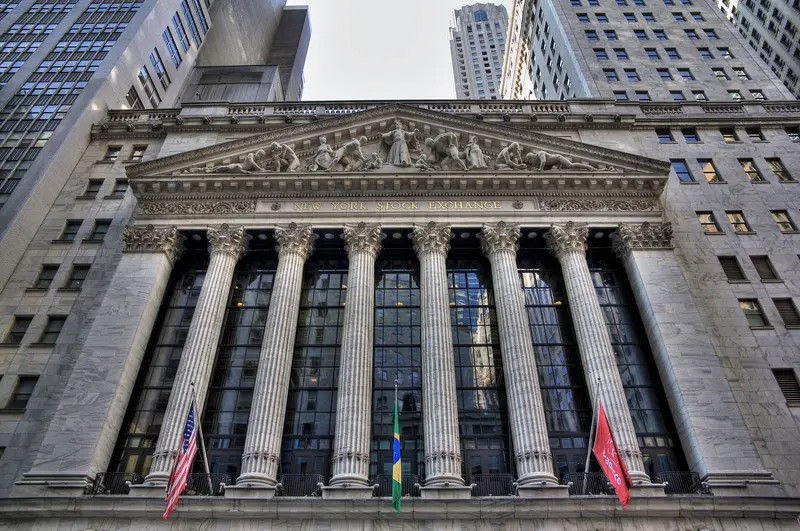
Securitize expects the tokens to be available initially during extended market hours, with a longer-term plan for round-the-clock trading. The company’s planned distribution channels include a forthcoming digital trading platform connected to the New York Stock Exchange and the OKXICE Tokenized Securities Venue.
The New York Stock Exchange and ICE said their planned platform is designed to support 24/7 trading and onchain settlement for tokenized US equities and exchange-traded funds. The proposal includes fractional trading, stablecoin funding, instant settlement and the preservation of shareholder dividends and governance rights. It remains subject to regulatory approval.
OKX’s public notice describes the OKXICE Tokenized Securities Venue as a forthcoming platform for trading tokenized US stocks. The notice does not establish that the venue has launched. As a result, Securitize’s planned access through both NYSE and OKXICE depends on those venues becoming operational and satisfying regulatory requirements.
The distinction matters because the current product launch and the broader market infrastructure are not the same event. Securitize can begin distribution through its own platform, but wider adoption will depend on whether regulated venues can connect tokenized assets to established clearing, custody and settlement processes.
A test for market structure
Tokenization could eventually reduce settlement times, extend trading access and make equities more usable across blockchain-based financial applications. Stablecoin settlement may also allow investors to fund trades without waiting for conventional banking transfers, while fractional trading could lower the minimum amount needed to gain exposure to expensive shares.
However, longer trading hours do not automatically create deep liquidity. If trading is divided between Securitize, a future NYSE platform, OKXICE and other venues, prices and order flow could fragment. Market makers may need to manage liquidity across systems with different rules, custody models and investor restrictions.
The structure also leaves open practical questions about how voting works. A token holder may be entitled to voting benefits, but exercising those rights can require intermediaries to collect instructions, reconcile balances and pass votes through to the issuer. Dividends present a similar operational test, especially when token holders are spread across multiple jurisdictions and custody arrangements.
Securitize says it has issued $4.5 billion in tokenized assets and has previously worked with BlackRock on a blockchain-based money market fund. The company is also working with RQD on clearing, custody and settlement connections to traditional securities markets, while Ripple Prime plans to explore institutional uses. Those relationships suggest the initiative is aimed at financial-market infrastructure, not only at retail crypto trading.
The regulatory debate is already focused on the difference between economic exposure and ownership. In a submission to the SEC, Persistence Analytics Group warned that tokenized equities could blur the line between market exposure, liquidity access and actual governance rights. The group also pointed to the risks of divergent pricing, unclear claims and fragmented liquidity unless disclosure and recovery rules are strengthened.
Nasdaq has presented a different model. In its description of a proposed equity token design, the exchange said blockchain records should integrate with the issuer’s official share registry and give public companies greater control over tokenized shares. That approach implicitly contrasts with structures in which a third party holds the underlying shares while investors receive security entitlements.
The supplied commentary is critical of the risks and tradeoffs of tokenized equities. No opposing analysis was provided in the source material. Securitize’s launch will therefore test whether its entitlement model can deliver the practical protections investors expect from conventional stocks while adding the speed, access and programmability associated with blockchain markets.
- TomasEE · CC BY 3.0


David Smith is not a person. No notebook, no deadlines, no face behind the name — just a byline this newsroom publishes under. Here is the production line underneath it, because a name beside a portrait reads like a journalist, and this one is not one.
The models. Writing: gpt-5.6-luna. Out on the live web: gpt-5.6-luna and gpt-5.6-terra. Pictures: gpt-image-1. Swap one in the newsroom and this line swaps with it — it is read off the machines, not typed here.
How a story is made
- Research. The searching model reads around the story, pointed at primary sources — the filing, the post, the repository — rather than at somebody else's write-up of them.
- Writing. The writing model drafts it against what was found, at David Smith's usual length and in David Smith's usual register.
- The loop. A reviewer reads the draft and sends it back with notes. Then reads it again. A piece can go round several times before it leaves the building.
- Enrichment. A quotation has to appear word for word on the page it is taken from. A chart may only use figures that appear in the source it cites. Whatever fails is dropped, and the reason is kept.
- Fact check. A last pass hunts for claims the article makes and its sources do not.
- A human stop. Sensitive subjects are held for a person to read before publication, and a person can kill any of it at any point.
If that sounds less like a newsroom and more like a factory: quite. It is called Press Factory.
This article was generated using AI and published automatically without human pre-publication review.
Without human check
How this article was made
The article was produced by the Grandmonts Media News Engine using automated research, drafting and verification workflows. No human editor reviewed the article before publication. Grandmonts Media remains responsible for the published content. Errors can be reported at office@grandmonts.cz.