
The New York Stock Exchange and Blockchain.com are moving toward a partnership that could give millions of crypto users access to tokenized US stocks and exchange traded funds, but the proposed service still depends on a new NYSE trading system and regulatory approval.
The Block reported that the companies have signed a memorandum of understanding covering access to the NYSE’s planned digital trading platform. If the platform launches as intended, Blockchain.com customers could trade blockchain based versions of selected US listed equities and ETFs through the crypto platform’s global application.
The agreement does not mean tokenized stocks are available on Blockchain.com today. The NYSE has not disclosed a final asset list or a launch date, and the proposed venue must receive regulatory approval before it can begin operating. Availability would also vary by jurisdiction, reflecting the different rules governing securities, custody and crypto trading in each market.
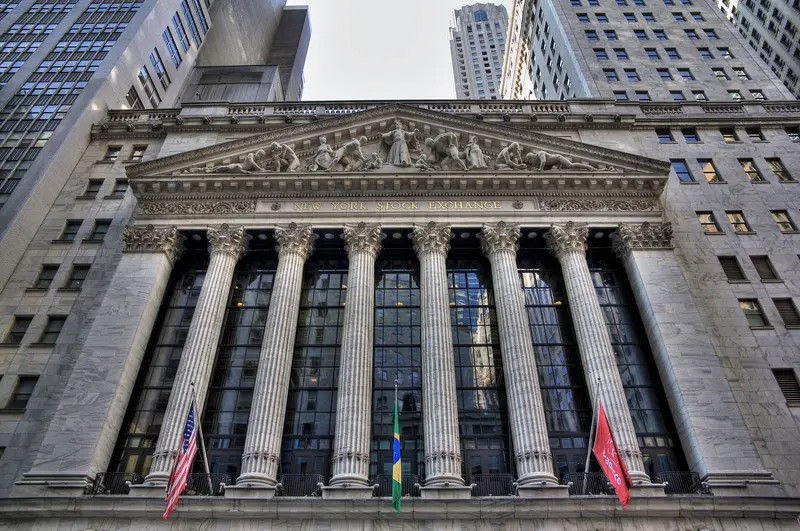
Even with those limitations, the agreement signals a significant attempt to connect conventional exchange infrastructure with a crypto native distribution network. Blockchain.com says it has more than 44 million confirmed accounts. That user base could give the NYSE a large potential audience for tokenized securities, while giving Blockchain.com a way to expand its investment products beyond cryptocurrencies.
A different structure for stock trading
The NYSE’s proposed digital platform is built around several features associated with crypto markets rather than traditional stock exchanges. It is expected to support trading around the clock, fractional ownership, stablecoin funding and immediate settlement on a blockchain.
Traditional US equity markets operate during defined trading sessions and generally settle one business day after a transaction. A blockchain based system could make transfers and settlement nearly immediate, at least from a technical perspective. Stablecoin funding could also allow users to move dollar linked value into the market without first converting funds through a conventional banking or brokerage process.
For retail investors, fractional ownership could lower the cost of buying exposure to expensive shares. A user would not necessarily need enough capital to purchase a complete share of a high priced company. The same structure could make it easier to build diversified positions using small amounts of capital.
However, extending trading to 24 hours a day would create operational and market structure questions. Liquidity may be thin outside US market hours, which could produce wider spreads and more volatile prices. Market makers would need to support trading across global time zones, while exchanges and regulators would need systems for handling outages, corporate actions and price discrepancies between tokenized assets and their conventional equivalents.
Around the clock availability also changes investor behavior. Crypto markets have accustomed users to continuous trading, but equities have traditionally included pauses that allow information to be processed and risk controls to be reset. A tokenized stock market would bring the convenience of crypto trading while potentially importing some of its most demanding risk characteristics.
Ownership or price exposure?
One of the most important unresolved issues is what a tokenized stock actually represents. The NYSE has said token holders would retain traditional shareholder rights, including dividends and voting. That suggests the tokens could be structured as direct claims connected to underlying shares rather than as instruments that merely follow a stock’s price.
The distinction matters. A token backed by a custodially held share may provide economic exposure, but the rights attached to that token depend on the legal structure, the issuer, the custodian and the trading venue. A synthetic token, by contrast, could track the value of a stock without giving the holder any ownership interest in the company.
Investors will need clear answers about custody, redemption, corporate actions and insolvency protection. They will also need to know whether tokens can be transferred to external wallets, whether they remain inside the platform, and how voting or dividend payments will be handled across borders.
These details may determine whether tokenized securities become a new form of ownership or simply a more convenient wrapper around existing brokerage products. Blockchain settlement alone does not automatically change the legal rights attached to an asset.
A two way data relationship
The memorandum also includes a market data partnership. ICE Data Services, the data arm of the NYSE’s parent company, plans to distribute Blockchain.com’s crypto data and analytics to its clients. Blockchain.com, in turn, intends to add selected ICE and NYSE data feeds to its application.
The arrangement could benefit both companies as traditional finance and digital assets become more closely connected. ICE can offer institutional customers access to crypto market information through an established data distribution business. Blockchain.com can add recognized exchange data to an application used primarily by crypto customers.
Data may become as strategically important as the trading venue itself. Institutions considering tokenized assets will need reliable pricing, reference data and transaction information. Crypto users seeking exposure to stocks will need market data that meets standards familiar to professional investors. Combining those systems could help reduce the information gap between digital asset markets and traditional finance.
Cointelegraph reported that the partnership follows Blockchain.com’s existing offering of tokenized stocks with Ondo Finance outside the United States. That existing activity gives the company experience distributing tokenized investment products, although the NYSE proposal would place the relationship closer to a regulated exchange infrastructure.
Regulation will shape the outcome
The proposed launch comes as US regulators show growing interest in testing new market structures. The Securities and Exchange Commission recently introduced a five year innovation exemption for certain tokenized securities venues, creating additional momentum for companies developing blockchain based trading systems.
The exemption does not remove the need for approvals, nor does it resolve the legal treatment of every tokenized asset. Regulators will still need to assess investor protection, market surveillance, custody, settlement and access across jurisdictions. The rules may also determine whether tokenized securities can be offered broadly to retail investors or only to qualified market participants.
The NYSE and Blockchain.com therefore face a delicate balance. The exchange wants to reach crypto native users without weakening the standards associated with its traditional market. Blockchain.com wants to broaden its product range while operating within rules that differ substantially from those governing digital currencies.
If the platform launches successfully, the partnership could make tokenized equities more accessible and accelerate competition among exchanges, brokerages, fintech companies and crypto platforms. If the service remains limited by regulation, liquidity or legal complexity, tokenization may still develop, but as a back end improvement that users rarely notice.
The larger question is whether blockchain changes how ownership works or simply changes how familiar products are delivered. The NYSE and Blockchain.com are betting that continuous access, fractional shares, stablecoin settlement and crypto distribution can make that difference commercially meaningful. The market will ultimately judge whether those features create a new equity system or a faster interface for the old one.
- TomasEE · CC BY 3.0

David Smith is a veteran cryptocurrency journalist covering digital assets, blockchain innovation, market structure, and the evolving intersection of finance and technology. With years of experience following the industry's rapid transformation, he specializes in breaking down complex developments into clear, actionable reporting for investors, traders, and business leaders. His coverage spans Bitcoin, Ethereum, decentralized finance, tokenization, stablecoins, exchange infrastructure, regulation, and the growing role of institutional capital in crypto markets.
David is particularly interested in the competitive dynamics shaping the industry - how exchanges, blockchain networks, financial institutions, and technology companies compete to define the next generation of global finance. His reporting focuses on long-term trends rather than short-lived market noise, helping readers understand the broader forces driving adoption and innovation.
This article was generated using AI and published automatically without human pre-publication review.
Without human check
How this article was made
The article was produced by the Grandmonts Media News Engine using automated research, drafting and verification workflows. No human editor reviewed the article before publication. Grandmonts Media remains responsible for the published content. Errors can be reported at office@grandmonts.cz.