


Solana is approaching the final stage of a seven-week effort to speed up its block production schedule. At epoch 1053, expected on October 9, the network is set to reduce its target block time from 250 milliseconds to 200 milliseconds. That will complete a progression that began at 400 milliseconds and has gradually tightened the interval between opportunities to produce blocks.
The change is easy to describe as a faster blockchain. Its consequences are more nuanced. Solana will not be adding more compute capacity to every block, and the upgrade is not designed to increase the network’s theoretical throughput. Instead, it changes how frequently the same broad amount of work can be organized and delivered.
CoinDesk reported that the final adjustment will create five block production opportunities per second. That faster execution clock could help trading platforms, wallets and exchanges receive fresher information. It could also reduce the period in which participants can exploit differences in what they know about pending transactions and what the rest of the network has already processed.
At the same time, validators will need to vote about twice as often as they did under the earlier schedule. They will have less time to receive, execute and propagate transactions, and the network will operate with shorter windows for transactions to remain valid. The upgrade therefore represents both a user experience improvement and a demanding infrastructure test.

A faster clock, not a larger engine
Block time is the interval at which a blockchain attempts to create a new block. A shorter interval can make a network appear more responsive because applications do not need to wait as long for the next opportunity to include a transaction or update the state of an account.
That distinction matters for Solana because the network already emphasizes speed. Its architecture is designed for high frequency execution, and many of its most visible applications depend on rapid updates. Decentralized exchanges need current prices and liquidity data. Wallets need to show users whether transfers and swaps have progressed. Market makers and trading firms need to react to changes before an opportunity disappears.
Reducing the target block time from 400 milliseconds to 200 milliseconds changes the rhythm of those interactions. At 400 milliseconds, the network targeted roughly two and a half block opportunities per second. At 250 milliseconds, that rose to four. At 200 milliseconds, the target becomes five.
That does not mean every transaction will be finalized in 200 milliseconds, nor does it guarantee that every block will be produced on time. A block still has to be assembled, propagated, verified and incorporated by validators. Network congestion, geographic distance, hardware performance and temporary failures can all affect what users experience.
The benefit is that the system has more frequent chances to move forward. If an event misses one production opportunity, the next arrives sooner. For applications that continuously submit transactions or monitor changing account states, that can make the network feel more fluid even when the total amount of work processed over a longer period remains similar.
The design also illustrates a broader scaling strategy. Rather than pursuing only larger blocks, a blockchain can seek improvements in how quickly it schedules and coordinates work. Faster scheduling may provide better responsiveness, but it cannot remove the underlying limits of computation, bandwidth or validator coordination.
Why the compute limit is falling
The most important detail in the upgrade is the change to the compute limit per block. Under the new schedule, the limit will fall from 37.5 million compute units to 30 million.
Compute units are a way of measuring the processing effort required by transactions and programs. A simple transfer consumes relatively little computational capacity. More complex operations, such as those involving decentralized exchange logic, multiple accounts or sophisticated smart contracts, consume more.
A lower limit per block appears, at first, to contradict the goal of making Solana faster. In practice, the block interval and the block budget must be considered together. The network is attempting to balance the amount of work assigned to each block against the number of blocks produced over time.
At 250 milliseconds and 37.5 million compute units per block, the theoretical rate is about 150 million compute units per second. At 200 milliseconds and 30 million compute units per block, the rate is also about 150 million compute units per second. The result is roughly unchanged theoretical throughput.
This is why the upgrade should not be described as a capacity doubling. Solana will have more block production opportunities, but each block will carry a smaller compute budget. The network is distributing similar theoretical capacity across more frequent scheduling points.
That structure could have practical advantages. Smaller blocks may be easier to process and propagate quickly, reducing the risk that a large block arrives too late for validators to incorporate it before the next one is due. More frequent opportunities may also make state changes appear sooner to applications, particularly when transactions are spread across successive blocks.
There are tradeoffs. Applications that depend on heavy bursts of computation may have to contend with lower per block limits. A transaction that could previously fit into a particular block may need to wait for another opportunity if the block has reached its compute ceiling. Developers may need to pay closer attention to how programs use compute resources, especially during periods of concentrated demand.
The result is a shift in execution texture rather than a straightforward expansion of capacity. Solana is seeking more regular movement through the system, not an unlimited increase in the amount of computation available.
The impact on trading and market infrastructure
High speed is especially valuable in digital asset markets because prices can change in fractions of a second. A decentralized exchange, centralized exchange integration or automated trading system that acts on stale information can expose users and operators to avoidable losses.
Faster block opportunities could reduce the time between a transaction being submitted and the network reflecting its effect. Wallets may be able to update balances and token positions more quickly. Trading platforms may be able to refresh prices and liquidity information with less delay. Exchanges that connect onchain settlement to offchain order systems could receive a more current view of network activity.
The upgrade may also narrow some latency advantages. In a market where participants compete to observe and respond to transactions, a longer gap between block events gives certain actors more time to infer what is happening or exploit differences in information. More frequent block production does not eliminate market manipulation or transaction ordering strategies, but it can reduce the time available for some forms of latency based behavior.
That benefit depends on the entire delivery pipeline. A faster block interval is useful only if validators can propagate data quickly and applications can consume it. An exchange with slow infrastructure may not benefit as much as a trading firm operating close to high performance validator hardware. Network connectivity, geographic placement and software optimization will remain important.
The upgrade could therefore intensify competition around infrastructure. Companies building on Solana may invest in faster data feeds, improved transaction submission systems and more efficient account monitoring. Wallet providers may optimize how they subscribe to updates and when they refresh user interfaces. Developers of decentralized applications may look for ways to reduce unnecessary computation and avoid congestion at the program level.
In that sense, the block time change is a product feature for the wider ecosystem. It does not only affect validators. It changes the assumptions that applications make about how quickly the network can respond.
The validator burden
The central risk is that a faster schedule creates more coordination pressure without delivering a corresponding increase in capacity.
Validators do more than produce blocks. They receive transactions, execute programs, verify proposed blocks, exchange votes and communicate with other validators. As the target interval falls, each part of that process has less time to complete before the next block is expected.
Voting frequency will rise significantly compared with the earlier schedule. Validators will need to produce and process votes at a faster pace, while also keeping up with block propagation and execution. Any delay can increase the chance of a missed slot, where the scheduled opportunity passes without a valid block being produced.
Missed slots are not automatically a sign that a blockchain is failing. They can result from temporary network conditions, a validator going offline or a leader being unable to complete its work in time. However, a sustained rise in missed slots would undermine the user experience that the upgrade is intended to improve.
The new schedule may also make hardware and network quality more important. Validators with slower processors, limited bandwidth or less reliable connections could find it harder to remain synchronized. If operating at the new speed requires more expensive infrastructure, smaller operators may face additional pressure.
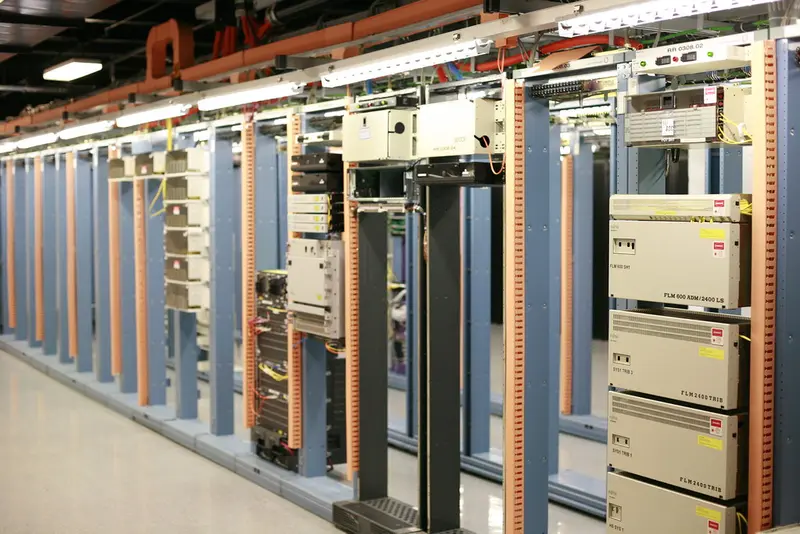
That raises a decentralization question. Solana’s performance has always depended on validators being able to manage substantial technical requirements. A faster execution clock could improve the experience for users while increasing the cost of participation for some operators. If the burden becomes too high, validator activity could become more concentrated among professional infrastructure providers.
The network’s challenge is to improve responsiveness without making reliable participation impractical for a narrower group of validators. This is one reason the rollout has been gradual. Moving from 400 milliseconds to 250 milliseconds, and then to 200 milliseconds, gives operators and developers time to observe how the system behaves under each stage.
Shorter transaction validity windows
The upgrade also affects how long transactions remain useful. A transaction is not simply a piece of data that can wait indefinitely for inclusion. It is created against a particular view of the network, and it may become invalid if too much time passes or if the relevant state changes.
With more frequent block production and tighter timing requirements, applications will have to manage these windows carefully. A wallet that holds a transaction for too long before submitting it may be more likely to encounter an expired or otherwise unusable request. Trading systems may need to refresh transactions more aggressively when prices or account states change.
Shorter validity windows can improve system hygiene by reducing the number of old transactions competing with current activity. They can also make the network more responsive to present conditions. But they place greater demands on software design. Applications must detect failures quickly, decide whether to retry and avoid accidentally submitting outdated instructions.
For users, this may appear as a simple improvement when everything works. Transactions can move through the system with less waiting. When something goes wrong, however, the failure may require more immediate handling. Wallets and exchanges will need clear messaging so that users understand whether a transaction is pending, expired or ready to be resubmitted.
Developers will be responsible for much of this transition. The block time itself is controlled at the protocol level, but the quality of the experience depends on how applications respond to faster timing.
A meaningful test for Solana
CoinDesk’s earlier report described the intermediate speed increase as a change in block timing without an increase in transaction capacity. That framing is useful for understanding the final stage as well. The objective is not to claim that Solana can process twice as much computation. It is to make the execution pipeline move at a faster and more consistent rhythm.
The most important indicators after epoch 1053 will be operational rather than promotional. Observers will need to track missed slots, validator participation, propagation behavior, transaction confirmation experience and the frequency of application failures. They will also need to examine whether the new schedule changes the cost of running infrastructure or encourages greater concentration among the largest operators.
For users, the success case would be subtle but meaningful. Wallets could feel more immediate. Trading systems could work with fresher information. Onchain applications could respond more quickly to state changes. These improvements may not appear as a dramatic headline metric, but they can influence whether people choose blockchain applications for payments, trading, gaming and other time sensitive activities.
For developers, the test will be whether faster block opportunities translate into better products without creating new reliability problems. If applications must constantly retry transactions, adjust for missed slots or cope with uneven propagation, the theoretical improvement may be difficult to feel.
For validators, the question is whether the network can maintain a high level of coordination under a tighter schedule while keeping participation broad enough to support resilience. That will require efficient software, capable hardware and stable connectivity, but it will also require careful monitoring of the costs imposed on operators.
Solana’s 200 millisecond target is therefore best understood as an experiment in execution efficiency. The network is making its clock faster while holding theoretical compute throughput roughly steady. That approach could produce a more responsive platform without simply increasing block size, but it also exposes the system to tighter timing constraints.
The upgrade’s long term importance will depend on what happens after the target changes. If Solana can reduce latency without a meaningful increase in missed slots, operating costs or centralization pressure, it will demonstrate that protocol speed can improve through more precise scheduling. If the faster clock strains validators or creates unstable application behavior, the tradeoff will become equally clear.
Either outcome will provide useful evidence for the next generation of blockchain infrastructure. The future of high performance networks will not be determined only by how many transactions they advertise. It will also depend on how reliably they can coordinate work, deliver current information and keep participation open as their systems become faster.
- Robert Scoble · BY 2.0
- TechCrunch · CC BY 2.0


Jessica Jones is not a person. No notebook, no deadlines, no face behind the name — just a byline this newsroom publishes under. Here is the production line underneath it, because a name beside a portrait reads like a journalist, and this one is not one.
The models. Writing: gpt-5.6-luna. Out on the live web: gpt-5.6-luna and gpt-5.6-terra. Pictures: gpt-image-1. Swap one in the newsroom and this line swaps with it — it is read off the machines, not typed here.
How a story is made
- Research. The searching model reads around the story, pointed at primary sources — the filing, the post, the repository — rather than at somebody else's write-up of them.
- Writing. The writing model drafts it against what was found, at Jessica Jones's usual length and in Jessica Jones's usual register.
- The loop. A reviewer reads the draft and sends it back with notes. Then reads it again. A piece can go round several times before it leaves the building.
- Enrichment. A quotation has to appear word for word on the page it is taken from. A chart may only use figures that appear in the source it cites. Whatever fails is dropped, and the reason is kept.
- Fact check. A last pass hunts for claims the article makes and its sources do not.
- A human stop. Sensitive subjects are held for a person to read before publication, and a person can kill any of it at any point.
If that sounds less like a newsroom and more like a factory: quite. It is called Press Factory.
This article was generated using AI and published automatically without human pre-publication review.
Read and checked by admin on 10/9/2026
How this article was made
The article was produced by the Grandmonts Media News Engine using automated research, drafting and verification workflows. No human editor reviewed the article before publication. Grandmonts Media remains responsible for the published content. Errors can be reported at office@grandmonts.cz.