

For years, crypto security has been built around an uncomfortable bargain. Users are told to protect long, complex passwords, activate two-factor authentication, store a seed phrase offline and distrust every unexpected message. The advice is sensible, but it places much of the burden on individuals, many of whom are being asked to manage security systems that were never designed for everyday consumers.
Passkeys are emerging as an attempt to change that equation.
Breez has launched passkey login for seedless Bitcoin wallets, allowing users to access their wallets without managing a traditional 12-word recovery phrase.
Built on the FIDO2 and WebAuthn standards, passkeys allow a user to authenticate with a device’s biometrics, screen lock or security key rather than typing a password. The underlying cryptographic key is generated on the device and is designed to work only with the legitimate website or application. A fake exchange login page may imitate a company’s branding, but it cannot normally use the passkey created for the real domain.
That distinction matters in crypto, where a successful account takeover can lead to irreversible losses. There is no bank chargeback for a transaction signed by the wrong person, and the time between a stolen credential and a drained account can be measured in minutes.
Exchanges, wallet providers and infrastructure companies are therefore treating passkeys as more than a security feature. They are becoming part of the competition to make digital assets usable by a larger audience. The companies that can hide sophisticated protection behind a familiar fingerprint or face scan may gain an advantage over products that still require users to understand seed phrases, authenticator apps and hardware devices before they can safely transact.
But passkeys do not solve every problem. They protect access to an account or application, not necessarily the assets controlled by a blockchain wallet. They do not prevent a user from approving a malicious token allowance, signing a deceptive smart-contract transaction or losing control of a phone that is poorly secured. Their introduction also raises difficult questions about recovery, cloud synchronization and the role of centralized providers in systems marketed as self-custodial.
The technology is promising. Its implementation will determine whether it strengthens crypto’s security model or merely adds a modern login layer to old risks.
Why passwords and codes are failing crypto users
Traditional account security depends on information a user can remember or receive. Passwords can be reused, guessed, stolen through malware or entered into a convincing phishing website. One-time codes are stronger, but they can still be intercepted through phishing, stolen from a compromised device or bypassed through SIM swapping and social engineering.
The problem is particularly acute in crypto because attackers do not need to maintain access for long. If a criminal obtains exchange credentials, they may change withdrawal settings, transfer funds to an external address or exploit an account’s API permissions. When the victim notices, the assets may already have passed through multiple wallets and mixing services.
Social engineering has also become more targeted. Attackers may pose as exchange support agents, wallet developers, venture investors or members of a project’s security team. A victim can be persuaded to reveal a password, share a recovery code or approve a transaction that appears routine. In some cases, the attacker does not need to break the authentication system at all; they only need to convince the user to defeat it.
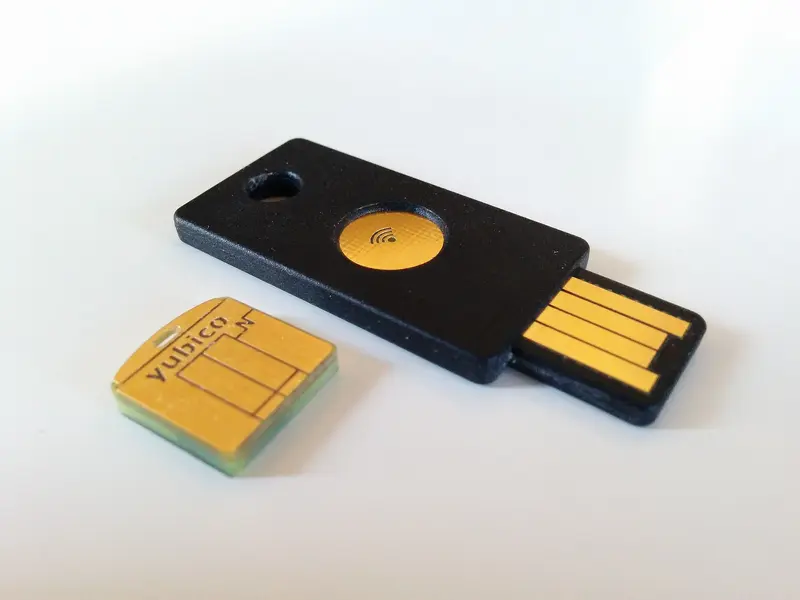
Hardware security keys have long offered strong protection. A physical key can verify that a login request originated from the correct website, making it difficult for a phishing page to capture a usable credential. Yet hardware keys remain a niche product. Users must buy one, carry it and understand what to do if it is lost. For a professional trader or treasury manager, that trade-off may be acceptable. For a first-time wallet user, it can feel like a barrier.
Passkeys attempt to bring some of the same phishing resistance to devices people already use. A phone, tablet or laptop can store the private portion of a passkey in a secure hardware area, while the user unlocks it with a fingerprint, face scan or local PIN. Depending on the platform and settings, passkeys can synchronize across a user’s devices through an operating-system account or remain tied to a single device.
The user experience is deliberately simple: choose “sign in with a passkey,” unlock the device and continue. The cryptography operates in the background.
For crypto companies, this simplicity is important because security friction has a business cost. If opening an account requires a password, authenticator app, backup codes, withdrawal whitelist and hardware key, many users will abandon the process or disable protections later. A passkey can make a stronger default feel closer to the login experience people already know from consumer technology.
A passkey is not a seed phrase
The most important distinction is between authentication and control of blockchain assets.
On a centralized exchange, a passkey can protect the user’s account. It may help prevent an attacker from signing in, changing account settings or initiating a withdrawal. The exchange still controls the underlying wallet infrastructure and can impose additional risk controls, such as withdrawal delays, address allowlists or manual reviews.
A self-custodial wallet is different. The user, not the provider, controls the private keys that authorize blockchain transactions. A passkey may be used to unlock an application, authenticate a cloud-based wallet service or help create a smart-contract wallet, but its security properties depend on the wallet’s architecture.
Some newer wallets use account abstraction or smart-contract accounts to replace the idea that one private key must authorize every action. These systems can support multiple signers, spending limits, recovery contacts, transaction simulation and programmable policies. A passkey can serve as one signing method, allowing a user to approve transactions with a device biometric rather than manually managing a conventional seed phrase.
That model could make self-custody more approachable. A user might create a wallet on a phone, approve routine payments with a fingerprint and designate several trusted devices or guardians for recovery. The wallet could impose limits on transfers to new addresses or require a second approval for unusually large transactions.
Yet these features introduce design choices that users may not understand. If a provider holds part of the recovery system, is the wallet still self-custodial in the practical sense? If a service can help restore access, can it also block or monitor transactions? If a passkey synchronizes through a technology company’s cloud account, what happens when that account is compromised or closed?
The label “passkey wallet” is therefore not enough. Users need to know where the cryptographic keys are stored, who can initiate recovery, whether the wallet uses a conventional blockchain key or a smart-contract account, and what options exist if a phone is lost.
The differences are visible in existing implementations. Coinbase’s Smart Wallet, for example, uses a passkey as the user-facing authorization method for a smart-contract wallet. The credential’s private key is held by the device or platform credential manager, while the wallet account is represented by a smart contract onchain. Coinbase does not hold a conventional seed phrase that can be handed back to the customer or use a company-controlled private key to sign ordinary user transactions. In practice, recovery depends on the user retaining access to the passkey through a device or the operating system’s synchronization system. A user can inspect the smart-wallet address and its onchain activity, but cannot replace the passkey through a Coinbase support agent in the way a bank might reset a password. Losing every synced passkey can therefore mean losing access.
Safe illustrates a different arrangement. A Safe account is a smart contract whose owners and signing threshold are visible onchain. The private keys reside with the individual owners, potentially in separate browser wallets, hardware wallets or passkey-backed signers, not with Safe as a single recovery authority. Recovery is an onchain configuration change approved by the required number of existing owners. Users can inspect and customize the owner list, threshold, modules and transaction policies, and can require two of three or three of five signers for a transfer. A passkey can be added as one signer, but it does not automatically become the sole recovery mechanism.
Argent takes a third approach through guardians. The wallet’s signing key is held by the user’s device, while designated guardians help authorize a replacement if the device or key is lost. Recovery authority is distributed among the guardians according to the wallet’s rules rather than assigned to an Argent support desk. Users can inspect their guardians and the recovery settings, and the system can impose a security period before a recovered wallet becomes fully active. The model reduces reliance on a seed phrase, but it makes guardian availability and independence part of the security perimeter.
Infrastructure providers expose yet another trade-off. Turnkey, for example, stores wallet key material inside hardware-backed infrastructure and applies programmable policies to the signing operations requested by an application. The application developer, not an individual end user, typically configures who may create wallets, which devices may sign and what transaction rules apply. Recovery authority consequently depends on the developer’s administrative policy and backup design. A user may receive a non-custodial experience, but the provider’s enclave, policy administrators and recovery procedures remain important parties in the system.
These are not interchangeable versions of the same product. In a passkey-only smart wallet, recovery may mean regaining a synchronized credential. In a Safe deployment, it means reaching the configured signer threshold. In a guardian wallet, it means obtaining enough independent recovery approvals. In an embedded-wallet service, it may involve an application’s authentication and administrative policies. The practical meaning of “self-custody” depends on which of those authorities can ultimately authorize a transaction.
The recovery problem
Recovery is where crypto security becomes more complicated than ordinary web authentication.
For a typical online service, losing access to a device may be inconvenient but recoverable. A user can reset a password through email, contact support or prove identity through a document check. In crypto, a recovery process that is too permissive creates a direct route for attackers. A customer-support agent who can restore access based on weak evidence may be manipulated by a convincing impersonator.
At the other extreme, an account with no recovery path can permanently lock out legitimate users. People lose phones, forget PINs, replace laptops and lose hardware keys. A security system that assumes perfect operational discipline may protect assets by making them inaccessible to their owners.
Passkey synchronization addresses part of this problem. Major device ecosystems can back up passkeys in encrypted form and make them available on a user’s other devices. This is more convenient than storing a single physical key, but it also concentrates trust in the account used to synchronize them. Protecting that account becomes essential.
Some crypto infrastructure providers are developing alternative approaches. A wallet may divide control among multiple devices, use threshold cryptography so that no single component holds a complete private key, or designate guardians who can jointly authorize recovery. Other systems may use delayed recovery, allowing a user to cancel a change during a waiting period. Exchanges can combine passkeys with identity verification, withdrawal limits and human review.
Each approach has trade-offs.
A centralized recovery desk can provide a familiar experience, but it creates an insider and social-engineering risk. Social recovery can reduce dependence on a seed phrase, but guardians must be selected carefully and may coordinate maliciously or become unavailable. Threshold systems can remove a single point of failure, but users may struggle to understand which parties hold fragments of control. Cloud-backed passkeys improve convenience, but their security is linked to the broader device ecosystem.
The concrete examples show why the recovery screen matters as much as the login screen. A Coinbase Smart Wallet user should be able to identify which devices or platform account can produce the passkey and understand that Coinbase support cannot simply issue a replacement signing key. A Safe user can open the account configuration and see the owners, threshold and modules that can alter control. An Argent user can review the guardians and recovery delay before depositing funds. A business using Turnkey must audit the administrators, quorum rules and policy changes that govern its signing infrastructure.
Those controls are observable, but they are not equally available to every customer. Some are onchain settings that anyone can verify; others are service-level policies visible only to an application operator. Users should be told whether they can add or remove signers, change a spending limit, revoke a device, export key material, replace a guardian or cancel a recovery attempt. Without those answers, a familiar biometric prompt can conceal a system whose actual authority remains centralized.
Passkeys do not protect against bad signatures
Phishing-resistant login is valuable, but many crypto losses occur after the user has already accessed the correct application.
A wallet may display a request to approve a token allowance, connect to a decentralized application or sign a message. The user may authenticate with a passkey and still authorize a malicious contract. In this case, the passkey worked exactly as designed: it proved that the legitimate user approved the action. The problem was that the user did not understand what the action would do.
This creates a second security frontier: transaction intent.
Wallet providers are investing in transaction simulation, address screening and clearer signing interfaces. Rather than showing technical data alone, a wallet might explain that a contract is requesting permission to spend a user’s tokens indefinitely, or that a transfer is going to an address with no prior relationship. Smart-contract wallets can add policy controls, such as blocking unknown contracts or requiring extra approval above a specified amount.
These protections need to work alongside passkeys. A secure login followed by an opaque signing prompt still leaves users vulnerable. In fact, smoother authentication could increase risk if it encourages people to approve more actions without scrutiny. The easier it becomes to sign, the more important it is to explain what is being signed.
Biometric authentication also does not mean that a company receives a user’s fingerprint or face data. In a standard passkey design, biometric information remains on the device and is used to unlock a cryptographic credential. The website receives proof of authentication, not the biometric itself. Communicating this distinction will matter for adoption, particularly among users who associate biometrics with surveillance or centralized identity systems.
Exchanges are building layered defenses
For centralized exchanges, passkeys are likely to become one layer in a broader account-protection system rather than a replacement for every existing control.
An exchange can require a passkey for login, withdrawals, changes to security settings and API access. It can separate those actions by risk. A user might sign in with a passkey, but a large withdrawal to a new address could also trigger a time delay, an email notification, device confirmation or manual review.
This layered model reflects the fact that authentication answers only one question: who is attempting to act? Risk controls address other questions: what are they trying to do, how unusual is it, and can the action be reversed or delayed?
Businesses also have to protect employees and administrative systems. A customer may use a passkey while an attacker targets exchange support staff, cloud accounts or internal tools. Hardware-backed authentication for employees, strict access controls and transaction monitoring can reduce the chance that a compromised operator becomes a path to customer funds.
For institutions, the requirements are more complex. Asset managers and corporate treasuries may need multiple authorized signers, policy-based approvals, audit records and separation of duties. A single biometric on a single phone is unlikely to satisfy those requirements. Passkeys can still play a role, but as part of a multi-party authorization system rather than as an individual consumer login.
This creates an opportunity for wallet infrastructure companies. Providers such as custody platforms, embedded-wallet developers and smart-account specialists can compete by offering programmable security policies through software development kits. A fintech launching a crypto feature may not want customers to handle seed phrases, but it may also not want to take full custody of their assets. Passkey-enabled wallets could sit between those models.
The business case for invisible security
The adoption argument extends beyond preventing theft. Better authentication can lower support costs, reduce account lockouts and make crypto products easier to integrate into payments, gaming and consumer applications.
A game developer, for example, may want players to own digital assets without asking them to write down a recovery phrase during onboarding. A payments company may want a user to approve a blockchain transaction through the same device-level action used for other financial services. A business issuing tokenized assets may need controlled access for employees and customers who have no interest in learning wallet terminology.
Passkeys can make these experiences less intimidating. They also offer developers a standard interface supported across browsers and operating systems, reducing the need to build proprietary login systems.
The competitive question is whether providers can preserve user choice as they simplify the experience. Convenience often comes from moving complexity into a platform’s infrastructure. That can be appropriate, but it may blur the difference between a wallet a user controls and an account a company manages on the user’s behalf.
Crypto’s original appeal was partly about reducing dependence on intermediaries. A wallet that hides every technical detail may attract more users, but it can also recreate the custodial relationships that blockchain systems were intended to change. The answer is not necessarily to force every person to manage a seed phrase. It may be to offer progressive self-custody: start with a safe, assisted wallet and provide a clear path toward greater user control as confidence grows.
Standardization will matter
Passkeys benefit from standards, but crypto wallets add capabilities that ordinary web accounts do not require. A passkey can authenticate a user to an application, while a blockchain wallet must also represent ownership, authorize transactions and interact with decentralized protocols.
Interoperability remains a challenge. A passkey created for one wallet may not be portable to another. A user who moves from one provider to a competitor may discover that recovery credentials, smart-account logic or transaction history do not transfer easily. Different wallets may also interpret device loss and guardian recovery in incompatible ways.
Developers will need to distinguish between portable identity, portable authentication and portable asset control. These are related but separate goals. Open standards can help prevent users from becoming trapped in a provider’s ecosystem, while clear export and recovery procedures can make competition healthier.
There is also a need for better security education. Users should understand the difference between a passkey, a password, a hardware key, a seed phrase and a wallet recovery system. They should know that a passkey prompt appearing unexpectedly may signal an attack, that approving a transaction is different from logging in, and that no support representative should require a seed phrase.
Regulators and auditors may increasingly examine these systems as crypto products enter mainstream financial channels. Companies will need to document how passkeys are enrolled, how devices are removed, how recovery is authorized and how suspicious activity is handled. Security claims will have to be tested against real-world processes, not just cryptographic specifications.
A test of crypto’s next design philosophy
Passkeys are not a magic shield. A compromised device, malicious browser extension, careless smart-contract approval or fraudulent recovery request can still put assets at risk. Seed phrases remain relevant in many wallet designs, and the safest answer for high-value holdings may still involve offline storage, multiple signers and carefully separated devices.
What passkeys can do is remove one of the most exploitable links in the chain: the reusable credential entered into a website. They can make strong authentication available to ordinary users without requiring every person to purchase specialist hardware. They can also serve as a foundation for wallets that combine familiar device security with programmable blockchain controls.
The technology’s long-term importance will depend on what companies build around it. A passkey attached to a weak recovery process is not a complete solution. A passkey-enabled wallet with transparent recovery, transaction simulation, spending limits and multiple authorization options could represent a meaningful shift in how self-custody works.
Crypto’s next phase will require security that is both technically robust and psychologically manageable. Users should not have to choose between convenience and control, but achieving both will require careful product design. Providers must explain where keys live, who can recover access and what a user is actually approving. They must treat support teams, cloud accounts and smart-contract permissions as part of the security perimeter.
The firms that succeed will not simply add a “sign in with passkey” button. They will redesign the wallet around the idea that authentication, ownership and transaction approval are separate problems that deserve separate protections. If they can make those layers feel simple while keeping their boundaries visible, passkeys could become an important bridge between crypto’s specialist origins and its consumer future.
- Autopilot · CC BY-SA 4.0
Jessica Jones is not a person. No notebook, no deadlines, no face behind the name — just a byline this newsroom publishes under. Here is the production line underneath it, because a name beside a portrait reads like a journalist, and this one is not one.
The models. Writing: gpt-5.6-luna. Out on the live web: gpt-5.6-luna and gpt-5.6-terra. Pictures: gpt-image-1. Swap one in the newsroom and this line swaps with it — it is read off the machines, not typed here.
How a story is made
- Research. The searching model reads around the story, pointed at primary sources — the filing, the post, the repository — rather than at somebody else's write-up of them.
- Writing. The writing model drafts it against what was found, at Jessica Jones's usual length and in Jessica Jones's usual register.
- The loop. A reviewer reads the draft and sends it back with notes. Then reads it again. A piece can go round several times before it leaves the building.
- Enrichment. A quotation has to appear word for word on the page it is taken from. A chart may only use figures that appear in the source it cites. Whatever fails is dropped, and the reason is kept.
- Fact check. A last pass hunts for claims the article makes and its sources do not.
- A human stop. Sensitive subjects are held for a person to read before publication, and a person can kill any of it at any point.
If that sounds less like a newsroom and more like a factory: quite. It is called Press Factory.
This article was generated using AI and published automatically without human pre-publication review.
Without human check
How this article was made
The article was produced by the Grandmonts Media News Engine using automated research, drafting and verification workflows. No human editor reviewed the article before publication. Grandmonts Media remains responsible for the published content. Errors can be reported at office@grandmonts.cz.