

Cointelegraph said in an Oct. 2 post that Atkins described the proposed rules as a path for advisers and funds to hold cryptocurrency within a recognized regulatory structure. He also indicated that more proposals were expected, suggesting the custody initiative could form part of a wider effort to define how digital assets fit within US financial regulation.
The remarks are significant because custody has become one of the central obstacles to institutional participation in cryptocurrency markets. Asset managers may want to offer clients exposure to bitcoin, ether and other digital assets, but they must also demonstrate that client property is being safeguarded, accurately recorded and protected against theft, misuse or operational failure.
For traditional securities, those responsibilities are supported by established rules, market infrastructure and widely understood roles for banks, broker dealers, transfer agents and specialist custodians. Crypto assets raise more complicated questions. Ownership is recorded on a blockchain, transactions can settle continuously, and control often depends on private keys. A mistake in key management can result in permanent loss, while a custodian’s insolvency or internal failure can create uncertainty over who controls the assets.
A framework for advisers and funds
Atkins’s statement does not provide the text of the proposed rules, but it identifies the intended policy outcome. Investment advisers and funds would have a clearer route to comply with custody obligations while holding digital assets for clients or portfolios.
That clarity could matter for several types of institution. Registered investment advisers may be better positioned to recommend or manage crypto exposure. Mutual funds, exchange traded products and private funds could gain more certainty over the infrastructure required to hold tokens. Banks, trust companies and specialist digital asset custodians could also compete to provide qualified custody, reporting and settlement services.
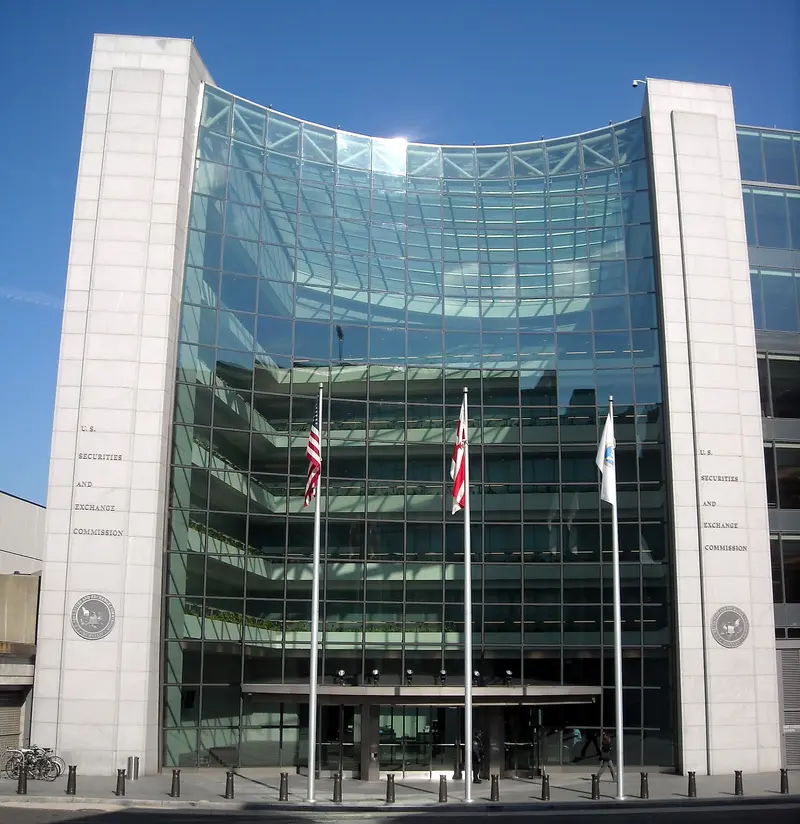
The practical effect will depend on how the SEC defines acceptable custody arrangements. A rule could specify which entities are eligible to safeguard assets, what controls they must maintain, how client assets must be segregated and how firms should report holdings. It could also address audits, insurance, cybersecurity, valuation and procedures for recovering assets after a loss.
Those requirements would not necessarily make crypto custody simple. They could instead formalize a demanding compliance process. Firms may need new systems to reconcile blockchain records with internal books, monitor transfers in real time and prove that wallets are controlled on behalf of clients. They may also need to establish procedures for forks, airdrops, network upgrades and other events that have no direct equivalent in traditional securities markets.
Questions left unanswered
The social media post does not disclose the proposal’s text, publication date or timetable. It also does not explain which digital assets would be covered or whether the framework would apply equally to tokens that the SEC considers securities and assets it does not.
That distinction could be important. A custody regime limited to securities would leave firms with separate questions about bitcoin, ether and other commodities or nonsecurity assets. A broader framework could provide more practical certainty, but it might also increase debate over the SEC’s authority and the boundaries of federal financial regulation.
Other unresolved issues include self-custody, staking, lending and decentralized protocols. Staking may require a custodian to transfer assets to a validator or maintain control while assets generate rewards. Lending arrangements can expose clients to counterparty and bankruptcy risks. Decentralized protocols may have no conventional legal entity that can assume responsibility for safeguarding property.
The treatment of these activities could determine whether the proposal expands institutional access or simply establishes clearer standards for existing custodial models. If the SEC excludes important parts of the crypto market, advisers may continue to rely on limited products or avoid direct holdings altogether. If the agency includes them, firms could face obligations that are difficult to meet within decentralized systems.
From enforcement uncertainty to written rules
Atkins’s reference to additional proposals also suggests a broader change in regulatory strategy. For years, many crypto companies have argued that the SEC has relied too heavily on enforcement actions and case-by-case interpretations. Firms have said that this approach makes it difficult to determine which products can be offered, which registrations are required and how digital asset businesses should structure their operations.
A written custody framework would not resolve those questions by itself. It could, however, give market participants a more stable foundation for building services around asset protection and administration. Clear standards may encourage established financial institutions to enter the sector because compliance obligations can be assessed before a product is launched.
The rules could also strengthen investor protection if they require meaningful separation between a custodian’s assets and client property. Strong controls could reduce the risk that customer assets are commingled, pledged without permission or left vulnerable to the collapse of a trading platform. Reporting requirements might give investors and regulators a better view of where assets are held and how they are controlled.
At the same time, stricter standards could concentrate custody in a small number of large providers. Smaller firms may find the costs of technology, audits, capital and compliance too high. That could improve consistency while reducing competition, particularly if only banks or a narrow group of regulated entities qualify.
Global implications
The SEC’s approach will also be watched outside the United States. European regulators are implementing the Markets in Crypto Assets framework, while other jurisdictions are developing licensing systems for exchanges, custodians and stablecoin issuers. Differences in custody requirements can influence where asset managers establish operations and where crypto businesses direct investment.
A US framework that offers clarity without making custody commercially impractical could strengthen the country’s position as a center for digital asset finance. Rules viewed as excessive or uncertain could encourage firms to serve American clients from other jurisdictions, although cross-border operations would still face local licensing and investor protection requirements.
For now, Atkins’s comments establish direction rather than deliver a final policy. The proposal’s definitions, compliance deadlines, treatment of different assets and handling of staking or self-custody will determine its significance. Until those details are released, the statement points to a possible opening for institutional crypto adoption, but not yet to a settled legal regime.
- AgnosticPreachersKid · CC BY-SA 3.0
Sarah Thompson is not a person. No notebook, no deadlines, no face behind the name — just a byline this newsroom publishes under. Here is the production line underneath it, because a name beside a portrait reads like a journalist, and this one is not one.
The models. Writing: gpt-5.6-luna. Out on the live web: gpt-5.6-luna and gpt-5.6-terra. Pictures: gpt-image-1. Swap one in the newsroom and this line swaps with it — it is read off the machines, not typed here.
How a story is made
- Research. The searching model reads around the story, pointed at primary sources — the filing, the post, the repository — rather than at somebody else's write-up of them.
- Writing. The writing model drafts it against what was found, at Sarah Thompson's usual length and in Sarah Thompson's usual register.
- The loop. A reviewer reads the draft and sends it back with notes. Then reads it again. A piece can go round several times before it leaves the building.
- Enrichment. A quotation has to appear word for word on the page it is taken from. A chart may only use figures that appear in the source it cites. Whatever fails is dropped, and the reason is kept.
- Fact check. A last pass hunts for claims the article makes and its sources do not.
- A human stop. Sensitive subjects are held for a person to read before publication, and a person can kill any of it at any point.
If that sounds less like a newsroom and more like a factory: quite. It is called Press Factory.
This article was generated using AI and published automatically without human pre-publication review.
Read and checked by admin on 10/3/2026
How this article was made
The article was produced by the Grandmonts Media News Engine using automated research, drafting and verification workflows. No human editor reviewed the article before publication. Grandmonts Media remains responsible for the published content. Errors can be reported at office@grandmonts.cz.