


Mastercard said in its October 19 announcement that Stablecoin Security combines its payment intelligence with blockchain analytics to evaluate risk before and during stablecoin settlement. The service is designed for banks, payment companies and other institutions that want to use dollar-pegged tokens without losing visibility into the movement of funds across public ledgers.
The product reflects a shift in how established payment networks are approaching stablecoins. Instead of treating them only as a faster or potentially cheaper settlement asset, Mastercard is building controls around the flow of liquidity itself. The system examines transaction signals such as the origin of funds, possible connections to restricted parties and behavior associated with scams or other financial crime. It then produces a risk score that can be connected to existing fraud and compliance systems.
That timing matters because a stablecoin payment often does not move directly from one wallet to another. Funds can pass through multiple addresses, services or conversion points before reaching a final recipient. Each step can make it harder for an institution to determine who initiated the payment, where the money came from and whether the transaction has acquired risk along the way.
The Bank for International Settlements found in its analysis of stablecoin activity that nearly 60% of transfer events occurred within complex, multi-step transactions. The study examined 593 million stablecoin transfer events across 141 million Ethereum transactions in 2025. Its findings provide the statistical basis for Mastercard’s focus on transaction paths rather than isolated wallet transfers.
For institutions, that distinction affects how capital can move through payment networks. A simple transfer may be relatively easy to monitor with address screening and transaction limits. A more complicated chain requires the compliance system to connect several actions into one economic event. Without that context, a payment can appear acceptable at one stage while exposure becomes visible only after funds have moved through additional wallets or services.
Mastercard launched Stablecoin Security with Borderless.xyz and Keyrails, companies that previously took part in its Start Path blockchain accelerator, according to the company’s announcement. Their involvement gives the product an immediate connection to firms working on the infrastructure needed to route, convert and settle digital-dollar payments.
The product also extends Mastercard’s broader effort to connect stablecoins with traditional payment rails. The company has been expanding its stablecoin settlement work and developing relationships with infrastructure providers such as BVNK. Those initiatives place Mastercard in a position between regulated financial institutions seeking blockchain settlement and the public networks where stablecoin transfers occur.
The commercial opportunity is tied less to speculative token demand than to the volume of institutional payment activity that stablecoins could eventually carry. If banks and fintechs are to use these assets for treasury transfers, cross-border payments or merchant settlement, they need to know that a transaction can be assessed before capital becomes difficult to recover. Pre-settlement screening gives them a way to stop or review payments while the funds are still within the institution’s control.
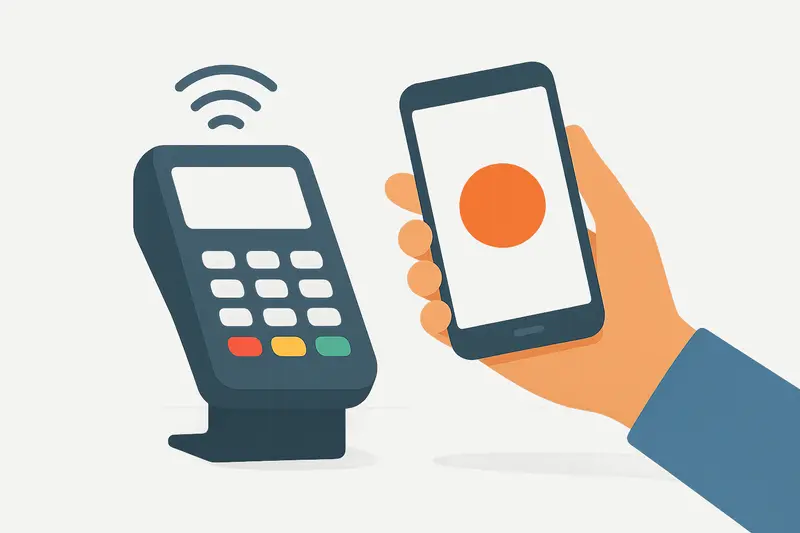
Decrypt reported on Mastercard’s effort to bring its fraud tools to stablecoin payments, highlighting the company’s attempt to apply established payment-risk capabilities to blockchain transactions. That approach suggests that stablecoin adoption may depend not only on token liquidity or settlement speed, but also on whether issuers, banks and payment processors can attach familiar controls to on-chain activity.
The regulatory context is more cautious. Federal Reserve authors warned in a 2026 analysis that complex intermediation chains, vertical integration and stronger links between stablecoins and traditional payment infrastructure can reduce transparency and amplify financial-stability risks. Their assessment provides a critical perspective on the same complexity that Mastercard is attempting to monitor.
That is the only critical position identified in the supplied sources. No opposing response to Mastercard’s launch was available from the sources reviewed.
The result is a product aimed at the infrastructure layer of stablecoin finance. Mastercard is not simply promoting another way to move dollars. It is positioning risk intelligence as a condition for moving those dollars through institutional channels. If stablecoin payments continue attracting banks and fintechs, screening before settlement could become as important to network access as liquidity, speed and interoperability.
The broader implication is that mainstream stablecoin use may come with a more centralized compliance architecture than the underlying blockchains suggest. Public ledgers can make transactions visible, but visibility alone does not explain the economic relationship between addresses. Mastercard’s service is an attempt to turn that raw activity into an actionable decision before money changes hands.


Ethan Brooks is not a person. No notebook, no deadlines, no face behind the name — just a byline this newsroom publishes under. Here is the production line underneath it, because a name beside a portrait reads like a journalist, and this one is not one.
The models. Writing: gpt-5.6-luna. Out on the live web: gpt-5.6-luna and gpt-5.6-terra. Pictures: gpt-image-1. Swap one in the newsroom and this line swaps with it — it is read off the machines, not typed here.
How a story is made
- Research. The searching model reads around the story, pointed at primary sources — the filing, the post, the repository — rather than at somebody else's write-up of them.
- Writing. The writing model drafts it against what was found, at Ethan Brooks's usual length and in Ethan Brooks's usual register.
- The loop. A reviewer reads the draft and sends it back with notes. Then reads it again. A piece can go round several times before it leaves the building.
- Enrichment. A quotation has to appear word for word on the page it is taken from. A chart may only use figures that appear in the source it cites. Whatever fails is dropped, and the reason is kept.
- Fact check. A last pass hunts for claims the article makes and its sources do not.
- A human stop. Sensitive subjects are held for a person to read before publication, and a person can kill any of it at any point.
If that sounds less like a newsroom and more like a factory: quite. It is called Press Factory.
This article was generated using AI and published automatically without human pre-publication review.
Read and checked by admin on 10/20/2026
How this article was made
The article was produced by the Grandmonts Media News Engine using automated research, drafting and verification workflows. No human editor reviewed the article before publication. Grandmonts Media remains responsible for the published content. Errors can be reported at office@grandmonts.cz.