

Regulation Is Becoming the Market’s Main Liquidity Question
The stablecoin debate is often presented as a question of innovation versus regulation. In practice, it is more directly a question of liquidity: who controls dollar-like balances, where those balances are held, how quickly they can be redeemed, and which institutions are allowed to move them across borders.
Stablecoins already serve as a financial bridge between traditional money and digital markets. Traders use them to move capital between exchanges and decentralized protocols. Crypto firms use them as collateral and settlement assets. Businesses can use them to transfer dollars outside banking hours, while individuals in countries with weak currencies may treat them as a more reliable store of value than local cash.
That existing activity gives stablecoins an economic importance beyond their market share in crypto trading. Every token represents a claim on an issuer, a reserve portfolio or a redemption mechanism. The credibility of that claim determines whether users keep funds on-chain or convert them back into bank deposits and fiat currency.
This is why lawmakers and regulators are focusing on reserves, redemption, disclosures and supervision rather than only on the technology behind blockchains. A token can settle in seconds, but speed is not the same as safety. If holders doubt the quality of the reserves or the issuer’s ability to meet redemptions, the same digital infrastructure that enables rapid settlement can accelerate a run.
The policy outcome will help determine where capital flows next. Clear standards could attract banks, payment companies, asset managers and multinational corporations. Ambiguous or highly restrictive rules could leave stablecoins concentrated in offshore markets and crypto-native trading venues. The central issue is not whether stablecoins will exist. It is whether they will remain primarily infrastructure for digital-asset markets or become accepted instruments for mainstream payments.
The Promise: Internet-Native Dollar Settlement
Stablecoins solve a problem that conventional payment systems have never fully addressed: the dollar is globally dominant, but access to dollar settlement remains dependent on intermediaries, operating schedules and national banking infrastructure.
A stablecoin can transfer value on a public blockchain at any hour. It can be integrated into software, smart contracts, exchanges and financial applications. In principle, a company can use the same digital dollar for payroll, treasury management, cross-border settlement and automated transactions between machines or software agents.
For institutions, the attraction is less about replacing every bank account than about reducing friction between financial systems. A company making a cross-border payment may face correspondent-bank fees, multiple currency conversions and settlement delays. A tokenized dollar could move directly between compatible wallets, with the blockchain recording the transfer and programmable rules handling parts of the transaction.
Remittances offer another potential use. Migrant workers and their families often pay substantial fees to send money across borders. Stablecoins could reduce the number of intermediaries, although users still need reliable conversion between tokens, local currencies and cash. That means adoption depends not only on the blockchain but also on exchanges, payment processors, banks and regulated off-ramps.
Dollar stablecoins may also extend the international reach of U.S. currency. In regions where inflation, capital controls or banking instability weaken confidence in local money, a digital dollar can become an informal savings and settlement instrument. That prospect creates both commercial opportunities and policy concerns. Greater dollar access may support trade and savings, but it could also accelerate currency substitution and complicate the monetary policy of emerging markets.
From a capital-flow perspective, the most important development would be a shift in stablecoin balances from speculative trading accounts into operational accounts. If businesses begin holding tokens for working capital, invoices and supplier payments, stablecoin demand would become less dependent on crypto-market cycles. That would represent a deeper form of adoption than a rise in exchange volume.
Why Reserves and Redemption Matter
A stablecoin’s promise rests on a simple proposition: one token should remain redeemable for one dollar, or for an equivalent amount of value. Maintaining that parity requires assets that are liquid, transparent and capable of meeting redemption requests during stress.
The composition of reserves therefore has direct consequences for investor confidence. Cash and short-term government securities are generally easier to value and liquidate than longer-duration, lower-quality or opaque assets. If an issuer invests reserves in instruments that lose value or cannot be sold quickly, holders may question whether the token is fully backed even if the issuer reports adequate assets under normal conditions.
Redemption rules are equally important. Holders need to know who can redeem tokens, whether redemption is available at par, what fees apply and how long settlement takes. A token that trades at one dollar in ordinary conditions but cannot be redeemed efficiently during a crisis is not equivalent to cash.
This distinction was highlighted by previous failures in the broader digital-asset market, when investors discovered that claims described as stable could depend on complex collateral arrangements, market incentives or confidence in a mechanism rather than on readily available reserves. Those episodes changed the regulatory conversation. The question became not merely whether an issuer could maintain a target price in normal markets, but whether it could withstand a rapid and synchronized withdrawal of funds.
A credible framework would likely require regular reserve disclosures, independent verification and clear legal rights for token holders. Regulators may also examine asset segregation, bankruptcy treatment and the possibility that customer claims could become entangled with an issuer’s other obligations.
For investors, better disclosure could reduce uncertainty. For issuers, however, it could increase operating costs and limit the assets they are permitted to hold. The resulting trade-off is central to market structure. A reserve rule that is too weak may preserve competition while leaving users exposed. A rule that is too demanding may favor the largest banks and payment companies, reducing the number of issuers able to compete.
The Bank Versus Nonbank Question
One of the most consequential regulatory choices is who may issue stablecoins.
Banks already operate within frameworks governing capital, liquidity, custody, consumer protection and supervision. Allowing banks to issue dollar-backed tokens could make regulatory approval easier and give users confidence that stablecoins are connected to familiar institutions. Banks also possess existing payment networks and corporate relationships that could help move stablecoins beyond crypto exchanges.
Nonbank issuers argue that they can build more efficient products and reach users that traditional banks underserve. Their business models may be focused on payments, remittances or digital commerce rather than deposit-taking and lending. Excluding them could reduce innovation and leave the market dependent on legacy systems.
The concern for regulators is that a widely used nonbank stablecoin could begin to resemble a deposit without being subject to equivalent safeguards. If users treat tokens as money, an issuer’s failure could impose losses on households and businesses even if the issuer is not formally a bank. At scale, a run could also force rapid sales of reserve assets, potentially transmitting stress into Treasury or money markets.
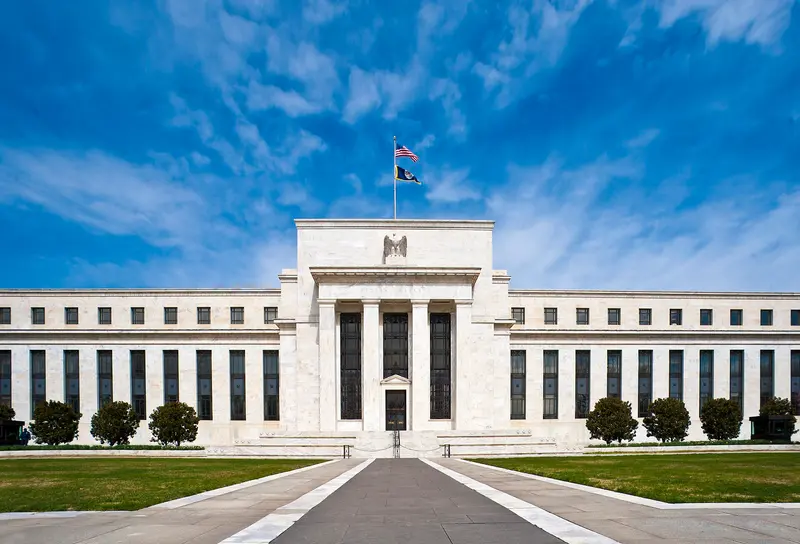
The Federal Reserve’s work on payment systems illustrates the broader institutional context. The central bank evaluates how payment innovations interact with settlement risk, operational resilience and the safety of the financial system. Stablecoins may not fit neatly into existing categories, but their growth raises familiar questions about finality, access, liquidity and oversight.
The likely result is not a single model but a layered system. Banks may issue tokens under banking supervision, while licensed nonbanks operate under specific reserve and payment rules. The dividing line will depend on the rights attached to the token, the scale of the issuer, how reserves are invested and whether the product is marketed as a payment instrument or an investment.
The FSB’s Global Warning
Stablecoins are inherently difficult to regulate within national borders. A token may be issued by a company incorporated in one jurisdiction, backed by assets held in another, traded on platforms across several countries and used by customers who live elsewhere.
That structure creates gaps in supervision. A national regulator may oversee the issuer but lack authority over foreign exchanges, wallet providers or reserve custodians. A stablecoin may be legal in one market and restricted in another, while users continue to access it through offshore platforms or decentralized interfaces.
The Financial Stability Board has emphasized the need for comprehensive oversight of crypto-asset arrangements, including stablecoins that could create financial-stability risks. Its recommendations focus on governance, risk management, data, disclosures, redemption and cooperation among authorities. The underlying message is that the largest stablecoins cannot be treated solely as software projects when their liabilities function like money.
Global coordination also matters because inconsistent rules can redirect liquidity rather than eliminate risk. If one jurisdiction imposes strict reserve standards while another permits opaque structures, issuers and users may migrate toward the lighter regime. That can produce regulatory arbitrage, with risk accumulating outside the country where the economic activity is most visible.
For dollar stablecoins, the international dimension is particularly significant. Their use may expand faster outside the United States than inside it, especially in countries where local currency instability creates strong demand for digital dollars. U.S. lawmakers must therefore consider not only consumer protection and domestic financial stability but also the effect of stablecoins on dollar demand, sanctions enforcement and foreign monetary systems.
What Clear Rules Could Unlock
The strongest case for legislation is that regulatory clarity can change the composition of capital entering the sector.
Institutional investors generally require legal certainty before allocating funds to new payment infrastructure. Banks need to know whether issuing or holding stablecoins creates unexpected capital or custody obligations. Corporations need assurance that tokens can be redeemed, accounted for and transferred without exposing them to unclear compliance risks.
Clear rules could encourage payment companies to build stablecoin rails into existing products. A merchant might accept a digital dollar while receiving local currency. A remittance provider could use stablecoins for wholesale settlement without requiring customers to understand blockchain technology. An asset manager could tokenize cash management products under a defined regulatory framework.
The benefits would extend to the reserve market. If stablecoin issuers are required to hold high-quality liquid assets, growth in circulating supply could create additional demand for short-term government securities and other approved instruments. That would connect on-chain money creation to traditional capital markets in a more formal way.
But regulation will not automatically produce adoption. Stablecoins still face practical obstacles: wallet security, private-key recovery, fraud, sanctions screening, consumer confusion and the fragmentation of blockchain networks. Users also need confidence that a token accepted by one platform will be usable elsewhere.
The most successful products may therefore be those that hide much of the technical complexity. Mainstream users are unlikely to care which blockchain processes a payment. They will care whether the transfer is reliable, reversible when fraud occurs, compatible with existing accounts and accepted by merchants.
The Risk of Market Concentration
Stricter requirements could improve stability while narrowing competition.
Reserve audits, compliance systems, licensing, cybersecurity controls and 24-hour redemption operations are expensive. Large banks and established payment firms can spread those costs across substantial transaction volumes. Smaller issuers may struggle to do so, particularly if they cannot earn meaningful income from reserve assets.
This could produce a concentrated market dominated by a handful of institutions. Concentration may simplify supervision, but it also creates new points of failure. If several payment networks depend on one issuer, a technical outage, legal dispute or operational mistake could affect a wide portion of the market.
There is also a risk that regulation separates stablecoins into two tiers. Fully supervised tokens may gain access to mainstream commerce, while less-regulated alternatives continue serving high-risk or offshore markets. That would not eliminate demand for unregulated products; it could push them into less transparent venues.
Competition will depend on whether rules are proportionate to risk. A stablecoin used only inside a limited trading platform may not create the same systemic exposure as one used by millions of consumers. Regulators may need thresholds based on circulation, transaction volume, reserve composition and interconnectedness rather than imposing identical obligations on every issuer.
The Signals Investors Should Watch
Investors assessing the sector should focus less on token price stability and more on the direction of balances and the identity of users.
The first signal is whether stablecoin supply grows alongside real economic activity or mainly with speculative leverage. Rising balances on exchanges can indicate trading demand, but growth in corporate treasury accounts, payment platforms and remittance corridors would provide stronger evidence of structural adoption.
The second is reserve transparency. Issuers that publish timely, understandable information about assets, custodians, maturity and redemption should be better positioned to attract institutional liquidity. Disclosures that rely on complex accounting without clearly explaining available cash may not satisfy users during a stress event.
The third is distribution. A stablecoin integrated into banking, commerce and payment software has a different growth profile from one dependent on a small number of crypto exchanges. Distribution determines whether demand survives a bear market.
Finally, investors should watch the legal treatment of customer claims. The difference between a direct claim on segregated reserves and an unsecured claim on an issuer may not matter when markets are calm. It can become decisive when redemptions accelerate.
A New Layer of the Dollar System
Stablecoins are unlikely to replace bank deposits, cards or central-bank money in a single step. Their more plausible role is as an additional settlement layer connecting traditional finance to digital markets.
Whether that layer becomes mainstream will depend on trust. Users must trust that tokens are backed, redeemable and protected against operational failure. Regulators must trust issuers to manage reserves and risks. Banks and corporations must trust that the legal framework will remain stable as the technology develops.
The Congressional debate and the work of financial regulators will shape those conditions. The Federal Reserve’s focus on payment-system safety, combined with the FSB’s emphasis on coordinated oversight, points toward a future in which stablecoins are treated less like experimental crypto instruments and more like regulated financial infrastructure.
That transition could redirect substantial capital. It may draw reserve assets into more transparent pools, move payment activity onto programmable networks and expand global access to digital dollars. It could also make the market more concentrated, more closely supervised and less ideologically distinct from traditional finance.
The decisive question is therefore not whether stablecoins are innovative. It is whether their efficiency is large enough to justify building the safeguards required for money. If regulators succeed, stablecoins may become invisible infrastructure: a digital dollar rail embedded in commerce, remittances and institutional settlement. If they fail, the sector may remain divided between tightly controlled products for mainstream users and lightly regulated tokens serving crypto’s own liquidity cycle.
- Federalreserve · Public domain
Ethan Brooks is not a person. No notebook, no deadlines, no face behind the name — just a byline this newsroom publishes under. Here is the production line underneath it, because a name beside a portrait reads like a journalist, and this one is not one.
The models. Writing: gpt-5.6-luna. Out on the live web: gpt-5.6-luna and gpt-5.6-terra. Pictures: gpt-image-1. Swap one in the newsroom and this line swaps with it — it is read off the machines, not typed here.
How a story is made
- Research. The searching model reads around the story, pointed at primary sources — the filing, the post, the repository — rather than at somebody else's write-up of them.
- Writing. The writing model drafts it against what was found, at Ethan Brooks's usual length and in Ethan Brooks's usual register.
- The loop. A reviewer reads the draft and sends it back with notes. Then reads it again. A piece can go round several times before it leaves the building.
- Enrichment. A quotation has to appear word for word on the page it is taken from. A chart may only use figures that appear in the source it cites. Whatever fails is dropped, and the reason is kept.
- Fact check. A last pass hunts for claims the article makes and its sources do not.
- A human stop. Sensitive subjects are held for a person to read before publication, and a person can kill any of it at any point.
If that sounds less like a newsroom and more like a factory: quite. It is called Press Factory.
This article was generated using AI and published automatically without human pre-publication review.
Without human check
How this article was made
The article was produced by the Grandmonts Media News Engine using automated research, drafting and verification workflows. No human editor reviewed the article before publication. Grandmonts Media remains responsible for the published content. Errors can be reported at office@grandmonts.cz.