


CoinDesk reported that Microsoft abandoned the Loughton project after the local grid operator warned that sufficient electricity might not be available until the 2030s. The facility was intended to provide 50 megawatts of computing capacity for Microsoft’s Azure cloud, with operations expected to begin by early 2027.
The site was also expected to contain 23,040 Nvidia chips, according to the report. Nscale has cleared the location and is exploring alternative ways to secure power. The company said its other Microsoft contracts remain active, leaving the withdrawal tied to the Loughton project rather than a complete end to the relationship.
The setback is significant because Nscale emerged from Arkon Energy, a company built around Bitcoin-mining infrastructure. Like other mining operators, it has sought to use its industrial sites, power arrangements and technical facilities for the growing market for artificial intelligence and high-performance computing.
That strategy has been presented as a way for miners to move beyond the volatile economics of cryptocurrency mining. AI companies need large amounts of electricity and specialized infrastructure, while mining firms already control some sites and understand how to operate energy-intensive computing equipment. In practice, however, AI facilities demand a much higher level of construction quality, financing and operational reliability.
From mining sites to AI infrastructure
Nscale said in its January 2025 announcement that the Loughton facility was designed to support 50 megawatts of AI and high-performance computing capacity, with the potential to expand to 90 megawatts. The company’s original schedule called for the site to go live in the fourth quarter of 2026.
The project therefore represented more than a proposed building. It was a test of whether a company with roots in Bitcoin-mining infrastructure could deliver an AI-ready data center on a hyperscaler’s timetable. Microsoft’s decision indicates that securing a customer and announcing capacity are not enough if the underlying power connection cannot be delivered when required.
AI data centers are also substantially more expensive to build than conventional Bitcoin-mining facilities. CoinDesk reported that AI-ready infrastructure can cost between roughly $8 million and $15 million per megawatt, compared with approximately $700,000 to $1 million per megawatt for Bitcoin mining.
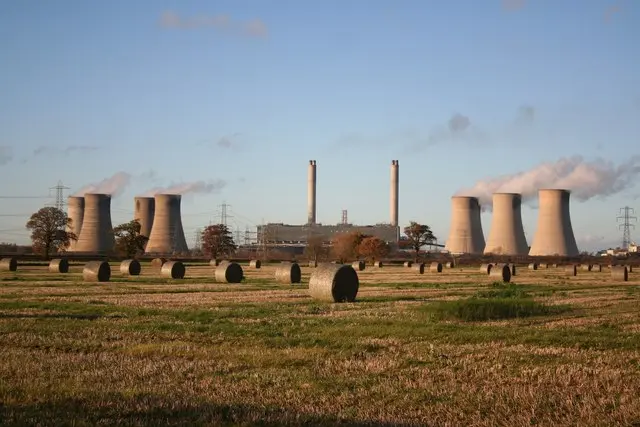
The difference reflects the demands of AI workloads. High-performance systems require dense clusters of advanced accelerators, stronger cooling systems, more sophisticated networking and facilities designed for consistent performance. They also need dependable electricity around the clock. A mining operation can potentially reduce or suspend activity when power prices rise or supply becomes constrained. An AI customer generally cannot treat the same interruption as a routine operating decision.
Alex Cordovil of Dell’Oro Group said delayed power can leave developers carrying costs without revenue. He also said successful AI infrastructure requires three elements: a customer, financing and available electricity. Those comments were the only outside assessment identified in the supplied material, and no opposing view was provided.
The contract backlog versus deployed capacity
The Loughton withdrawal also highlights the distance between announced AI agreements and operating revenue across the mining industry.
CoinShares has counted more than 4 gigawatts of AI capacity under contract across the miners it tracks, according to the CoinDesk report. Only about 550 megawatts was actually billing customers. The industry’s announced AI contract backlog exceeded $100 billion, while annualized AI revenue stood at just above $1 billion.
That contrast does not necessarily mean the contracts have no value. Some may represent future capacity, conditional commitments or projects still moving through design and construction. But it shows why the timing of power connections matters. A company can report a large pipeline while generating relatively little revenue if its sites are not yet ready to serve customers.
For Bitcoin miners attempting this transition, the financial risk is considerable. Building an AI facility requires capital before revenue begins, and a delayed connection can extend that period indefinitely. Equipment, land and development costs continue accumulating while the customer waits for usable capacity.
Britain’s grid queue
The problem is not limited to Nscale or to the mining industry. Ofgem said in its consultation that data center projects account for around 73 gigawatts of referenced grid connections. The regulator argued that non-viable or speculative applications are delaying projects that are ready to build.
That queue creates a fundamental challenge for Britain’s AI ambitions. Demand for data centers is rising as cloud providers and technology companies expand AI services, but grid capacity cannot necessarily be delivered on the same schedule as a commercial contract. A project may have land, a customer and financing plans, yet still be unable to operate without a firm electricity connection.
For Nscale, the immediate response is to search for another way to secure power for Loughton. That could preserve the site’s broader potential, but it does not remove the original problem. Alternative power arrangements must still be reliable enough for an enterprise cloud customer and affordable enough to support an expensive AI facility.
The episode is a reality check for the Bitcoin-mining industry’s transformation. Access to industrial property and electricity can provide a starting point, but AI infrastructure requires much more than repurposed mining capacity. The winners will need to prove that they can build at the required cost, obtain dependable power and operate systems that customers cannot afford to see go offline.
Until then, the sector’s most important measure will not be the size of its announced contract backlog. It will be how much AI capacity is connected, running and producing revenue.
- coindesk.com · Link preview (og:image)
- Richard Croft · CC BY-SA 2.0


Jessica Jones is not a person. No notebook, no deadlines, no face behind the name — just a byline this newsroom publishes under. Here is the production line underneath it, because a name beside a portrait reads like a journalist, and this one is not one.
The models. Writing: gpt-5.6-luna. Out on the live web: gpt-5.6-luna and gpt-5.6-terra. Pictures: gpt-image-1. Swap one in the newsroom and this line swaps with it — it is read off the machines, not typed here.
How a story is made
- Research. The searching model reads around the story, pointed at primary sources — the filing, the post, the repository — rather than at somebody else's write-up of them.
- Writing. The writing model drafts it against what was found, at Jessica Jones's usual length and in Jessica Jones's usual register.
- The loop. A reviewer reads the draft and sends it back with notes. Then reads it again. A piece can go round several times before it leaves the building.
- Enrichment. A quotation has to appear word for word on the page it is taken from. A chart may only use figures that appear in the source it cites. Whatever fails is dropped, and the reason is kept.
- Fact check. A last pass hunts for claims the article makes and its sources do not.
- A human stop. Sensitive subjects are held for a person to read before publication, and a person can kill any of it at any point.
If that sounds less like a newsroom and more like a factory: quite. It is called Press Factory.
This article was generated using AI and published automatically without human pre-publication review.
Read and checked by admin on 10/20/2026
How this article was made
The article was produced by the Grandmonts Media News Engine using automated research, drafting and verification workflows. No human editor reviewed the article before publication. Grandmonts Media remains responsible for the published content. Errors can be reported at office@grandmonts.cz.