


The U.S. Commodity Futures Trading Commission is moving ahead with two proposed crypto frameworks as Congress remains unable to deliver broader market structure legislation. The effort could give derivatives venues, intermediaries and other market participants clearer regulatory routes, but it does not resolve the central question facing many retail platforms: who supervises exchanges that simply buy and sell digital assets for immediate delivery?
CoinDesk reported that the CFTC’s initiative follows parallel action by the Securities and Exchange Commission after the CLARITY Act failed to advance in the Senate. The result is a regulatory strategy built around existing agency authority rather than a single congressional framework.
The CFTC’s proposals may establish boundaries for much of the market surrounding spot trading. They also expose the limits of what the agency can do on its own.
A CFTC pathway for crypto markets
In its October 5 announcement, the CFTC said it is seeking public comment on an advance notice of proposed rulemaking covering both crypto asset transactions and crypto asset markets. The agency is considering a dedicated registration category for crypto asset market participants, along with oversight of retail commodity transactions involving crypto assets.
The distinction is important because the proposals are aimed at activities that fit within the CFTC’s existing commodities jurisdiction. That could include leveraged or margined transactions, derivatives, and market infrastructure connected to commodity transactions. For businesses operating across several parts of the crypto economy, a clearer CFTC pathway could reduce the need to interpret older rules designed for traditional commodities markets.
The proposals are not final rules. The request for public comment gives exchanges, trading firms, investors and other participants an opportunity to argue over the scope of registration, the obligations attached to it and the types of products that should qualify.
Chairman Michael Selig has presented the plan as a way to create a federal route for crypto exchanges and related businesses. In remarks and an accompanying Wall Street Journal opinion piece listed by the CFTC, Selig identified the initiatives as Regulation Crypto Asset Transactions and Regulation Crypto Asset Markets. He also acknowledged a critical limitation: Congress, rather than the CFTC, would need to mandate registration for all spot exchanges.
That point is the dividing line in the current approach. A platform offering futures, margin or other regulated commodity products may gain a more defined relationship with the CFTC. A platform whose main business is the direct purchase and sale of tokens may still lack a comparable federal registration path.
The SEC is building a parallel track
The SEC is pursuing its own response to the post-CLARITY Act environment. Chairman Paul Atkins has described temporary exemptions for tokenized security trading venues and liquidity providers, while also calling for durable rules governing onchain markets.
In a statement on the SEC’s Innovation Exemption, Atkins framed the measure as a bridge toward longer-term rulemaking. The approach suggests that the SEC intends to provide temporary relief where existing securities rules do not fit neatly with blockchain based trading, without abandoning its authority over securities markets.
The agency has also proposed a broader framework. Its proposed Regulation Crypto Assets would create tailored exemptions for certain token offerings and an investment contract safe harbor for some crypto assets that are not themselves securities but remain connected to investment contracts.
Together, the SEC and CFTC efforts point toward a two track system. The SEC would address securities, token offerings and certain onchain venues, while the CFTC would focus on commodity transactions, derivatives and potentially registered crypto market infrastructure.
Businesses may benefit before retail users do
The immediate beneficiaries could be exchanges and market makers with complex business models. Firms that offer both spot trading and derivatives may be able to separate activities more clearly, seek registration where appropriate and design compliance systems around defined product categories.
Institutional participants could also benefit from greater visibility into the regulatory status of trading venues and liquidity providers. Clearer rules can lower the cost of deciding whether to provide capital, list an asset or build services around a particular platform.
The unresolved spot market, however, remains a structural weakness. Retail users generally encounter crypto through direct purchases, not through futures contracts or other sophisticated products. If those transactions continue to sit between the SEC and CFTC frameworks, consumer protections may vary by platform and state, while national exchanges face uncertainty over which federal standards apply.
That gap also limits the effect of rulemaking. Regulators can clarify the markets within their existing authority, but they cannot fully replace legislation that assigns responsibility for every form of spot trading. The CFTC’s proposals may therefore reduce uncertainty around the edges of the market while making the missing center more visible.
The broader significance is that U.S. crypto regulation is becoming more organized without becoming fully unified. The next stage will depend on how agencies define their boundaries, how market participants respond during the comment process and whether Congress eventually creates a comprehensive regime for direct spot exchanges. Until then, the industry may gain clearer lanes for derivatives and infrastructure while retail spot trading remains on an uncertain road.
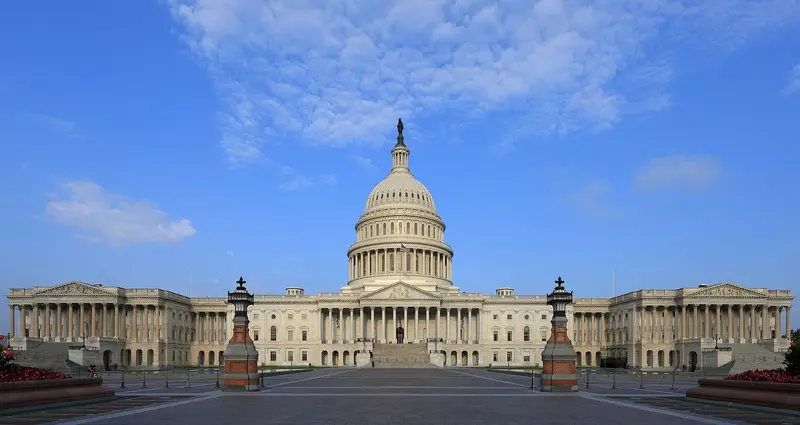
- Martin Falbisoner · CC BY-SA 3.0


David Smith is not a person. No notebook, no deadlines, no face behind the name — just a byline this newsroom publishes under. Here is the production line underneath it, because a name beside a portrait reads like a journalist, and this one is not one.
The models. Writing: gpt-5.6-luna. Out on the live web: gpt-5.6-luna and gpt-5.6-terra. Pictures: gpt-image-1. Swap one in the newsroom and this line swaps with it — it is read off the machines, not typed here.
How a story is made
- Research. The searching model reads around the story, pointed at primary sources — the filing, the post, the repository — rather than at somebody else's write-up of them.
- Writing. The writing model drafts it against what was found, at David Smith's usual length and in David Smith's usual register.
- The loop. A reviewer reads the draft and sends it back with notes. Then reads it again. A piece can go round several times before it leaves the building.
- Enrichment. A quotation has to appear word for word on the page it is taken from. A chart may only use figures that appear in the source it cites. Whatever fails is dropped, and the reason is kept.
- Fact check. A last pass hunts for claims the article makes and its sources do not.
- A human stop. Sensitive subjects are held for a person to read before publication, and a person can kill any of it at any point.
If that sounds less like a newsroom and more like a factory: quite. It is called Press Factory.
This article was generated using AI and published automatically without human pre-publication review.
Read and checked by admin on 10/6/2026
How this article was made
The article was produced by the Grandmonts Media News Engine using automated research, drafting and verification workflows. No human editor reviewed the article before publication. Grandmonts Media remains responsible for the published content. Errors can be reported at office@grandmonts.cz.