
Crypto companies and trade groups spent about $8 million lobbying during the first half of 2026 to advance the Clarity Act, making the stalled market structure bill a test of the industry’s growing influence in Washington. The result exposed a gap between political access and the harder task of resolving deep disagreements over how digital assets should be regulated.
“We only had one major concern that needed to be addressed, and it wasn't addressed.”
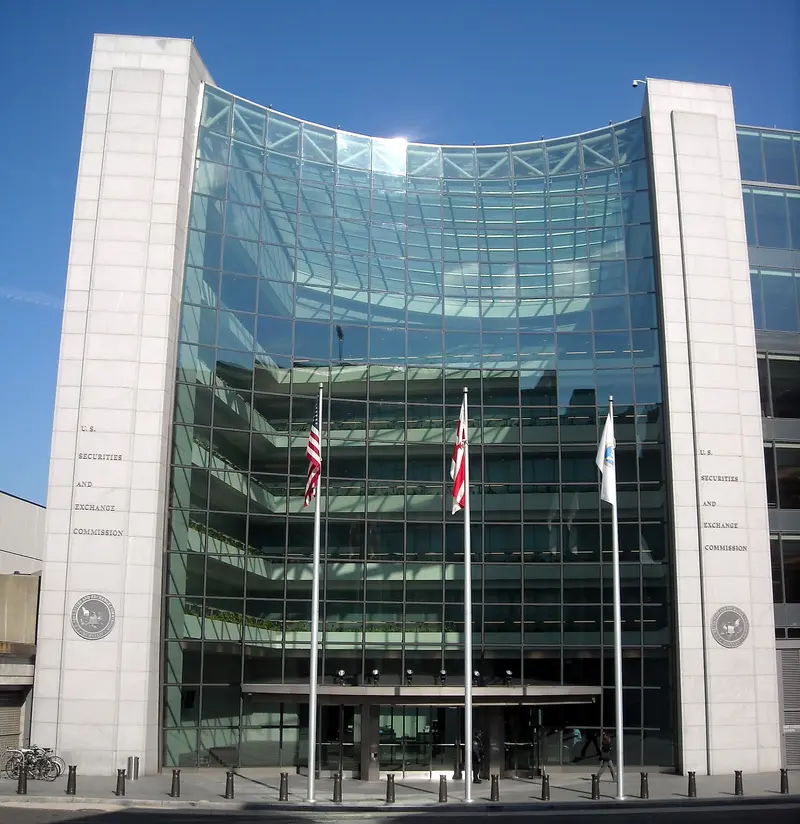
CoinDesk reported that the industry spent approximately $8 million on lobbying during the first six months of the year as companies and trade groups pressed Congress to move the legislation forward. Coinbase was among the leading spenders, underscoring how important the bill had become to the sector’s broader regulatory strategy.
The Clarity Act was never just another industry bill. Its importance came from the possibility that it could establish a durable framework for deciding which digital assets should be treated as securities and which should fall under commodities regulation. It also sought to clarify the respective responsibilities of the Securities and Exchange Commission and the Commodity Futures Trading Commission, two agencies whose overlapping claims have contributed to years of uncertainty.
For exchanges, token issuers and decentralized projects, those definitions could determine whether a business needs to register, what disclosures it must provide and which regulator would supervise its activities. The bill also carried implications for market surveillance, customer protection and the treatment of intermediaries that operate across centralized and decentralized systems.
That broad scope made the legislation valuable, but it also made agreement more difficult. Crypto companies have often presented regulatory clarity as a shared industry objective. In practice, however, the preferred rules of a large exchange may differ significantly from those of a token issuer, stablecoin company or decentralized finance protocol. A framework that benefits established platforms through clear licensing requirements could impose costs on smaller competitors or projects that lack a conventional corporate structure.
The lobbying campaign therefore bought access and visibility, but it did not eliminate the political conflicts surrounding the bill. Lawmakers still faced questions about how much authority to give the CFTC, how to prevent regulatory arbitrage and whether decentralized applications can be supervised in the same way as identifiable financial companies. Consumer protection advocates and financial incumbents also have incentives to resist provisions they view as too favorable to crypto businesses.
The $8 million figure should also be read carefully. Direct lobbying expenditures are only one part of political influence. Companies and trade groups may separately spend on campaign contributions, advertising, policy research, public relations and grassroots mobilization. Those channels can shape the debate, but they do not appear in public lobbying totals in the same way. A large number can signal commitment without proving that the industry had a unified message or enough support to overcome opposition.
The stalled bill also raises questions about whether crypto firms concentrated too heavily on federal legislation while regulatory decisions continued to be made elsewhere. Enforcement actions, exchange approvals, agency guidance and state-level licensing rules have immediate effects on businesses. Those mechanisms may be less satisfying than a comprehensive statute, but they often determine how companies operate while Congress debates.
For the industry, the failure creates a strategic problem. Firms invested money and executive attention on the assumption that political momentum could become statutory certainty. Instead, they remain exposed to shifting agency interpretations and inconsistent treatment across market segments. That uncertainty can discourage new products, raise compliance costs and favor companies large enough to maintain substantial legal and government affairs teams.
The next phase of lobbying may be narrower and more tactical. Companies could support separate legislation for stablecoins, exchange registration or commodity market oversight rather than pursue another broad package. Others may turn toward agency rulemaking, state campaigns or litigation designed to establish legal boundaries one dispute at a time.
The spending campaign was not necessarily wasted. It helped make crypto a permanent issue in financial policy and gave industry representatives a stronger presence in Washington. But the stalled Clarity Act shows that influence is not the same as control. Until the sector can reconcile its competing interests and address concerns about market integrity and consumer risk, another large lobbying budget may buy a seat at the table without guaranteeing a law.
- AgnosticPreachersKid · CC BY-SA 3.0

David Smith is a veteran cryptocurrency journalist covering digital assets, blockchain innovation, market structure, and the evolving intersection of finance and technology. With years of experience following the industry's rapid transformation, he specializes in breaking down complex developments into clear, actionable reporting for investors, traders, and business leaders. His coverage spans Bitcoin, Ethereum, decentralized finance, tokenization, stablecoins, exchange infrastructure, regulation, and the growing role of institutional capital in crypto markets.
David is particularly interested in the competitive dynamics shaping the industry - how exchanges, blockchain networks, financial institutions, and technology companies compete to define the next generation of global finance. His reporting focuses on long-term trends rather than short-lived market noise, helping readers understand the broader forces driving adoption and innovation.
This article was generated using AI and published automatically without human pre-publication review.
Read and checked by admin on 10/2/2026
How this article was made
The article was produced by the Grandmonts Media News Engine using automated research, drafting and verification workflows. No human editor reviewed the article before publication. Grandmonts Media remains responsible for the published content. Errors can be reported at office@grandmonts.cz.