
Bitcoin
Pompliano’s Crypto Purge: Why Bitcoin, Stablecoins and Tokenization May Be the Only Survivors


- Share
- Tweet /data/web/virtuals/383272/virtual/www/domains/theunhashed.com/wp-content/plugins/mvp-social-buttons/mvp-social-buttons.php on line 63
https://theunhashed.com/wp-content/uploads/2026/05/clown-1000x600.png&description=Pompliano’s Crypto Purge: Why Bitcoin, Stablecoins and Tokenization May Be the Only Survivors', 'pinterestShare', 'width=750,height=350'); return false;" title="Pin This Post">
Anthony Pompliano has never been shy about drawing hard lines in crypto, but his latest argument cuts deeper than the usual Bitcoin maximalist sermon. His message is not simply that Bitcoin will win. It is that most of the crypto industry has already lost. In his view, the future belongs to a narrow set of durable categories: Bitcoin, stablecoins, equity infrastructure and tokenization. Everything else, he suggests, risks becoming part of a “ridiculous clown show” of speculative tokens, ghost chains and narratives that no longer deserve serious capital.
That may sound brutal, but it lands at a moment when crypto is undergoing a major identity shift. The industry that once promised to replace Wall Street is now being absorbed, adapted and institutionalized by it. ETFs, stablecoin legislation, tokenized funds, brokerage integrations and bank custody products are becoming more important than anonymous founders launching yet another chain with a recycled white paper. Crypto is not disappearing. It is being sorted.
The End of the Everything-Rally Era
Pompliano’s thesis begins with a simple observation: the old crypto market rewarded too many things that did not matter. In previous cycles, liquidity could lift almost every corner of the sector. Bitcoin would run, Ethereum would follow, large-cap altcoins would move next, then speculative money would rotate into smaller tokens, gaming coins, DeFi forks, memecoins and increasingly obscure narratives.
That pattern trained investors to believe that survival was less important than timing. A token did not need users if it had a story. A protocol did not need revenue if it had a community. A blockchain did not need meaningful activity if it had a roadmap, a foundation treasury and exchange listings.
Pompliano is arguing that this era is ending. The next phase will not treat all crypto assets as variations of the same trade. It will separate monetary assets, payment rails, financial infrastructure and tokenized real-world assets from the thousands of projects that exist mainly as speculative inventory.
That is a painful message for a market built on optionality. Crypto’s long tail has always survived on the promise that the next breakout network could emerge from nowhere. But institutional capital is less romantic. It wants liquidity, legal clarity, custody, auditability, revenue and integration with existing markets. In that environment, the number of credible survivors shrinks fast.
Bitcoin as the Institutional Anchor
For Pompliano, Bitcoin remains the clearest survivor because it has the simplest institutional story. It is not trying to be an app platform, a gaming network, a decentralized cloud, a social graph or a tokenization layer. It is digital scarcity, secured by the largest proof-of-work network, with deep liquidity and an increasingly accepted role as a macro asset.
The arrival of spot Bitcoin ETFs changed the market structure around that thesis. Bitcoin is no longer only a crypto-native asset traded on crypto-native exchanges. It is now accessible through traditional brokerage accounts, retirement platforms and institutional portfolios. That does not make Bitcoin risk-free, but it does make it legible to the financial system.
This is where Pompliano’s argument becomes less ideological and more structural. Bitcoin does not need thousands of crypto projects to survive. In fact, the collapse of weak projects may strengthen Bitcoin’s relative position by making it look cleaner, simpler and more durable. When institutions look at the sector and see scams, dead chains and illiquid tokens, Bitcoin benefits from being the least complicated asset in the room.
The irony is that Bitcoin began as a rebellion against centralized financial power, yet its next wave of adoption is being driven by some of the largest firms in traditional finance. That contradiction may bother purists, but markets tend to reward distribution. If Wall Street wants a crypto asset it can package, custody, trade and explain to clients, Bitcoin is the obvious candidate.
Stablecoins as Crypto’s Killer App
If Bitcoin is the monetary anchor, stablecoins are the transactional engine. Pompliano’s inclusion of stablecoins among the survivors reflects a broader consensus that dollar-backed tokens have become one of crypto’s few undeniable product-market fits.
Stablecoins solve a real problem. They allow dollars to move across blockchain rails with speed, programmability and global availability. For traders, they are settlement instruments. For emerging-market users, they can function as digital dollars. For fintechs, they are payment infrastructure. For AI agents and automated commerce, they may become a machine-native payment layer.
This is why stablecoins are increasingly treated less like a crypto sideshow and more like a financial infrastructure category. Banks, payment companies and fintech platforms are watching the sector closely because stablecoins threaten to compress settlement times, reduce cross-border friction and create new competition around deposits and payments.
Pompliano’s point is that stablecoins do not need speculative mania to justify their existence. They are already used because they are useful. That separates them from many token projects whose main utility is being sold to the next buyer at a higher price.
The challenge for stablecoins is regulation. The more important they become, the more governments will insist on reserve transparency, issuer supervision, sanctions compliance and banking-style oversight. That may reduce the anarchic character of the sector, but it could also make stablecoins more trusted by institutions. In a market where survival depends on legitimacy, regulation may become a moat rather than a threat.
Equity Infrastructure and the Brokerage Convergence
One of the more interesting parts of Pompliano’s framework is his focus on equity infrastructure. This is not the usual retail crypto narrative. It points to a deeper convergence between crypto platforms and traditional brokerage systems.
Crypto exchanges are no longer content to list only tokens. They want equities, options, prediction markets, commodities and other financial products. At the same time, traditional brokerages are moving toward Bitcoin, tokenized assets and blockchain-based settlement. The boundary between a crypto exchange and a brokerage platform is becoming less clear.
This convergence matters because it changes what crypto companies are competing to become. The winning platforms may not be those with the most tokens listed, but those that become full-stack financial accounts. Users may want to hold Bitcoin, trade stocks, access tokenized funds, borrow against assets, move stablecoins and interact with 24/7 markets from one interface.
Pompliano’s argument suggests that the infrastructure behind this shift will survive because it serves a real financial function. Custody, compliance, liquidity routing, token issuance, settlement, brokerage connectivity and asset servicing are not glamorous, but they are essential. They are also the areas where institutional money is most likely to flow.
That is bad news for projects whose only product is a token. The future may belong less to protocols with loud communities and more to companies that quietly process transactions, connect markets and meet regulatory standards.
Tokenization: The Wall Street Version of Crypto
Tokenization may be the most important survivor category because it is the one traditional finance understands best. The idea is straightforward: represent real-world assets such as funds, bonds, equities, real estate or private credit on blockchain rails.
For years, tokenization sounded like a crypto conference slogan. Now it is becoming a boardroom strategy. Large asset managers, banks and custodians are exploring tokenized funds and on-chain settlement because the benefits are not purely ideological. Tokenization could improve transferability, reduce operational friction, enable faster settlement, expand collateral use and eventually make financial markets more programmable.
This is the version of crypto Wall Street can embrace without buying into the culture of memecoins, anonymous founders or governance chaos. Tokenization does not ask institutions to abandon the financial system. It offers them a way to upgrade parts of it.
Pompliano’s thesis fits this direction neatly. He is not saying every blockchain experiment is useless. He is saying the winners will be those that connect to assets, markets and problems that already matter. Tokenization survives because it can make legacy finance more efficient. That is a different proposition from asking investors to believe that every new token community is the start of a new economy.
The risk is that tokenization becomes crypto without crypto’s open spirit. If banks and asset managers build permissioned tokenized markets, the result may look less like decentralized finance and more like faster back-office plumbing. But from an adoption perspective, that may not matter. Infrastructure wins when it becomes boring.
The “Clown Show” Problem
Pompliano’s harshest criticism is aimed at the rest of the market: the speculative layer that keeps reinventing itself through new narratives. In one cycle, it is DeFi yield farms. In another, gaming tokens. Then metaverse land, algorithmic stablecoins, celebrity NFTs, AI coins, restaking derivatives, social tokens, memecoins and whatever label attracts liquidity next.
Not all experimentation is bad. Crypto’s open design has produced meaningful breakthroughs precisely because anyone can build and launch. But that openness also creates a low-quality flood. Every cycle produces thousands of assets that lack users, revenue, security, differentiation or a credible reason to exist.
The “clown show” criticism resonates because many participants know it is partly true. The industry has often rewarded theatricality over substance. It has confused attention with adoption and token price with product value. It has allowed insiders to extract liquidity from retail traders under the banner of decentralization.
This is why Pompliano’s argument is not just about asset selection. It is about crypto growing up. If the sector wants to be taken seriously as financial infrastructure, it cannot continue pretending that every token is a revolutionary asset. Some are experiments. Some are jokes. Some are outright predatory. Many are simply irrelevant.
Why Altcoin Defenders Will Push Back
Pompliano’s thesis will irritate many builders and investors outside Bitcoin. Some will argue that it ignores Ethereum’s role as the largest smart contract settlement layer. Others will point to DeFi protocols with real revenue, decentralized exchanges with meaningful volume, oracle networks, layer-2 scaling systems and infrastructure projects that do not fit neatly into his four categories.
That criticism is fair. The crypto market is not only Bitcoin, stablecoins, equity infrastructure and tokenization. There are serious teams building useful systems across decentralized finance, privacy, identity, data availability, interoperability and on-chain applications. Dismissing everything outside the institutional comfort zone risks overlooking where the next breakthrough could emerge.
But Pompliano’s argument is less about whether innovation exists and more about whether value accrues broadly. A technology can be useful without its token being a good investment. A protocol can be interesting without needing a multi-billion-dollar market cap. A chain can process transactions without becoming a durable monetary asset.
That distinction is becoming increasingly important. The next crypto cycle may not reward “good technology” automatically. It may reward assets and companies that capture cash flow, liquidity, regulatory acceptance and user trust. That is a much harder game.
Institutions Are Changing the Rules
The institutionalization of crypto is often described as a bullish development, and in many ways it is. More capital, better custody, regulated products and mainstream access can expand the market. But institutionalization also changes the rules of competition.
Retail-driven crypto markets are narrative-heavy. Institutional markets are infrastructure-heavy. Retail chases volatility. Institutions demand risk controls. Retail can rotate into a token because a chart looks explosive. Institutions need investment committees, compliance teams and custody approvals.
This shift favors Bitcoin, stablecoins and tokenization because they can be explained in traditional financial language. Bitcoin is a scarce macro asset. Stablecoins are payment and settlement instruments. Tokenization is market infrastructure. Equity infrastructure is brokerage modernization.
By contrast, many crypto assets still rely on circular logic. The token has value because the network may grow, and the network may grow because the token has value. That kind of reflexive story can work during speculative booms, but it becomes fragile when capital demands evidence.
Pompliano’s warning is therefore not only that weak crypto projects will die. It is that the market’s evaluation framework is changing. The question is no longer “Could this pump?” It is “What enduring role does this serve in the financial system?”
A Cleaner Industry, or a Smaller One?
There is a constructive interpretation of Pompliano’s view. If the weak projects fade, the industry may become healthier. Talent could move from speculative token launches to real infrastructure. Capital could concentrate around useful rails. Regulators could distinguish serious systems from casino-like behavior. Users could encounter fewer scams and more functional products.
A smaller crypto industry may be a stronger one.
But there is also a risk. If the market narrows too aggressively around institutionally acceptable categories, crypto could lose some of its experimental energy. Many important innovations began as weird, marginal or poorly understood ideas. A world where only Bitcoin, stablecoins and bank-friendly tokenization matter may be more legitimate, but also less open.
That tension defines the next era. Crypto wants mainstream adoption, but mainstream adoption comes with filters. It rewards compliance, scale and predictability. It punishes chaos. The same forces that bring in institutional capital may also squeeze out the wild experimentation that made crypto interesting in the first place.
The Strategic Takeaway for Investors
For investors, Pompliano’s argument is a warning against lazy diversification. Owning a basket of random tokens is not the same as owning the future of crypto. The market is maturing, and maturity usually means dispersion. Winners become larger. Losers become irrelevant. Liquidity concentrates. Narratives stop saving weak assets.
The key question is whether an asset belongs to a durable category. Does it have liquidity? Does it solve a real problem? Does it generate revenue or enable essential infrastructure? Does it benefit from regulation rather than depend on avoiding it? Can institutions use it? Can users understand why it exists without needing a 40-page thread?
Bitcoin, stablecoins, equity infrastructure and tokenization answer those questions more clearly than most of the market. That does not mean every company or token in those categories will win. It does mean those categories have a stronger claim on the future than speculative clones and narrative-driven assets.
Pompliano’s Bet Is Really About Discipline
Pompliano’s “clown show” comment will get attention because it is blunt. But the more important idea underneath it is discipline. Crypto has spent years expanding horizontally, creating more chains, more tokens, more bridges, more yield schemes and more narratives. The next phase may be vertical: deeper liquidity, better infrastructure, stronger regulation, larger institutional channels and fewer assets that matter.
That is not the death of crypto. It is the death of indiscriminate crypto.
If Pompliano is right, the industry’s future will look less like a thousand-token casino and more like a layered financial system. Bitcoin sits at the base as a scarce digital asset. Stablecoins move value across networks. Infrastructure firms connect crypto rails with brokerage and banking systems. Tokenization brings traditional assets on-chain. Around that core, plenty of experimentation will continue, but far less of it will deserve lasting market value.
The uncomfortable truth is that crypto may finally be reaching the point where survival depends on usefulness rather than belief. For an industry built on speculation, that is a brutal transition. For the parts of crypto that actually work, it may be the best thing that ever happened.















For years, Strategy trained the market to expect a familiar weekly ritual: sell securities, raise capital and convert the proceeds into more Bitcoin. Between July 6 and July 12, that machine continued to raise money—but the final step never happened. The company sold approximately 4.82 million shares of MSTR through its at-the-market program, generating $466.7 million in net proceeds, yet purchased no Bitcoin and sold none. Instead, Strategy increased its designated U.S. dollar reserve by $450 million, taking the balance to $3 billion.
The pause does not mean Strategy has abandoned Bitcoin. It still holds 843,775 BTC, acquired for an aggregate cost of roughly $63.69 billion at an average price of $75,476 per coin. No publicly listed company comes close to matching that exposure. But the decision to direct newly raised equity capital toward cash rather than additional Bitcoin illustrates how Strategy’s financial architecture is changing. The company is no longer managing only a giant crypto treasury. It is managing a layered capital structure filled with common stock, multiple preferred securities, debt obligations, dividend commitments and a Bitcoin reserve whose market value can move by billions of dollars in a single week.
That makes the zero-purchase week less of a non-event than it appears. Strategy raised almost half a billion dollars, diluted common shareholders and deliberately chose liquidity over accumulation. The question is no longer simply why Michael Saylor’s company did not buy Bitcoin. It is what the growing cash pile reveals about the risks and priorities behind the world’s largest corporate Bitcoin strategy.
The Headline Numbers
Strategy’s July 13 regulatory filing showed that the company sold 4,818,781 shares of Class A common stock between July 6 and July 12. The sales produced $466.7 million in net proceeds after commissions. The company did not issue any of its preferred securities during the period and did not repurchase common or preferred shares.
Its Bitcoin holdings remained unchanged at 843,775 BTC. The absence of a purchase is notable because Strategy has historically used proceeds from common-stock and preferred-stock issuance to expand its Bitcoin reserve. This time, the company directed most of the newly raised capital toward its U.S. dollar reserve, which increased from $2.55 billion on July 5 to $3 billion on July 12.
The $466.7 million raised and the $450 million reserve increase are not identical. Strategy did not provide a simple dollar-for-dollar reconciliation in the weekly update, and the reserve figure includes expected proceeds from ATM transactions that had not yet settled. The safest interpretation is that the company raised $466.7 million through the equity program while increasing the designated reserve by $450 million over the same reporting period.
Strategy also retained substantial fundraising capacity. After the latest sale, approximately $23.79 billion remained available under its MSTR at-the-market programs, alongside billions of dollars of unused capacity across its preferred-stock offerings. The company therefore has not run out of ways to raise money. It is choosing how to allocate that money under more difficult market conditions.
Why Strategy Is Building a $3 Billion Cash Fortress
Strategy’s dollar reserve is not simply idle corporate cash waiting for a better Bitcoin entry price. It is a management-designated liquidity pool intended to support dividend payments on the company’s preferred shares and interest payments on its outstanding debt.
That distinction is critical. Strategy has issued several preferred securities with different dividend structures, seniority and market characteristics. These instruments have allowed the company to attract capital from investors who may want Bitcoin-related exposure but prefer income-producing securities over the volatility of MSTR common stock. The trade-off is that preferred dividends create recurring cash obligations regardless of whether Bitcoin rises, falls or trades sideways.
Bitcoin does not generate operating cash flow. It can appreciate dramatically, but it does not automatically produce the dollars required to pay quarterly dividends or service debt. Strategy must obtain those dollars from its software business, capital-market transactions, existing liquidity or Bitcoin sales. A larger cash reserve reduces the possibility that the company will be forced to sell Bitcoin at an unfavorable price simply to meet scheduled obligations.
Strategy’s reserve policy requires management to maintain at least 12 months of expected preferred dividends and interest payments unless the board authorizes a lower amount. The company has also expressed an ambition to build coverage for 24 months or more. A $3 billion reserve moves it closer to operating with a substantial liquidity runway rather than continually depending on favorable access to equity markets.
This is not a retreat from the Bitcoin thesis. It is an attempt to protect that thesis from the company’s own financing structure.
The Capital Machine Has Become More Complicated
The original Strategy playbook was comparatively simple. The company raised money through debt or common-stock issuance, bought Bitcoin and benefited when the value of its holdings increased faster than the cost of capital. When MSTR traded at a large premium to the value of its Bitcoin, issuing new common shares could be particularly attractive. Strategy could sell expensive equity, purchase Bitcoin and potentially increase the amount of Bitcoin attributable to each diluted share.
The model became more complex as the company introduced a growing collection of preferred securities. These products expanded Strategy’s addressable investor base and provided new channels for raising capital, but they also created a larger stack of contractual and expected cash payments. Strategy increasingly resembles a Bitcoin-focused financial institution whose liabilities must be managed alongside its assets.
The $3 billion reserve is evidence that management recognizes this transformation. A company with recurring preferred dividends cannot behave exactly like a passive Bitcoin wallet. It needs liquidity planning, liability matching and contingency funding. The more securities Strategy issues, the more important those disciplines become.
This also explains why the absence of a Bitcoin purchase should not automatically be interpreted as bearishness. Management may believe that protecting the capital structure currently creates more value than adding a relatively small amount of Bitcoin to an already enormous position. At recent market prices, the $466.7 million raised would have purchased only a fraction of one percent of Strategy’s existing holdings. Directing the money to the reserve may have a greater effect on near-term financial resilience.
Common Shareholders Paid for the Buffer
The reserve did not appear without a cost. Strategy created and sold almost 4.82 million additional MSTR shares, increasing the number of claims on the company’s assets and future value. Existing common shareholders were diluted, yet the proceeds were not immediately converted into more Bitcoin.
That is a meaningful change from the transaction common investors have historically been encouraged to evaluate. When Strategy issues stock and buys Bitcoin on favorable terms, management can argue that the deal increases Bitcoin exposure per share or strengthens the company’s long-term Bitcoin position. When it issues stock to hold dollars, the benefit is defensive rather than directly accretive to Bitcoin holdings.
The dilution may still be economically rational. Cash that prevents a distressed Bitcoin sale, protects preferred dividends or reduces refinancing pressure can preserve value for common shareholders. The common stock sits below debt and preferred securities in the capital structure, so anything that improves the company’s ability to satisfy senior obligations can indirectly protect MSTR holders.
Nevertheless, the market will increasingly scrutinize the price at which Strategy issues common shares and the purpose of each capital raise. Selling stock when MSTR commands a substantial premium to its underlying assets is very different from selling it when that premium has narrowed. The less favorable the valuation, the harder it becomes to justify dilution unless the proceeds clearly improve the company’s financial position.
This week’s transaction therefore asks investors to accept a new proposition: sometimes the best use of freshly issued MSTR equity is not more Bitcoin, but a larger safety margin around the Bitcoin already owned.
The Pause Follows Actual Bitcoin Sales
The zero-purchase week did not occur in isolation. Strategy had recently sold Bitcoin, marking a major departure from the uncompromising accumulation narrative that defined the company for years. During the two preceding reporting periods, it sold a combined 3,588 BTC for approximately $216 million. Those sales were connected to preferred distributions and reserve management.
Strategy still owns more than 843,000 BTC, so the amount sold represented well under 1% of its holdings. The transactions were not a liquidation of the corporate Bitcoin strategy. They were, however, proof that the company now treats at least part of its Bitcoin reserve as a monetizable financial asset rather than an untouchable position.
The company has also established a Bitcoin monetization framework that allows management to sell BTC under specified conditions, including to support the dollar reserve. The existence of this program matters even when no coins are sold. It gives Strategy another liquidity source if capital markets become less receptive to MSTR or preferred-stock issuance.
This flexibility reduces the risk of missing payments, but it changes the investment narrative. Strategy is no longer operating under a simple “buy and never sell” principle. It is actively balancing Bitcoin ownership against the needs of a complex securities platform.
Why Zero Bitcoin Purchases Can Be Bullish
For some Bitcoin investors, any week without a Strategy purchase looks disappointing. The company has been one of the market’s most visible sources of institutional demand, and its announcements often reinforce confidence that large corporate buyers remain committed to accumulation.
Yet purchasing Bitcoin every week regardless of financing conditions would not necessarily be responsible. A disciplined treasury company should compare the expected value of an additional purchase with the cost of raising capital, the price of its securities, the strength of its liquidity reserve and the risk of future obligations.
By raising cash now, Strategy may improve its ability to avoid selling Bitcoin later. A stronger reserve can give the company time to wait through a prolonged downturn without relying on emergency financing. It can also support confidence in the preferred securities that have become central to its capital-raising strategy. If investors believe those dividends are protected by a substantial cash buffer, demand for Strategy’s credit-like products may recover, giving the company more efficient funding options in the future.
From that perspective, the $3 billion reserve is part of the Bitcoin strategy rather than an alternative to it. Liquidity strengthens Strategy’s capacity to remain a long-term holder during periods when the price of Bitcoin, MSTR and its preferred securities are all under pressure.
Why the Move Can Also Be Read as a Warning
The defensive interpretation has an uncomfortable side. Strategy would not need such a large reserve if its capital structure did not require significant recurring cash payments. The company has created a system that can accumulate Bitcoin rapidly in favorable markets but demands careful maintenance when conditions deteriorate.
Preferred securities can provide patient capital, but their dividends do not disappear when Bitcoin falls. Common-stock issuance can raise enormous sums, but it becomes more dilutive when MSTR’s valuation weakens. Selling Bitcoin can produce cash, but doing so during a downturn risks crystallizing losses and undermining the accumulation story that supports investor enthusiasm.
The reserve is therefore both a strength and a signal of pressure. It makes Strategy safer than it would be with minimal cash, while demonstrating that management sees liquidity risk as serious enough to justify almost half a billion dollars of common-stock issuance without a corresponding Bitcoin purchase.
Investors should also distinguish between solvency and market performance. A $3 billion reserve can help Strategy pay dividends and interest. It cannot prevent the market value of its Bitcoin from falling, guarantee that MSTR will trade at a premium or ensure that future equity issuance will be accretive.
Strategy Is Becoming a Bitcoin Bank
Strategy is often described as a leveraged Bitcoin proxy, but that label no longer captures the full business. It has created a collection of securities designed to transform Bitcoin exposure into products with different risk, income and volatility profiles. Common shareholders receive the most leveraged residual exposure. Preferred investors receive varying dividend structures. Debt holders occupy another position in the hierarchy. The dollar reserve links the system by providing liquidity for obligations that Bitcoin itself cannot directly satisfy.
In effect, Strategy is trying to construct a Bitcoin-backed capital-market platform without operating as a conventional bank. Its core asset is Bitcoin, its funding comes from public securities and its treasury team continuously decides whether the next dollar should purchase BTC, support dividends, repay obligations, repurchase securities or remain liquid.
That model can be powerful when Bitcoin appreciates and Strategy’s securities trade at attractive valuations. It can also become fragile when the asset falls and the cost of capital rises. The move to $3 billion in cash suggests management wants the company to survive both environments.
What Happens Next Matters More Than the Zero
One week without a Bitcoin purchase does not establish a permanent shift. Strategy may return to the market quickly if Bitcoin prices, MSTR’s valuation or financing conditions become more favorable. The company still has enormous ATM capacity and remains publicly committed to Bitcoin as its primary treasury asset.
The more important metric is the direction of capital allocation over several months. If Strategy continues selling common stock primarily to fund cash reserves and obligations, investors may begin viewing it less as an aggressive Bitcoin accumulator and more as a mature treasury platform focused on defending its balance sheet. If the reserve reaches management’s desired coverage level and new capital begins flowing back into Bitcoin, this period may look like a temporary fortification phase.
For now, the company’s message is clear even without saying it directly. Strategy did not fail to buy Bitcoin because it lacked access to money. It raised $466.7 million and chose not to buy.
That decision reveals a company prioritizing durability over spectacle. The weekly purchase announcement may have disappeared, but the capital machine is still running. It is simply being used to build a $3 billion wall around 843,775 Bitcoin.

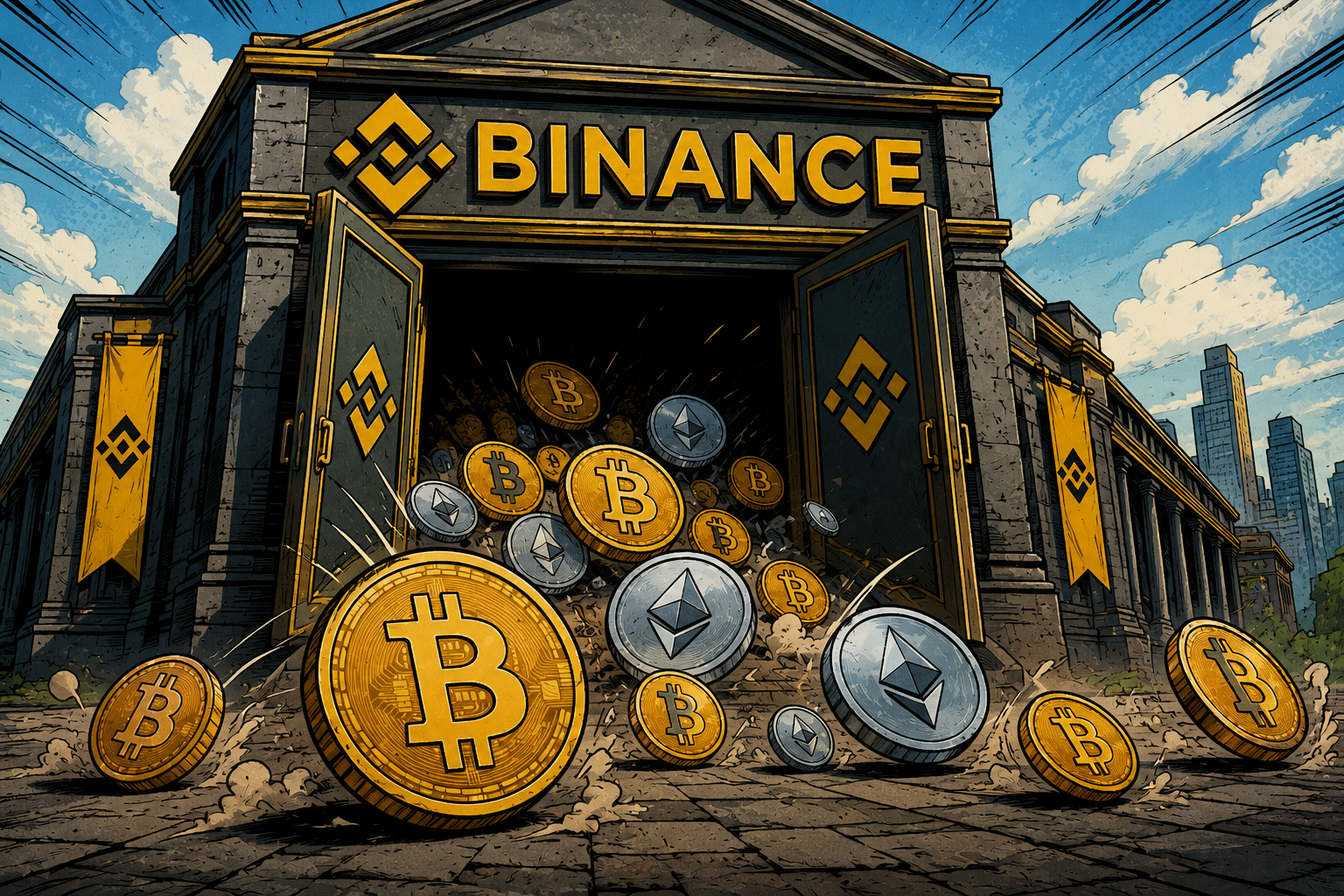
The crypto market rarely turns on a single signal, but some signals matter more than others. Right now, one of the most important is hiding in plain sight: Bitcoin and Ethereum are not piling onto exchanges. They are leaving them. At the same time, both assets have bounced sharply from recent lows, with Bitcoin recovering toward the mid-$60,000 range and Ethereum pushing back toward the upper-$1,000s. That combination does not guarantee a new bull market, but it changes the mechanics of the rebound. When fewer coins are sitting on exchanges ready to be sold, every wave of demand can hit a thinner order book. In crypto, thin supply can turn a normal rally into something much more violent.
The Exchange Supply Signal Is Flashing Again
According to Santiment data, Bitcoin’s supply on exchanges is sitting near its lowest level since 2017, while Ethereum’s exchange supply is near its lowest level since 2015. That is a remarkable backdrop for two assets that have just staged a meaningful rebound after months of pressure.
Exchange supply is one of the cleaner on-chain signals because it tracks where coins are positioned. Coins held on centralized exchanges are generally easier to sell quickly. Coins moved off exchanges are often going into cold storage, staking, custody, decentralized finance, or long-term holding arrangements. The signal is not perfect, because not every withdrawal is bullish and not every deposit means panic selling. Still, the direction matters.
When exchange balances fall for a sustained period, it suggests that the immediately available sell-side inventory is shrinking. In simple terms, fewer coins are sitting in the most convenient place to be dumped into the market. That does not mean selling pressure disappears. It means selling pressure has to work harder.
For Bitcoin and Ethereum, this matters because both assets trade as global liquidity instruments. They are not only held by retail traders. They are used by funds, market makers, treasuries, staking participants, ETF-linked entities, DeFi users and long-term allocators. When available supply tightens across that kind of market structure, the price response to fresh demand can become sharper than traders expect.
The Bounce Is Not Happening in a Vacuum
Bitcoin has rallied roughly 10% from its early July lows, while Ethereum has bounced even harder, with gains closer to the mid-teens at the strongest point of the move. This follows a rough stretch in which sentiment around major crypto assets had deteriorated, ETF flows had weakened, leverage had been flushed out, and traders had started to treat every bounce as temporary.
That kind of backdrop is important. Strong rallies after heavy drawdowns are often dismissed as relief moves, and sometimes that is exactly what they are. But when a relief rally happens while exchange supply is historically low, the market setup becomes more interesting.
A bounce from oversold levels can attract short-term traders. A historically low exchange balance can limit immediate sell-side liquidity. Together, those two forces can create the conditions for a squeeze.
That is the real story here. The move is not only about Bitcoin and Ethereum going up. It is about the market structure underneath the move. If traders are short, underexposed, or waiting for lower prices, a fast rally can force them to chase. If the exchange inventory is thin at the same time, the chase becomes more aggressive.
Why Thin Supply Changes the Game
Crypto rallies often accelerate because of reflexivity. Price moves higher, short positions get pressured, buyers regain confidence, momentum systems re-enter, and sidelined capital begins to fear missing the move. In a market with deep exchange supply, that demand can be absorbed more easily. Sellers show up, coins hit order books, and the rally cools.
But when exchange balances are low, there may be fewer coins immediately available to satisfy that demand. That does not remove resistance, but it can make resistance less predictable. Instead of meeting a wall of supply, buyers may find pockets of thin liquidity. The result can be sharp upside moves that look exaggerated in real time but make sense once liquidity conditions are considered.
This is especially relevant for Bitcoin. BTC has a fixed supply schedule, a large base of long-term holders and an increasingly institutional market structure. When coins move into cold storage or long-duration custody, the tradable float can tighten. In a bullish environment, that creates upside pressure. In a bearish environment, it can reduce the probability of disorderly exchange-led selling.
Ethereum has a different supply story but a similar liquidity implication. ETH is not only held as a speculative asset. It is used for staking, DeFi collateral, gas, treasury management and institutional exposure to programmable blockchain infrastructure. When ETH leaves exchanges, some of it may be moving into staking or other yield-bearing arrangements. That can reduce liquid availability, even if the total supply dynamics differ from Bitcoin’s.
Lower Exchange Balances Can Reduce Cascade Risk
One of the most destructive forces in crypto is the cascade. A cascade happens when falling prices trigger forced selling, liquidations, margin calls, stop-losses and panic deposits to exchanges. The process feeds on itself. Traders sell because price falls, and price falls because traders sell.
Low exchange supply can reduce some of that risk. If fewer coins are sitting on trading venues, there is less immediate inventory available for panic selling. That does not mean liquidations cannot happen. Derivatives can still drive violent moves, and leveraged traders can still be forced out. But a market with less spot supply parked on exchanges may be less vulnerable to the kind of instant spot-selling pressure that deepens crashes.
This is one reason the current setup is attracting attention. Bitcoin and Ethereum have already gone through a major reset. Prices fell, sentiment deteriorated, and weaker hands were shaken out. Now, with exchange supply still historically tight, the market may be less exposed to a fresh wave of easy selling than it was during previous speculative peaks.
That is a subtle but important distinction. A low exchange balance is not automatically bullish in isolation. But after a market has already absorbed heavy stress, it can become a stabilizing force.
Bitcoin’s Setup Looks Like a Supply Story
Bitcoin remains the cleaner scarcity narrative. Its supply curve is predictable, its issuance is fixed by protocol, and its investor base increasingly treats it as a long-duration macro asset. When BTC leaves exchanges, the message is straightforward: holders are not positioning those coins for immediate sale.
That matters because Bitcoin’s price is often driven by marginal supply and marginal demand. The total supply is large, but the amount actively available for sale at any given price can be much smaller. If long-term holders are reluctant to sell and exchange balances are low, new buyers have to bid more aggressively to unlock supply.
This is why Bitcoin can move so quickly when sentiment flips. The asset does not need every holder to become bullish. It only needs enough new demand to collide with a limited pool of available coins.
The current bounce suggests that buyers are stepping back in after a period of fear. Whether that becomes a durable trend depends on broader liquidity, ETF flows, macro conditions and risk appetite. But the supply setup gives the rally a stronger foundation than a purely technical bounce.
Ethereum’s Setup Is More Complex, But Potentially More Explosive
Ethereum’s low exchange supply is arguably even more interesting because ETH has more competing uses. Bitcoin is primarily held, traded and used as collateral. Ethereum is held, staked, spent, bridged, locked, wrapped and used across decentralized applications. That makes its liquid supply more dynamic.
When ETH leaves exchanges, it may be going into cold storage, staking contracts, institutional custody or DeFi strategies. Each destination has different implications, but many of them share one feature: they make ETH less instantly available for sale.
This can matter during a rebound because Ethereum tends to have higher beta than Bitcoin. When risk appetite improves, ETH often moves faster. When risk appetite collapses, it can fall harder. A low exchange balance can amplify that upside beta if demand returns quickly.
Ethereum’s recent bounce reflects that dynamic. ETH has outperformed Bitcoin during parts of the recovery, suggesting traders are starting to rotate back into higher-beta crypto exposure. If that rotation continues while exchange supply remains tight, Ethereum could remain more volatile on the upside than Bitcoin.
The Bear Case Has Not Disappeared
It would be a mistake to treat low exchange supply as a magic shield. Crypto markets can still fall. Macro conditions still matter. If liquidity tightens, if equities roll over, if ETF outflows accelerate, or if a major credit event hits risk assets, Bitcoin and Ethereum can come under renewed pressure.
There is also a more nuanced point: coins leaving exchanges do not always mean investors are confident. Some movements may reflect custody changes, institutional restructuring, staking behavior, wallet migration or exchange-specific risk management. On-chain signals require interpretation, not blind faith.
Derivatives markets also complicate the picture. Even with thin spot supply, high leverage can create sharp downside moves. If too many traders crowd into long positions after the bounce, the market can become vulnerable to a long squeeze. Low exchange supply may limit some forms of spot selling, but it does not eliminate leverage risk.
That is why the current setup should be read as constructive, not conclusive. It improves the odds of a stronger rebound, but it does not remove the need for confirmation.
What Traders Should Watch Next
The next phase depends on whether the bounce attracts real follow-through. Bitcoin needs to hold recovered levels and push through resistance with volume. Ethereum needs to prove that its outperformance is more than a short-term oversold reaction. Both assets need to avoid a sudden return of exchange inflows, which would suggest holders are preparing to sell into strength.
The most important signal may be whether coins continue leaving exchanges as prices rise. If exchange balances keep falling during a rally, that suggests holders are not eager to sell the bounce. That would strengthen the supply squeeze argument.
If, however, exchange balances begin rising sharply as prices recover, the interpretation changes. That would imply investors are using higher prices as exit liquidity. In that case, the bounce could stall.
For now, the data leans constructive. Bitcoin and Ethereum are recovering while their exchange supplies remain historically compressed. That is not a setup traders should ignore.
A Market Built for Squeezes
Crypto has always been a market of extremes. It overshoots on the way down, then overshoots on the way back up. What makes this moment notable is that the two largest crypto assets are bouncing at a time when available exchange supply is unusually thin.
That creates an asymmetric setup. If demand fades, the rally may simply cool. But if demand accelerates, the market may not have enough easy supply to absorb it smoothly. That is when squeezes happen.
Bitcoin’s near-record low exchange supply reinforces its scarcity story. Ethereum’s low exchange supply strengthens the case that liquid ETH is becoming harder to source when buyers return. Together, they suggest that the recent bounce is not just a price move. It is a liquidity event.
The market is not out of danger, but the tone has changed. After months of weakness, Bitcoin and Ethereum are showing signs of life at the exact moment when fewer coins are waiting on exchanges to be sold. In crypto, that can be enough to turn caution into momentum very quickly.

Bitcoin’s oldest philosophical fight is back, and this time it is not about block size. It is about what Bitcoin is allowed to be. A payment network? A settlement layer? A monetary base? Or a permanent storage system for tokens, images, inscriptions, metadata, and experiments that happen to fit inside valid transactions? The latest flashpoint is BIP-110, a controversial soft fork proposal that aims to restrict certain forms of arbitrary data on Bitcoin for one year. Luke Dashjr’s refusal to back away from the proposal has turned a technical specification into a governance test for the entire network.
The Proposal at the Center of the Fight
BIP-110 is formally titled the Reduced Data Temporary Softfork. Its purpose is straightforward but politically explosive: temporarily limit the size and structure of certain data fields at the consensus level. Supporters argue that Bitcoin has drifted too far toward becoming an expensive, permanent data storage layer. Critics argue that the proposal crosses a dangerous line by trying to define which valid transactions are socially acceptable.
The distinction matters. Bitcoin already has policy rules, which determine what many nodes relay by default. Those rules can discourage certain transaction types without making them invalid. Consensus rules are different. If a transaction violates consensus, it is not merely ignored by some nodes; it is invalid under the rules enforced by upgraded nodes. That is why BIP-110 is so contentious. It is not just a mempool filter. It is an attempt to temporarily move anti-spam restrictions into Bitcoin’s rulebook.
The proposal is designed as a temporary one-year intervention. It would apply only to UTXOs created after activation, while older UTXOs would be grandfathered. That detail is essential because it is meant to avoid freezing existing coins. The soft fork would also expire after roughly one year, allowing the network to return to unrestricted rules unless a longer-term solution is proposed and accepted.
Still, temporary does not mean trivial. In Bitcoin, even a one-year consensus change can reshape incentives, signal social priorities, and set precedent.
Dashjr’s Message: It Is Too Late to Cancel
The debate intensified after Dashjr rejected calls to withdraw BIP-110. Responding to arguments that Michael Saylor’s recent comments about Bitcoin’s slow-moving design philosophy supported abandoning the proposal, Dashjr pushed back. His point was that Saylor had not directly addressed BIP-110. More importantly, Dashjr said it was too late to cancel the proposal.
That statement is less about administrative procedure than political resolve. BIP-110 has become a proxy battle between two visions of Bitcoin. One vision says Bitcoin must defend its role as money even if that requires making some forms of data storage invalid. The other says Bitcoin’s neutrality depends on refusing to judge transaction intent, as long as users pay the fee and follow the rules.
Dashjr has long been associated with a strict interpretation of Bitcoin’s purpose. His Bitcoin Knots client has often taken a more aggressive stance toward filtering inscriptions and other data-heavy uses than Bitcoin Core. In that context, his support for BIP-110 is not surprising. What is new is the escalation from policy-level filtering toward a proposed consensus-level restriction.
That escalation is what has forced the wider Bitcoin community to pay attention.
Ordinals and Runes Are the Real Trigger
BIP-110 cannot be understood without Ordinals and Runes. Ordinals made it possible to associate data with individual satoshis, creating a market for inscriptions on Bitcoin. Runes extended the conversation by offering a Bitcoin-native way to etch, mint, and transfer fungible digital commodities through Bitcoin transactions.
To supporters, these protocols are creative uses of open block space. They generate fees, prove demand, and show that Bitcoin can support more than simple transfers without changing its base architecture. To critics, they are a misuse of a monetary network. They consume block space, increase data burdens on node operators, and turn Bitcoin into a settlement layer for speculative tokens and digital clutter.
The economic argument is deceptively simple. If someone pays the fee, why should their transaction be treated differently from any other transaction? Bitcoin’s block space is scarce. Fees allocate that scarcity. From this view, the fee market is the fairest possible judge.
BIP-110 supporters reject that framing. They argue that data storage and monetary settlement are not the same market. A payment pays miners once to confirm a transfer. Data storage imposes long-term costs on the broader network because nodes must download, verify, store, and serve blockchain data indefinitely. The miner receives the fee, but the network inherits the burden.
That is the core philosophical divide. One side sees fees as sufficient consent. The other sees fees as an incomplete price signal that does not compensate the full set of network participants.
Why Consensus-Level Filtering Is So Controversial
The reason BIP-110 feels bigger than a technical adjustment is that Bitcoin’s legitimacy rests on predictable, neutral validation. Once a transaction is valid under consensus rules, the network does not ask whether it is a payment, a token transfer, a message, a commitment, or a JPEG fragment. It only asks whether the cryptographic and structural rules have been followed.
Critics of BIP-110 worry that defining “spam” at the consensus level introduces subjectivity into a system designed to avoid it. Today’s target may be inscriptions and Runes. Tomorrow’s target could be another activity some faction dislikes. That slippery-slope argument is powerful in Bitcoin culture because Bitcoin’s value proposition depends on resisting discretionary control.
There are also technical objections. Restricting certain Taproot structures, witness data patterns, or script behavior could affect experimental protocols, wallet designs, Miniscript edge cases, or emerging systems such as BitVM. The BIP attempts to preserve known monetary use cases, but Bitcoin’s ecosystem is broad, and not every use case is visible to proposal authors. In a permissionless system, unknown use cases are part of the design surface.
Supporters counter that the proposal is narrow, temporary, and intentionally crafted to avoid normal payments. They argue that Bitcoin has always resisted arbitrary data embedding and that BIP-110 merely reasserts a long-standing norm at a moment when policy-level resistance may no longer be enough.
That disagreement is not easy to resolve because both sides can claim to be defending Bitcoin’s neutrality. One side defines neutrality as allowing any valid use. The other defines neutrality as preserving Bitcoin’s monetary function against use cases that impose external costs.
The Governance Test
BIP-110 also highlights how Bitcoin governance actually works. A BIP is not law. A completed specification is not activation. Developers can write code and publish proposals, but miners, businesses, node operators, wallet providers, exchanges, and users decide what software they run and what chain they treat as Bitcoin.
This is where the proposal becomes risky for its supporters. A soft fork can technically be backward-compatible, but it still requires broad social and economic support to be safe. If support is weak, activation can fail, or worse, create confusion around which rules the network is enforcing. Bitcoin’s immune system is not just code; it is the difficulty of achieving consensus for contentious changes.
BIP-110’s activation design uses a modified signaling process with a lower miner threshold than traditional BIP9 deployments. That design reflects the authors’ belief that the issue is urgent and temporary. But it also makes critics more nervous. Bitcoin has historically treated contentious consensus changes with extreme caution. Lowering the activation threshold, even for a temporary proposal, can look like an attempt to push through social disagreement with procedural machinery.
That perception matters. In Bitcoin, legitimacy is everything. A proposal that wins technically but loses socially can still fail in practice.
The Saylor Angle
Michael Saylor’s comments added fuel because he framed Bitcoin’s strength as its resistance to rapid change. His view is that Bitcoin should not behave like a technology company competing to add features. It should move slowly and preserve what already works.
That philosophy can be read in two ways. BIP-110 supporters can say it supports their position: Bitcoin should not become a data platform, and preserving its monetary purpose requires resisting feature creep. Critics can say it supports their position instead: Bitcoin should avoid rushed, contentious consensus changes and let the fee market handle competing uses.
Dashjr’s response was to separate Saylor’s broad statement from BIP-110 specifically. That was technically fair. Saylor did not directly endorse or reject the proposal in the remarks being debated. But the fact that both sides tried to claim the same philosophical ground shows how politically charged the issue has become.
This is not really about Saylor. It is about Bitcoin’s identity crisis.
The Fee Market Is Not a Complete Answer
The standard anti-BIP-110 argument is that block space should go to the highest bidder. That is clean, market-based, and consistent with Bitcoin’s preference for rules over discretion. But it does not fully address the long-term cost problem.
Bitcoin nodes are not paid by transaction fees. Miners are. If users stuff data into blocks, miners may benefit from higher fees, while archival and validating nodes bear the storage and bandwidth burden. In the short term, this may not seem dramatic. Over years, the concern is that permanent data growth raises the cost of running a node and weakens decentralization.
The counterargument is that block size is already limited, and all valid data inside blocks is part of Bitcoin’s history. If the chain grows too large, that is a cost of using Bitcoin, not a reason to police transaction intent. Moreover, trying to suppress data may only push users toward more obscure encoding methods. BIP-110 can make some forms of data storage harder and more expensive, but it cannot eliminate steganography. Bitcoin transactions can always carry meaning that the protocol itself does not understand.
That limitation is important. BIP-110 is not a magic spam-killer. It is a friction machine. Its goal is to make the most direct, obvious, and scalable forms of arbitrary data storage harder to use, while signaling that Bitcoin does not officially support that behavior.
Whether that signal is useful or dangerous is the heart of the debate.
Bitcoin’s Conservative Culture Faces a Hard Choice
Bitcoin’s conservatism is usually described as resistance to change. But BIP-110 shows that conservatism can point in opposite directions. A conservative can oppose BIP-110 because it changes consensus rules. A conservative can support BIP-110 because it defends Bitcoin’s original monetary mission. Both positions are internally coherent.
That is what makes this fight more serious than an ordinary developer argument. It exposes a tension Bitcoin has never fully resolved. Is Bitcoin neutral infrastructure whose only job is to validate rules and order transactions by fees? Or is Bitcoin specifically money, with all other uses tolerated only when they do not threaten that purpose?
For years, the debate remained mostly theoretical. Ordinals and Runes made it concrete. They created real fee demand, real user activity, and real irritation among people who believe Bitcoin’s block space should be reserved for monetary settlement. BIP-110 is the most aggressive attempt yet to turn that irritation into protocol change.
The Market Implications
For investors, BIP-110 matters even if they never read a line of code. Bitcoin’s value depends not only on scarcity but also on governance credibility. A network that cannot adapt may stagnate. A network that changes too easily may lose its neutrality premium. Bitcoin’s strength has always come from being hard to change, but not impossible to coordinate when the need is overwhelming.
If BIP-110 fails, it may reinforce the idea that Bitcoin’s social layer will not accept contentious restrictions on valid transaction types. That outcome would strengthen the “block space is neutral” camp and likely embolden builders of Bitcoin-native token and data protocols.
If BIP-110 gains traction, it would mark a major shift. It would show that enough of the network believes certain data-heavy activities are not merely annoying but structurally harmful. That could reshape the economics of Ordinals, Runes, and future Bitcoin-based metadata systems.
Either outcome will send a message.
The Bottom Line
BIP-110 is not just a spam proposal. It is a referendum on Bitcoin’s boundaries.
Dashjr’s support has pushed the debate into sharper focus because it forces the community to confront a difficult question: should Bitcoin defend monetary minimalism at the consensus layer, or should it remain indifferent to transaction purpose as long as fees are paid and rules are followed?
There is no clean answer. Restricting data may protect node operators, reduce incentives for blockchain bloat, and reinforce Bitcoin’s monetary identity. It may also introduce subjective judgment, weaken neutrality, and create precedent for future attempts to restrict unpopular uses.
That is why the fight is escalating. BIP-110 sits at the intersection of technical design, economic incentives, legal anxiety, cultural identity, and governance legitimacy. It is a reminder that Bitcoin’s hardest problems are not always cryptographic. Sometimes they are social.
Bitcoin was built to avoid trusted intermediaries, but it cannot avoid human disagreement. Every node enforces rules. Every miner chooses blocks. Every user decides what software to run. BIP-110 now asks whether Bitcoin’s community still agrees on what the rules are supposed to protect.
The answer will matter long after the spam fight fades.
-

 Cardano10 months ago
Cardano Breaks Ground in India: Trivolve Tech Launches Blockchain Forensic System on Mainnet
-

 Cardano8 months ago
Solana co‑founder publicly backs Cardano — signaling rare cross‑chain respect after 2025 chain‑split recovery
-

 Cardano10 months ago
Cardano Reboots: What the Foundation’s New Roadmap Means for the Blockchain Race
-

 News7 months ago
Crypto on Trial: The $5.5 Billion Pump.fun, Solana & RICO Lawsuit That Could Redefine On‑Chain Liability
-

 Altcoins7 months ago
Crypto Goes Mainstream — Bitwise 10 Crypto Index ETF (BITW) Debuts on NYSE Arca
-

 Altcoins7 months ago
Algorand’s 2027 Question: Can the Network Survive Without Foundation-Funded Rewards?
-

 News7 months ago
From Memes to Courtrooms: Solana and Jito Execs Named in Explosive RICO Suit Over Pump.fun
-

 Ethereum8 months ago
Ethereum Breaks TPS Record as Lighter Layer-2 Surges Past 24,000 Transactions per Second