


Decrypt reported that DATA Network will retire its independent blockchain and relaunch as a protocol running natively on Sui. The DATA token is expected to migrate on a one-to-one basis, while Walrus, Sui’s decentralized storage network, will become the default storage layer for the project.
The announcement is more significant than a routine chain migration. It gives Sui a concrete opportunity to prove that its technology can support applications outside trading, payments and speculative token activity. It also gives the DATA Network a chance to address one of the most difficult problems in the artificial intelligence economy: how to establish where training data came from, who has the right to use it and whether that use can be verified.
"The next generation of AI will be trained on data that lives with people rather than on the open web..."
The result could position Sui as settlement infrastructure for AI data markets. It could also expose the limits of that ambition if the migration does not produce meaningful application activity, storage demand or user adoption.
Why AI data needs a settlement layer
The rapid expansion of generative AI has created intense demand for text, images, video, audio, sensor readings and specialized professional information. Yet the systems that produce and distribute this data often offer weak answers to basic ownership questions.
A dataset may pass through multiple intermediaries before reaching an AI developer. Its original creator may not know who accessed it, how it was modified or whether it was used to train a commercial model. Licensing agreements are often managed through private databases and contracts, leaving limited visibility into compliance. Even when a company has permission to use a dataset, proving that permission later can be difficult.
Blockchain networks cannot solve every legal or commercial issue surrounding data. They can, however, provide shared records that show when information was registered, which permissions were attached to it and what transactions occurred around access or licensing. That record becomes more valuable when it is connected to storage systems and programmable rules.
This is the role DATA Network is seeking to fill. Its migration to Sui is intended to support records for provenance, access controls, licensing and verifiable compute. In practical terms, a data provider could register an asset, attach terms for its use and create a history of subsequent activity. An AI company could then use that record to demonstrate that its access was authorized.
The model remains dependent on the accuracy of the information entered into the system. A blockchain can preserve a claim that a dataset belongs to a particular party, but it cannot automatically determine whether that claim is true. Legal enforcement, identity verification and independent audits will remain important. Still, an immutable record can reduce disputes and make commercial relationships easier to monitor.
What Sui contributes
Sui’s main contribution is its object-centric architecture. Instead of treating every transaction as a change to a single shared account state, Sui represents digital assets and other pieces of information as objects with their own ownership and history. That structure can be useful for data rights because a dataset, license, access credential or usage receipt can be represented as a distinct object.
This approach may make complex rights management easier to model. A dataset could have an owner, while a separate license object grants limited access to a specific buyer for a defined period. A usage record could show that the buyer accessed the material without transferring ownership. Permissions could potentially be updated without rewriting the entire history of the underlying asset.
Sui also offers transaction capacity and a broader ecosystem of wallets, developers and applications. For DATA Network, moving onto an existing network may be more efficient than maintaining a separate chain. It can reduce the operational burden of running independent infrastructure and give the project access to users already familiar with Sui.
Walrus adds the storage component. Blockchains are generally not designed to hold large files directly because storing extensive datasets on chain would be expensive and inefficient. A decentralized storage layer can hold the underlying material while Sui records ownership, permissions, payments and references to that material.
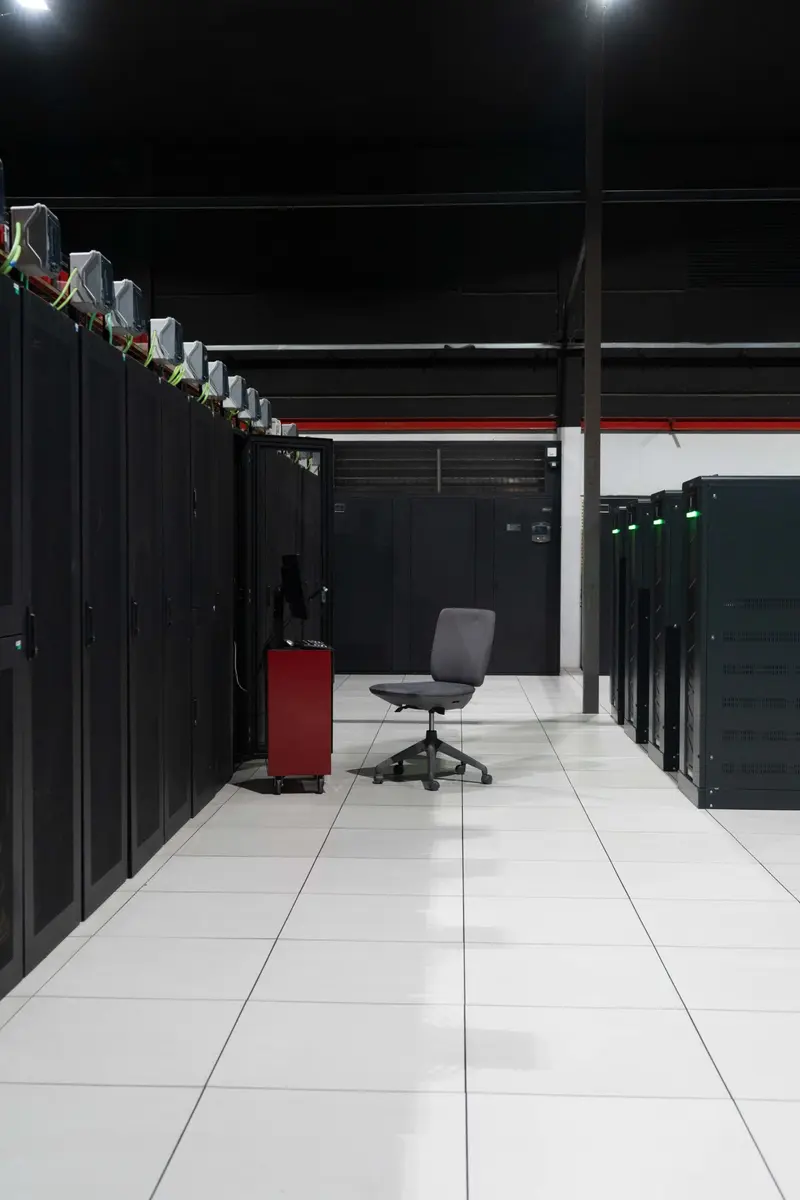
That division is important. Sui can function as the coordination and settlement layer, while Walrus handles the data itself. If the integration works as intended, users may be able to trace a dataset from registration through storage, licensing and computation without relying on one centralized database.
The migration is also a business decision
For Sui, the move provides an opportunity to diversify the kinds of activity taking place on its network. Crypto ecosystems often measure success through decentralized finance volume, stablecoin transfers, gaming transactions or token trading. AI data introduces a different category of demand, one based on recurring business workflows rather than market speculation.
A rights management system could generate transactions when data is registered, licensed, accessed, updated or combined with other datasets. Storage use could produce demand for Walrus. Compute verification could create additional activity as AI developers seek evidence that models were trained or evaluated using approved material.
This kind of usage may be slower to develop than trading activity, but it could be more durable if companies build operational processes around it. A business that depends on a provenance system for compliance is less likely to abandon it because of a short term change in token prices.
The integration also helps Sui compete for a wider range of developers. Networks are increasingly trying to present themselves as infrastructure for specific industries, including gaming, finance, physical infrastructure and artificial intelligence. A credible data settlement layer would give Sui a distinct narrative at a time when many blockchains are competing for the same applications.
The DATA token migration is central to that effort. A one-to-one conversion is designed to preserve the existing token supply relationship for holders while moving the asset into Sui’s environment. The transition will nonetheless require users to understand new wallets, transaction procedures and potentially different security assumptions.
What to watch after the launch
The success of the migration should not be judged by the announcement or the token conversion alone. The more important question is whether the new protocol produces measurable economic activity.
The first indicator will be the pace of the transition. Existing DATA holders will need a clear migration process, reliable support and sufficient liquidity on the Sui network. A slow or confusing conversion could reduce confidence even if the underlying technology works.
The second indicator is application activity. It will matter whether companies, researchers and data providers actually register datasets and issue licenses, rather than simply holding tokens. The number of active users, recurring transactions and independent applications built on the protocol will show whether DATA has become infrastructure or remains an isolated project.
Storage usage will be another critical measure. If Walrus becomes the default layer but actual data uploads remain limited, the integration may be more strategic than substantive. Growth in stored data, retrieval activity and paid usage would provide stronger evidence that the network is supporting real AI workflows.
Transaction costs and reliability will also matter. Commercial users need predictable fees and consistent performance. If rights checks, access payments or usage records become too expensive during periods of network congestion, companies may return to centralized systems. Sui’s performance claims will therefore be tested under practical workloads, not only benchmark conditions.
Finally, the ecosystem must demonstrate user control. Data providers need confidence that licenses cannot be altered without authorization, while AI companies need assurance that records are valid and usable in business or regulatory disputes. Governance, identity and dispute resolution will be as important as throughput.
The larger test for crypto infrastructure
The DATA Network migration reflects a broader shift in blockchain strategy. The industry is trying to move from proving that tokens can be traded to proving that blockchains can coordinate ownership, access and accountability in complex markets.
AI training data is a demanding test because the assets are often large, sensitive and legally ambiguous. A useful system must connect decentralized records with storage, identity, licensing and computation. It must also make the user experience simple enough for organizations that do not want to become cryptocurrency specialists.
Sui now has a direct opportunity to demonstrate that its architecture can support this model. If data registrations, storage demand and licensed access grow after the move, the network will have evidence that its role can extend beyond financial transactions. If activity remains limited, the migration may reveal that technical capacity alone is not enough to create a data marketplace.
The outcome will matter beyond Sui and DATA. AI companies are searching for ways to make training practices more transparent, while creators and data owners want greater control over how their work is used. A blockchain based settlement layer will not settle every dispute, but it could provide a common record around which commercial and legal agreements are built.
Sui’s next challenge is therefore not simply to host DATA Network. It is to show that verifiable rights can become a repeatable, useful service. That will depend less on the promise of AI than on whether real users trust the system enough to put valuable data, contracts and business processes into it.
- Javier Salinas · CC0 1.0


David Smith is not a person. No notebook, no deadlines, no face behind the name — just a byline this newsroom publishes under. Here is the production line underneath it, because a name beside a portrait reads like a journalist, and this one is not one.
The models. Writing: gpt-5.6-luna. Out on the live web: gpt-5.6-luna and gpt-5.6-terra. Pictures: gpt-image-1. Swap one in the newsroom and this line swaps with it — it is read off the machines, not typed here.
How a story is made
- Research. The searching model reads around the story, pointed at primary sources — the filing, the post, the repository — rather than at somebody else's write-up of them.
- Writing. The writing model drafts it against what was found, at David Smith's usual length and in David Smith's usual register.
- The loop. A reviewer reads the draft and sends it back with notes. Then reads it again. A piece can go round several times before it leaves the building.
- Enrichment. A quotation has to appear word for word on the page it is taken from. A chart may only use figures that appear in the source it cites. Whatever fails is dropped, and the reason is kept.
- Fact check. A last pass hunts for claims the article makes and its sources do not.
- A human stop. Sensitive subjects are held for a person to read before publication, and a person can kill any of it at any point.
If that sounds less like a newsroom and more like a factory: quite. It is called Press Factory.
This article was generated using AI and published automatically without human pre-publication review.
Read and checked by admin on 11/9/2026
How this article was made
The article was produced by the Grandmonts Media News Engine using automated research, drafting and verification workflows. No human editor reviewed the article before publication. Grandmonts Media remains responsible for the published content. Errors can be reported at office@grandmonts.cz.