

The policy question is becoming an infrastructure question
Stablecoins were once treated primarily as trading tools: dollar-pegged tokens that allowed crypto investors to move capital between exchanges without returning to the traditional banking system. That description is now incomplete. Stablecoins have become settlement instruments, collateral in decentralized finance, treasury assets for digital businesses and potential payment rails for companies operating across borders.
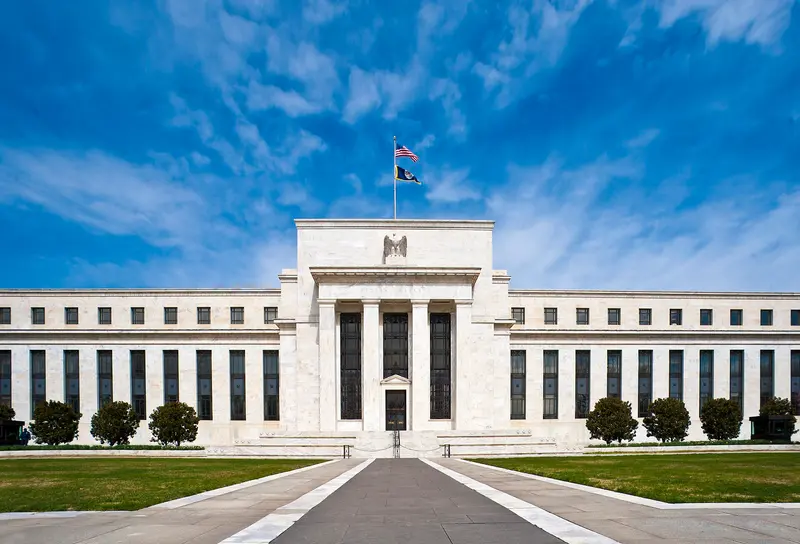
That expansion is changing the political and commercial stakes. The central question is no longer simply whether a token can maintain a one-dollar price. It is who controls the reserves behind it, who can issue it, what claims holders have when they seek redemption and which regulators are responsible for supervising the activity.
Those questions matter because stablecoin balances represent a form of private money. A token holder generally expects to exchange the asset for one U.S. dollar, either directly with the issuer or through a market. That expectation depends on the quality and liquidity of the issuer’s reserves. If reserves are transparent, conservative and readily available, the token can function as a reliable settlement asset. If reserves are opaque or difficult to liquidate, confidence can weaken quickly, creating the possibility of a run.
For lawmakers, the challenge is to establish standards without eliminating the innovation that has made stablecoins useful. For banks and payment companies, the debate is also an opportunity to compete for control of the digital-dollar infrastructure. The firms that secure issuance rights, custody relationships, compliance systems and distribution channels could capture value even if end users never think of themselves as using a blockchain.
Why reserves sit at the center of the debate
A stablecoin issuer receives dollars or dollar-like assets from customers and creates tokens in return. In principle, the issuer holds enough high-quality assets to honor redemptions. In practice, the economic model depends on the composition of those reserves, the speed at which they can be converted into cash and the issuer’s ability to process large redemption requests during periods of stress.
Regulatory proposals have therefore focused on reserve quality and disclosure. Policymakers have generally shown more interest in cash, central-bank deposits, Treasury bills and other highly liquid government-backed instruments than in volatile or difficult-to-value assets. The objective is straightforward: the reserve portfolio should not lose substantial value precisely when token holders are seeking their money back.
The distinction between market value and liquidity is important. A reserve can be technically valuable but still fail as a source of immediate payment if it cannot be sold quickly, if it is encumbered or if the issuer lacks access to appropriate banking channels. A stablecoin that promises near-instant redemption requires more than an accounting claim. It requires operational access to cash.
That requirement may favor large issuers and banks. Major financial institutions already have treasury operations, compliance departments, custody arrangements and access to payment networks. Crypto-native companies may have stronger distribution within digital-asset markets, but they could face higher costs if rules require extensive reporting, independent audits, capital controls or direct relationships with regulated financial institutions.
The reserve debate also determines where income accumulates. If an issuer holds billions of dollars in short-term government securities, the interest generated by those assets can become a significant source of revenue. This creates an incentive for banks, fintech companies and crypto firms to seek a role in issuance rather than merely provide wallets or payment interfaces.
Issuance rights could reshape competition
The most consequential regulatory choice may be whether stablecoin issuance is limited to banks and closely supervised financial institutions or opened to a wider group of licensed companies.
A bank-centered model would bring stablecoins closer to existing deposit and payment regulation. Banks could issue tokens through their established balance sheets and compliance frameworks, while regulators could apply familiar standards concerning risk management, liquidity and consumer protection. The arrangement might reduce concerns about runs and illicit finance, but it could also limit competition and slow product development.
A broader licensing model would permit qualified nonbank companies to issue stablecoins if they satisfy reserve, disclosure and redemption requirements. That approach could preserve competition between crypto-native firms, payment companies and banks. It would also recognize that issuing a fully reserved digital token is not identical to traditional fractional-reserve lending.
The distinction is economically significant. A stablecoin issuer generally does not need to lend against customer funds to provide value. Its business may instead depend on issuing tokens, investing reserves conservatively and collecting income from those assets, while charging fees for institutional services or redemption. That model resembles a payments utility more than a conventional lender.
Yet the public may treat the token as money regardless of the legal structure. Holders may assume that a dollar token is as safe and accessible as a bank deposit, even if it lacks deposit insurance or the same legal protections. Rules will need to clarify whether the token represents a direct claim on the issuer, a claim on segregated reserves or an asset whose value depends on secondary-market liquidity.
The answer will influence customer behavior and institutional adoption. Corporations are unlikely to hold large operating balances in an instrument whose redemption rights are ambiguous. Payment firms may hesitate to route merchant transactions through a token if legal liability is unclear. Banks may participate more aggressively if a federal framework establishes consistent standards across states and reduces the risk that each transaction is treated differently under securities, money-transmission or banking rules.
The Federal Reserve’s role extends beyond supervision
The Federal Reserve is central to the debate because stablecoins intersect with monetary policy, bank supervision, payment systems and financial stability. Even when the Fed is not the direct licensing authority for every issuer, its decisions can determine which institutions gain access to banking services and how stablecoin activity interacts with the regulated financial system.
The Federal Reserve has long viewed privately issued digital money through the lens of safety, settlement and confidence. A widely used stablecoin could increase demand for dollar-denominated assets and make cross-border settlement more efficient. It could also accelerate the movement of funds during a crisis, particularly if users can transfer tokens around the clock across public blockchains.
That speed creates both benefits and risks. Traditional bank transfers may be constrained by operating hours, intermediaries and jurisdictional boundaries. A blockchain-based token can move continuously, with transaction records visible on a public network. But the same efficiency could allow a loss of confidence to spread faster. If holders can convert tokens into bank deposits or fiat currency at high speed, a redemption wave could put pressure on reserve assets and banking partners.
The Fed has also been attentive to the relationship between stablecoins and deposits. If households and businesses shift money from bank accounts into wallets holding stablecoins, banks could lose a source of relatively stable funding. That would not necessarily make stablecoins unsafe, but it could change how banks finance loans and manage liquidity.
The impact would depend on the scale and use of the tokens. Stablecoins held mainly inside crypto markets may have a different effect from tokens used for payroll, merchant settlement or corporate treasury operations. Regulation may therefore need to distinguish between products designed for trading and those integrated into mainstream payments.
Public blockchains are the distribution layer
Stablecoin legislation is often discussed as if issuance were the entire business. In reality, value can accumulate at several layers: reserve management, token creation, custody, wallets, exchanges, transaction processing and blockchain settlement.
Public blockchains provide the distribution layer. They allow stablecoins to move without requiring every participant to maintain a bilateral relationship with the issuer. That interoperability is one of the main reasons stablecoins have spread through decentralized finance and crypto trading. A token can be used as collateral, transferred between platforms and embedded in smart contracts.
For payment companies, the attraction is different. A stablecoin can reduce the number of intermediaries involved in cross-border settlement, particularly where traditional correspondent banking is slow or expensive. A merchant may not care which blockchain carries the transaction, but it may care about receiving a dollar-denominated asset quickly and converting it into local currency at a predictable cost.
This is where regulation can affect network competition. Rules that permit stablecoins only on approved platforms could push activity toward closed systems controlled by banks or large payment networks. Rules that allow issuers to use multiple public blockchains could encourage competition among networks based on transaction costs, reliability, compliance tools and liquidity.
The result may be a split market. Regulated institutions could issue stablecoins that serve corporate and consumer payments, while crypto-native tokens remain dominant in trading and decentralized finance. Alternatively, one or two large issuers could become common across both markets, creating a highly liquid digital-dollar standard that operates on several chains.
Interoperability will be especially important. If each bank or payment firm creates a separate token that cannot easily move between platforms, the market may reproduce the fragmentation of traditional payment systems. If tokens are broadly compatible, capital can flow more efficiently but regulators may have less control over how assets move after issuance.
Compliance costs will determine who survives
Stablecoin regulation will not affect all issuers equally. Reserve standards are only one part of the cost structure. Companies may also need systems for customer identification, sanctions screening, transaction monitoring, suspicious-activity reporting, cybersecurity, consumer disclosures and operational resilience.
Large institutions can spread those costs across substantial transaction volumes. Smaller issuers may struggle to do so, even if their reserve management is sound. This creates a familiar trade-off in financial regulation: higher standards can protect users, but compliance burdens can reduce the number of competitors.
Concentration may be particularly significant because stablecoins benefit from network effects. Users prefer the token that is accepted by the most exchanges, wallets, merchants and decentralized applications. Once a stablecoin becomes a common unit of account, competitors must offer a clear advantage to persuade users to switch.
A concentrated market could improve liquidity and simplify compliance. It could also create single points of failure. If many payment systems rely on one issuer, a technical outage, reserve question or regulatory action could disrupt activity across the digital-asset economy.
Banks face their own barriers. They may have the balance sheets and compliance resources to enter the market, but they also operate under stricter risk controls and may be cautious about connecting their brands to public blockchain activity. Some may prefer to provide custody, settlement or reserve services to specialist issuers rather than issue tokens directly.
This division could produce a layered market in which crypto companies own customer relationships while banks control the regulated infrastructure. Such an arrangement would allow traditional finance to participate in stablecoins without immediately replacing crypto-native distribution channels.
Redemption rights are the test of trust
The practical measure of a stablecoin is what happens when a holder wants dollars. A token can trade near one dollar for months, but the credibility of that peg is ultimately tested by redemption.
Rules may need to address whether all holders can redeem directly or only approved customers, how quickly redemption must occur, what fees may be charged and whether the issuer can suspend withdrawals under specified conditions. They may also require clear disclosures about the assets backing the token and the legal status of customer claims.
Secondary-market liquidity complicates the issue. Many users buy and sell stablecoins through exchanges rather than directly with issuers. If the market price falls below one dollar, arbitrage traders may purchase the token and redeem it, helping restore the peg. But that mechanism works only when redemption is reliable and market participants trust the issuer.
Transparency can support that trust, though disclosures must be understandable and timely. A lengthy report that arrives after a reserve problem has emerged is less useful than frequent information about reserve composition, custody and outstanding tokens. Independent verification may provide additional assurance, but it does not eliminate the need for strong governance and operational controls.
Consumer protection also extends to mistaken transfers and fraud. Blockchain transactions are often irreversible, and users may send tokens to the wrong address or interact with malicious contracts. Regulation will need to clarify how issuers, wallets and payment intermediaries share responsibility without undermining the settlement finality that makes blockchains efficient.
The dollar’s global reach is part of the calculation
Stablecoins could strengthen the dollar’s role in digital commerce by making dollar settlement available to users who lack direct access to U.S. banking infrastructure. Businesses in countries with unstable currencies may use dollar tokens as a store of value or a means of international payment. Global freelancers, exporters and online merchants may use them to reduce delays and fees.
That prospect is strategically attractive, but it raises questions about capital flows and local monetary systems. Large-scale stablecoin use could increase demand for dollar assets while weakening demand for domestic currencies in some markets. Foreign regulators may respond with restrictions, licensing requirements or limits on how stablecoins can be used for payments.
The U.S. framework will therefore influence international competition. If regulation provides clear rules while preserving open blockchain access, dollar stablecoins may gain adoption as neutral settlement instruments. If requirements are so restrictive that issuers cannot serve global users efficiently, foreign alternatives and privately issued non-dollar tokens may gain room to expand.
The dollar advantage is not automatic. It depends on confidence in reserves, access to redemption and the cost of moving tokens across borders. Regulatory clarity can support all three, but it cannot substitute for sound operations or functioning payment channels.
What capital is signaling
The renewed focus on stablecoins is a signal that investors and financial institutions are looking beyond speculative token exposure toward recurring infrastructure revenue. Reserve income, custody fees, payment processing, compliance services and blockchain settlement all offer ways to participate in digital assets without relying solely on price appreciation.
That capital is likely to favor firms able to combine regulatory credibility with distribution. A bank may have trust and access to payment systems but lack a strong crypto user base. A crypto company may have liquidity and technical expertise but need a regulated partner. Payment firms may sit between the two, controlling merchant relationships while outsourcing issuance or reserve management.
The final rules will determine how those advantages are combined. A permissive framework could create a competitive market of licensed issuers operating across several blockchains. A restrictive framework could make stablecoins an extension of a small group of banks and payment networks. A fragmented framework could leave the market dependent on state-by-state licensing and reduce the efficiency that makes digital settlement attractive.
For users, the distinction may appear abstract. They may simply see a digital dollar in a wallet or checkout screen. For the financial system, however, the difference is substantial. Stablecoin rules will decide who receives reserve income, who bears redemption risk, which networks process transactions and how easily money can move between crypto markets and the banking system.
The debate has therefore moved beyond the question of whether stablecoins are legitimate. Their usefulness is already visible in trading, settlement and cross-border transfers. The harder question is what institutional structure will govern their growth.
If lawmakers establish clear reserve, disclosure and redemption standards while allowing meaningful competition, stablecoins could become a connective layer between public blockchains and traditional finance. If rules favor incumbents too heavily, the technology may still spread, but much of its economic value could accrue to the institutions already controlling money movement.
The policy outcome will not be measured only by the number of approved issuers. It will be measured by where liquidity settles, how many intermediaries stand between users and dollars, and whether public blockchains remain open rails or become merely back-end infrastructure for regulated financial firms.
Sources:
U.S. Congress, legislative records: https://www.congress.gov/
Federal Reserve, financial and payments policy materials: https://www.federalreserve.gov/
CoinDesk, policy coverage: https://www.coindesk.com/policy/
- Federalreserve · Public domain
Ethan Brooks is not a person. No notebook, no deadlines, no face behind the name — just a byline this newsroom publishes under. Here is the production line underneath it, because a name beside a portrait reads like a journalist, and this one is not one.
The models. Writing: gpt-5.6-luna. Out on the live web: gpt-5.6-luna and gpt-5.6-terra. Pictures: gpt-image-1. Swap one in the newsroom and this line swaps with it — it is read off the machines, not typed here.
How a story is made
- Research. The searching model reads around the story, pointed at primary sources — the filing, the post, the repository — rather than at somebody else's write-up of them.
- Writing. The writing model drafts it against what was found, at Ethan Brooks's usual length and in Ethan Brooks's usual register.
- The loop. A reviewer reads the draft and sends it back with notes. Then reads it again. A piece can go round several times before it leaves the building.
- Enrichment. A quotation has to appear word for word on the page it is taken from. A chart may only use figures that appear in the source it cites. Whatever fails is dropped, and the reason is kept.
- Fact check. A last pass hunts for claims the article makes and its sources do not.
- A human stop. Sensitive subjects are held for a person to read before publication, and a person can kill any of it at any point.
If that sounds less like a newsroom and more like a factory: quite. It is called Press Factory.
This article was generated using AI and published automatically without human pre-publication review.
Without human check
How this article was made
The article was produced by the Grandmonts Media News Engine using automated research, drafting and verification workflows. No human editor reviewed the article before publication. Grandmonts Media remains responsible for the published content. Errors can be reported at office@grandmonts.cz.