

Stablecoins occupy a distinctive position in financial markets. They are crypto-native instruments, but their economic purpose is usually tied to conventional money. A user does not generally acquire a dollar-pegged token to speculate on whether it will rise in value. The attraction is that the token can move around the clock, settle across borders, interact with blockchain-based applications and remain close to the value of a dollar.
That combination has made stablecoins one of the main channels through which capital passes between the banking system and digital-asset markets. Traders use them as collateral and as a substitute for bank transfers on exchanges. Businesses use them to move funds across jurisdictions. Some institutions are testing them for treasury operations, foreign-exchange settlement and programmable payments. Remittance companies and fintech firms see a potential way to reduce the cost and time involved in sending money internationally.
The policy debate is therefore no longer limited to whether crypto companies should be allowed to issue private digital tokens. It is increasingly about who will control the pipes through which digital dollars circulate, what assets will support those tokens, and whether stablecoin issuers should be treated more like technology companies, payment firms or banks.
The answer could redirect billions of dollars in liquidity and determine which institutions capture the next stage of digital payments.
The reserve question is also a liquidity question
A stablecoin’s credibility begins with its reserves. If holders believe they can exchange tokens for dollars at or near face value, the token can function as money inside a digital network. If that belief weakens, holders have an incentive to redeem quickly, creating pressure on the issuer and potentially on the assets backing the coin.
Regulation is expected to focus on the quality, liquidity and segregation of those reserves. The most conservative framework would require issuers to hold cash, central-bank balances or short-term government securities against the tokens in circulation. Other approaches could permit a wider group of assets, including bank deposits or high-quality commercial paper, subject to limits.
The distinction matters because reserves are not passive collateral. They are a pool of capital that can generate income, absorb redemptions and connect stablecoin issuers to short-term funding markets. An issuer with a large token base and a reserve portfolio concentrated in Treasury bills can become a meaningful buyer of government debt. If stablecoin balances grow substantially, issuers could become a new source of demand for short-duration public borrowing.
That capital flow has two sides. Stablecoin demand for Treasury bills could deepen the market for highly liquid government securities, particularly if issuers are required to maintain reserves in instruments that can be sold quickly. It could also create a new channel through which global users hold indirect exposure to dollar assets without opening a traditional U.S. bank account.
But a rapid expansion would raise questions about concentration and redemption. If users collectively exchange tokens for dollars during a period of market stress, an issuer may need to sell reserve assets at the same time other investors are seeking liquidity. Rules requiring daily or frequent reporting, asset segregation and clear redemption procedures are intended to reduce that risk.
The debate is consequently not just about whether reserves exist. It is about whether they can be accessed when confidence breaks, who has priority over them, and how quickly a token holder can convert digital claims into bank money.
Redemption rights determine whether a token behaves like money
Stablecoins can resemble money in daily use, but their legal treatment may be closer to a claim on an issuer. That distinction becomes critical during stress.
A strong regulatory framework would define who can redeem, at what price, within what time period and under which operational conditions. It could also require issuers to disclose fees, settlement delays and circumstances in which redemptions may be suspended. The more direct and predictable the redemption mechanism, the more likely users are to treat the token as a reliable payment instrument rather than a tradable crypto asset.
Retail users may assume that a token marked as worth one dollar can always be exchanged for one dollar. In practice, access to direct redemption can vary. Some issuers serve institutional customers directly while retail holders rely on exchanges or intermediaries. During market turbulence, a token can trade above or below its reference value even when the underlying reserve assets have not materially changed.
Regulators are likely to focus on closing that gap between perceived and legal rights. If a stablecoin is marketed as a digital dollar, consumers may expect protections similar to those attached to bank deposits or regulated payment accounts. Yet extending deposit-like protections without imposing bank-like obligations could create an uneven market.
This is where the design of legislation becomes economically important. A token that offers fast, low-cost transfers but limited redemption rights may remain useful for trading and wholesale settlement. A token with enforceable one-to-one redemption and strong disclosures could move more naturally into payroll, merchant payments and remittances.
The difference will influence where liquidity accumulates. Users prefer instruments that can be moved easily, but businesses prefer instruments whose value and legal status are predictable. Stablecoins that satisfy both requirements could draw payment flows away from traditional correspondent banking networks.
Issuer supervision will shape the competitive landscape
The proposed regulatory models generally sit between two poles. One would allow specialized nonbank issuers to operate under a dedicated payments framework. The other would place stablecoin issuance largely within the banking system, subjecting issuers to prudential supervision, capital requirements and potentially access restrictions.
Banks have an obvious interest in the outcome. They already hold deposits, provide payment rails and manage short-term liquidity. Stablecoins could complement those activities by giving banks a programmable settlement layer. They could also compete directly with deposits if customers begin holding digital tokens for payments instead of keeping balances in bank accounts.
Nonbank issuers argue that stablecoins are not conventional lending institutions. If their reserves are fully backed and segregated, they say, the main risks involve custody, technology, operational resilience and redemption rather than credit creation. A specialized license could allow them to scale payments without bearing the full cost of bank regulation.
Banks counter that scale changes the risk profile. A large issuer with millions of users can become systemically important even if it does not make loans. Its reserve management, cybersecurity and transaction-processing systems could affect markets well beyond the crypto sector. Banks also warn that allowing nonbanks to issue money-like claims without comparable oversight could encourage regulatory arbitrage.
The regulatory decision will affect which firms can issue stablecoins, but it will also determine who captures the associated revenue. Issuers earn income on reserves. Banks earn from deposits, payment services and foreign-exchange transactions. Card networks earn network fees. Technology companies can use stablecoins to embed payments inside software platforms.
A permissive framework may encourage rapid innovation and attract capital to specialized issuers. A bank-centered framework may produce fewer but more heavily supervised tokens. Neither structure guarantees adoption. The key issue is whether the resulting instruments are trusted and usable enough to support sustained payment activity.
Stablecoins could change the economics of cross-border transfers
The strongest early use case for stablecoins is not necessarily the purchase of coffee. It is the movement of money across borders.
Traditional international payments can involve multiple banks, messaging systems, settlement accounts and currency conversions. Each intermediary may add cost or delay. Stablecoins can reduce some of those steps by allowing value to move on a shared blockchain network. A remittance provider can acquire tokens, transfer them to a local partner and convert them into local currency without relying on the same sequence of correspondent-bank relationships.
That does not eliminate the need for local banking infrastructure. Recipients generally still need a way to convert tokens into domestic currency or spend them with merchants. Compliance screening, foreign-exchange risk and consumer protection remain significant. But stablecoins can shorten the path between the sender’s funds and the recipient’s payment provider.
The economic impact will vary by market. In countries with expensive remittance channels or unstable banking systems, a dollar-linked token may be attractive because it offers access to a relatively stable unit of account. In markets with efficient domestic payments, the benefit may depend more on lower costs for international commerce and corporate treasury operations.
Regulation could either support or constrain that growth. Clear licensing rules may allow remittance firms, payment processors and banks to integrate stablecoins into existing services. Uncertain requirements could push activity toward offshore platforms, where users face weaker protections and regulators have less visibility into flows.
This creates a policy tension. Strict controls can reduce consumer and financial-crime risks, but rules that are too difficult for legitimate firms to meet may not eliminate demand. They may simply move transactions into less transparent channels.
Payments adoption will depend on more than blockchain speed
Stablecoin advocates often emphasize instant or near-instant settlement. That is important, but speed alone does not create a payment network. Merchants need predictable conversion into local currency, customers need dispute mechanisms and businesses need accounting, tax and compliance tools.
The next phase of adoption will depend on the infrastructure built around the tokens. Payment processors must connect blockchains to bank accounts and card networks. Wallet providers need secure recovery and fraud controls. Businesses require software that can reconcile on-chain transactions with invoices and financial statements. Regulators need ways to identify suspicious activity without making every payment operationally burdensome.
Programmability could provide a meaningful advantage. A company could use a smart contract to release payment when goods arrive, distribute funds among suppliers or automate recurring transfers. Financial institutions could use stablecoins as collateral that moves between trading venues without waiting for traditional settlement windows.
Yet programmability also introduces new risks. Code can contain vulnerabilities. A transaction sent to the wrong address may be difficult or impossible to reverse. Automated systems can propagate errors quickly. If stablecoins become embedded in commercial software, a failure in a wallet provider, blockchain network or application could interrupt payments at scale.
Legislation that focuses only on the issuer may leave these operational issues unresolved. A token can be fully reserved and still be unsafe to use if wallets, exchanges or payment processors are poorly governed. The broader regulatory perimeter will therefore matter as much as the rules applied to the entity creating the coin.
Banks and card networks face different kinds of pressure
Stablecoins are unlikely to replace banks or card networks immediately. They may instead alter the economics of the services those institutions provide.
For banks, the central concern is deposit migration. If customers move funds from checking accounts into stablecoins, banks could lose a low-cost source of funding. That could affect lending economics, particularly for smaller institutions that depend heavily on deposits. On the other hand, banks may issue their own stablecoins, custody reserves, operate blockchain settlement systems or provide conversion services.
Large banks with substantial compliance infrastructure may be well positioned in a regulated market. Smaller banks could find the technology and reporting requirements expensive unless they rely on specialized providers. The result could be greater concentration in payments, even if regulation is intended to promote competition.
Card networks face a different challenge. Their value comes from authorization, fraud management, merchant acceptance and consumer trust. Stablecoins do not automatically provide those services. However, they could allow merchants and payment companies to settle behind the scenes using blockchain-based dollars, reducing dependence on existing card rails for some transactions.
The most likely outcome is a layered system. Cards may remain dominant for consumer purchases that require rewards, chargebacks and familiar interfaces. Stablecoins may gain ground in business-to-business payments, global commerce, remittances and digital platforms. Over time, the boundary between the two systems could become less visible to users.
Monetary sovereignty is becoming part of the debate
Dollar stablecoins have global reach, which makes their regulation relevant beyond the jurisdiction where an issuer is based. In countries with weaker currencies, residents may use dollar-linked tokens as a savings instrument or medium of exchange. That can provide individuals with a hedge against inflation, but it can also reduce demand for local currency and complicate monetary policy.
Governments are therefore balancing inclusion against sovereignty. A stablecoin may improve access to digital payments and dollar liquidity while increasing the risk of currency substitution. If domestic payments increasingly settle in a foreign-linked token, local authorities may have less control over money supply, capital flows and financial conditions.
Other countries are responding by developing their own frameworks for fiat-backed tokens, central-bank digital currencies or regulated digital payment accounts. The result may be a fragmented market in which the same stablecoin faces different reserve, licensing and data requirements across jurisdictions.
Global interoperability will be difficult. A token approved in one market may not qualify as a permitted payment instrument in another. Rules on wallet identification, transaction monitoring, taxation and consumer protections may differ. Issuers could be forced to create separate products for separate regions, reducing the network effects that make digital payments attractive.
For users and businesses, legal certainty may matter more than technical uniformity. They need to know whether a token can be held, transferred and redeemed in the jurisdictions where they operate. Without that clarity, capital will remain concentrated in trading and offshore settlement rather than moving into regulated commerce.
The decisive test will be trust under stress
Stablecoin legislation can accelerate adoption, but regulation alone cannot create demand. Users will adopt these instruments at scale when they believe the tokens can be redeemed, transferred and accounted for during both normal conditions and periods of financial stress.
That requires more than reserve attestations. It requires transparent reporting, credible supervision, operational resilience and a clear legal claim for holders. It also requires a framework that distinguishes between fully backed payment tokens, interest-bearing products and more complex algorithmic designs.
The capital-flow implications are substantial. If stablecoins become trusted settlement assets, they could attract liquidity from bank accounts, money-market funds, remittance channels and corporate payment balances. Issuers would become important holders of short-term government debt. Banks and payment companies would compete to provide the surrounding infrastructure. Blockchain networks that offer reliable settlement could gain activity even if users never think of themselves as crypto investors.
If lawmakers produce rules that are inconsistent, difficult to enforce or unclear about redemption, adoption may remain concentrated in exchanges and offshore markets. Stablecoins would continue to serve as the connective tissue of crypto trading, but their role in mainstream payments would develop more slowly.
The central question is therefore not whether stablecoins will exist. They already do. It is whether regulators can define a trusted form of digital money without creating a new source of run risk, weakening consumer protections or allowing private payment networks to outgrow public oversight.
The answer will determine where digital-dollar liquidity settles next: inside traditional banks, across specialized payment issuers, through global technology platforms or among a fragmented mix of all three.
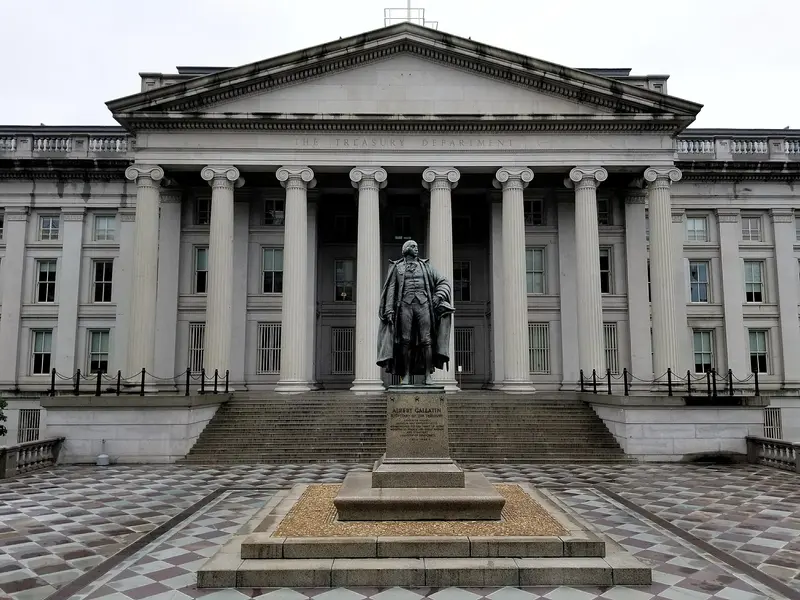
- Sealy j · CC BY-SA 4.0
Ethan Brooks is not a person. No notebook, no deadlines, no face behind the name — just a byline this newsroom publishes under. Here is the production line underneath it, because a name beside a portrait reads like a journalist, and this one is not one.
The models. Writing: gpt-5.6-luna. Out on the live web: gpt-5.6-luna and gpt-5.6-terra. Pictures: gpt-image-1. Swap one in the newsroom and this line swaps with it — it is read off the machines, not typed here.
How a story is made
- Research. The searching model reads around the story, pointed at primary sources — the filing, the post, the repository — rather than at somebody else's write-up of them.
- Writing. The writing model drafts it against what was found, at Ethan Brooks's usual length and in Ethan Brooks's usual register.
- The loop. A reviewer reads the draft and sends it back with notes. Then reads it again. A piece can go round several times before it leaves the building.
- Enrichment. A quotation has to appear word for word on the page it is taken from. A chart may only use figures that appear in the source it cites. Whatever fails is dropped, and the reason is kept.
- Fact check. A last pass hunts for claims the article makes and its sources do not.
- A human stop. Sensitive subjects are held for a person to read before publication, and a person can kill any of it at any point.
If that sounds less like a newsroom and more like a factory: quite. It is called Press Factory.
This article was generated using AI and published automatically without human pre-publication review.
Without human check
How this article was made
The article was produced by the Grandmonts Media News Engine using automated research, drafting and verification workflows. No human editor reviewed the article before publication. Grandmonts Media remains responsible for the published content. Errors can be reported at office@grandmonts.cz.