

The central question is no longer whether stablecoins have a use case. They already function as settlement assets across crypto exchanges, decentralized finance protocols, remittance channels and increasingly international commerce. The harder question is who should be allowed to issue them, what assets should stand behind them, how quickly holders can redeem them and which authorities should supervise the companies controlling the money.
That debate has moved from the margins of digital-asset policy into the broader architecture of payments. Stablecoin balances represent a pool of dollar-linked liquidity that can move at any hour, across borders and between counterparties that may never share a bank. The larger that pool becomes, the more closely it resembles a payments system, and the more regulators worry about runs, illicit finance, consumer losses and the migration of deposits away from banks.
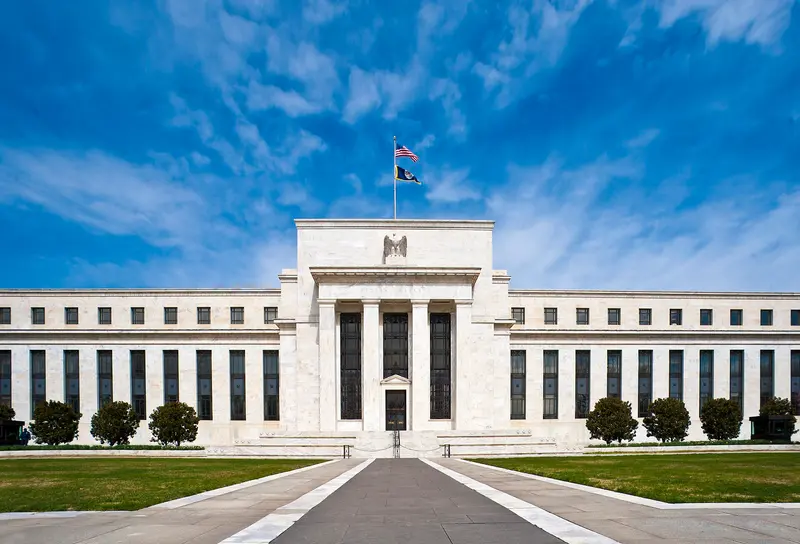
Lawmakers in Congress and regulators including the Federal Reserve, the Treasury Department, the Office of the Comptroller of the Currency and state banking authorities have approached the issue from different angles. Their proposals and public statements generally converge on several requirements: high-quality reserves, clear redemption rights, disclosures, anti-money-laundering controls and defined supervision. They diverge over who should issue stablecoins and whether nonbanks should be permitted to compete directly with banks in dollar payments.
For investors, the regulatory details matter because they determine where capital can legally settle. A rule that makes a token safer but more expensive to issue could favor the largest firms. A rule that permits broad nonbank issuance could accelerate adoption while creating new links between money-market instruments, bank deposits and digital wallets. A fragmented framework could instead push users and liquidity toward offshore platforms.
The reserve question is also a liquidity question
A stablecoin issuer typically promises that each token can be redeemed for one dollar, or for an equivalent amount of fiat currency. That promise is credible only if the issuer holds assets that can be converted into cash when users demand redemption.
The composition of those reserves is therefore more important than the token’s branding. Cash held at a bank, short-term Treasury securities and certain government money-market instruments are generally viewed as more liquid and less volatile than corporate debt, longer-duration bonds, loans or investments in other digital assets. A regulator that requires conservative reserves is trying to prevent a mismatch between the assets an issuer owns and the liabilities it owes to tokenholders.
The mismatch becomes dangerous during stress. If holders believe an issuer may not be able to redeem tokens, they have an incentive to exit before other users. The resulting redemptions can force the issuer to sell assets quickly, potentially at unfavorable prices. What begins as a confidence problem can become a liquidity event.
This is why stablecoin oversight is closely connected to the market for Treasury bills and other short-term instruments. Issuers that hold large reserve portfolios are already important buyers of government debt. As token supply expands, their purchases can become a meaningful source of demand for short-dated Treasuries. That could lower funding costs for the U.S. government at the margin, but it also means that a stablecoin run could transmit selling pressure into the money markets.
The Federal Reserve has repeatedly emphasized the importance of understanding stablecoins as part of the financial system rather than as isolated crypto products. Its concerns include the potential for privately issued digital dollars to grow rapidly without the safeguards applied to banks or other payment institutions. The central bank has also focused on the effects of stablecoins on bank deposits, payment competition and financial stability.
From a capital-flow perspective, the reserve rule will determine whether stablecoin growth represents new demand for dollar assets or merely a shift in ownership. If users move money from bank deposits into tokenized dollars, banks could lose a source of low-cost funding. If users bring cash from outside the banking system into regulated stablecoins backed by Treasuries, issuers could become a new distribution channel for dollar liquidity.
Redemption rights will define the quality of the dollar peg
A stablecoin’s headline price is less important than the path a holder must follow to receive cash. Institutional users may redeem directly with an issuer, while retail users often transact through exchanges, brokers or wallets. In practice, the ability to redeem at par can depend on fees, minimum transaction sizes, banking relationships, operating hours and compliance checks.
Regulators are likely to focus on whether the redemption promise is legally enforceable and operationally realistic. A token that is technically backed by cash but cannot be redeemed promptly during a market disruption may not provide the same economic protection as a regulated deposit or money-market fund.
Rules could require issuers to publish reserve reports, undergo independent examinations and disclose the assets supporting circulation. They could also establish segregation requirements, ensuring that reserve assets are held for tokenholders rather than exposed to the issuer’s general creditors. Those protections would matter if an issuer failed or entered bankruptcy.
The design of redemption rules will create winners and losers. Large issuers with direct access to banks, Treasury markets and institutional custody networks may be able to offer rapid redemptions at low cost. Smaller issuers could face higher compliance and liquidity expenses, even if their technology is competitive. Exchanges and payment companies may also seek direct issuance licenses to reduce reliance on external stablecoin providers.
That dynamic could lead to consolidation. Regulation often improves confidence in a financial product while raising the fixed cost of participating in the market. If audits, reserve monitoring, cybersecurity controls and compliance systems require substantial investment, the stablecoin sector may increasingly resemble banking or card payments: competitive at the consumer interface, but concentrated at the infrastructure layer.
Banks and fintech companies are competing for the same dollar flows
The political debate is partly a debate over institutional privilege. Banks already operate under capital, liquidity, reporting and supervision requirements. They also have access to payment networks and, in some cases, central-bank facilities. Nonbank stablecoin issuers argue that they can provide faster and cheaper digital payments without becoming full-service banks.
Banks, by contrast, warn that allowing nonbanks to issue widely used dollar tokens could create a shadow deposit system. A stablecoin may not pay interest to users, but it can still attract money that would otherwise remain in checking accounts or short-term bank products. If the tokens become a common way to hold transaction balances, banks may need to pay more for deposits or rely more heavily on wholesale funding.
This competition is particularly important in a higher-rate environment. When short-term Treasury yields are attractive, the income earned on reserve assets can be substantial. Depending on the legal structure, an issuer may retain some or all of that income rather than pass it to tokenholders. The reserve yield can become a major source of revenue, giving issuers an incentive to expand circulation.
That business model also creates an important policy tension. A stablecoin issuer can appear to operate like a payments company while earning economics associated with asset management. Regulators must decide whether those earnings justify additional consumer protections, whether reserve income should be shared with users and how much risk an issuer may take to improve returns.
The answer could determine whether stablecoins remain primarily transactional instruments or become savings products. If holders receive no yield, tokens may circulate mainly when they are useful for trading and payments. If issuers or platforms distribute returns, stablecoins could compete more directly with deposits and money-market funds, increasing both their adoption and their regulatory burden.
Compliance is becoming part of the product
Stablecoin transfers are recorded on public blockchains, but transparency does not automatically equal compliance. Issuers must identify customers in relevant transactions, screen addresses linked to sanctions or illicit activity and respond to law-enforcement requests. They also need controls covering fraud, market manipulation, cyberattacks and the use of intermediaries.
These obligations create a trade-off between openness and control. A token that can move freely between self-custodied wallets is efficient for global settlement, but it is harder to monitor than a closed payment network. A token restricted to verified accounts may satisfy regulators more easily, but it could lose some of the composability that made stablecoins valuable in decentralized finance.
The compliance question also affects liquidity fragmentation. If different issuers use different standards for identity verification, transaction monitoring or wallet restrictions, users may face a patchwork of tokens that are not equally acceptable on exchanges, lending platforms or payment networks. A regulated token could trade at a premium because institutions trust its controls, while an offshore token may offer broader access but face restrictions from banks and U.S.-based platforms.
The industry’s capital flows will reflect those differences. Institutional money tends to move toward assets with predictable legal status, reliable custody and clear exit routes. Retail and crypto-native capital may tolerate more operational uncertainty in exchange for faster access, broader geographic coverage or lower fees. Regulation will not eliminate that divide, but it can make one side of the market substantially larger.
Offshore issuance remains the pressure valve
A strict domestic framework does not eliminate demand for digital dollars. It can redirect that demand. Users outside the United States may continue to seek dollar-denominated assets for savings, trade and remittances even when local currencies are unstable or banking systems are expensive. Offshore issuers and foreign exchanges are positioned to serve that demand if U.S. rules make domestic products less available.
This is the core argument against an overly restrictive approach. If compliant firms cannot offer dollar tokens at competitive cost, users may choose products with weaker disclosures, less transparent reserves or limited legal recourse. Capital would still move into digital dollars, but the issuers and jurisdictions capturing the business would be harder for U.S. authorities to supervise.
The opposing argument is that access without safeguards can amplify risk. A token used across multiple jurisdictions may expose users to the issuer’s reserve practices, the laws of its incorporation and the stability of the intermediaries handling redemptions. During a crisis, domestic authorities could face pressure to protect users even if they had limited authority over the issuer.
Global coordination will therefore matter. European rules, international standards for digital assets and national approaches in major financial centers may determine whether stablecoins can operate across borders without duplicative licensing. The United States will want to preserve the dollar’s role in digital commerce, but it must balance that objective against concerns over sanctions, capital controls and financial stability.
The next phase will be measured in payment volume, not headlines
The most useful indicators of stablecoin adoption are not token prices. They are circulation, settlement volume, redemption activity, reserve composition, exchange balances and the number of merchants, institutions and protocols accepting the tokens.
A rise in supply can indicate new capital entering the ecosystem, but it can also reflect internal leverage or funds moving between platforms. Increasing transaction volume is more meaningful when it is accompanied by growth in payments, remittances and institutional settlement rather than simply higher trading activity. A decline in exchange balances may show that users are moving stablecoins into self-custody or decentralized applications, but it could also reflect reduced risk appetite.
Regulatory decisions will change how those metrics should be interpreted. If rules make reserves more transparent and redemption more reliable, stablecoin supply could grow as institutions allocate working capital to digital payment rails. If licensing costs rise sharply, supply may consolidate among a few issuers without expanding actual usage. If banks receive a dominant role, stablecoins may become extensions of existing payment networks rather than independent competitors.
The market is also likely to separate into distinct categories. One group may consist of fully regulated, reserve-backed tokens designed for financial institutions and mainstream payments. Another may target crypto trading and decentralized finance, where users prioritize liquidity and interoperability. A third may serve international markets through offshore entities. The boundaries between those groups will depend on whether wallets, exchanges and banks can freely interact with each token.
A durable market will require credible exits
Stablecoins have grown because they solve a practical problem: they give market participants a transferable dollar unit that can move across digital networks. Regulation will not change that underlying demand. It will determine how safely and efficiently the demand is met.
The strongest framework will likely be one that makes the issuer’s obligations clear, reserves liquid, redemptions enforceable and compliance proportionate to risk. It will also need to distinguish a payment token from a deposit, an investment product and a speculative crypto asset. Treating every stablecoin identically could either impose unnecessary costs on low-risk payment activity or leave meaningful risks outside supervision.
For investors, the key question is where regulated liquidity will accumulate. Issuers with transparent reserves, strong banking access and dependable redemption systems are positioned to capture institutional flows. Exchanges and payment companies that can integrate those tokens into everyday transactions may gain strategic value even if stablecoin margins narrow. Banks that adapt their deposit and custody models could retain a role in the digital-dollar economy; those that resist may see payment liquidity migrate to new intermediaries.
The regulatory test is ultimately a test of trust. Users must believe that a token can be redeemed, institutions must believe that it can be settled and authorities must believe that its growth will not create an unmanaged source of systemic risk. If policymakers establish that confidence without blocking competition, stablecoins could become a durable layer of global payments. If they fail, the market may continue to grow, but through fragmented, offshore channels that leave less capital and control within the regulated financial system.
Sources: U.S. Congress, Federal Reserve, CoinDesk Policy
- Federalreserve · Public domain
Ethan Brooks is not a person. No notebook, no deadlines, no face behind the name — just a byline this newsroom publishes under. Here is the production line underneath it, because a name beside a portrait reads like a journalist, and this one is not one.
The models. Writing: gpt-5.6-luna. Out on the live web: gpt-5.6-luna and gpt-5.6-terra. Pictures: gpt-image-1. Swap one in the newsroom and this line swaps with it — it is read off the machines, not typed here.
How a story is made
- Research. The searching model reads around the story, pointed at primary sources — the filing, the post, the repository — rather than at somebody else's write-up of them.
- Writing. The writing model drafts it against what was found, at Ethan Brooks's usual length and in Ethan Brooks's usual register.
- The loop. A reviewer reads the draft and sends it back with notes. Then reads it again. A piece can go round several times before it leaves the building.
- Enrichment. A quotation has to appear word for word on the page it is taken from. A chart may only use figures that appear in the source it cites. Whatever fails is dropped, and the reason is kept.
- Fact check. A last pass hunts for claims the article makes and its sources do not.
- A human stop. Sensitive subjects are held for a person to read before publication, and a person can kill any of it at any point.
If that sounds less like a newsroom and more like a factory: quite. It is called Press Factory.
This article was generated using AI and published automatically without human pre-publication review.
Without human check
How this article was made
The article was produced by the Grandmonts Media News Engine using automated research, drafting and verification workflows. No human editor reviewed the article before publication. Grandmonts Media remains responsible for the published content. Errors can be reported at office@grandmonts.cz.