


CoinDesk reported on Nov. 26 that Spain had expanded the authority of Sepblac, the country’s financial intelligence unit, to freeze crypto accounts on its own initiative. The change was published in Spain’s Official State Gazette through Real Decreto-ley 44/2026, which adds Article 46 bis to the country’s anti-money-laundering law.
Under the new provision, Sepblac can suspend a crypto-asset account for up to five business days without obtaining prior judicial approval. It can also stop a pending transaction for as long as 10 business days while it investigates suspected money laundering or terrorist financing.
The authority extends beyond crypto. The decree also covers bank and payment accounts, placing the new crypto procedure within a wider framework for temporarily preserving funds when financial crime is suspected. If authorities want to keep a full account freeze or transaction suspension in place after the initial period, a prosecutor must seek judicial ratification or an extension.
The measure is scheduled to take effect on Jan. 25, 2027, subject to the required parliamentary validation. Until now, Sepblac could suspend accounts in this context only when a foreign financial intelligence unit submitted a request. The new rule gives it a direct domestic mechanism to intervene while tracing potentially illicit flows.
A faster response to disappearing funds
The practical significance is timing. Investigators will no longer need to wait for a foreign request before asking a regulated provider to stop money from moving. A temporary freeze could give authorities time to examine transaction histories, identify counterparties and determine whether assets are being transferred through multiple platforms or jurisdictions.
For crypto firms, that changes the operational demands of compliance. Exchanges, custodians and other regulated providers will need procedures for receiving direct Sepblac orders, locating the relevant account or transaction and preserving associated records. They will also need to distinguish between a five-day account suspension and a 10-day transaction block, since the two measures carry different time limits.
The rule does not give Sepblac unlimited control over customer assets. The initial restrictions are deliberately temporary, and continuing them requires the prosecutor to obtain judicial authorization. That structure is intended to balance the need to preserve funds quickly with the customer’s interest in having a court review a longer intervention.
The distinction could become important in cases where an alert turns out to involve legitimate activity. A temporary restriction may prevent funds from being moved beyond recovery, but it can also interrupt access to assets before a judge has assessed the evidence. The quality of notice, the process for challenging a freeze and the speed of judicial review will therefore help determine how the new power operates in practice.
Parliamentary scrutiny and industry response
The Spanish government has described the previous limitation as a regulatory gap that could draw attention during the country’s mutual evaluation by the Financial Action Task Force. Giving Sepblac a domestic power to act first is intended to address that vulnerability, particularly where suspected funds could move faster than a formal international request.
The sources available for this report do not show a public objection specifically directed at the crypto-freeze provision. The Spanish FinTech and InsurTech Association asked Congress not to validate the decree through the emergency procedure, calling instead for ordinary legislative processing, a Council of State opinion and fuller parliamentary debate. Its statement addressed the decree as a whole and did not specifically criticize Sepblac’s new authority.
Europa Press reported that AEFI, the Spanish Association of Microloans and Adigital also opposed validation of the consumer-credit decree. Their objections concerned the legislative process and broader credit provisions, rather than the crypto-account rules.
That leaves implementation as the main near-term test. Providers have until the January start date to establish response channels, train compliance teams and clarify how orders will be executed across account systems. The policy’s broader importance will depend on whether Spain can preserve the speed needed to stop suspected illicit transfers without turning temporary intervention into an effectively unreviewed restriction.
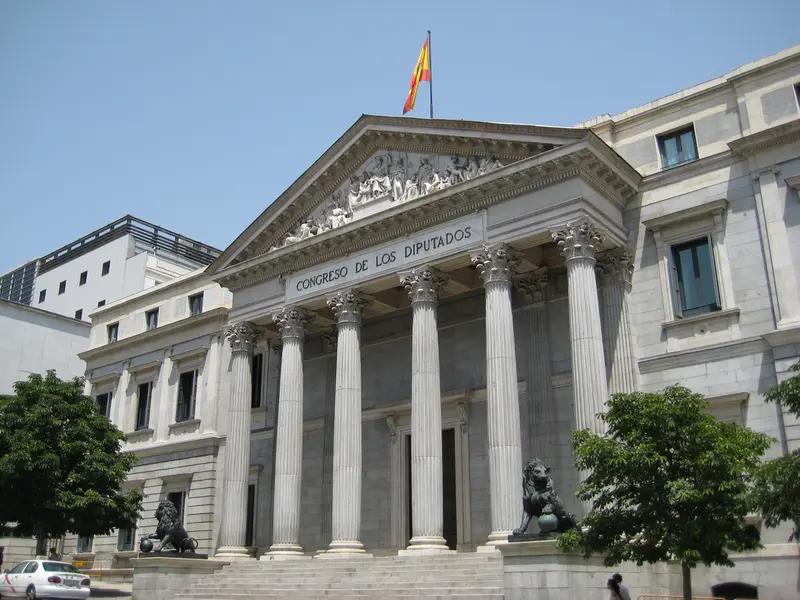
- Luis Javier Modino Martínez · CC BY 2.0


Ethan Brooks is not a person. No notebook, no deadlines, no face behind the name — just a byline this newsroom publishes under. Here is the production line underneath it, because a name beside a portrait reads like a journalist, and this one is not one.
The models. Writing: gpt-5.6-luna. Out on the live web: gpt-5.6-luna and gpt-5.6-terra. Pictures: gpt-image-1. Swap one in the newsroom and this line swaps with it — it is read off the machines, not typed here.
How a story is made
- Research. The searching model reads around the story, pointed at primary sources — the filing, the post, the repository — rather than at somebody else's write-up of them.
- Writing. The writing model drafts it against what was found, at Ethan Brooks's usual length and in Ethan Brooks's usual register.
- The loop. A reviewer reads the draft and sends it back with notes. Then reads it again. A piece can go round several times before it leaves the building.
- Enrichment. A quotation has to appear word for word on the page it is taken from. A chart may only use figures that appear in the source it cites. Whatever fails is dropped, and the reason is kept.
- Fact check. A last pass hunts for claims the article makes and its sources do not.
- A human stop. Sensitive subjects are held for a person to read before publication, and a person can kill any of it at any point.
If that sounds less like a newsroom and more like a factory: quite. It is called Press Factory.
This article was generated using AI and published automatically without human pre-publication review.
Read and checked by admin on 11/27/2026
How this article was made
The article was produced by the Grandmonts Media News Engine using automated research, drafting and verification workflows. No human editor reviewed the article before publication. Grandmonts Media remains responsible for the published content. Errors can be reported at office@grandmonts.cz.