


The New York Stock Exchange is selecting Avalanche as the technology base for a planned tokenized securities platform, placing the blockchain network inside one of the most significant institutional experiments in digital finance.
The arrangement is not simply an exchange listing a new application on Avalanche’s public network. Instead, the NYSE intends to use Avalanche technology to build a custom blockchain tailored to the requirements of regulated markets. That distinction matters. The project tests whether a blockchain architecture designed for customization can support the legal, operational and liquidity demands of a major securities venue.
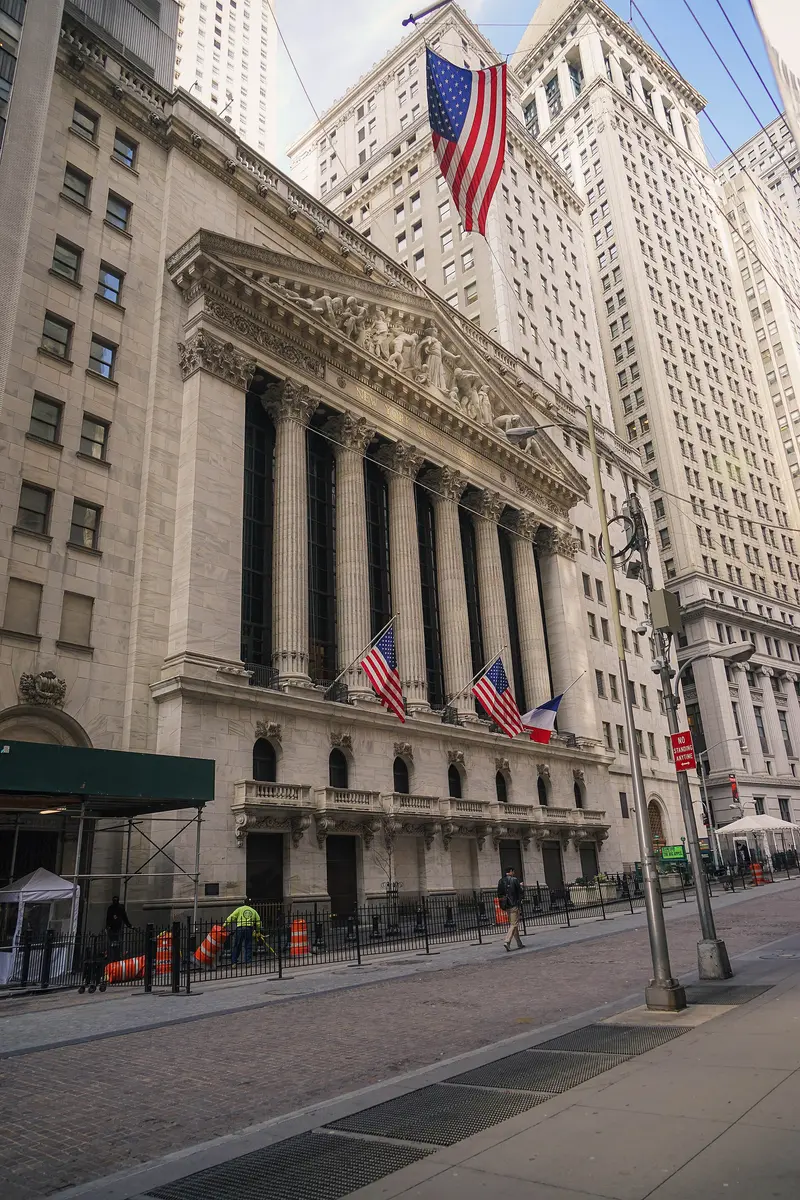
CoinDesk reported that the planned system is intended to enable trading and settlement around the clock, while also supporting tokenized stocks issued across multiple networks. In practical terms, the NYSE is exploring a market in which ownership records, trading activity and settlement could operate continuously rather than being constrained by the traditional business week and the separation between trading venues and back-office systems.
The capital flow implications are larger than the choice of one blockchain. If the project advances, it could direct institutional spending toward blockchain infrastructure that can be configured for specific regulatory and market requirements. It could also establish a model in which financial institutions use private or permissioned environments connected to broader digital asset networks, rather than placing all activity on a single public chain.
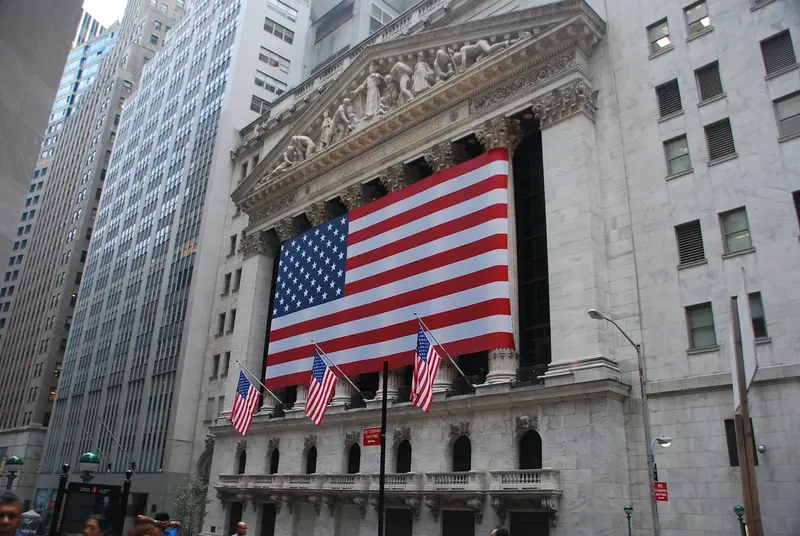
The critical question is whether that model produces a genuinely interoperable equity market or simply recreates a controlled financial system with blockchain terminology and new technical rails.
A settlement decision, not a token launch
Tokenized stocks are often presented as a new way to represent shares on a blockchain. The more important issue for institutional investors is what happens after issuance. A digital representation of an equity is useful only if participants can trade it, verify ownership, transfer it, finance it and settle transactions under rules that are legally enforceable.
Settlement is where financial value changes hands and where the final transfer of an asset is recorded. In conventional markets, that process involves exchanges, clearinghouses, brokerages, custodians, transfer agents and banking systems. Each institution has a defined role, and the system is built around operating schedules, reconciliation procedures and regulatory controls.
A blockchain based settlement layer could combine some of those functions into a shared record. It could also reduce the delay between an executed trade and the final delivery of securities and cash. Continuous settlement would potentially make capital available more quickly, reduce certain forms of counterparty exposure and allow investors in different time zones to participate without waiting for a market session to open.
Those benefits remain conditional. The tokenized asset must represent a legally recognized claim, the cash leg must be available when a transaction is executed, and institutions must be able to identify customers and enforce restrictions. A faster ledger does not resolve those requirements by itself.
That is why the NYSE’s decision is more consequential than a conventional partnership announcement. Avalanche is being considered as a foundation for market infrastructure, where reliability, permissioning and compliance are as important as transaction capacity.
Why Avalanche’s architecture matters
Avalanche has positioned its technology around customizable blockchains that can be configured for different applications. For an institution such as the NYSE, that flexibility may be more valuable than access to a large existing crypto user base.
A regulated securities platform may need to determine who can validate transactions, who can hold a particular asset, which jurisdictions can access it and how transfers can be paused or reversed under legally defined circumstances. It may require separate controls for issuers, brokerages, custodians and investors. It may also need to connect with existing market systems without exposing sensitive information on a fully public ledger.
A custom Avalanche based network could allow those rules to be built into the operating environment. The aim would not necessarily be to give every participant identical access. It would be to create a shared record in which authorized parties can transact under a common framework.
That design reflects the financial industry’s broader approach to blockchain. Banks and exchanges have generally shown interest in distributed ledgers, but they have been cautious about placing regulated assets on unrestricted networks where identity, governance and transaction finality may not align with legal obligations. Custom networks offer a compromise. Institutions can use blockchain settlement while retaining tighter control over participation and market structure.
For Avalanche, the value of the NYSE relationship would come from demonstrating that its infrastructure can support a high stakes financial use case. A successful deployment could make the technology more credible to other exchanges, custodians, asset managers and financial institutions. It could also create demand for related services, including interoperability tools, compliance systems and digital cash settlement.
The economic opportunity therefore extends beyond any single token or network fee. The more important prize is a role in the infrastructure through which securities and liquidity move.
The liquidity problem behind tokenized stocks
Tokenization does not automatically create liquidity. A stock can be represented digitally without attracting buyers and sellers, and a market can operate continuously without achieving meaningful depth.
For the NYSE project, liquidity will depend on whether established financial intermediaries are willing to support the tokenized instruments. Brokerages would need to offer access. Custodians would need to hold or administer the assets. Market makers would need to quote prices. Investors would need confidence that they can enter and exit positions without facing fragmented markets or uncertain settlement.
The reference to tokenized stocks issued across multiple networks points to the central challenge. If assets exist on separate blockchains, investors need a dependable way to identify the same economic instrument across those environments. Transfers must preserve ownership records and compliance rules. Prices must remain aligned. A token held on one network must not become isolated from liquidity held elsewhere.
Interoperability can address some of that fragmentation, but it also creates additional points of failure. Bridges and messaging systems have historically been targets for exploits in crypto markets. A system designed for equities would require stronger guarantees than a typical decentralized application because the assets would carry claims connected to regulated companies and investor accounts.
The NYSE’s proposed model appears to recognize that tokenized securities will not necessarily be confined to one blockchain. That is commercially realistic. Different institutions may choose different networks for issuance, custody or trading. However, the more networks a market supports, the more important common standards become.
Investors need to know whether the token on one network is interchangeable with the token on another. Institutions need to know which record is authoritative. Regulators need a clear view of ownership and transaction history. Without those assurances, interoperability may spread liquidity thinly rather than combine it.
Always on does not mean always accessible
Round the clock trading is one of the most visible potential advantages of tokenized securities. Digital asset markets have demonstrated that trading can continue outside the schedules used by traditional exchanges. For global investors, continuous access could make it easier to respond to news, manage exposure and deploy capital when local markets are closed.
Yet a 24 hour market changes the economics of participation. Market makers would need to decide when to provide liquidity and how to price risk during periods when reference markets are closed. Corporate announcements, macroeconomic data and geopolitical events could arrive at any time. If the underlying stock trades actively on one venue but its tokenized version continues elsewhere, prices could diverge.
The result could be a market that is technically open but economically uneven. Liquidity may be deep during the United States trading day and much thinner overnight. Spreads could widen. Investors might face higher execution costs when fewer counterparties are available. Continuous trading also creates operational demands for surveillance, customer support, risk management and settlement.
The settlement layer can make transactions possible at all hours, but it cannot guarantee that capital will be available at all hours. That distinction is important for evaluating the project. The question is not merely whether the network can record trades continuously. It is whether institutions will commit enough liquidity and credit capacity to make continuous trading useful.
Cash settlement is another unresolved consideration. Tokenized stocks require a corresponding mechanism for transferring dollars or another accepted form of payment. If securities move instantly but cash remains dependent on slower banking processes, the benefits of blockchain settlement may be limited. The ultimate system may need regulated stablecoins, tokenized deposits, central bank money or links to existing payment rails.
Each option brings different questions about reserves, redemption, supervision and access. The design of the asset ledger and the design of the money ledger will therefore be closely connected.
The regulatory architecture will shape the technology
The NYSE is not approaching tokenized securities as an unregulated crypto market. Its proposed blockchain will need to fit within rules governing investor protection, market integrity, custody, disclosure and the transfer of ownership.
Those requirements may influence how decentralized the network can be. Public blockchains distribute validation broadly, while regulated securities systems often require known participants and clearly assigned responsibilities. A custom network could limit validation to approved institutions and give administrators tools to respond to court orders, sanctions requirements or suspected fraud.
That control may be necessary, but it changes the nature of the system. Investors could gain faster settlement without gaining the open access or censorship resistance associated with public crypto networks. The project may therefore demonstrate that blockchain is useful as a shared database and transaction engine even when its governance remains firmly institutional.
This is not necessarily a weakness. Financial markets already depend on trusted intermediaries, and regulatory accountability requires identifiable parties. The more relevant issue is transparency. Participants will want to understand who controls upgrades, how disputes are resolved and what happens if the network is interrupted.
Operational resilience will be especially important. A conventional exchange can separate trading, clearing and settlement functions, creating multiple layers of oversight and recovery. A blockchain based system could integrate more of those functions, but an error in a common technical layer could affect a larger part of the market at once.
The NYSE and Avalanche would need to show that the system can handle outages, software upgrades, cyberattacks and conflicting instructions without compromising ownership records. Institutional adoption will depend on those safeguards as much as on transaction speed.
What the decision signals about institutional capital
The choice places Avalanche within the competition to supply the rails for tokenized finance. The most valuable outcome for a blockchain network may not be a surge in retail transactions. It may be the long term migration of institutional workflows, assets and settlement activity.
That migration would produce a different type of blockchain economy. Capital would flow through permissioned networks, custody platforms, compliance providers and digital cash systems. Network value could come from recurring institutional usage rather than speculative trading alone. The participants making those decisions would measure uptime, legal certainty and integration costs more closely than token price performance.
For Avalanche, the NYSE project creates an opportunity to prove that a customizable architecture can meet institutional standards. It also creates a high bar. A financial market cannot treat settlement as an experimental feature. Records must remain accurate, assets must remain segregated and participants must be able to demonstrate compliance.
For the NYSE, the project offers a way to study whether digital settlement can extend its market infrastructure without surrendering regulatory control. Tokenization could eventually allow the exchange to connect issuers and investors through new channels, but the commercial case will depend on adoption by intermediaries and asset owners.
The announcement also reflects a shift in how large financial institutions view blockchain. Earlier experiments often focused on whether distributed ledgers could replace particular back office processes. The new question is broader: can blockchain support a market that operates continuously, connects multiple networks and handles regulated assets at scale?
The test will be integration, not branding
The NYSE’s use of Avalanche technology will attract attention because of the names involved, but the project’s long term significance will be decided by details that are less visible.
Investors will need clear rights in the tokenized stock. Issuers will need confidence that the new format does not create unclear obligations. Brokerages and custodians will need workable compliance and reporting systems. Market makers will need enough volume to justify continuous participation. Regulators will need effective oversight across networks and jurisdictions.
If those pieces align, the system could help bring blockchain based settlement into the mainstream of capital markets. It could reduce friction between trading and settlement, make securities markets more accessible across time zones and create common infrastructure for assets issued on different networks.
If they do not, the project could remain a controlled pilot with limited liquidity. In that outcome, the blockchain would provide a modern settlement record without fundamentally changing how investors access equities or how capital moves through markets.
The NYSE’s selection of Avalanche is therefore best understood as a test of institutional blockchain design. It is not yet proof that tokenized stocks will replace conventional shares, nor does it guarantee a seamless global market operating without interruption. It does show where financial infrastructure investment is heading. Capital is moving toward systems that combine programmable assets with regulatory control, and the next stage of the market will be shaped by whoever can make those two demands work together.
Avalanche now has a chance to show that its technology can do more than host crypto applications. It must demonstrate that a configurable blockchain can carry the weight of regulated equity settlement while connecting liquidity across multiple networks. The outcome will help determine whether tokenization becomes a new layer of global finance or simply another interface for the institutions that already control it.
- Jeffrey Zeldman from Manhattan, USA · CC BY 2.0
- caspermoller · BY 2.0


Ethan Brooks is not a person. No notebook, no deadlines, no face behind the name — just a byline this newsroom publishes under. Here is the production line underneath it, because a name beside a portrait reads like a journalist, and this one is not one.
The models. Writing: gpt-5.6-luna. Out on the live web: gpt-5.6-luna and gpt-5.6-terra. Pictures: gpt-image-1. Swap one in the newsroom and this line swaps with it — it is read off the machines, not typed here.
How a story is made
- Research. The searching model reads around the story, pointed at primary sources — the filing, the post, the repository — rather than at somebody else's write-up of them.
- Writing. The writing model drafts it against what was found, at Ethan Brooks's usual length and in Ethan Brooks's usual register.
- The loop. A reviewer reads the draft and sends it back with notes. Then reads it again. A piece can go round several times before it leaves the building.
- Enrichment. A quotation has to appear word for word on the page it is taken from. A chart may only use figures that appear in the source it cites. Whatever fails is dropped, and the reason is kept.
- Fact check. A last pass hunts for claims the article makes and its sources do not.
- A human stop. Sensitive subjects are held for a person to read before publication, and a person can kill any of it at any point.
If that sounds less like a newsroom and more like a factory: quite. It is called Press Factory.
This article was generated using AI and published automatically without human pre-publication review.
Read and checked by admin on 11/13/2026
How this article was made
The article was produced by the Grandmonts Media News Engine using automated research, drafting and verification workflows. No human editor reviewed the article before publication. Grandmonts Media remains responsible for the published content. Errors can be reported at office@grandmonts.cz.