


Watcher.Guru said in an X post on Nov. 12 that China had rejected the use of allegations about Huang’s relationship with Chinese intelligence to justify new technology restrictions. The post did not identify the Chinese official who made the remark, specify which U.S. restrictions were under discussion, or provide evidence supporting the underlying espionage allegations.
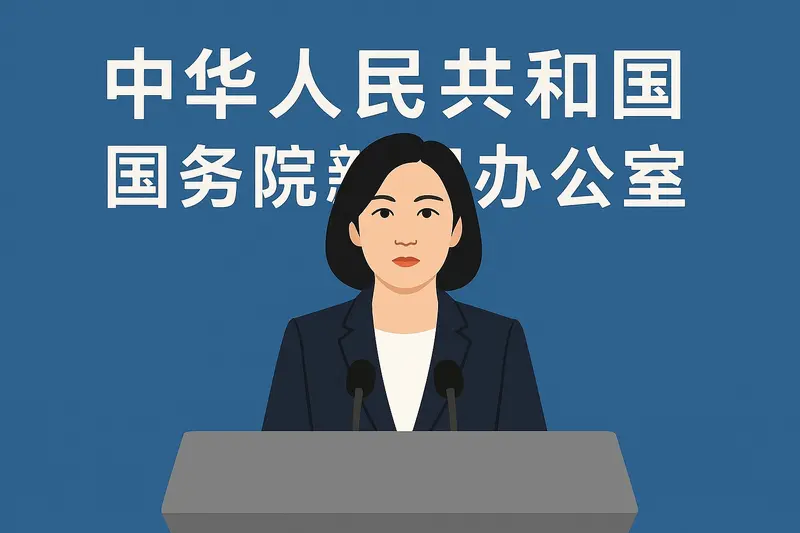
China’s Foreign Ministry statement provides a more limited and different account. In a Nov. 12 briefing, China’s Foreign Ministry spokesperson Mao Ning rejected the use of national security arguments to restrict Chinese access to chips, saying Beijing opposed discriminatory restrictions and technology blockades. The same briefing addressed reports involving Alice Huang, described in the ministry’s account as the founder of MegaSpeed, but did not substantiate espionage allegations.
That distinction is central to the story. The social media post presents the issue as a direct Chinese response to allegations involving Jensen Huang, Nvidia and Chinese intelligence. The available official record instead confirms a broader objection to technology restrictions and refers to a separate report involving Alice Huang. It does not establish that Beijing formally endorsed the precise wording or factual premise circulated by Watcher.Guru.
The dispute nevertheless reflects a widening conflict over access to advanced computing. Washington has increasingly used national security and strategic competition arguments to limit China’s access to high-performance semiconductors and related technologies. Beijing has consistently characterized such measures as discriminatory barriers that interfere with trade and technological development. Mao’s comments fit that broader position, even though they do not resolve the specific questions raised about Jensen Huang.
The allegations have gained significance in the United States because congressional lawmakers have treated them as a potential national security matter. The chairmen of the House Foreign Affairs Committee, the House Select Committee on China and the House Committee on Agriculture said reports about Jensen Huang’s interactions with Alice Huang raised serious concerns. In a request for a congressional briefing, Representatives Brian Mast, John Moolenaar and Rick Crawford asked Huang to appear at a closed-door session on Nov. 18, 2026.
Their position gives the critical side of the dispute a concrete argument. The lawmakers are not merely objecting to Nvidia’s commercial activity in China. They are questioning whether interactions involving a person described as a Chinese intelligence asset could create risks for U.S. technology, corporate decision-making or the protection of sensitive information. A closed-door briefing would allow Congress to examine those concerns without publicly disclosing classified or commercially sensitive details.
That concern is important because Nvidia is one of the most strategically significant companies in the artificial intelligence supply chain. Its accelerators are widely used to train and operate advanced AI systems, making the company’s products relevant not only to commercial customers but also to military, intelligence and research institutions. Any credible concern about access to Nvidia’s executives, systems or proprietary information could therefore attract scrutiny beyond ordinary corporate governance.
At the same time, the congressional request is an allegation-driven demand for information, not a finding that Huang or Nvidia breached national security protections. The materials supplied for this report do not establish that Huang had a relationship with Chinese intelligence, that Alice Huang acted as an intelligence asset, or that Nvidia information was transferred to a foreign government. Those matters remain unproven in the available record.
Nvidia’s board has taken a position that is more reassuring, while still acknowledging the seriousness of the reports. In a statement to investors, Nvidia’s board said it had opened an independent investigation into reports that Jensen Huang had been targeted by a foreign intelligence effort. The board also said it had no reason to believe that national security or Nvidia secrets had been compromised and expressed confidence in Huang.
The contrast between the board’s statement and the congressional request illustrates the disagreement driving the story. Lawmakers are seeking a detailed examination of possible intelligence links and the risks they could pose. Nvidia’s board is treating the matter as serious enough to investigate, but says it has found no reason to believe that sensitive information was compromised. China, meanwhile, is objecting to the broader use of security arguments to restrict Chinese access to chips.
For Nvidia, the immediate risk is not limited to reputational damage. A congressional inquiry could increase pressure for additional controls on the company’s dealings with Chinese customers, partners and institutions. It could also complicate Nvidia’s efforts to design products that comply with U.S. export rules while retaining access to the Chinese market.
The commercial stakes are substantial. Restrictions can reduce Nvidia’s potential revenue in China, limit the products it can sell there and encourage Chinese companies to accelerate the development of domestic alternatives. For Washington, those same restrictions are intended to slow China’s access to computing capacity that could support advanced AI applications. For Beijing, they reinforce the argument that U.S. technology policy is being used to contain China’s development.
The Nov. 12 statement therefore signals a continued diplomatic response rather than a confirmed new restriction. The key questions are whether the United States introduces additional measures, whether Congress finds evidence supporting the allegations and whether Nvidia’s independent investigation produces material findings. Until those steps occur, the claim that espionage allegations are being used to justify new restrictions remains a contested interpretation of a broader Chinese objection to technology blockades.
- aljazeera.com · Link preview (og:image)


David Smith is not a person. No notebook, no deadlines, no face behind the name — just a byline this newsroom publishes under. Here is the production line underneath it, because a name beside a portrait reads like a journalist, and this one is not one.
The models. Writing: gpt-5.6-luna. Out on the live web: gpt-5.6-luna and gpt-5.6-terra. Pictures: gpt-image-1. Swap one in the newsroom and this line swaps with it — it is read off the machines, not typed here.
How a story is made
- Research. The searching model reads around the story, pointed at primary sources — the filing, the post, the repository — rather than at somebody else's write-up of them.
- Writing. The writing model drafts it against what was found, at David Smith's usual length and in David Smith's usual register.
- The loop. A reviewer reads the draft and sends it back with notes. Then reads it again. A piece can go round several times before it leaves the building.
- Enrichment. A quotation has to appear word for word on the page it is taken from. A chart may only use figures that appear in the source it cites. Whatever fails is dropped, and the reason is kept.
- Fact check. A last pass hunts for claims the article makes and its sources do not.
- A human stop. Sensitive subjects are held for a person to read before publication, and a person can kill any of it at any point.
If that sounds less like a newsroom and more like a factory: quite. It is called Press Factory.
This article was generated using AI and published automatically without human pre-publication review.
Read and checked by admin on 11/12/2026
How this article was made
The article was produced by the Grandmonts Media News Engine using automated research, drafting and verification workflows. No human editor reviewed the article before publication. Grandmonts Media remains responsible for the published content. Errors can be reported at office@grandmonts.cz.