

The most important change may not be a new token, trading application or settlement network. It may be the gradual disappearance of the trading day itself.
Digital-asset exchanges have operated continuously for years in spot markets, allowing customers to buy and sell bitcoin, ether and other cryptocurrencies on weekends and public holidays. More recently, the industry has been moving toward broader around-the-clock access across derivatives, institutional products and regulated trading venues. The objective is straightforward: give global investors the ability to respond to news whenever it occurs, regardless of the time zone or the operating schedule of a conventional exchange.
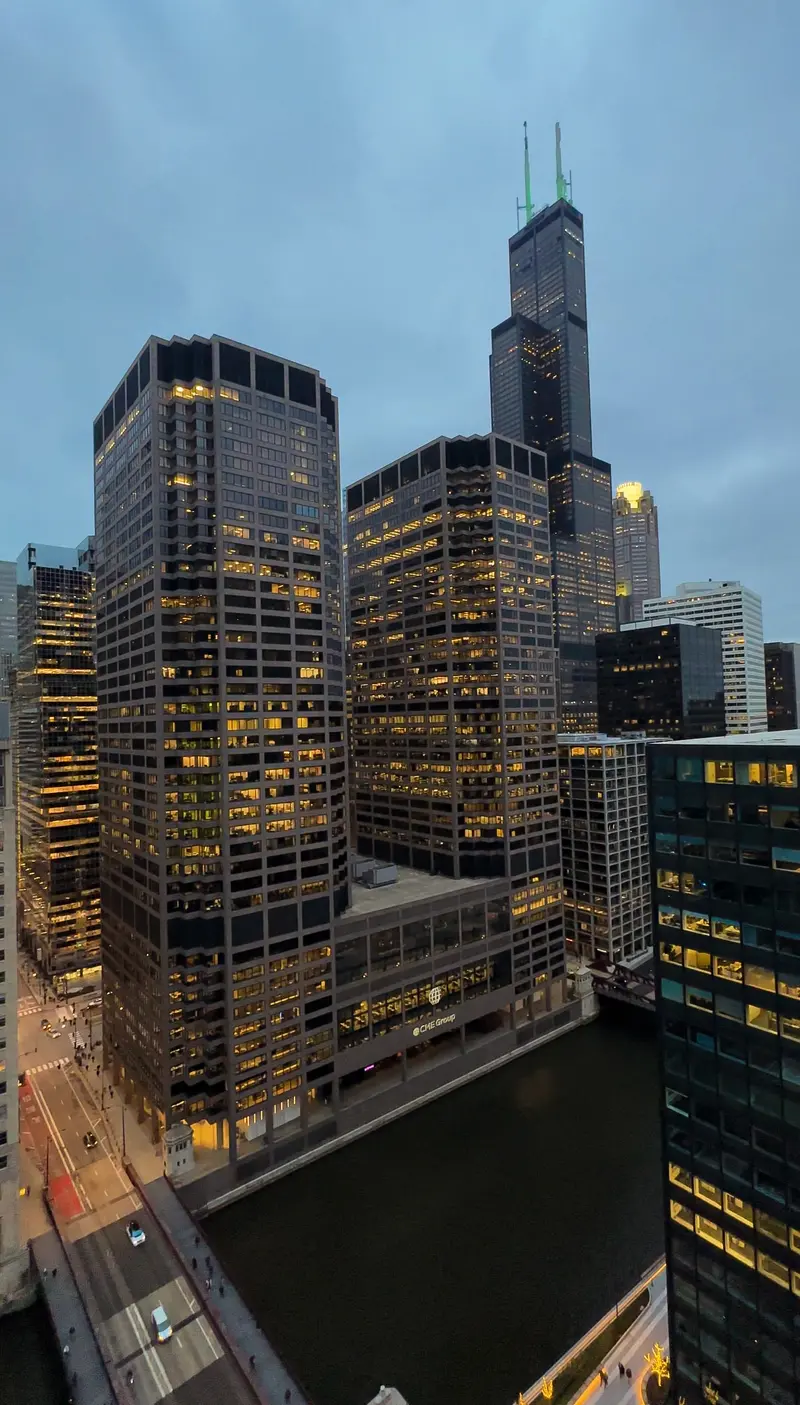
That model is now attracting greater attention from established financial institutions. CME Group, one of the world’s largest derivatives operators, has maintained extended trading hours for cryptocurrency futures and options, with a scheduled daily maintenance period rather than a traditional overnight closure. Coinbase has also promoted the development of crypto markets that can operate continuously, arguing that digital assets are global by design and should not be constrained by the calendars of national stock exchanges.
The commercial opportunity is substantial. Longer hours can create more transaction revenue, deepen customer engagement and make exchanges more relevant to institutions managing portfolios across continents. But continuous markets also expose weaknesses in the existing financial architecture. Liquidity can become fragmented between venues and time zones. Price moves may be sharper when fewer professional traders are active. Operational failures can occur when risk, compliance and technology teams are working with reduced staffing. Regulators must also decide how exchange outages, market manipulation and investor disclosures should be handled when trading never meaningfully stops.
The debate is therefore about more than convenience. It concerns the design of a global financial market and whether a system built around continuous access can provide the same protections traditionally associated with opening and closing auctions, formal settlement cycles and clearly defined supervisory windows.
From digital-asset exception to institutional expectation
Traditional exchanges were designed around geography. A stock exchange opens when its local market participants are ready to trade, closes at the end of the business day and pauses for weekends and holidays. The schedule gives brokers, clearing houses, banks and regulators predictable periods for reconciliation, maintenance and review.
Cryptocurrency markets developed differently. Assets trade across borders, ownership is recorded on distributed networks and many exchanges do not rely on a single national market infrastructure. A customer in Asia can trade against a customer in Europe or North America without waiting for a central exchange to open. This global structure made 24-hour spot trading a basic feature rather than a premium service.
That feature is increasingly shaping expectations elsewhere. Investors who hold digital assets alongside stocks, bonds, commodities or foreign exchange may find it inefficient that one part of a portfolio can be adjusted at any time while another must wait for the next session. A geopolitical announcement on a Saturday can immediately affect crypto prices, yet investors may be unable to hedge related equity or credit exposure until Monday morning.
The pressure is particularly strong among institutional investors. Asset managers, hedge funds, market makers and payment companies operate across multiple time zones and increasingly use automated systems to monitor prices and execute trades. For them, the issue is not simply whether markets are open. It is whether reliable liquidity, credit, custody and clearing are available when markets move.
CME’s extended cryptocurrency trading schedule illustrates the transitional model. Rather than abandoning the trading day entirely, regulated derivatives markets have expanded access while retaining a scheduled break for operational processing. This approach preserves a defined period for maintenance and reconciliation, but it does not offer the same continuity as crypto-native spot exchanges.
The difference matters. A scheduled pause can be manageable when all participants know it is coming. An unexpected outage, by contrast, can leave investors unable to hedge positions while prices continue to move on other venues. The more markets converge toward continuous access, the more important it becomes to coordinate the treatment of planned and unplanned interruptions.
Liquidity is the central test
The strongest argument for longer trading hours is that they can improve price discovery. If buyers and sellers are able to meet whenever information emerges, prices may adjust more quickly and investors may face less exposure to gaps between sessions.
However, opening a market does not automatically create deep liquidity. Trading volume is usually concentrated during the hours when major institutions, market makers and banks are most active. During quieter periods, order books may be thinner, bid-ask spreads wider and the cost of executing large trades higher. A market can be technically open while offering materially weaker execution.
This creates a potential divide between continuous access and continuous quality. Retail investors may be able to submit an order at 3 a.m., but they may not receive the same price or depth available during the overlap between London and New York trading hours. Automated market makers can provide some liquidity, yet they may widen spreads or reduce exposure when volatility rises and counterparties become less predictable.
Fragmentation adds another layer of risk. Crypto liquidity is already distributed across centralized exchanges, decentralized protocols, broker platforms and derivatives venues. If each venue operates its own overnight market, prices may diverge more frequently. Arbitrage firms can help close those gaps, but their ability to do so depends on access to capital, reliable transfers and functioning custody arrangements.
Regulation also affects liquidity. A market maker may be authorized to trade in one jurisdiction but unable to serve customers in another. Rules governing stablecoins, derivatives, leverage and client assets differ across the United States, the European Union, the United Kingdom and Asian financial centers. As exchanges extend hours, these legal differences can become more visible because liquidity may shift toward venues that offer broader access or lower compliance costs.
The European Union’s Markets in Crypto-Assets framework, or MiCA, is intended to create a common regulatory structure for many crypto-asset services across member states. It may support cross-border consistency, but it does not eliminate every difference in market supervision, banking access or tax treatment. In the United States, the division of responsibility among securities, commodities and banking regulators remains a significant factor in determining which products can be offered and under what conditions.
For institutional investors, the question will be whether an exchange can provide not merely access, but dependable liquidity under stress. That will require transparent information about order-book depth, trading interruptions, margin requirements and the concentration of market-making activity.
Risk does not disappear overnight
Continuous markets may reduce the risk associated with a sharp opening gap, but they can introduce other forms of instability. When a major announcement occurs during a period of thin participation, prices may move rapidly before sufficient liquidity returns. A market that never closes has fewer natural opportunities for participants to reassess positions and for infrastructure providers to complete routine controls.
Margin systems are particularly important. Derivatives exchanges must determine how collateral is valued, when margin calls are issued and how liquidations are managed during low-volume periods. If a price feed becomes unreliable or one venue experiences an isolated price spike, automatic liquidation systems could amplify the move.
These questions are familiar in crypto markets, where leveraged trading has historically contributed to rapid cascades of forced selling. They are also relevant to traditional futures markets that are considering longer access. The more frequently positions can be adjusted, the more often collateral, settlement and risk models must operate without a lengthy pause.
A continuous schedule can also complicate circuit breakers and trading halts. Traditional exchanges generally have established procedures for pausing a security when prices move beyond specified limits or when there is a technical problem. In a fragmented crypto market, a halt on one venue does not necessarily stop trading elsewhere. A token may continue to trade on other exchanges, decentralized platforms or peer-to-peer markets.
This raises a basic regulatory question: what should count as a market-wide disruption? If a major exchange loses connectivity while its competitors remain open, should customers be permitted to transfer collateral and hedge positions elsewhere? If a stablecoin temporarily loses its peg, should derivatives venues suspend contracts referencing it? The answers require coordination among exchanges, custodians, issuers, clearing firms and supervisors.
Surveillance becomes a 24-hour obligation
Market surveillance is another area where the extension of trading hours has practical consequences. Detecting manipulation requires monitoring orders, cancellations, transfers, derivative positions and activity across connected venues. Continuous trading expands the period in which abusive strategies can operate and makes it harder to rely on a concentrated team working during local business hours.
Regulators have increasingly emphasized the need for exchanges to identify wash trading, spoofing, insider dealing and coordinated manipulation. The challenge is greater in crypto because trading data is dispersed across jurisdictions and platforms, and because some venues operate outside the perimeter of conventional financial supervision.
A regulated exchange that offers overnight trading must demonstrate that surveillance is not an afterthought. It needs systems capable of recognizing unusual activity in real time, escalation procedures for potential abuse and staff with authority to intervene. It also needs reliable records that allow regulators to reconstruct events after the fact.
The issue extends to token issuers and insiders. A project announcement, security incident or governance decision can move prices immediately. If insiders trade before information is broadly disclosed, the absence of a closing bell does not reduce the potential harm. It may make the conduct harder to detect because activity spans multiple jurisdictions and there is no obvious session in which the event occurred.
Authorities may therefore seek greater transparency about exchange controls, listing standards and relationships with market makers. They may also examine whether customer access should differ according to investor status, jurisdiction or product risk. Around-the-clock availability does not necessarily mean that every customer should receive unrestricted access to leveraged products at all hours.
The operational burden falls across the system
Exchanges are not the only businesses affected. Brokers, custodians, banks, payment providers and clearing organizations must adapt when clients expect service outside traditional working hours.
Custodians need to process deposits, withdrawals and collateral movements continuously or clearly disclose when those functions are unavailable. A customer may be able to sell an asset at any moment but unable to transfer the proceeds to a bank account until the next business day. That mismatch can create liquidity stress, particularly for institutions using crypto as collateral.
Banks also face questions about settlement finality. A trade may execute instantly on an exchange, while the movement of fiat currency, stablecoins or securities occurs through systems with separate operating windows. Institutions must reconcile these timelines and manage the risk that a transaction is legally complete on one platform but economically unsettled elsewhere.
Cybersecurity teams face a similar challenge. Continuous service reduces the time available for planned upgrades and creates pressure to patch vulnerabilities without disrupting customers. Yet emergency maintenance can itself trigger disputes if users cannot close positions during a fast market.
This makes outage policy a commercial and regulatory issue. Exchanges will need clear rules on whether they will cancel trades, reimburse losses, adjust settlement prices or maintain records of orders that could not be executed. Different approaches could create uncertainty for customers trading across multiple venues.
Traditional exchanges have long-established procedures for technical failures, but those procedures were developed around defined sessions and centralized infrastructure. Crypto platforms will need to show that their incident response plans work across a distributed, always-on environment. Regulators may eventually require standardized reporting of outages, latency events and pricing errors to allow comparisons among venues.
A challenge to the global regulatory timetable
The move toward 24-hour markets also exposes a mismatch between financial regulation and global commerce. Many supervisory systems are organized around national business days. Licensing, reporting, enforcement and court processes may follow local calendars, while crypto markets continue to generate activity across all of them.
This creates practical coordination problems. A regulator in one jurisdiction may identify suspicious trading while the relevant accounts, exchange servers or counterparties are located elsewhere. Information requests can take time, but positions may be opened and closed within minutes. Supervisors may need stronger arrangements for real-time data sharing and clearer rules on which authority leads during a cross-border incident.
Jurisdictions are approaching the issue differently. Some are seeking to attract crypto businesses through tailored licensing regimes, while others are emphasizing restrictions on retail access, leverage or stablecoin use. Europe’s effort to establish a broad framework through MiCA contrasts with the more fragmented approach in the United States, where different agencies may assert authority over different products. Singapore, Hong Kong and the United Kingdom have each pursued their own models for licensing and institutional participation.
These choices will influence where liquidity forms. If compliance obligations are excessive or unclear, firms may route activity through less regulated venues. If rules are too permissive, authorities may face greater consumer and financial-stability risks. The objective is not to force every jurisdiction into an identical system, but to establish enough compatibility that firms cannot easily exploit gaps between regimes.
Global standards may eventually be needed for market access, custody, stablecoin settlement, derivatives margin and incident reporting. International bodies such as the Financial Stability Board have already pressed for coordinated crypto regulation, but implementation remains uneven. Continuous trading makes that inconsistency more consequential because market activity does not wait for national authorities to align their schedules.
Will traditional exchanges follow?
Traditional exchanges are unlikely to move uniformly to full 24-hour trading. Extending hours involves technology costs, staffing, clearing arrangements and customer demand. A smaller or less liquid market may gain little from being open overnight if few participants are willing to quote prices.
Still, the competitive pressure is real. Digital-asset venues can present themselves as more responsive to global investors, particularly as tokenized securities, stablecoins and other blockchain-based financial products develop. If institutions become accustomed to adjusting crypto positions at any time, they may expect similar flexibility from venues listing tokenized funds, bonds or other assets.
A gradual expansion is more likely than an immediate abandonment of the traditional market day. Exchanges may begin with extended sessions for selected products, overnight trading for highly liquid instruments or electronic access during periods that were previously reserved for maintenance. They may also use scheduled breaks to preserve operational controls.
The deciding factor will be whether additional hours produce durable institutional demand rather than merely more retail speculation. Exchanges will need to demonstrate that overnight markets can support fair execution, credible surveillance and orderly settlement. Regulators, meanwhile, will assess whether the benefits of faster price discovery outweigh the risks of thinner liquidity and reduced human oversight.
The next phase will be defined by rules
Around-the-clock access is often described as a technological inevitability. It is not. Technology can keep an order book online, but policy determines who may participate, how assets are held, what happens during an outage and which institutions are accountable when markets fail.
The future of continuous trading will therefore depend on infrastructure as much as software. Exchanges must build resilient systems, publish clear operating standards and maintain credible controls outside peak hours. Brokers and custodians must reconcile instant trading with slower banking and settlement networks. Regulators must develop cross-border methods for supervision that match the speed of the markets they oversee.
For investors, the promise is greater flexibility and potentially more efficient price discovery. The risk is that access may be mistaken for liquidity, or that the ability to trade at any hour may encourage decisions without adequate information, support or risk controls.
Crypto’s early advantage was its willingness to operate beyond the limits of traditional market schedules. Its next test is whether that advantage can be converted into a dependable financial service. If exchanges can provide continuous markets with strong safeguards, they may influence how global trading is organized across asset classes. If they cannot, 24-hour access may instead expose the costs of a market that never has time to pause, reconcile or recover.
- Flimpkiss1 · CC0
Sarah Thompson is not a person. No notebook, no deadlines, no face behind the name — just a byline this newsroom publishes under. Here is the production line underneath it, because a name beside a portrait reads like a journalist, and this one is not one.
The models. Writing: gpt-5.6-luna. Out on the live web: gpt-5.6-luna and gpt-5.6-terra. Pictures: gpt-image-1. Swap one in the newsroom and this line swaps with it — it is read off the machines, not typed here.
How a story is made
- Research. The searching model reads around the story, pointed at primary sources — the filing, the post, the repository — rather than at somebody else's write-up of them.
- Writing. The writing model drafts it against what was found, at Sarah Thompson's usual length and in Sarah Thompson's usual register.
- The loop. A reviewer reads the draft and sends it back with notes. Then reads it again. A piece can go round several times before it leaves the building.
- Enrichment. A quotation has to appear word for word on the page it is taken from. A chart may only use figures that appear in the source it cites. Whatever fails is dropped, and the reason is kept.
- Fact check. A last pass hunts for claims the article makes and its sources do not.
- A human stop. Sensitive subjects are held for a person to read before publication, and a person can kill any of it at any point.
If that sounds less like a newsroom and more like a factory: quite. It is called Press Factory.
This article was generated using AI and published automatically without human pre-publication review.
Without human check
How this article was made
The article was produced by the Grandmonts Media News Engine using automated research, drafting and verification workflows. No human editor reviewed the article before publication. Grandmonts Media remains responsible for the published content. Errors can be reported at office@grandmonts.cz.