

From price volatility to market-structure risk
Crypto markets have experienced sharp collateral shocks before. Bitcoin and other major tokens have fallen by large percentages within short periods, while smaller assets can lose most of their value in a single trading session. What has changed is the number of financial arrangements built around those assets.
Tokens now serve as collateral for direct loans, margin accounts, structured products, perpetual futures and other forms of leveraged exposure. They may also be rehypothecated, meaning that an asset pledged by one customer is used again by a lender or intermediary to support another transaction. This creates a chain of claims that can remain stable when prices rise or markets are liquid, but can become difficult to unwind when prices move quickly.
The central question for lenders is therefore operational as much as financial: can they identify a breach of collateral requirements, liquidate positions, settle trades and return or transfer assets quickly enough to prevent a shortfall?
In traditional markets, collateral systems have developed over decades around established legal agreements, central counterparties, custodians and settlement procedures. Crypto markets operate across a more fragmented structure. Trading may take place on centralized exchanges, decentralized protocols, offshore venues and over-the-counter desks. Collateral can be held in wallets controlled by borrowers, lenders, custodians or smart contracts. The legal rights associated with an asset may vary by jurisdiction and by the terms of the platform’s customer agreement.
That fragmentation can make a routine margin call more complicated. A lender may know that collateral has fallen below a required threshold but still face delays in transferring it, locating sufficient liquidity or confirming who has priority over the assets.
How a liquidation feedback loop forms
A typical crypto lending arrangement requires a borrower to deposit assets worth more than the loan. If a customer pledges $150,000 of tokens for a $100,000 loan, the extra value provides a buffer against market movements. The lender may set a loan-to-value limit, require additional margin when prices fall and reserve the right to sell collateral if the borrower does not meet a margin call.
The buffer can disappear quickly. Consider a token that falls 25% while the borrower has no immediately available cash to add collateral. The lender may begin selling. If many borrowers face the same problem, numerous lenders and exchanges may sell the same asset simultaneously.
That selling can reduce the token’s market price, especially when order books are thin. The lower price causes more accounts to breach their collateral requirements, producing additional forced sales. The cycle can be reinforced by traders who anticipate liquidation and sell ahead of it, or by automated systems that increase short positions as prices fall.
The impact is not limited to the token initially used as collateral. Falling prices can reduce the value of the borrower’s broader portfolio, trigger margin calls in other markets and weaken the balance sheets of firms that accepted the asset. If stablecoins are used to repay loans or settle trades, demand for particular stablecoins can rise sharply. Conversely, a loss of confidence in a stablecoin can create a second source of stress by reducing the value or liquidity of the repayment asset.
The speed of the process matters. A lender with a conservative margin requirement and reliable access to deep markets may absorb a fall without major losses. A lender with concentrated exposure, slow operational systems or uncertain custody arrangements may be forced to sell after liquidity has already deteriorated.
The importance of collateral quality
Not all crypto collateral carries the same risk, even when two assets have similar market values. Bitcoin and Ether generally trade across more venues and at greater volume than smaller tokens. Their markets may still experience severe stress, but lenders can usually obtain more reliable price information and execute larger trades with less market impact.
Smaller tokens create several additional problems. Their prices may be based on limited trading activity, making valuation more vulnerable to manipulation or temporary distortions. A lender may believe it has sufficient collateral based on a quoted market price, only to discover that selling a meaningful amount pushes the price substantially lower.
Tokens connected to a particular platform, protocol or affiliated company also create concentration risk. If the borrower, lender and collateral issuer are economically linked, a single adverse event can affect all three. A protocol failure may reduce the token’s value, impair the lender’s ability to liquidate it and increase withdrawals by customers at the same time.
Correlation is another concern. Portfolios can appear diversified because they contain several tokens, but many digital assets respond to the same factors: changes in interest-rate expectations, regulatory announcements, stablecoin flows, exchange failures or a decline in risk appetite. During a market shock, assets that seemed independent may fall together.
Lenders must also assess whether collateral can be moved. Assets locked in decentralized finance protocols, subject to vesting schedules or held in wallets requiring multiple approvals may not be immediately available for liquidation. A collateral agreement that looks strong on paper may provide less protection when an event unfolds over minutes rather than days.
Margin rules are becoming a policy issue
Margin requirements are usually presented as a risk-management decision, but they also have market-wide consequences. If lenders demand large amounts of additional collateral at the same time, borrowers may sell assets to meet those requirements. If requirements are raised preemptively, they can protect lenders while putting additional pressure on prices.
This is familiar in traditional finance. Regulators and market participants have long considered how margin rules can amplify procyclical behavior: leverage is easier to obtain in calm conditions and becomes more expensive precisely when markets are under stress. Crypto markets may be especially exposed because trading is continuous, retail participation is significant and automated liquidation systems can operate without human intervention.
The Commodity Futures Trading Commission has repeatedly emphasized the importance of customer protection, market integrity, risk controls and the resilience of derivatives infrastructure in its regulatory work. Those principles are relevant to crypto lending even where a particular lending product does not fall directly under the agency’s jurisdiction. A lender’s ability to value collateral, manage customer assets and control liquidation risk can determine whether a localized trading loss remains contained.
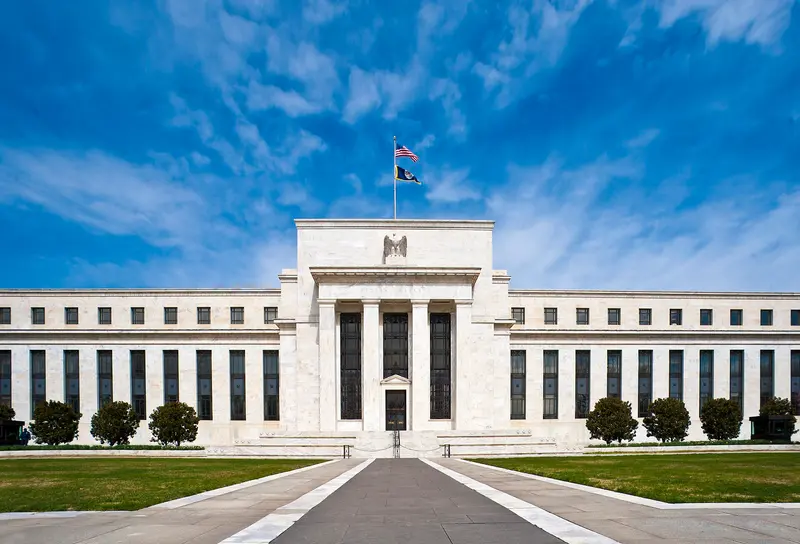
The Federal Reserve’s supervisory communications have likewise focused on the risks banks must address when engaging with crypto-asset activities, including governance, operational resilience, liquidity, compliance and risk management. For banks, the issue is not merely whether a token’s price is volatile. It is whether the institution understands its direct and indirect exposures, has reliable data and can manage a sudden change in market conditions.
Regulatory oversight is divided among agencies and jurisdictions. A crypto lender may provide a product resembling a loan, margin account, security or derivatives contract, with the legal classification depending on its structure and location. That creates the possibility of gaps in supervision, particularly when platforms serve customers across borders through entities with different obligations.
Traditional finance is becoming more connected
The prospect of spillovers into traditional finance has attracted attention because banks and institutional firms are building infrastructure for digital assets. Their activities can include custody, trading, settlement, payments, prime brokerage, asset management and lending to crypto-related companies.
These connections do not automatically create systemic risk. A bank may maintain strict limits, require high-quality collateral and avoid lending directly against volatile tokens. It may also hold client assets separately from its own balance sheet. But even limited relationships can matter if several firms depend on the same crypto exchange, stablecoin issuer, custodian or settlement network.
A bank may have a modest direct exposure while facing larger indirect risks. A crypto-market disruption could affect the value of loans to trading firms, the reliability of a technology provider or the ability of a customer to post margin. Operational failures could delay settlements. Legal uncertainty could make it difficult to seize or transfer collateral in a bankruptcy.
Prime brokers are particularly important because they can connect hedge funds, market makers, exchanges and lenders. If a prime broker finances multiple clients using similar collateral, a fall in that collateral can generate losses across the network. The broker may then tighten credit or reduce positions, affecting market liquidity beyond the original borrowers.
Custodians face a different set of challenges. They must establish who owns assets, who has authority to move them and how records are reconciled across blockchains and internal systems. A blockchain transaction may be technically final while the legal status of the asset remains contested. Regulators and courts in different countries may reach different conclusions about customer property, insolvency and creditor priority.
Stablecoins and repayment flows
Stablecoins are central to crypto lending because they are used to borrow funds, settle trades and move liquidity between platforms. A borrower may pledge Bitcoin and receive a dollar-linked token, then use that token for trading or repayment.
During stress, stablecoin flows can reveal where pressure is building. Borrowers may rush to obtain stablecoins to meet margin calls. Traders may exchange volatile assets for stablecoins as a defensive move. At the same time, customers may redeem stablecoins for fiat currency, creating liquidity demands for issuers and their reserve managers.
The quality and transparency of stablecoin reserves therefore matter to lenders. A stablecoin that is widely accepted but difficult to redeem under pressure may not function as dependable collateral or a reliable repayment instrument. Questions about reserve composition, custody, liquidity and redemption rights can become urgent when markets are falling.
A disruption in one stablecoin can also affect others. Traders may shift into alternatives, causing abrupt changes in market share and liquidity. Lending platforms that accept several stablecoins must determine whether they should apply different haircuts, borrowing limits and redemption assumptions to each one.
Regulators in the United States and elsewhere have been examining stablecoin arrangements through the lenses of payments, investor protection and financial stability. Europe’s Markets in Crypto-Assets framework, for example, establishes requirements for certain crypto-asset issuers and service providers, while U.S. policymakers continue to debate the appropriate federal framework. The resulting rules may influence which stablecoins institutions are willing to accept and how cross-border transactions are structured.
Transparency remains uneven
Investors and counterparties cannot assess collateral risk without timely information. Yet many lending platforms disclose less than a regulated bank or broker. They may publish reserve attestations without providing a complete view of liabilities, rehypothecation or exposure to affiliated entities. Some report total assets but not the maturity, liquidity or concentration of those assets.
Proof-of-reserves systems can help show that a platform controls certain on-chain assets at a particular time. They do not necessarily establish that the platform has enough liquid assets to meet all obligations, that customer claims are legally protected or that assets have not been pledged elsewhere. A complete assessment requires information about both assets and liabilities.
Key questions include how much collateral is concentrated in a small number of tokens, how many borrowers are close to liquidation thresholds, whether loans are overcollateralized after applying realistic haircuts and how quickly the platform can access the collateral. Investors should also ask whether a lender can pause withdrawals, change margin rules unilaterally or use customer assets for its own activities.
Disclosure of stress testing would improve market discipline. Platforms could publish the effect of hypothetical price declines, stablecoin depegs, exchange outages and blockchain congestion on their liquidity. They could explain how liquidation engines prioritize orders, what safeguards limit market impact and whether they have arrangements with multiple venues.
Cross-border regulation creates practical gaps
Crypto lending is global by design, but supervision remains national or regional. A platform may be incorporated in one country, maintain technology in another, use a custodian in a third and serve borrowers worldwide. Enforcement and insolvency proceedings can become complicated when assets and customers are spread across several legal systems.
Jurisdictions are taking different approaches. The European Union is moving toward a more harmonized framework through MiCA, although national authorities remain involved in implementation and supervision. The United Kingdom has been developing a broader regulatory regime for crypto activities. Singapore, Hong Kong and other financial centers have emphasized licensing, custody standards and customer protection, while the United States continues to apply a combination of existing financial laws, agency rules and new legislative proposals.
These differences affect competition. Strict requirements may raise costs but improve confidence among institutional users. Lighter regimes may attract innovation and trading activity, while also increasing the chance that risks migrate to less supervised venues. If a jurisdiction permits high leverage or opaque lending products, stress originating there can still reach firms regulated elsewhere through common counterparties and collateral.
International coordination is consequently important. Regulators need compatible standards for customer-asset segregation, disclosures, liquidation procedures, stablecoin reserves and cooperation during insolvency. Without that coordination, firms may structure products to exploit regulatory differences, and authorities may struggle to determine which agency is responsible when a platform fails.
What lenders and investors will watch
The next period of market stress will test whether risk controls work under real conditions rather than in policy documents. Investors and counterparties are likely to focus on several indicators.
The first is collateral concentration. Heavy dependence on Bitcoin and Ether may be more manageable than exposure to thinly traded tokens, but even major assets can become difficult to sell when many institutions act simultaneously.
The second is the distance between current collateral values and liquidation thresholds. A platform with borrowers clustered just above its margin limits may face a sudden wave of calls after a relatively modest decline.
The third is stablecoin behavior. Large issuance, redemption or transfer changes can signal shifts in borrowing demand and liquidity preference. Discounts to a stablecoin’s target value may indicate that repayment assumptions are weakening.
The fourth is the transparency of reserves and liabilities. Investors should distinguish between an independently reviewed financial statement, an attestation of selected wallets and a marketing claim about solvency.
Finally, the quality of governance will matter. Platforms need clear authority over margin changes, independent risk oversight, tested business-continuity plans and procedures for handling blockchain congestion or exchange outages. Automated liquidation is useful, but automation does not eliminate model risk or legal uncertainty.
A test of financial infrastructure
Crypto lending’s future will depend less on whether digital assets experience another volatile period than on how the surrounding financial infrastructure responds. A controlled decline can demonstrate that lenders hold sufficient buffers, borrowers understand their obligations and markets can absorb sales without disorder. A chaotic unwind would reveal weaknesses in collateral valuation, custody, liquidity and supervision.
For regulators, the policy challenge is to reduce hidden leverage without preventing legitimate uses of blockchain-based finance. For banks and institutional firms, participation requires more than technical access to token markets; it requires a clear understanding of legal rights, operational dependencies and counterparty exposures. For investors, headline reserve figures are not enough. They must examine the quality, liquidity and concentration of the assets supporting the system.
The CFTC’s focus on market integrity and customer protection, together with the Federal Reserve’s attention to bank risk management and operational resilience, points toward a broader regulatory expectation: firms engaging with crypto assets must be able to measure and control risks before they become losses. As connections between digital and traditional markets deepen, that expectation will increasingly apply not only to crypto-native lenders but also to the banks, brokers and custodians that help bring them into the mainstream.
- Federalreserve · Public domain
Sarah Thompson is not a person. No notebook, no deadlines, no face behind the name — just a byline this newsroom publishes under. Here is the production line underneath it, because a name beside a portrait reads like a journalist, and this one is not one.
The models. Writing: gpt-5.6-luna. Out on the live web: gpt-5.6-luna and gpt-5.6-terra. Pictures: gpt-image-1. Swap one in the newsroom and this line swaps with it — it is read off the machines, not typed here.
How a story is made
- Research. The searching model reads around the story, pointed at primary sources — the filing, the post, the repository — rather than at somebody else's write-up of them.
- Writing. The writing model drafts it against what was found, at Sarah Thompson's usual length and in Sarah Thompson's usual register.
- The loop. A reviewer reads the draft and sends it back with notes. Then reads it again. A piece can go round several times before it leaves the building.
- Enrichment. A quotation has to appear word for word on the page it is taken from. A chart may only use figures that appear in the source it cites. Whatever fails is dropped, and the reason is kept.
- Fact check. A last pass hunts for claims the article makes and its sources do not.
- A human stop. Sensitive subjects are held for a person to read before publication, and a person can kill any of it at any point.
If that sounds less like a newsroom and more like a factory: quite. It is called Press Factory.
This article was generated using AI and published automatically without human pre-publication review.
Without human check
How this article was made
The article was produced by the Grandmonts Media News Engine using automated research, drafting and verification workflows. No human editor reviewed the article before publication. Grandmonts Media remains responsible for the published content. Errors can be reported at office@grandmonts.cz.