

Macro expectations are driving the market again
Crypto markets have spent much of their history being described as an alternative financial system, but their trading behavior increasingly reflects the same forces that shape other risk assets. When expectations for interest rates change, investors reprice everything from technology stocks to emerging-market currencies. Bitcoin and the wider digital-asset market are especially sensitive because a large share of their demand comes from investors willing to take significant exposure to long-duration, high-volatility assets.
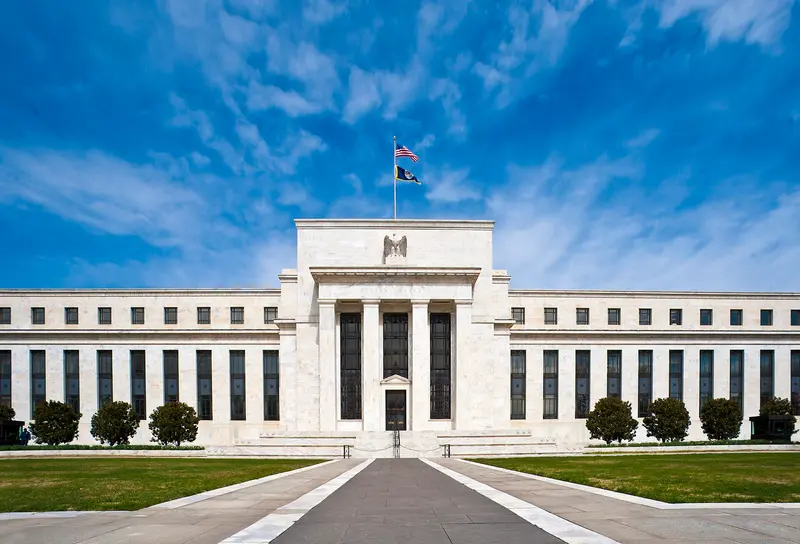
That sensitivity is returning as traders position for the Federal Reserve’s next policy communication. The decision itself matters, but the accompanying statement, economic projections, press conference and subsequent comments from officials may matter more. Markets will be looking for clues about how policymakers interpret inflation, employment, economic growth and financial conditions, and whether those assessments make rate cuts, rate increases or an extended period of restrictive policy more likely.
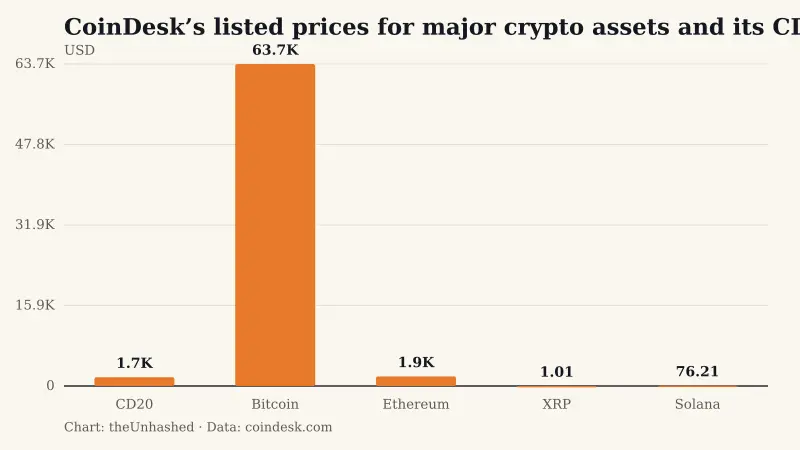
This is a different market from the one that existed during earlier crypto cycles. Bitcoin now trades alongside regulated exchange-traded funds, listed crypto companies, options markets and a more developed institutional derivatives complex. Yet that greater integration has not made the asset class immune to monetary policy. It has made the transmission mechanism clearer.
A move in Treasury yields can change the relative appeal of holding a non-yielding asset. A stronger dollar can reduce the purchasing power of investors outside the United States and tighten financial conditions globally. A shift in expectations for short-term rates can alter the cost of leverage used by hedge funds, market makers and trading firms. These factors can affect bitcoin before any change appears in blockchain activity.
The result is a market in which a Federal Reserve signal can influence crypto through several channels at the same time. Spot investors may alter allocations, ETF flows may accelerate or reverse, derivatives traders may close positions, and companies with crypto exposure may see their valuations move with the underlying asset. What looks like a single price reaction can therefore represent many different decisions occurring simultaneously.
Why yields and the dollar matter to bitcoin
Bitcoin does not generate cash flow in the way a bond pays interest or a company produces earnings. Its valuation is based on expected future demand, scarcity, network utility, monetary characteristics and investor willingness to hold risk. That makes the opportunity cost of capital important.
When short-term government securities offer attractive yields, investors can earn income with comparatively limited volatility. The hurdle for holding bitcoin becomes higher, particularly for institutions that must justify allocations against cash, fixed-income instruments and other liquid alternatives. Conversely, when investors expect policy to become less restrictive, the relative appeal of scarce or speculative assets can improve.
Longer-term Treasury yields are also important. They influence borrowing costs across the economy and serve as a benchmark for valuing risk assets. Rising yields can pressure equities, private-market valuations and crypto assets simultaneously, especially when the increase reflects expectations that inflation will remain persistent or that the Federal Reserve will keep rates high for longer.
The dollar adds another layer. Bitcoin is priced globally, but much of its liquidity is concentrated in dollar markets. When the dollar strengthens, investors using other currencies may face a higher effective purchase price, while global financial conditions can become tighter. Companies and funds that borrow in dollars may also reduce risk when funding becomes more expensive.
A weaker dollar and falling yields, by contrast, can provide a more favorable backdrop for crypto. That does not guarantee a rally. Digital assets can decline even during an easing cycle if investors interpret rate cuts as evidence of a weakening economy, or if regulatory, technological or market-structure risks dominate. Monetary policy is a major input, not a complete explanation.
The distinction between anticipated and unexpected policy is crucial. If traders have already priced in a particular outcome, the formal announcement may produce little lasting movement. The larger reaction often comes from a change in the expected path of rates. A decision that appears supportive at first can become negative if policymakers signal that future easing will be slower than investors hoped.
The importance of the Federal Reserve’s communication
The Federal Open Market Committee’s policy rate is only one part of the message. Investors will examine the language used to describe inflation and labor-market conditions, the balance of risks in the economy and the committee’s confidence in moving toward its objectives.
Economic projections can also reshape expectations. If officials indicate that inflation is proving stubborn, markets may push back the timing of expected rate cuts. If growth and employment are weakening more quickly than anticipated, investors may begin to price easier policy, though that response can be complicated by concerns about recession.
The press conference is particularly important because it allows the Fed chair to explain how officials are weighing conflicting data. A careful statement that policy is neither predetermined nor urgently restrictive can produce a different market outcome from language suggesting that policymakers are prepared to respond quickly to a change in conditions.
For crypto traders, the challenge is that the market often reacts to the direction of the surprise rather than the headline decision. A pause can be interpreted as supportive if investors expected a hawkish stance, or negative if they were hoping for a clearer path to cuts. A rate cut can also disappoint if it is accompanied by warnings about inflation or financial instability.
This creates a volatile environment around policy events. Automated trading systems respond to text, yields and currency movements within seconds, while discretionary investors may wait to judge whether the first move is sustainable. In leveraged crypto markets, those reactions can be amplified by liquidations. A modest movement in bitcoin can trigger forced selling or buying when traders have positioned aggressively through perpetual futures, options or other derivatives.
Leverage remains the market’s fastest transmission mechanism
Leverage helps explain why crypto often moves more sharply than traditional markets after macroeconomic news. Perpetual futures allow traders to maintain exposure without owning the underlying asset, using funding payments to keep contracts aligned with spot prices. When positioning becomes one-sided, a sudden move can force traders to close positions.
If bitcoin falls through levels supporting leveraged long trades, exchanges may liquidate those positions automatically. The resulting selling can push prices lower and trigger additional liquidations. The same process works in reverse when heavily short markets are forced to buy.
This mechanism does not necessarily indicate a change in long-term investor conviction. Some of the most dramatic price movements around Federal Reserve events reflect the unwinding of crowded trades rather than a fundamental shift in adoption, network usage or corporate strategy.
That distinction matters for interpreting market data. A sharp move accompanied by unusually high derivatives volume, rising open interest and a wave of liquidations may be less informative about institutional demand than a steadier move supported by spot purchases. Open interest measures outstanding derivatives contracts, not net investor confidence. High volume can reflect both buying and selling, while funding rates can indicate whether traders are paying to maintain one-sided exposure.
Options markets provide another signal. A rise in implied volatility before a policy event shows that traders expect larger price moves, but it does not identify the direction. Demand for protective puts may indicate concern about downside risk, while demand for calls may reflect expectations of a rally. In practice, institutions often use options to express or hedge views without taking the same spot exposure as retail traders.
ETF flows offer a more useful test of demand
The development of spot bitcoin exchange-traded funds has given investors a new way to assess market participation. ETF flows can provide a clearer indication of whether traditional asset managers, wealth advisers and other regulated investors are adding or reducing exposure through financial products that fit existing portfolios.
Still, ETF data must be interpreted carefully. Daily inflows can be influenced by portfolio rebalancing, tax considerations, arbitrage activity and short-term tactical decisions. Outflows do not automatically mean that institutions have abandoned bitcoin. Investors may move exposure between products, hedge through futures or reduce risk across a broader portfolio.
The timing of flows also matters. A fund can report strong creations after prices have already risen, reflecting momentum and investor demand, while redemptions may occur after a decline. That makes it difficult to separate cause from effect. ETF activity is most informative when it aligns with other evidence, including spot-market volume, exchange balances, options positioning and the behavior of long-term holders.
The quality of spot liquidity is equally important. A rally supported by purchases across several venues is generally more durable than one driven by a thin order book and a small number of aggressive derivatives trades. Market participants are therefore watching whether volume expands as prices move, whether spreads remain orderly and whether large transactions are absorbed without producing abrupt reversals.
For institutional investors, these details are part of the maturation of the asset class. They are no longer asking only whether bitcoin can rise. They are examining execution costs, custody arrangements, liquidity under stress, counterparty exposure and how an allocation behaves during a change in monetary policy.
Crypto-linked equities face a separate set of risks
The Federal Reserve signal is also relevant to publicly traded companies tied to digital assets. Crypto exchanges, miners, infrastructure providers and companies holding bitcoin on their balance sheets can experience larger percentage moves than the asset itself, but their performance depends on more than token prices.
Exchanges benefit when trading activity rises, although intense volatility does not always translate into higher profits. Fee compression, competition, regulatory obligations and the mix of spot and derivatives volume can influence revenue. A policy-driven surge in trading may therefore help platforms in the short term without resolving longer-term questions about customer acquisition and sustainable margins.
Mining companies face an additional combination of bitcoin price risk, energy costs and capital expenditure. Higher interest rates can make it more expensive to finance new equipment and data centers. A stronger bitcoin price may improve revenue, but miners must still manage network difficulty, power contracts and the competitive pressure created by other operators.
Companies that use debt or equity financing to acquire bitcoin are exposed to the cost of capital as well as the asset’s volatility. In an easier financial environment, these strategies may attract investors seeking leveraged exposure. In a tighter environment, funding costs and dilution concerns can outweigh the benefit of holding more bitcoin.
This is why a macro signal can produce divergent outcomes within the crypto sector. A lower-yield environment may be positive for a bitcoin-holding company but less helpful for a miner facing weak margins. A volatility spike may benefit an exchange but hurt a highly leveraged investment vehicle. Investors need to look beyond correlations and examine each business model.
The policy signal does not override crypto’s own fundamentals
Macro conditions are powerful, but crypto markets remain exposed to industry-specific developments. Regulatory decisions can change the accessibility of products and services. Stablecoin rules can affect the infrastructure that supports trading and decentralized finance. Security failures, operational outages or credit losses can undermine confidence regardless of the interest-rate outlook.
Network activity also matters. Bitcoin’s settlement demand, fee market and long-term holder behavior provide information that cannot be inferred from bond yields. In other parts of the ecosystem, growth in stablecoin transfers, decentralized exchange volume, Layer 2 activity and tokenized financial products can indicate whether blockchain usage is broadening beyond speculative trading.
The business models emerging around digital assets are particularly important. Exchanges are competing to become full-service financial platforms. Custodians are building institutional infrastructure. Banks and asset managers are exploring tokenized funds and payment instruments. Developers are seeking to make blockchain networks cheaper and easier to use.
These trends can create durable demand, but they do not eliminate cyclical risk. A useful technology can still experience a valuation correction when liquidity tightens. Likewise, a supportive policy environment cannot guarantee that every token, protocol or company will produce sustainable value.
The Federal Reserve event is therefore best viewed as a stress test. It can reveal which parts of the market are dependent on cheap leverage and which have developed a broader base of users, investors and cash-generating operations.
Three possible market paths
The first scenario is a clearly restrictive signal. If Fed officials emphasize persistent inflation, robust demand or the need to maintain tight financial conditions, Treasury yields and the dollar could rise. Bitcoin and other speculative assets would face pressure as investors reduce exposure and derivatives traders unwind bullish positions.
The impact would not necessarily be uniform. Bitcoin could outperform smaller tokens if investors seek liquidity and relative quality within crypto. Stablecoins could gain transactional use as traders move out of volatile assets, although that would not represent bullish demand for the market as a whole. Crypto-linked equities with high financing needs could underperform the underlying asset.
The second scenario is a more accommodative signal. If policymakers indicate that inflation is moving sustainably toward target or that labor-market risks are becoming more prominent, yields could fall and risk appetite could improve. Bitcoin may benefit from renewed allocations, particularly if ETF inflows increase and spot demand confirms the move.
But easier policy can also revive speculative excess. Investors may chase smaller tokens, high-yield decentralized finance strategies or highly leveraged trades before underlying adoption has improved. In that case, the initial rally could be strong but vulnerable to reversal.
The third scenario is a mixed or ambiguous message. This may be the most difficult environment for traders. A policy decision could be broadly expected while the press conference introduces uncertainty about the next move. Markets may whipsaw as participants revise forecasts, with bitcoin moving first in one direction and then reversing as yields and the dollar settle.
An ambiguous signal often favors investors with disciplined risk management over those relying on a single macro prediction. Position size, liquidity and the ability to withstand volatility become more important than confidently forecasting the next candle.
What a durable move would look like
Investors seeking to distinguish a lasting repricing from a short-term reaction will likely monitor several indicators together.
First is spot-market participation. A sustained move should ideally be accompanied by healthy spot volume rather than derivatives activity alone. Second is the direction and persistence of ETF flows. A single day can be noisy, but repeated inflows or outflows may reveal a stronger change in allocation.
Third is leverage. If prices rise while funding rates and open interest increase rapidly, the market may be becoming crowded. That does not invalidate the rally, but it raises the risk that a relatively small setback will trigger liquidations. A move supported by moderate leverage may have a stronger foundation.
Fourth is the relationship between bitcoin and traditional markets. If bitcoin rises while yields remain elevated and the dollar strengthens, the move may reflect crypto-specific demand or short covering. If it rises as yields fall and liquidity expectations improve, the rally is more clearly part of a broader risk-asset response.
Finally, investors should watch whether capital is flowing into productive areas of the industry. Growth in custody, payments, tokenization, infrastructure and real-world blockchain applications would suggest that the market is gaining value beyond financial speculation. Price alone cannot provide that evidence.
Why this policy cycle matters for the industry
The significance of the next Federal Reserve signal extends beyond the immediate direction of bitcoin. It will help demonstrate how digital assets behave as they become embedded in mainstream portfolios and financial infrastructure.
During earlier cycles, crypto was often treated as an isolated market dominated by retail speculation. Today, institutional products and regulated access have created more connections to global finance. That integration brings capital and credibility, but it also imports the vulnerabilities of traditional markets: sensitivity to funding costs, crowded positioning, liquidity shocks and changes in risk appetite.
For companies operating in the sector, this environment rewards resilience. Exchanges need diversified revenue and robust compliance. Asset managers need products that can withstand volatile flows. Infrastructure providers need customers with durable use cases rather than temporary trading demand. Protocol developers need to demonstrate that network activity can persist when token prices are not rising.
For investors, the lesson is equally practical. A supportive Fed signal may create favorable conditions, but it is not a substitute for evaluating valuation, custody, governance, competition and execution. A restrictive signal may create short-term pain, but it can also expose weak business models and redirect capital toward stronger ones.
Crypto’s next phase will likely be shaped by both forces: the global liquidity cycle and the industry’s ability to generate real utility. Monetary policy may determine when capital enters or leaves the market. Business fundamentals will help determine where that capital remains.
As traders await the Federal Reserve’s next communication, the central question is not simply whether bitcoin moves higher or lower. It is whether the market can demonstrate genuine demand through spot purchases, persistent institutional flows and lower reliance on leverage. If it can, macro volatility may become a temporary obstacle within a maturing asset class. If it cannot, the next policy repricing could show that much of the market’s strength still depends on financial conditions rather than lasting adoption.
Sources:
Federal Reserve monetary policy materials: https://www.federalreserve.gov/monetarypolicy.htm
CoinDesk Markets: https://www.coindesk.com/markets/
- Federalreserve · Public domain
David Smith is not a person. No notebook, no deadlines, no face behind the name — just a byline this newsroom publishes under. Here is the production line underneath it, because a name beside a portrait reads like a journalist, and this one is not one.
The models. Writing: gpt-5.6-luna. Out on the live web: gpt-5.6-luna and gpt-5.6-terra. Pictures: gpt-image-1. Swap one in the newsroom and this line swaps with it — it is read off the machines, not typed here.
How a story is made
- Research. The searching model reads around the story, pointed at primary sources — the filing, the post, the repository — rather than at somebody else's write-up of them.
- Writing. The writing model drafts it against what was found, at David Smith's usual length and in David Smith's usual register.
- The loop. A reviewer reads the draft and sends it back with notes. Then reads it again. A piece can go round several times before it leaves the building.
- Enrichment. A quotation has to appear word for word on the page it is taken from. A chart may only use figures that appear in the source it cites. Whatever fails is dropped, and the reason is kept.
- Fact check. A last pass hunts for claims the article makes and its sources do not.
- A human stop. Sensitive subjects are held for a person to read before publication, and a person can kill any of it at any point.
If that sounds less like a newsroom and more like a factory: quite. It is called Press Factory.
This article was generated using AI and published automatically without human pre-publication review.
Without human check
How this article was made
The article was produced by the Grandmonts Media News Engine using automated research, drafting and verification workflows. No human editor reviewed the article before publication. Grandmonts Media remains responsible for the published content. Errors can be reported at office@grandmonts.cz.