
Ripple
Ripple CTO David “JoelKatz” Schwartz to Step Down by Year’s End, but Will Remain on Board


- Share
- Tweet /data/web/virtuals/383272/virtual/www/domains/theunhashed.com/wp-content/plugins/mvp-social-buttons/mvp-social-buttons.php on line 63
https://theunhashed.com/wp-content/uploads/2025/10/joel-1000x600.png&description=Ripple CTO David “JoelKatz” Schwartz to Step Down by Year’s End, but Will Remain on Board', 'pinterestShare', 'width=750,height=350'); return false;" title="Pin This Post">
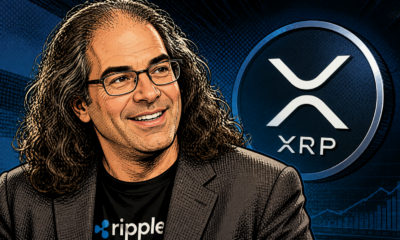
In a surprise move that signals a turning of the guard, David “JoelKatz” Schwartz — the longtime CTO and technical architect behind XRP’s ledger — announced he will step down from his executive role at Ripple by the end of 2025. Yet, his exit from day‑to‑day operations comes with strings attached: he’s not leaving entirely, and his continuing presence suggests this is less an abdication than a recalibration.
A Quiet Separation, Not a Break
Schwartz’s announcement, made via a post on X (formerly Twitter), explained that after more than 13 years with Ripple, he plans to shift focus toward family, personal projects, and rediscovering passions which fell by the wayside during his intense involvement in cryptocurrency development.
Despite relinquishing the CTO title, Schwartz will take on the role of CTO Emeritus and join Ripple’s board of directors. In those capacities, he intends to remain connected to the firm and its mission — providing guidance, advising on technical direction, and acting as a bridge to the XRP community.
According to Ripple CEO Brad Garlinghouse, this change was mutually agreed upon, and he welcomed Schwartz’s continuing influence: “regular check‑ins will continue,” Garlinghouse wrote in his own post.
The Context: Litigation Resolved, Transition Begins
Schwartz’s decision comes at a pivotal moment for Ripple. The company has just closed the book on its long-standing legal battle with the U.S. Securities and Exchange Commission (SEC), which culminated in a settlement in August 2025 involving alleged unregistered sales of XRP. That settlement marked a milestone in regulatory clarity and freed Ripple from years of uncertainty and litigation overhead.
In that light, Schwartz’s shift may represent both personal timing and organizational recalibration. With the legal clouds lifting, Ripple enters a new phase — one that is less reactive and more future‑oriented. Schwartz’s move to a less hands‑on role aligns with the company’s need to reorganize for growth beyond court constraints.
Another factor: Schwartz’s continued involvement in the XRP Ledger ecosystem beyond Ripple’s core business. In recent months, he’s been running an XRPL node, publishing data, exploring novel use cases, dialoguing with developer communities, and experimenting beyond Ripple’s payment infrastructure focus. These activities may hint at the direction he hopes to carve out for himself post‑CTO.
What This Means for Ripple — and the XRP Ecosystem
Technical Continuity vs. Fresh Leadership
By remaining as a board member and CTO Emeritus, Schwartz helps preserve institutional memory and technical continuity during the transition. His presence offers reassurance that the architecture he helped build won’t suddenly veer off or lose stewardship. Meanwhile, Ripple gains flexibility to bring in fresh leadership or reorganize technical strategy without losing its foundational thinking.
Symbolic Clean Break from Litigation Era
The timing supports a symbolic narrative: with legal burdens now settled, Ripple is turning a new page. Leadership transitions often frame such pivots. Removing Schwartz from full-time executive duty signals that the company is ready to operate beyond its prior struggle, while still honoring its technical roots.
Empowering Developer Innovation
Schwartz’s pivot toward experimental, developer‑facing, and use‑case explorations is significant. His backing of broader XRPL innovation (beyond payments) could catalyze new dApps, tools, or standards within the ecosystem, independent of Ripple’s commercial priorities. His hands‑on approach, freed from executive constraints, may be precisely what XRPL developers were hoping for.
Investor & Market Perception
Markets reacted modestly: XRP was reported down about 1.5% following the announcement, though it had already drifted downward ~6.5% over the week. Given that Schwartz wasn’t exiting the company entirely, strong negative or panic reactions seem unlikely.
For investors, this signals both stability and change: Ripple is not abandoning its technical foundations, but it is reorganizing to be more agile, less litigative, and more forward-looking.
Risks, Questions, and Watch Points
- Succession plan clarity: Who will take over the CTO’s day-to-day role? How smooth will that handover be?
- Board influence vs. execution authority: How much power will Schwartz genuinely hold in shaping future architecture and strategy?
- Ecosystem fragmentation: There’s potential tension if the XRP Ledger community diverges or develops in ways not aligned with Ripple’s commercial path.
- Market & partner confidence: Partners and institutional investors will watch whether Ripple sustains momentum and credibility without Schwartz’s full-time presence.
Final Thoughts
David Schwartz stepping down as CTO is a significant milestone—not because he’s leaving, but because he’s evolving. The move is a balancing act: he’s stepping away from the fires of daily management while preserving a strong tether to Ripple and the XRPL. For Ripple, this is a moment of transition: from survival through litigation toward growth and innovation in a more stable regulatory environment.
It’s too early to label this a departure or a retreat. Rather, it’s a reorientation. The key will be how Ripple navigates the post‑Schwartz era, and whether the company and the XRPL community can thrive in concert even as roles shift.











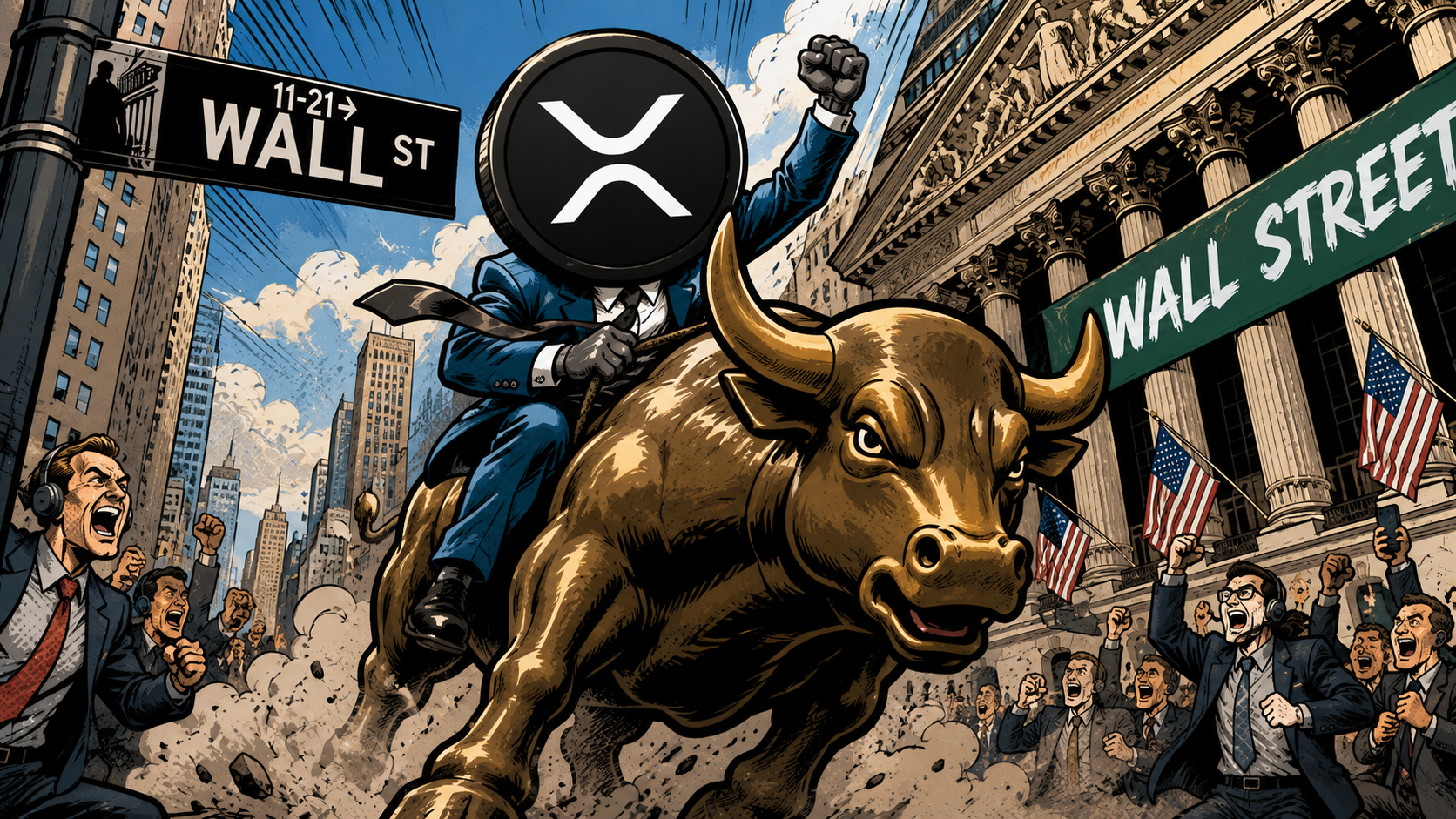
After years of uncertainty surrounding XRP’s regulatory status and institutional appeal, exchange-traded funds are beginning to tell a different story. While Bitcoin and Ethereum continue to dominate headlines, XRP investment products have quietly built a streak of steady inflows that suggests institutional investors are becoming increasingly comfortable with the asset.
According to SoSo data, the five spot XRP ETFs attracted a combined net inflow of approximately $8.15 million over the past week. On its own, that figure may appear modest compared with the multi-billion-dollar flows regularly seen in Bitcoin ETFs. In context, however, it reinforces a broader trend that has defined most of 2026: investors continue adding exposure to XRP rather than pulling money out.
The products are now approaching ownership equivalent to 1.5% of XRP’s circulating supply, a notable milestone for a group of funds that are still relatively new. Even more striking, XRP ETFs have experienced just seven weeks of net outflows throughout the entire year, highlighting remarkably consistent demand despite periods of heightened market volatility.
Consistency May Matter More Than Size
Institutional demand is not always measured by the largest weekly inflow.
Large one-week purchases can be driven by a single fund allocation, portfolio rebalance or corporate transaction. Sustained inflows over many months often provide a clearer indication that investors are gradually increasing exposure.
That appears to be the case for XRP.
An $8.15 million weekly inflow is relatively small compared with Bitcoin ETF activity, where daily flows can exceed several hundred million dollars. Yet XRP is competing in a different category. The important signal is not that institutions are buying XRP faster than Bitcoin, but that they have continued buying despite changing market conditions.
Seven weeks of net outflows across nearly eight months also suggests that periods of selling have been relatively limited. In practical terms, institutional investors have spent far more weeks accumulating XRP exposure than reducing it.
That pattern points toward steady portfolio construction rather than speculative trading.
Approaching 1.5% of XRP Supply Is an Important Milestone
ETF ownership of nearly 1.5% of XRP’s circulating supply represents more than a symbolic achievement.
Unlike exchange trading, ETF purchases generally remove coins from the liquid trading environment. Fund issuers acquire XRP to back newly created shares, placing those holdings into custody while investors trade the ETF itself.
As ETF assets grow, a larger portion of the circulating supply becomes tied to long-term investment vehicles rather than active trading accounts.
This does not permanently reduce supply. Investors can always redeem or sell their ETF holdings, and authorized participants can create or redeem shares depending on demand. Nevertheless, consistently rising ETF ownership can reduce the amount of XRP actively changing hands in the spot market.
If institutional inflows continue while long-term holders remain reluctant to sell, the available trading supply could tighten over time.
Supply dynamics alone cannot guarantee higher prices, but they can amplify market moves when demand accelerates.
Why Institutions Are Looking at XRP Again
Several factors help explain why institutional investors may be warming to XRP.
Regulatory clarity has improved significantly compared with previous years. Much of the legal uncertainty that once discouraged professional investors has diminished, allowing fund managers and financial advisers to evaluate XRP with greater confidence.
At the same time, XRP has matured as a market.
Liquidity has improved, custody infrastructure has expanded and institutional-grade trading services have become more widely available. These developments reduce operational barriers that previously made large allocations more difficult.
The launch of multiple spot ETFs also simplifies access.
Rather than opening cryptocurrency exchange accounts, managing digital wallets or arranging specialized custody, investors can gain exposure through regulated investment products that fit within existing brokerage and portfolio management systems.
That convenience has already transformed institutional participation in Bitcoin. XRP ETFs are now attempting to establish a similar role for investors seeking diversified digital-asset exposure.
XRP Still Trails Bitcoin and Ethereum
Despite encouraging inflow trends, XRP remains well behind Bitcoin and Ethereum in absolute institutional adoption.
Bitcoin continues attracting the overwhelming majority of digital-asset ETF capital. Ethereum has also developed a substantial institutional investor base, particularly among investors interested in staking, tokenization and blockchain infrastructure.
XRP occupies a different position.
Its investment thesis centers largely on cross-border payments, settlement infrastructure and Ripple’s enterprise ecosystem. Institutions allocating to XRP are therefore making a different strategic decision than those primarily seeking exposure to digital gold or programmable blockchain platforms.
This distinction may actually work in XRP’s favor.
As institutional portfolios diversify beyond Bitcoin and Ethereum, managers increasingly look for assets that provide different risk profiles and market drivers rather than simply adding more exposure to the largest cryptocurrencies.
ETF Flows Are Only One Piece of the Puzzle
Strong ETF inflows should not be interpreted as a guarantee of future price appreciation.
Markets respond to many factors simultaneously, including macroeconomic conditions, derivatives positioning, exchange liquidity, profit-taking and broader investor sentiment.
ETF purchases represent one source of demand.
If long-term holders decide to sell into that demand, prices may remain relatively stable despite continued inflows. Conversely, modest ETF buying can have a larger market impact if available supply becomes constrained.
Institutional investment also tends to move more gradually than retail speculation.
Professional investors often build positions over weeks or months rather than making large one-day purchases. As a result, ETF inflows can support longer-term trends without necessarily producing immediate price spikes.
That gradual accumulation may be exactly what current XRP flow data is showing.
Could This Become a Larger Institutional Trend?
The consistency of 2026 inflows suggests that institutional interest has survived periods of both market optimism and uncertainty.
That resilience may prove more important than any single weekly figure.
If XRP ETFs continue attracting net inflows while assets under management steadily expand, they could become a meaningful source of structural demand similar to what Bitcoin has experienced over the past two years.
The key question is whether current allocations represent the beginning of a longer institutional adoption cycle or simply early positioning by a relatively small group of investors.
Additional participation from wealth managers, pension funds, family offices and registered investment advisers would likely have a much larger impact than isolated weekly inflow figures.
The fact that ETF ownership is already approaching 1.5% of XRP’s circulating supply suggests that institutional participation is becoming increasingly difficult to dismiss.
The Bigger Picture
The latest $8.15 million weekly inflow is not a headline capable of moving the entire cryptocurrency market. What makes it significant is the broader pattern it reinforces.
XRP ETFs have spent most of 2026 attracting fresh capital while experiencing relatively few weeks of net withdrawals. Their holdings continue climbing toward a meaningful share of the asset’s circulating supply, indicating that institutional investors are steadily building exposure rather than abandoning it.
Whether that demand ultimately translates into stronger price performance will depend on broader market conditions, overall cryptocurrency sentiment and future capital flows.
For now, however, the evidence suggests that institutional interest in XRP is no longer merely a possibility. It is becoming an increasingly visible part of the market.
News
Ripple Takes Its Crypto Lobbying Campaign to the Streets as the CLARITY Act Faces a Tight Deadline


Ripple is bringing its push for crypto regulation directly to Capitol Hill. Instead of relying solely on meetings with lawmakers and policy papers, the blockchain company has launched a highly visible mobile advertising campaign around the U.S. Capitol, urging Congress to pass the Digital Asset Market CLARITY Act before time runs out.
Large digital displays mounted on a Ripple-branded truck now circle Washington carrying a simple message: “On the Road to Clarity.” The campaign is designed to keep pressure on lawmakers as Congress enters one of the most critical periods for crypto legislation in years.
Ripple Is Making Its Message Impossible to Ignore
The campaign goes beyond traditional corporate lobbying.
Rather than limiting its efforts to private discussions with lawmakers, Ripple is taking its message into public view. The truck features prominent Ripple branding alongside messaging promoting the CLARITY Act as legislation that would create transparent rules for digital assets in the United States.
According to Ripple, the bill would protect consumers, encourage responsible innovation and help keep the United States globally competitive in blockchain technology and digital assets. The company has framed the legislation as an opportunity to replace years of regulatory uncertainty with a clear legal framework that gives both businesses and investors confidence.
The slogan, “On the Road to Clarity,” also reflects Ripple’s long-running argument that the crypto industry has suffered from unclear regulation rather than a lack of willingness to comply.
Why the CLARITY Act Matters
The Digital Asset Market CLARITY Act is widely viewed as one of the most important pieces of crypto legislation currently under consideration in Washington.
Its goal is to establish clear rules governing digital assets while defining the responsibilities of different federal regulators. One of the industry’s biggest frustrations over the past several years has been uncertainty over whether particular cryptocurrencies fall under securities laws or commodity regulations.
That uncertainty has led to lawsuits, conflicting regulatory interpretations and hesitation among companies considering expanding operations in the United States.
Supporters argue that passing the CLARITY Act would finally establish predictable rules for exchanges, developers, token issuers and institutional investors.
For companies like Ripple, which spent years fighting a legal battle with the SEC over XRP, regulatory clarity has become one of the industry’s defining political priorities.
The Clock Is Suddenly Working Against the Bill
Ripple’s campaign comes at a critical moment.
Senate Majority Leader John Thune recently adjourned the Senate until July 13, significantly reducing the number of legislative days available before Congress leaves again for its August recess. That compressed calendar makes it increasingly difficult for lawmakers to move major legislation through both chambers before attention shifts to other priorities.
Every legislative delay matters.
Major crypto bills often require lengthy negotiations between committees, regulators and lawmakers from both parties. Even legislation enjoying bipartisan support can stall simply because Congress runs out of time.
Ripple’s advertising campaign appears designed to ensure that the CLARITY Act remains visible while lawmakers prepare to return to Washington.
A Crowded Congressional Agenda
The CLARITY Act is not competing only against political opposition.
It is competing against time.
Congress is already juggling multiple high-profile legislative priorities, including housing legislation, federal spending issues and other regulatory reforms. President Donald Trump’s decision to delay signing the bipartisan housing bill has added another item to an already crowded legislative agenda, creating additional scheduling pressure in Washington.
That means supporters of crypto legislation cannot simply rely on bipartisan backing.
They must also compete for limited floor time, committee attention and political momentum.
In Washington, even popular legislation can be delayed if other priorities consume the congressional calendar.
Ripple Is No Longer Lobbying Alone
Ripple’s campaign reflects a broader shift across the crypto industry.
Over the past year, major digital asset companies have dramatically expanded their presence in Washington. Coinbase, Ripple, Circle, Kraken, venture capital firms and numerous industry organizations have all increased lobbying efforts as lawmakers move closer to establishing comprehensive crypto regulation.
Earlier this month, more than 200 organizations signed a joint letter urging Senate leaders to advance the CLARITY Act to a floor vote, demonstrating how much of the industry now views regulatory clarity as its highest political priority.
The industry’s message has become increasingly coordinated.
Rather than focusing solely on individual companies or specific tokens, many firms now argue that the United States risks losing blockchain innovation to other jurisdictions unless clear rules are established soon.
Ripple Has a Personal Stake
For Ripple, the legislation carries particular significance.
The company spent years defending itself against SEC allegations surrounding XRP sales, becoming one of the highest-profile legal battles in crypto history.
Although Ripple secured several important courtroom victories, executives have consistently argued that litigation is not an effective way to regulate an entire industry.
Instead, they have repeatedly called on Congress to establish legislation that defines digital assets before regulators resort to enforcement actions.
The CLARITY Act represents exactly that type of framework.
Passing it would not only benefit Ripple but could fundamentally reshape how crypto companies operate within the United States.
Supporters Say the Bill Encourages Innovation
Ripple continues to emphasize three core arguments for the legislation.
First, supporters believe clear rules would improve consumer protection by replacing legal uncertainty with transparent regulatory standards.
Second, they argue that predictable regulation would encourage responsible innovation by giving entrepreneurs confidence that new blockchain businesses can operate legally within the United States.
Third, supporters believe failing to act could weaken America’s competitive position as other countries continue developing their own digital asset frameworks.
The company has repeatedly argued that uncertainty drives investment, talent and innovation overseas, while clarity encourages companies to build domestically.
Opposition Still Exists
Although the bill enjoys significant industry support, it is not without critics.
Some policymakers and law enforcement groups have raised concerns about how aspects of the legislation could affect financial crime investigations or oversight of digital asset markets.
However, supporters note that the legislation is designed to preserve the government’s ability to investigate and prosecute crimes involving digital assets while establishing clearer rules for legitimate businesses.
As with most major financial legislation, negotiations continue over specific provisions as lawmakers work toward a final version.
More Than Just a Marketing Campaign
At first glance, a branded truck driving around Capitol Hill may seem like a publicity stunt.
In reality, it reflects how important the next few weeks have become for the entire crypto industry.
Ripple understands that legislation is influenced not only by committee meetings and legal drafting but also by public visibility and political momentum. Keeping the CLARITY Act in the headlines may increase pressure on lawmakers to prioritize crypto legislation once Congress returns.
Whether the campaign changes any votes remains uncertain.
But it demonstrates that the industry’s largest companies are no longer waiting quietly for regulation to happen. They are actively campaigning for it.
The Bottom Line
Ripple’s “On the Road to Clarity” campaign signals that the fight for crypto regulation has entered a new phase.
Instead of focusing solely on courtroom battles or private lobbying, one of the industry’s largest companies is taking its message directly to Capitol Hill through a highly visible public campaign.
With the Senate recessed until July 13, a shrinking legislative calendar and an increasingly crowded congressional agenda, supporters of the CLARITY Act believe every remaining legislative day counts.
Whether the bill ultimately passes this session remains uncertain. What is clear is that Ripple has no intention of letting lawmakers forget about it.
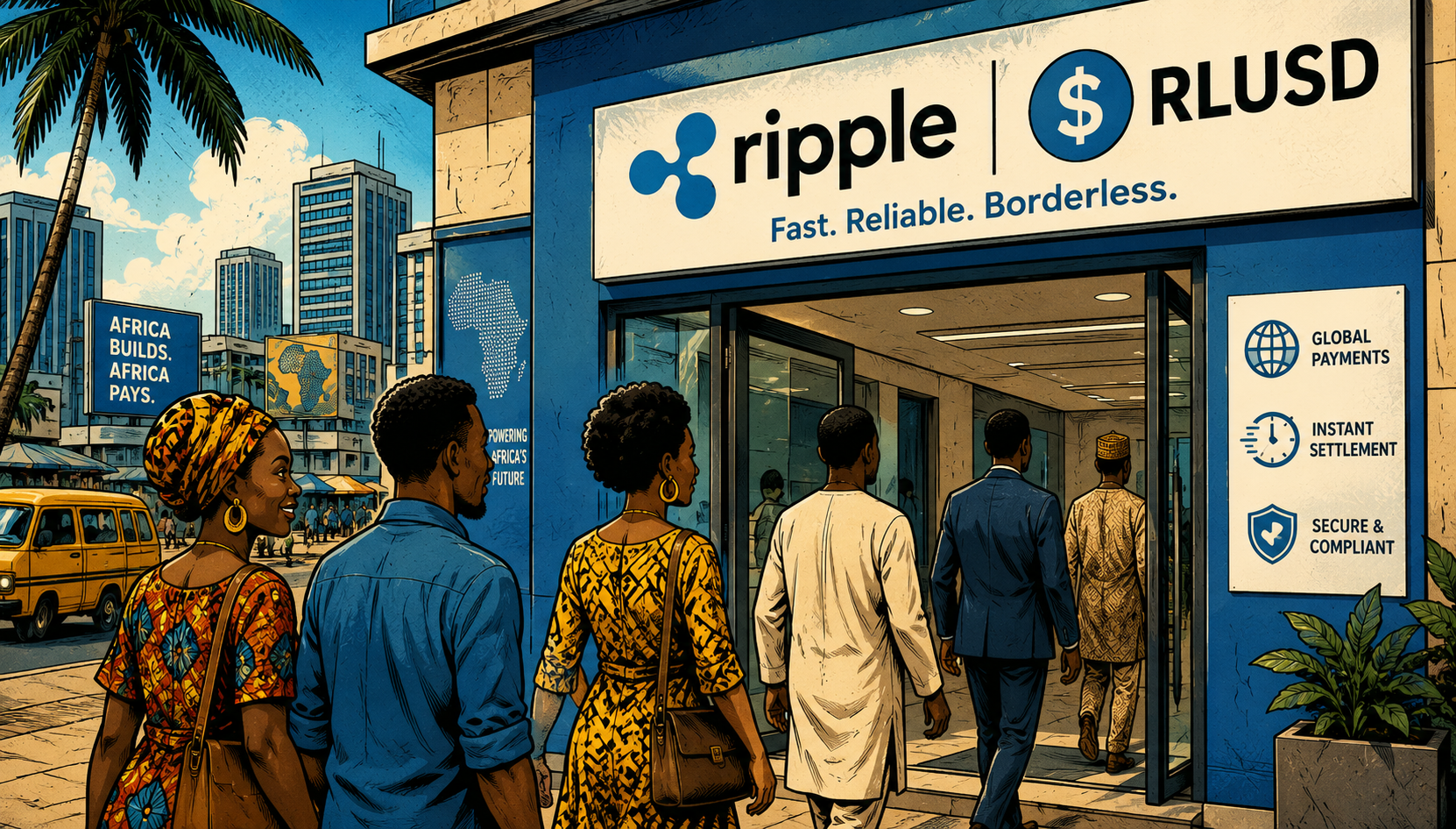
Ripple’s strategic investment in Flutterwave is not just another fintech funding headline. It is a direct bet on one of the most important questions in global payments: can stablecoins finally make cross-border settlement faster, cheaper, and more useful at scale? By backing Flutterwave at a reported $3.2 billion valuation and embedding RLUSD and the XRP Ledger into one of Africa’s most important payment networks, Ripple is positioning itself at the center of a continent-wide payments experiment with global implications.
A Strategic Investment, Not Just a Funding Round
Flutterwave’s latest Series E round gives Ripple more than exposure to a major African fintech. It gives Ripple a distribution channel.
Flutterwave operates across dozens of African markets and has built payment infrastructure used by merchants, platforms, remittance users, and businesses moving money across borders. That footprint is exactly what blockchain payment companies have long needed but often lacked: real-world transaction flow.
Ripple, for its part, brings RLUSD, Ripple Payments, and the XRP Ledger. The partnership is designed to connect Flutterwave’s domestic African payment rails with Ripple’s global settlement network, using RLUSD as a primary settlement asset for high-volume corridors, including Flutterwave’s Send App remittance ecosystem.
This matters because the biggest problem in cross-border payments is not messaging. It is settlement.
Money can appear to move instantly on an app while the actual clearing process behind the scenes still depends on correspondent banks, prefunded accounts, currency conversions, and delayed reconciliation. That structure creates cost, delay, and opacity. Stablecoins offer a different model: digital dollars that can move across blockchain rails with faster finality and fewer intermediaries.
Why Africa Is the Right Market for This Experiment
Africa is one of the most compelling regions for stablecoin-based payments because the pain points are obvious.
Cross-border transfers are often slow. Foreign exchange margins can be high. Many corridors remain inefficient. Businesses operating across multiple African countries frequently face fragmented banking systems, currency volatility, and settlement delays. Remittance users, meanwhile, are often extremely price-sensitive because every percentage point lost to fees matters.
Flutterwave’s strength is that it already understands this complexity. It is not a crypto startup trying to invent payments from the outside. It is a payments company with existing relationships, local market knowledge, merchant infrastructure, and consumer-facing remittance products.
That makes Ripple’s investment strategically different from simply launching a token or announcing a blockchain corridor. The real value comes from integration into payment flows that already exist.
RLUSD Takes Center Stage
One of the most important details in the deal is that RLUSD, not XRP, appears to be the primary settlement asset for key payment corridors.
That is significant.
For years, Ripple’s public identity was closely tied to XRP and the XRP Ledger. But the stablecoin market has become the clearest product-market fit in crypto payments. Businesses do not necessarily want exposure to a volatile crypto asset when settling invoices, remittances, or merchant payments. They want speed without price risk.
RLUSD gives Ripple a dollar-denominated instrument that is easier to understand for fintechs, merchants, and payment companies. It allows Ripple to compete in the stablecoin settlement race while still using the XRP Ledger as part of the transaction infrastructure.
In practical terms, this means Flutterwave can use RLUSD to move value across borders while relying on blockchain rails for clearing and coordination. XRP does not disappear from the story, but the commercial center of gravity shifts toward stablecoin settlement.
That is a mature move from Ripple. It recognizes that enterprise payments are less about ideological loyalty to one token and more about solving treasury, liquidity, and reconciliation problems.
The XRP Ledger Still Matters
Although RLUSD is the headline settlement asset, the XRP Ledger remains important to the architecture.
The XRPL was built with payments in mind. It is designed for fast settlement, low fees, and high-throughput value transfer. By connecting Flutterwave’s rails to the XRPL and Ripple Payments, the partnership gives Ripple a chance to prove that its infrastructure can handle real payment demand in markets where efficiency matters.
This is where the deal becomes more than a stablecoin story.
Stablecoins need rails. Payment companies need liquidity. Merchants need reliable settlement. Remittance users need low costs. Regulators need oversight. The network that best coordinates those requirements has a chance to become deeply embedded in financial infrastructure.
Ripple has spent years making the argument that blockchain payments are not just for speculation. Flutterwave gives that argument a serious test case.
The Real Enemy Is the Correspondent Banking Stack
The target of this partnership is not only other crypto companies. It is the traditional cross-border settlement system.
Correspondent banking remains expensive and slow because it was not designed for modern digital commerce. It depends on layers of banking relationships, nostro accounts, compliance checks, currency conversions, and settlement windows. For large financial institutions, those frictions are manageable. For smaller merchants, diaspora remittance users, and fast-growing African businesses, they can be punishing.
Ripple and Flutterwave are attacking that inefficiency from different directions.
Flutterwave brings the local and regional payment network. Ripple brings the blockchain settlement layer and stablecoin infrastructure. Together, they are trying to compress what can take days into something closer to real-time movement of value.
The promise is simple: fewer trapped funds, faster liquidity, lower FX friction, and more predictable settlement.
The challenge is making that promise work across real markets, not just in a press release.
Flutterwave Gets More Than Capital
For Flutterwave, Ripple’s investment arrives with strategic benefits that go beyond the balance sheet.
The company gains access to a global blockchain payments network at a time when stablecoin adoption is accelerating across fintech, remittances, trading, and treasury operations. It also gains a deeper crypto infrastructure partner without needing to build every layer internally.
That could become a competitive advantage.
African fintech is crowded and increasingly sophisticated. Payment companies are competing not only on merchant acceptance but also on settlement speed, international reach, compliance, liquidity, and developer tools. If Flutterwave can offer faster cross-border settlement through RLUSD-backed rails, it may strengthen its position with merchants and remittance users that operate across borders.
The Send App integration is especially important because remittances are one of the clearest use cases for stablecoins. Users do not care whether the backend uses blockchain. They care whether the money arrives quickly, cheaply, and reliably.
If stablecoins can improve that experience invisibly, adoption can happen without crypto ever becoming the front-end story.
Why This Is Bigger Than Ripple and Flutterwave
The partnership points to a larger shift in financial infrastructure. Stablecoins are moving from crypto trading venues into mainstream payment workflows.
For years, stablecoins were primarily used inside crypto markets as trading collateral and dollar liquidity. That is changing. Payment companies, fintechs, banks, card networks, and treasury platforms are increasingly exploring stablecoins as settlement instruments.
The reason is obvious: stablecoins combine the familiarity of fiat-denominated value with the programmability and speed of blockchain rails.
Africa could become one of the most important proving grounds for this model because the need is real. Cross-border commerce, remittances, mobile-first finance, currency fragmentation, and limited access to efficient dollar liquidity create fertile ground for alternative settlement infrastructure.
Ripple’s Flutterwave deal is therefore not only about one company backing another. It is about whether stablecoin rails can become part of the everyday payment stack in high-growth markets.
The Regulatory Question Is Still Unavoidable
The opportunity is large, but so is the regulatory burden.
Payments are heavily regulated. Stablecoins are increasingly scrutinized. Cross-border transfers involve anti-money-laundering obligations, sanctions compliance, licensing requirements, consumer protection rules, and local currency controls.
Flutterwave already operates in a complex regulatory environment. Ripple also knows regulatory risk well. That experience may help the partnership, but it does not eliminate the challenge.
The key question is whether RLUSD-based settlement can be implemented in a way that satisfies regulators while still preserving the efficiency gains that make stablecoins attractive.
If compliance requirements recreate the same friction as legacy banking, the advantage shrinks. But if blockchain settlement can improve transparency, reconciliation, and auditability while reducing settlement delays, regulators may eventually view it as infrastructure rather than disruption.
That is the line Ripple and Flutterwave must walk.
The Stablecoin War Is Becoming Infrastructure-Driven
The stablecoin market is no longer just a battle over issuance. It is becoming a battle over distribution.
USDT dominates many retail and offshore crypto markets. USDC has built credibility with institutions and regulated fintechs. RLUSD is entering the field with Ripple’s enterprise payments history and now a major African fintech partner.
The winners will not be decided only by market capitalization. They will be decided by where stablecoins are actually used.
A stablecoin embedded in merchant settlement, remittance corridors, treasury operations, and payment APIs has a different kind of value than one sitting mostly on exchanges. Ripple appears to understand this. Rather than trying to win attention only through liquidity, it is trying to place RLUSD inside real payment infrastructure.
Flutterwave gives RLUSD a practical route into African corridors where stablecoin settlement could have immediate utility.
What Success Would Look Like
The success of this partnership should not be judged only by headlines or valuation.
The real indicators will be operational. Do settlement times fall? Do FX costs improve? Do merchants receive funds faster? Does Send App become more competitive in remittance corridors? Can Flutterwave use RLUSD without creating new complexity for users? Can Ripple prove the XRPL is reliable for high-volume real-world settlement?
The best version of this partnership is invisible to end users. A customer sends money. A merchant gets paid. A business settles across borders. The experience improves, but the user does not need to understand RLUSD, XRP, or blockchain finality.
That is how crypto infrastructure becomes mainstream: not by demanding attention, but by disappearing into useful products.
Final Thoughts
Ripple’s investment in Flutterwave is one of the clearest examples yet of crypto infrastructure entering real payment markets through strategic fintech partnerships.
The deal brings together Ripple’s stablecoin and blockchain settlement ambitions with Flutterwave’s African payment footprint. It places RLUSD in a practical role as a settlement asset, gives the XRP Ledger a route into high-volume payment activity, and targets a region where faster and cheaper cross-border money movement is not a luxury but a necessity.
The stakes are high. If the integration works, Ripple strengthens its claim that blockchain can modernize global payments. Flutterwave gains a powerful settlement layer for African and international corridors. RLUSD gets real-world distribution. And Africa could become one of the most important markets for stablecoin-powered financial infrastructure.
This is not just a funding round. It is a test of whether stablecoins can move from crypto liquidity tools to mainstream payment rails.
If Ripple and Flutterwave execute well, the result could be one of the most meaningful bridges yet between blockchain finance and everyday commerce.
-

 Cardano9 months ago
Solana co‑founder publicly backs Cardano — signaling rare cross‑chain respect after 2025 chain‑split recovery
-

 Cardano11 months ago
Cardano Breaks Ground in India: Trivolve Tech Launches Blockchain Forensic System on Mainnet
-

 Altcoins8 months ago
Algorand’s 2027 Question: Can the Network Survive Without Foundation-Funded Rewards?
-

 Altcoins8 months ago
Crypto Goes Mainstream — Bitwise 10 Crypto Index ETF (BITW) Debuts on NYSE Arca
-

 News8 months ago
Crypto on Trial: The $5.5 Billion Pump.fun, Solana & RICO Lawsuit That Could Redefine On‑Chain Liability
-

 Cardano11 months ago
Cardano Reboots: What the Foundation’s New Roadmap Means for the Blockchain Race
-

 Ethereum9 months ago
Ethereum Breaks TPS Record as Lighter Layer-2 Surges Past 24,000 Transactions per Second
-

 News8 months ago
From Memes to Courtrooms: Solana and Jito Execs Named in Explosive RICO Suit Over Pump.fun