
Ethereum
Polygon Cuts 30% of Devs — What’s Really Happening in Crypto Teams?


- Share
- Tweet /data/web/virtuals/383272/virtual/www/domains/theunhashed.com/wp-content/plugins/mvp-social-buttons/mvp-social-buttons.php on line 63
https://theunhashed.com/wp-content/uploads/2026/01/polygon.jpeg&description=Polygon Cuts 30% of Devs — What’s Really Happening in Crypto Teams?', 'pinterestShare', 'width=750,height=350'); return false;" title="Pin This Post">
Polygon’s recent decision to lay off roughly 30 % of its workforce — specifically affecting developers and engineers — has sent ripples across the crypto world. This latest move comes as the project shifts focus toward stablecoin payments and a broader “Open Money Stack” strategy, including major acquisitions aimed at payments infrastructure. The cuts were reportedly part of this strategic pivot rather than a reflection of individual performance.
But Polygon isn’t alone. Across both traditional tech and the blockchain sector, layoffs have continued through 2025 and into 2026 — and while the specific reasons vary, common themes are emerging.
Polygon’s Layoffs: Strategic Pivot or Market Pressure?
Polygon Labs’ decision to reduce headcount by about a third is tied explicitly to a business realignment. After picking up payment-focused companies like Coinme and Sequence, the team is consolidating roles to support its new mandate of pushing widely accessible stablecoin payments and on-chain money movement.
According to insiders, this isn’t a one-off. Polygon already cut around 20 % of its staff in 2024 in a similar behind-the-scenes restructuring, suggesting a longer trend of internal streamlining.
For developers and other personnel, that shift means some positions are no longer essential to the new product roadmap. For the broader industry, it’s a reminder that blockchain projects are still wrestling with how to turn long-term visions into sustainable organizations — especially in a world where speculative bull runs haven’t consistently lifted spending.
Broader Crypto Layoff Trends
Polygon’s restructuring happens against a backdrop of significant job cuts across crypto firms over recent years. While not all layoffs hit in 2025, historical cases illustrate how cyclical pressures and market downturns have repeatedly forced teams to shrink.
At the height of the crypto winter in 2022–2023, a slew of exchanges and services cut developer and engineering roles as markets cratered and capital tightened. This coincided with a broader tech contraction: in 2025 alone, more than 150,000 jobs were shed across major tech companies and startups as firms reoriented priorities or braced for slower growth.
In addition, mainstream tech giants — including Microsoft — underwent layoffs affecting even high-profile AI and engineering teams in 2025, underscoring that developers across sectors are not immune from broader economic recalibrations.
Why Are Crypto Teams Cutting Devs?
Several factors explain why Polygon and other blockchain teams are reducing development headcount:
Market Conditions and Bear Cycles: Crypto has endured prolonged downturns — even booming assets like Bitcoin have coexisted with weak broader market participation. This “bear within a bull” effect can curb revenue, tighten funding rounds, and force teams to reassess cost structures. Some analysts even called 2024–2025 “the most bearish bull market of all time,” where price strength fails to generate deep liquidity or hiring momentum across the ecosystem.
Strategic Refocus: Projects often recast their mission in response to competitive shifts or technology pivots. Polygon’s move toward payment infrastructure and stablecoins is a strategic redirection that deprioritizes other development areas, meaning some talent is no longer aligned with the current roadmap.
Funding and Cash Runway: Many crypto teams expanded during boom periods when capital was cheap and valuations were high. When markets cooled and venture capital became more cautious, runway constraints pressured firms to reduce burn by shrinking payrolls.
Product Prioritization and Maturity: Some projects may have reached a phase where fewer developers are needed — moving from rapid feature expansion to optimization, maintenance, and integration market work, which can require smaller, more specialized teams.
Tech Disruption and Automation: Even outside crypto, many tech firms are rebalancing roles as automation and AI tools handle tasks that previously demanded large engineering headcounts. This broader shift contributes to layoffs and team restructuring beyond just blockchain economics.
Other Teams That Have Cut Devs — Crypto and Beyond
Polygon isn’t unique in reshaping its workforce; historical patterns show this happens across markets when economics tighten or strategies change:
Crypto Companies During Bear Markets:
Major exchanges and platforms cut engineering staff during downturns — for example, Kraken and others reduced teams when market conditions worsened and revenue slowed.
Tech Giants Restructuring:
Big tech names like Microsoft cut AI and engineering roles despite ongoing product development, reflecting bigger organizational pivots rather than performance issues.
Wider Tech Layoff Waves:
Between 2024–2025, many tech companies — from consumer apps to enterprise tools — reduced teams as part of broader efficiency drives in the face of economic uncertainty.
This shows that developers are often the first to feel the impact when companies shift strategy, rationalize spending, or respond to market cycles, whether in Web2 or Web3.
Could the Bear Market Be the Main Driver?
It’s easy to point at a weak or uneven market as the culprit for layoffs. And in crypto’s case, extended periods without a broad, sustained bull run can reduce liquidity, delay product monetization, and cool hiring enthusiasm.
But layoffs aren’t solely a symptom of price action. Polygon’s cuts are linked to a strategic repositioning that came even as it pursued acquisitions and new revenue avenues. That suggests layoffs are also about focus and product alignment — not just cost-cutting in a downturn.
What This Means for Developers and the Ecosystem
For engineers and technical talent in crypto, these shifts signal important realities:
Expect Fluid Role Definitions: As projects evolve, the kinds of developer skills in demand will change. Skills tied to payments infrastructure, cross-chain integration, and regulated product development may rise in importance compared to earlier hype-driven features.
Bear Markets Can Redefine Priorities: Downturns aren’t just painful; they can force teams and ecosystems to concentrate on sustainable product areas where real revenue can be captured — and that often reshapes where development talent is deployed.
Strategic Realignment Over Panic Hiring: Even in better markets, firms may prefer leaner, highly specialized teams over large developer rosters if they believe it more closely matches long-term goals.
Upskilling and Flexibility Matter: Developers with adaptable skills — especially in payments, stablecoins, cross-chain interoperability, and regulated infrastructure — may be more resilient in shifting market conditions.
Looking Ahead: Structural Shifts vs. Temporary Pain
Polygon’s layoffs highlight a broader trend where crypto projects calibrate teams to match evolving priorities. While the industry has historically expanded headcount rapidly during optimistic phases, recent layoffs reflect a maturation process. Teams are becoming more focused, more strategic, and less driven by speculative hype.
That doesn’t mean all tech layoffs are negative. Strategic restructuring can redistribute talent to new ventures, increase innovation outside legacy projects, and encourage more sustainable models of economic growth within the ecosystem.
Nevertheless, the pattern of layoffs — whether at Polygon or elsewhere in crypto — underscores a key reality: this industry remains cyclical, adaptive, and deeply tied to broader market and technological forces. Developers and observers alike must be prepared not just for price volatility, but for ongoing shifts in how teams allocate resources, prioritize products, and define what success means in the next phase of Web3.














Aave is making one of the largest optimization moves in its history. The leading decentralized lending protocol has announced plans to retire six blockchain deployments while removing dozens of underutilized asset reserves, signaling a clear shift toward efficiency over expansion.
The decision affects deployments on Sonic, Scroll, zkSync, Metis, Soneium and Aptos, along with a significant cleanup of inactive markets. While the changes impact nearly $100 million in supplied assets, Aave’s leadership argues the move will strengthen the protocol by reducing complexity and limiting long-term risk.
Rather than pursuing a presence on every emerging blockchain, Aave is now focusing on maintaining liquidity where it matters most.
A Major Cleanup Across the Protocol
The proposal outlines an extensive restructuring of Aave’s ecosystem. In total, the protocol plans to deprecate 50 asset reserves that have seen little user activity across multiple blockchain deployments.
Alongside these removals, Aave will also wind down its deployments on Sonic, Scroll, zkSync, Metis, Soneium and Aptos. These networks will no longer host active Aave markets as the protocol reallocates resources toward ecosystems with stronger demand and healthier liquidity.
The cleanup extends even further. Another 25 asset reserves are scheduled for removal, while 21 matured Pendle Principal Tokens (PTs) will also be eliminated from the protocol after reaching the end of their lifecycle.
According to the proposal, the affected markets currently account for approximately $98.1 million in supplied assets and around $15.6 million in outstanding debt. While those figures are meaningful in absolute terms, they represent only a small fraction of the capital secured across Aave’s broader ecosystem, which manages tens of billions of dollars in total value locked.
Why Aave Is Making the Change
Aave founder Stani Kulechov explained that the initiative is designed to reduce both economic and technical risk across the protocol.
Every blockchain deployment requires ongoing maintenance, governance oversight, security monitoring and infrastructure support. Even markets with minimal activity demand developer attention, regular updates and continued auditing to ensure they remain secure and compatible with protocol upgrades.
As Aave expanded across multiple Layer 2 networks and alternative blockchains over recent years, the operational burden naturally increased. While diversification offered broader market access, it also created a growing number of low-volume markets that contributed little to the protocol’s overall activity.
Removing underperforming deployments allows developers and governance participants to concentrate on ecosystems that consistently generate lending demand, borrowing activity and fee revenue.
The decision also reduces the protocol’s exposure to risks associated with maintaining infrastructure on chains with relatively limited adoption.
Quality Over Quantity
The announcement reflects a broader trend emerging across decentralized finance.
During the previous bull market, many DeFi protocols raced to deploy on as many blockchains as possible. Expanding quickly offered access to new users, liquidity mining incentives and growing ecosystems eager to attract established applications.
That strategy made sense while blockchain competition was accelerating. Nearly every new Layer 1 or Layer 2 network sought flagship DeFi protocols to establish credibility.
Today’s environment looks different.
Many networks have struggled to build sustainable user activity after their initial launches. Liquidity has become increasingly concentrated around a handful of dominant ecosystems, making it more difficult for smaller deployments to justify their operational costs.
For mature protocols like Aave, maintaining dozens of lightly used markets no longer provides the same strategic advantage it once did.
Instead, capital efficiency has become a higher priority than simply maximizing the number of supported chains.
The Challenge of Fragmented Liquidity
One of decentralized finance’s biggest structural issues remains fragmented liquidity.
When a lending protocol operates across numerous independent blockchains, liquidity becomes divided among separate pools. Borrowers and lenders may find fewer opportunities on smaller deployments, resulting in lower utilization rates and less efficient markets.
These fragmented pools often struggle to achieve the scale necessary to attract institutional participants or sophisticated traders.
By reducing its footprint, Aave can encourage liquidity to consolidate within its strongest deployments, improving borrowing conditions and increasing overall capital efficiency.
Larger markets also tend to be more resilient during periods of volatility, as deeper liquidity can absorb larger transactions without creating significant disruptions.
Governance Continues to Mature
The proposal also highlights the evolution of DeFi governance.
In the industry’s early years, governance discussions largely focused on adding new assets and expanding into new ecosystems. Increasingly, proposals now involve simplifying protocols, retiring outdated infrastructure and optimizing existing operations.
This shift reflects the growing maturity of decentralized finance.
Rather than measuring success by the number of supported chains or listed assets, protocols are placing greater emphasis on sustainable economics, security and operational efficiency.
Removing obsolete products is often as important as launching new ones, particularly for protocols managing billions of dollars in user funds.
What It Means for Users
Users with positions on the affected deployments will need to migrate their assets before the wind-down process is completed.
While the protocol intends to retire these markets in an orderly manner, borrowers and lenders should closely monitor governance updates and migration timelines to ensure their positions remain unaffected.
For most Aave users, however, the practical impact will likely be minimal. The protocol’s primary markets across its largest blockchain deployments will continue operating normally, and the vast majority of liquidity remains concentrated in those ecosystems.
The proposal is therefore less about shrinking Aave’s overall presence and more about eliminating parts of the network that no longer justify ongoing maintenance.
A More Focused Future
Aave’s latest restructuring marks an important milestone for one of decentralized finance’s most established protocols.
Instead of continuing to expand indiscriminately, the lending giant is refining its ecosystem by removing low-adoption markets, retiring inactive deployments and concentrating resources where user demand is strongest.
The decision affects approximately $98 million in supplied assets and more than $15 million in outstanding debt, but the broader objective is to create a leaner, more secure and more sustainable protocol.
As competition across blockchain ecosystems intensifies, Aave’s move suggests that the next phase of DeFi growth may be defined not by expansion into every available network, but by disciplined capital allocation and operational efficiency. For a protocol responsible for billions in digital assets, reducing unnecessary complexity could prove just as valuable as launching the next major feature.

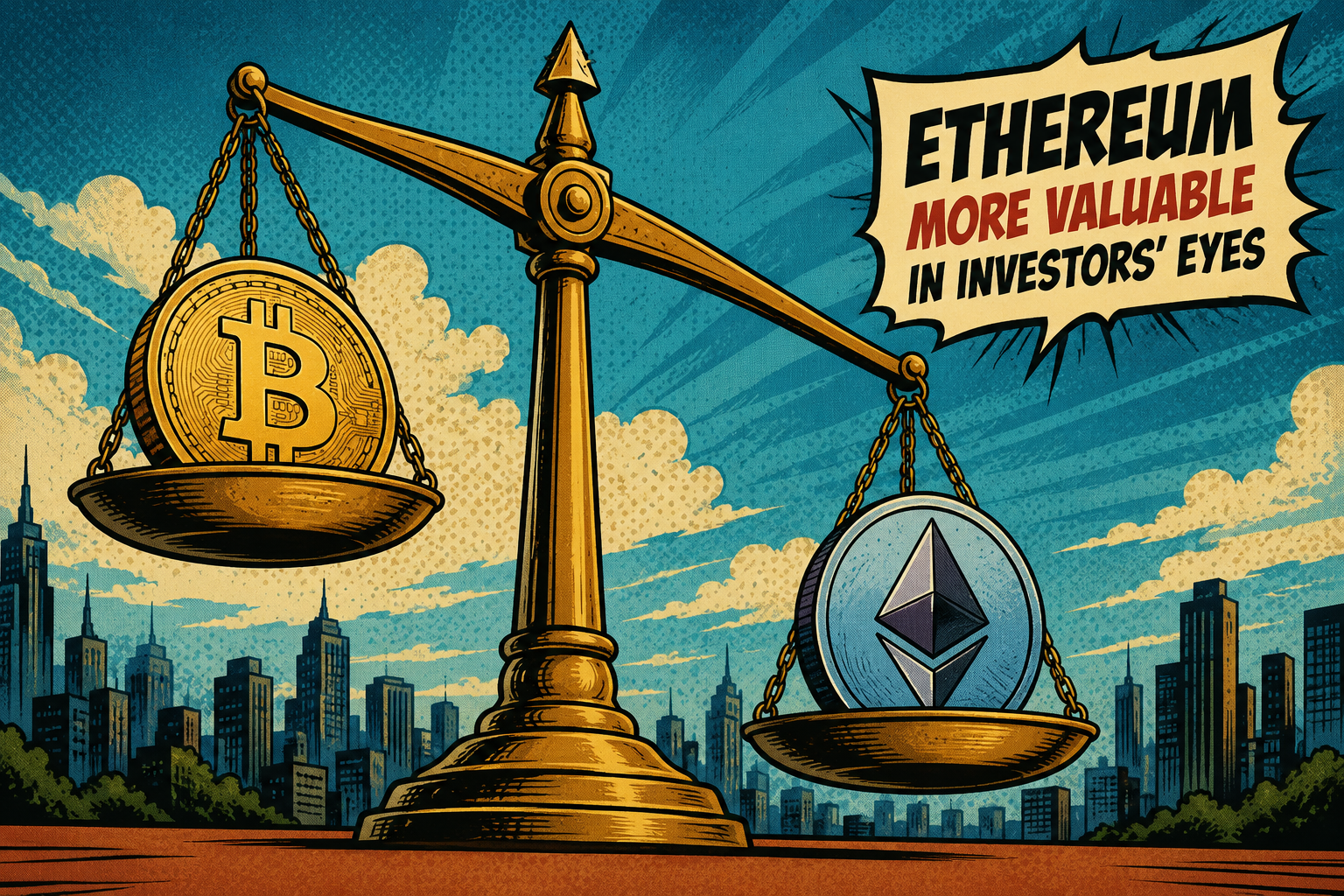
For most of the institutional crypto era, capital has followed a predictable route: enter through Bitcoin, establish a core position and consider everything else later. This week, that sequence briefly changed. BlackRock’s Bitcoin product recorded redemptions while its Ethereum vehicles attracted fresh capital, offering one of the clearest signs yet that professional investors are beginning to treat the two largest digital assets as competing portfolio allocations rather than interchangeable expressions of crypto exposure.
According to Arkham, clients withdrew approximately $60 million from BlackRock’s iShares Bitcoin Trust, or IBIT, during the opening sessions of the week. Over the same period, more than $20 million moved into Ethereum associated with the asset manager’s Ether products.
The numbers are modest relative to BlackRock’s enormous digital-asset holdings, but the direction matters. Institutional investors were not simply reducing cryptocurrency exposure. At least for a brief window, they appeared to be exchanging part of their Bitcoin allocation for Ethereum.
That is a more consequential signal than a conventional risk-off withdrawal. It suggests that the institutional crypto trade is entering a more sophisticated phase—one driven by relative valuation, yield potential and portfolio construction rather than a binary decision between owning Bitcoin and remaining outside the market.
The Rotation That Caught the Market’s Attention
The initial flow pattern emerged during the trading sessions of July 27 and July 28. IBIT recorded combined net outflows of approximately $63.6 million, while BlackRock’s Ethereum products attracted roughly $21.1 million.
Most of the Ethereum allocation entered the iShares Ethereum Trust ETF, known as ETHA, while a smaller portion flowed into the iShares Staked Ethereum Trust ETF, or ETHB. The latter offers exposure not only to Ether’s market price but also to potential staking rewards generated by participating in Ethereum’s proof-of-stake security system.
Arkham’s on-chain monitoring supported the ETF-flow picture. Bitcoin connected to IBIT-related custody moved toward wallets associated with redemption activity, while Ether entered BlackRock-labeled addresses. The parallel movements created the appearance of an active switch from one asset to the other.
That interpretation, however, requires an important qualification. ETF data cannot prove that the exact same investors sold IBIT and purchased ETHA or ETHB. Net flows aggregate the decisions of many market participants, including advisers, hedge funds, wealth platforms, market makers and individual brokerage clients.
The data therefore reveals a rotation at the product level, not a confirmed transaction in which one identifiable institution exchanged Bitcoin for Ethereum.
Even so, simultaneous outflows from one BlackRock crypto product and inflows into another are meaningful. They show that investors are increasingly willing to make relative choices inside the digital-asset category.
A Tactical Move That Quickly Evolved
The most recent completed trading session adds another layer to the story.
On July 29, IBIT attracted approximately $89.8 million in fresh capital, more than reversing its outflows from the previous two sessions. BlackRock’s Ethereum products also continued to receive money, adding approximately $5.2 million, although the broader US Ethereum ETF market ended the day with net redemptions.
Across the first three sessions of the week, IBIT consequently moved back to a net inflow of roughly $26.2 million. BlackRock’s combined Ethereum products collected almost exactly the same amount, approximately $26.3 million.
That updated picture does not invalidate the rotation observed earlier in the week. Instead, it defines its character.
This was not a wholesale migration away from Bitcoin. It was a tactical rebalancing episode in which Ethereum briefly captured capital while Bitcoin was being reduced, followed by renewed demand for both assets.
The distinction is important because crypto markets frequently interpret short-term ETF activity as evidence of a permanent institutional change. A few trading sessions rarely provide enough information to establish a durable trend. Portfolio rebalancing, liquidity management, options hedging, tax considerations and short-term basis trades can all influence daily flows.
A lasting rotation would require persistent Ethereum inflows combined with sustained Bitcoin redemptions over several weeks, preferably across multiple issuers rather than within a single asset manager’s product range.
Why Ethereum Is Receiving a Fresh Institutional Look
Ethereum’s renewed appeal is not difficult to understand.
Bitcoin remains the most established institutional crypto asset, with the clearest monetary narrative and the deepest pool of regulated investment products. Ethereum offers a different proposition. It is simultaneously an asset, a programmable settlement network and the economic foundation for a large segment of decentralized finance, stablecoins and tokenized financial instruments.
For investors, that combination creates several potential sources of value. Ether can appreciate alongside network adoption, function as collateral across on-chain markets and generate staking rewards when committed to network validation.
The arrival of ETHB has made the final component more accessible through conventional brokerage infrastructure. Rather than arranging custody, operating validator infrastructure or selecting a staking provider, investors can obtain exposure through a listed BlackRock product designed to capture Ether’s price movement alongside potential staking income.
That changes the comparison with Bitcoin.
IBIT provides relatively direct exposure to an asset commonly positioned as scarce digital collateral. ETHB presents Ethereum as a productive asset with an embedded income component. For institutional allocators working under return targets, the possibility of yield can become particularly attractive when price appreciation alone is uncertain.
Ethereum has also experienced substantial underperformance. BlackRock’s ETHA showed a year-to-date decline of more than 35% by late July. For momentum investors, that weakness is a warning. For relative-value investors, it can create an entry point—especially when the long-term investment thesis remains intact.
The rotation may therefore reflect less enthusiasm for Ethereum’s immediate price trend than a judgment that its risk-reward profile has improved relative to Bitcoin.
Bitcoin Still Holds the Institutional Center
Any suggestion that Ethereum is replacing Bitcoin in institutional portfolios would be premature.
IBIT held approximately $47 billion in net assets as of July 29. BlackRock’s Ethereum products together controlled roughly $6.1 billion. The Bitcoin vehicle was still almost eight times larger than the asset manager’s combined Ether offering.
That gap illustrates how deeply Bitcoin remains embedded as the default institutional gateway into digital assets.
Bitcoin benefits from a simple investment case. Its fixed supply, extensive liquidity, long operating history and growing recognition as a non-sovereign reserve asset can be explained without requiring an investor to forecast activity across applications, staking markets or scaling networks.
Ethereum demands a more complex analytical framework. Its value depends partly on usage, transaction economics, monetary policy, staking participation, competition among blockchains and the relationship between the main network and its expanding layer-two ecosystem.
That complexity can produce additional upside, but it also introduces more variables.
For conservative allocators, Bitcoin is therefore likely to remain the core position. Ethereum increasingly looks like a satellite allocation capable of adding growth, yield and exposure to blockchain-based financial infrastructure.
The emerging portfolio structure is not necessarily Bitcoin or Ethereum. It is Bitcoin as reserve-style collateral and Ethereum as productive digital infrastructure.
Institutional Crypto Is Becoming a Relative-Value Market
The broader significance of this week’s flows is the transition from crypto access to crypto allocation.
During the first phase of institutional adoption, the main challenge was gaining regulated exposure. Investors focused on custody, market integrity, liquidity and compliance. Once spot exchange-traded products solved much of that operational problem, institutions could begin evaluating digital assets using familiar portfolio-management techniques.
That process is now becoming visible.
Investors can adjust the weighting between Bitcoin and Ethereum, choose between unstaked and staked Ether exposure, seek option income through newer Bitcoin products and manage crypto positions alongside traditional assets from the same brokerage and risk-management systems.
BlackRock itself now offers products covering spot Bitcoin, spot Ether, staked Ether and Bitcoin-related option income. The expansion of that lineup gives investors more ways to express specific views without leaving regulated financial infrastructure.
As the product set becomes more complete, crypto ETF flows are likely to become less directional and more strategic. Capital may rotate according to volatility, valuation, yield, liquidity and macroeconomic conditions, much as it already does between technology stocks, bonds, commodities and defensive equities.
This makes daily fund-flow analysis more complicated, but also more informative. A withdrawal from Bitcoin no longer automatically means an exit from crypto. It may represent a move into Ethereum, a yield-oriented vehicle or another digital-asset strategy.
What Would Confirm a Lasting Ethereum Rotation
The next stage of the story depends on persistence.
Ethereum would need to attract capital through both strong and weak market sessions. Inflows limited to periods of Bitcoin selling could indicate temporary hedging or bargain hunting. Consistent allocations during broader market recoveries would suggest that institutions are building strategic positions.
Demand for ETHB will be particularly revealing. Growth in the staked product would show that investors are not merely speculating on Ether’s price but are embracing its role as an income-generating network asset.
The relationship between Ethereum and Bitcoin prices will also matter. ETF flows can lead price movements, but they can also chase them. A sustained improvement in Ethereum’s performance relative to Bitcoin, supported by rising fund demand and network activity, would provide stronger evidence of a structural shift.
For now, the market has received an early signal rather than a final verdict.
BlackRock clients briefly reduced Bitcoin exposure while adding Ethereum, revealing a willingness to rotate within crypto rather than abandon the asset class. Bitcoin demand then returned, while Ethereum continued to attract incremental capital through BlackRock’s product lineup.
The result is not a changing of the guard. It is evidence that institutional crypto portfolios are becoming more dynamic.
Bitcoin remains the anchor. Ethereum is increasingly becoming the alternative institutions can no longer afford to ignore.

Morgan Stanley is widening the institutional gateway into digital assets, launching exchange-traded products tied to ether and Solana’s SOL alongside its existing bitcoin offering. The expansion is more than another pair of crypto listings. It marks a deeper commitment by a major Wall Street asset manager to package blockchain assets inside the familiar structures used by advisers, institutions and traditional brokerage clients.
The Morgan Stanley Ethereum Trust, trading under MSSE, and the Morgan Stanley Solana Trust, trading under MSOL, have begun trading on NYSE Arca. Both products carry an annual expense ratio of 0.14% and are designed to track established CoinDesk benchmarks calculated at the 4 p.m. New York settlement.
With bitcoin, ether and SOL now represented in its digital asset lineup, Morgan Stanley Investment Management is building a broader platform around three distinct parts of the crypto economy: bitcoin as a monetary asset, Ethereum as a programmable settlement layer and Solana as a high-throughput application network.
The decision suggests that large financial firms are no longer treating crypto access as a single-product business built around bitcoin alone.
A Digital Asset Suite Takes Shape
MSSE and MSOL follow the earlier launch of the Morgan Stanley Bitcoin Trust, or MSBT. The bitcoin product had accumulated more than $381 million in assets under management as of July 16, 2026, giving Morgan Stanley an established base from which to expand into additional crypto assets.
The wider exchange-traded product business is considerably larger. Morgan Stanley Investment Management says its full ETF and ETP lineup now holds more than $14 billion across 22 products. That total includes traditional equity and fixed-income funds as well as the company’s three digital asset trusts.
The distinction is important. The $14 billion figure does not represent crypto assets alone. It demonstrates, however, that Morgan Stanley is inserting digital assets into an established and rapidly growing exchange-traded platform rather than operating them as an isolated experiment.
That approach gives the new products immediate strategic relevance. Morgan Stanley already has the distribution relationships, operational systems and investment-management infrastructure required to serve financial advisers and institutional allocators. Ethereum and Solana exposure can now sit beside conventional products within the same broader product architecture.
For investors, the value proposition is straightforward. MSSE and MSOL provide indirect exposure through exchange-traded shares, eliminating the need to open accounts at crypto platforms, manage private keys or transfer assets between blockchain wallets.
The trusts do not remove the market risks associated with ether or SOL. They change the method through which those risks can be accessed and managed.
The 0.14% Fee Sends a Competitive Message
Both trusts charge an expense ratio of 0.14%, equivalent to approximately $14 annually for every $10,000 invested, before considering market movements and other potential costs.
Pricing matters because the digital asset ETP market has become increasingly competitive. Once several products provide exposure to the same underlying asset, fees, liquidity, tracking quality and brand credibility become major differentiators.
Morgan Stanley’s pricing indicates that the company is not positioning MSSE and MSOL as niche products carrying a substantial crypto premium. The trusts are being introduced as components of a larger, competitively priced investment platform.
A low fee can also support distribution through financial advisers, who must consider product costs when constructing client portfolios. Although a difference of several basis points may appear minor for a small allocation, the impact becomes more significant across larger institutional mandates and longer holding periods.
The fee level is therefore both an investor benefit and a strategic tool. Morgan Stanley is entering markets already served by specialized crypto managers and some of the world’s largest asset-management companies. Competing on cost reduces one obstacle to adoption while allowing the firm to emphasize its existing reputation for governance, risk management and institutional infrastructure.
The more difficult competition will take place around liquidity. Tight bid-and-ask spreads, efficient share creation and redemption, accurate tracking and consistent trading volume can matter as much as the headline expense ratio. New products must develop active secondary markets before they can challenge established funds at scale.
Staking Changes the Investment Equation
The Ethereum and Solana trusts are not designed solely to hold their underlying assets. Both intend to stake a portion of their respective holdings to earn network rewards.
Staking is a core function of proof-of-stake blockchains. Participants commit assets to support validators that process transactions and maintain network security. In return, the network distributes rewards.
For an exchange-traded product, staking creates the possibility of generating additional assets beyond simple price exposure. Morgan Stanley has said it will not retain any portion of the rewards earned by either trust for itself.
That feature could make the products more attractive than passive vehicles that hold ether or SOL without participating in the networks’ reward systems. An investor buying direct exposure can independently stake assets, but doing so introduces custody decisions, validator selection, lockup considerations and additional technical complexity. An ETP can package part of that process inside a brokerage-accessible security.
The structure is not risk-free. Staking can expose assets to validator failures, operational disruptions and penalties associated with improper validator behavior. Assets may also be temporarily unavailable during staking or unstaking processes, potentially complicating liquidity management during periods of heavy redemptions.
Regulatory and tax considerations add another layer. The trusts’ ability to stake depends on Morgan Stanley determining that the activity does not create unacceptable legal, regulatory or tax consequences. Staking levels may therefore change, and investors should not assume that future rewards will be constant or guaranteed.
Even with those limitations, the inclusion of staking is strategically significant. It shows that crypto ETPs are evolving beyond simple price wrappers. Asset managers are beginning to incorporate blockchain-native economic functions into traditional investment products.
CoinDesk Benchmarks Anchor Daily Valuation
MSSE seeks to track ether using the CoinDesk Ether Benchmark 4PM NY Settlement Rate, while MSOL uses the CoinDesk Solana Benchmark 4PM NY Settlement Rate.
Both benchmarks are designed to express the value of their respective assets in U.S. dollars by aggregating trading activity from major spot markets. The trusts use the 4 p.m. New York rate when calculating daily net asset value.
A standardized benchmark is critical because crypto assets trade continuously across numerous global platforms. Unlike a stock listed primarily on one exchange, ether and SOL can have slightly different prices at the same moment across separate venues.
A benchmark attempts to reduce dependence on any single exchange by combining qualified market data into a repeatable reference rate. This gives authorized participants, market makers and investors a common valuation point for creating shares, redeeming shares and assessing whether a product is trading at a premium or discount to its underlying assets.
The system cannot eliminate tracking differences. Trust expenses, trading costs, market dislocations, staking activity and differences between intraday prices and the daily settlement rate can all affect performance.
Still, using established benchmarks helps bridge the always-on crypto market and the fixed trading schedule of U.S. securities exchanges. That bridge is essential for integrating digital assets into brokerage systems built around conventional market hours and daily net asset value calculations.
Why Ethereum and Solana Matter to Morgan Stanley
Bitcoin was the logical starting point for a bank-affiliated digital asset manager. It has the longest operating history, the strongest institutional recognition and a relatively simple investment narrative centered on scarcity and monetary value.
Ether and SOL offer different exposure.
Ethereum is a programmable blockchain used for token issuance, stablecoin transfers, decentralized finance and other on-chain applications. Ether functions as the network’s native asset, paying transaction fees and supporting its proof-of-stake security model.
Solana targets many of the same application categories but emphasizes speed, low transaction costs and high network capacity. Its ecosystem has expanded across trading, payments, consumer applications, tokenized assets and decentralized infrastructure.
By launching products tied to both assets, Morgan Stanley is giving investors access to two competing models for blockchain-based application activity. The trusts do not require investors to choose individual projects built on those networks. Instead, they provide exposure to the native assets that power the underlying ecosystems.
That distinction may appeal to allocators seeking broader participation in blockchain adoption without taking concentrated positions in smaller tokens or venture-style investments.
It also reflects a growing segmentation within crypto portfolios. Bitcoin may be treated as an alternative monetary asset, while ether and SOL can be viewed as exposure to programmable blockchain infrastructure. The assets remain highly correlated during many market cycles, but their underlying investment narratives and network economics are not identical.
Traditional Access Does Not Remove Crypto Risk
The convenience of an exchange-traded product can make digital assets easier to purchase, but it does not make them conventional investments.
Ether and SOL remain highly volatile. Their prices can respond to changes in network usage, regulation, technological development, validator economics, investor sentiment and competition from other blockchains. A severe market decline in either asset would flow directly into the corresponding trust.
Investors also face structural risks. Shares can trade above or below the value of the assets held by a trust, particularly when market liquidity is weak or the creation and redemption process is disrupted. Custodial failures, benchmark problems or interruptions in the underlying spot markets could also affect performance.
Staking adds potential rewards but introduces separate operational risks. Validator penalties, network disruptions and delays in unstaking could reduce returns or make portfolio management more difficult.
The products also provide indirect rather than direct ownership. Shareholders cannot use the underlying ether or SOL in blockchain applications, transfer it to a personal wallet or deploy it across decentralized finance. They own exchange-traded shares representing an interest in a trust.
For many traditional investors, that limitation is part of the appeal. It separates portfolio exposure from the technical responsibilities of direct ownership. For crypto-native investors who want full control and on-chain utility, the structure may be less compelling.
Wall Street’s Crypto Strategy Becomes Multi-Asset
Morgan Stanley’s expansion illustrates the next stage of institutional crypto adoption. The first stage concentrated on whether major financial firms would offer bitcoin exposure at all. The emerging question is how far beyond bitcoin those firms are prepared to go.
The launch of MSSE and MSOL provides a clear answer. Morgan Stanley sees enough client interest to support a multi-asset lineup, and it is willing to combine traditional exchange infrastructure with blockchain-native staking.
The broader strategic opportunity extends beyond these three products. Once operational systems have been established for custody, valuation, trading, compliance and distribution, an asset manager can evaluate additional digital asset products more efficiently. That does not guarantee a wave of new launches, but it lowers the institutional barrier to expanding the category.
Morgan Stanley is also creating a framework through which advisers can discuss crypto allocations as part of portfolio construction rather than as assets held entirely outside the traditional financial system.
That change may be more important than any single product’s initial inflows. Exchange-traded wrappers allow digital assets to enter familiar conversations about allocation size, risk budgets, rebalancing, liquidity and diversification.
Bitcoin opened that door. Ethereum and Solana are now widening it.
A Broader Bet on Blockchain Markets
MSSE and MSOL arrive at a moment when the competitive advantage in digital asset management is shifting. Simply offering crypto exposure is no longer enough. Asset managers must compete on price, liquidity, staking design, benchmark quality, custody, distribution and brand trust.
Morgan Stanley is bringing all of those considerations into a growing ETP platform with more than $14 billion in total assets. Its 0.14% fee places cost at the center of the strategy, while staking gives the new products a blockchain-native feature that goes beyond passive custody.
The expansion also makes Morgan Stanley’s view of the market increasingly clear. Bitcoin may remain the anchor of institutional crypto portfolios, but the firm does not expect the investment opportunity to end there.
Ethereum and Solana represent competing infrastructure layers for a financial system becoming more programmable, tokenized and digitally connected. By placing both assets on NYSE Arca through familiar exchange-traded structures, Morgan Stanley is positioning itself to serve investors who want exposure to that transformation without leaving the traditional brokerage ecosystem.
The result is not simply a larger crypto shelf. It is a more complete digital asset strategy—one built for a market in which institutional access is expanding from a single asset into a broader portfolio category.
-

 Cardano9 months ago
Solana co‑founder publicly backs Cardano — signaling rare cross‑chain respect after 2025 chain‑split recovery
-

 Cardano11 months ago
Cardano Breaks Ground in India: Trivolve Tech Launches Blockchain Forensic System on Mainnet
-

 Altcoins8 months ago
Algorand’s 2027 Question: Can the Network Survive Without Foundation-Funded Rewards?
-

 Altcoins8 months ago
Crypto Goes Mainstream — Bitwise 10 Crypto Index ETF (BITW) Debuts on NYSE Arca
-

 News8 months ago
Crypto on Trial: The $5.5 Billion Pump.fun, Solana & RICO Lawsuit That Could Redefine On‑Chain Liability
-

 Cardano11 months ago
Cardano Reboots: What the Foundation’s New Roadmap Means for the Blockchain Race
-

 Ethereum9 months ago
Ethereum Breaks TPS Record as Lighter Layer-2 Surges Past 24,000 Transactions per Second
-

 News8 months ago
From Memes to Courtrooms: Solana and Jito Execs Named in Explosive RICO Suit Over Pump.fun