Blockchain & DeFi
Crypto Hacker Returns 90% of Stolen Funds After Project Offers Onchain Deal


- Share
- Tweet /data/web/virtuals/383272/virtual/www/domains/theunhashed.com/wp-content/plugins/mvp-social-buttons/mvp-social-buttons.php on line 63
https://theunhashed.com/wp-content/uploads/2026/05/white_hacker-1000x600.png&description=Crypto Hacker Returns 90% of Stolen Funds After Project Offers Onchain Deal', 'pinterestShare', 'width=750,height=350'); return false;" title="Pin This Post">
Crypto hacks usually end in one of two ways: the attacker disappears forever, or law enforcement spends years chasing wallets across chains with little to show for it. This week, a far stranger outcome played out in DeFi. A hacker who exploited Arbitrum dark pool protocol Renegade and drained roughly $209,000 worth of assets unexpectedly returned about 90% of the stolen funds after the protocol publicly negotiated with the attacker onchain. The exploit initially impacted 27 ERC-20 tokens and looked like another routine DeFi loss. Instead, it turned into one of crypto’s increasingly common “whitehat negotiations,” where protocols effectively settle with attackers in real time to recover user funds before reputational damage spirals.
The Exploit Drained $209K Across 27 Tokens
The original attack targeted Renegade’s dark pool infrastructure on Arbitrum, draining approximately $209,000 across a wide basket of tokens. While the total loss was relatively small compared with billion-dollar protocol exploits that have defined previous cycles, the incident still highlighted a growing problem in DeFi infrastructure: smaller protocols often have fewer security resources while still managing increasingly complex smart contract architectures. Even relatively contained attacks can severely damage user trust, particularly for newer protocols trying to establish credibility in increasingly competitive decentralized finance markets.
Renegade Took an Unusual Approach
Rather than immediately escalating threats or waiting for blockchain investigators to track the attacker, Renegade made a highly pragmatic decision. The team sent an onchain message directly to the exploiter with a simple proposal: return 90% of the stolen funds, keep 10% as a whitehat bounty, and avoid legal consequences. The offer essentially reframed the exploit as a security disclosure rather than outright theft. This strategy has become increasingly common in DeFi because recovering most funds quickly is often more valuable than pursuing lengthy legal battles that rarely result in full restitution.
The message was blunt but effective. Return the funds, keep a six-figure reward, and walk away.
The Hacker Returned $190K
Shortly after receiving the message, the attacker returned roughly $190,000 worth of assets to Renegade. According to the protocol, the hacker claimed the exploit was conducted to protect DeFi users and expose vulnerabilities before more malicious actors could exploit them. Whether that explanation reflects genuine whitehat intentions or simply a calculated effort to avoid legal risk remains unclear.
That ambiguity has become a recurring theme in crypto security incidents. Some attackers initially exploit vulnerabilities before negotiating returns once public scrutiny intensifies. Others may genuinely identify weaknesses but use aggressive extraction tactics to force protocol teams into paying substantial bounties.
In this case, Renegade recovered the overwhelming majority of user funds—which is ultimately what matters most to affected users.
The Rise of “Negotiated Hacking”
This type of event is becoming increasingly normalized across crypto markets. Protocols now frequently negotiate directly with attackers through blockchain messages, social media, and public statements. In many cases, projects offer exploiters a percentage of stolen funds in exchange for returning the remainder. This creates a strange gray zone between ethical hacking, extortion, and practical damage control.
The model exists because traditional legal enforcement remains difficult in decentralized systems. Attackers often operate anonymously, move funds across chains, and exploit jurisdictional gaps that make prosecution difficult. Negotiation becomes the fastest path toward recovering user capital.
It may feel unconventional, but the strategy often works better than courtroom battles.
DeFi Security Still Has a Massive Problem
Even though this story ended relatively well, it reinforces a larger issue across decentralized finance. Smart contract vulnerabilities remain one of the sector’s biggest structural weaknesses. As protocols introduce more advanced trading systems, dark pools, cross-chain bridges, synthetic assets, and AI-powered trading infrastructure, the attack surface continues expanding.
Security audits help but are not foolproof. Bug bounty systems help but remain underutilized. Formal verification remains expensive. Meanwhile, attackers continue becoming more sophisticated.
The industry still loses billions annually to exploits, hacks, and protocol failures.
Why This Story Matters
The biggest takeaway is not that Renegade got lucky—it’s that crypto’s security culture is evolving. Protocol teams are becoming more pragmatic, attackers increasingly understand public pressure, and users are starting to see more funds recovered after incidents that once would have been permanent losses.
That does not solve DeFi’s security challenges, but it does show the industry is developing faster mechanisms for crisis response.
This time, a hack ended with users getting most of their money back.
In crypto, that still counts as an unusually good outcome.












Blockchain & DeFi
Central Banks Admit Stablecoins Are Strengthening the U.S. Dollar, Not Replacing It

For years, one of the biggest fears surrounding cryptocurrencies was that they would eventually undermine traditional money. Governments worried that digital assets could weaken national currencies, reduce the effectiveness of monetary policy, and create a parallel financial system operating beyond the reach of central banks. Stablecoins, in particular, were often portrayed as the first genuine competitors to fiat currencies.
Today, that narrative is changing.
According to a growing number of central bank officials and policymakers, dollar-backed stablecoins are not replacing government-issued money. Instead, they are reinforcing the global dominance of the U.S. dollar. Rather than creating an alternative monetary system, they are expanding the reach of America’s currency into parts of the global economy that traditional banking struggles to serve.
It is an unexpected twist. The technology originally promoted by many crypto enthusiasts as a way to challenge the existing financial order may instead be strengthening the very system it was expected to disrupt.
From Bitcoin’s Vision to Stablecoin Reality
Bitcoin was introduced as an alternative to the traditional financial system. Its original vision centered on peer-to-peer payments without banks or governments acting as intermediaries. Supporters imagined a future where decentralized digital currencies could compete directly with national currencies.
While Bitcoin succeeded in establishing itself as a global digital asset, it never became a widely used medium of exchange for everyday commerce. Its price volatility made it difficult for businesses and consumers to use it for routine payments.
Stablecoins solved that problem by taking a different approach.
Instead of creating entirely new monetary systems, stablecoins linked their value to existing currencies, most commonly the U.S. dollar. Every token represented a digital version of dollars held in reserves or backed by highly liquid financial assets. Users gained blockchain’s speed, programmability, and global accessibility without giving up the price stability businesses require.
Ironically, the biggest success story in crypto payments has turned out to be digital dollars rather than independent cryptocurrencies.
Why Central Banks Are Changing Their Tone
Central banks have traditionally viewed private digital currencies with skepticism. Concerns ranged from financial stability and consumer protection to money laundering and monetary sovereignty.
However, recent developments have forced policymakers to distinguish between cryptocurrencies and dollar-backed stablecoins.
Many stablecoins do not compete directly with the dollar. They extend it.
When someone in Latin America, Africa, Southeast Asia, or Eastern Europe holds a dollar-backed stablecoin, they are not abandoning the U.S. currency. They are effectively increasing demand for it. Every additional stablecoin issued generally requires additional dollar-denominated reserve assets, often including U.S. Treasury securities and cash equivalents.
In other words, stablecoin growth can translate directly into greater demand for dollar-based financial assets.
That dynamic is becoming increasingly difficult for policymakers to ignore.
Digital Dollars Without Traditional Banks
One reason stablecoins are expanding rapidly is that they solve problems traditional banking systems often struggle to address.
International transfers remain expensive in many parts of the world. Settlement times can stretch across multiple business days. Banking infrastructure varies dramatically between countries, and access to U.S. dollars is not always straightforward for individuals or businesses outside the United States.
Stablecoins simplify many of these challenges.
Anyone with an internet connection and a compatible digital wallet can receive, hold, and transfer dollar-backed tokens almost instantly, regardless of local banking infrastructure. Businesses can settle cross-border invoices more efficiently, traders can move liquidity around the world in minutes rather than days, and individuals living in countries with unstable currencies gain easier access to dollar-denominated savings.
Rather than replacing the dollar, stablecoins are making it easier to use.
A New Source of Dollar Demand
The rapid growth of stablecoins has created an unexpected benefit for the United States.
Most major dollar-backed stablecoin issuers hold significant reserves in short-term U.S. Treasury securities and other highly liquid dollar assets. As stablecoin adoption increases, issuers generally purchase additional Treasuries to back newly issued tokens.
That creates a new class of buyers for U.S. government debt.
Several stablecoin issuers now rank among the largest holders of Treasury bills globally, illustrating how closely digital asset infrastructure has become connected to traditional financial markets.
From Washington’s perspective, this is an attractive outcome. Stablecoins expand global dollar usage while simultaneously supporting demand for U.S. government securities.
Few policymakers would have predicted this outcome during crypto’s early years.
Stablecoins Have Become Financial Infrastructure
The discussion around stablecoins has also shifted because their primary use cases have matured.
Initially, stablecoins were largely viewed as tools for cryptocurrency traders moving between exchanges. Today, they have become payment rails for a much broader range of financial activity.
Cross-border settlements, business-to-business payments, treasury management, decentralized finance, tokenized assets, remittances, and increasingly even payroll solutions rely on stablecoins.
Major payment companies, financial institutions, fintech firms, and blockchain developers are integrating stablecoins into their products. Governments are actively developing regulatory frameworks designed to support responsible adoption rather than prohibit it outright.
That represents a remarkable shift from just a few years ago, when stablecoins were often viewed primarily as a regulatory risk.
The Dollar’s Digital Advantage
For decades, the U.S. dollar has dominated international trade, commodity markets, central bank reserves, and global finance.
Stablecoins may strengthen that position even further.
Instead of requiring every international dollar transaction to flow through traditional banking infrastructure, blockchain networks allow digital dollars to move continuously across borders with fewer intermediaries.
This creates a new distribution channel for the dollar itself.
Countries with limited banking infrastructure, capital controls, or unstable local currencies increasingly see demand for digital dollars regardless of local financial conditions.
For users, the attraction is practical rather than ideological. Many simply want access to a stable currency that can be transferred quickly and stored digitally.
That demand reinforces the dollar’s role as the world’s primary reserve currency.
What About Other Currencies?
The dominance of dollar-backed stablecoins also presents challenges for other major economies.
European policymakers have expressed concerns that widespread adoption of dollar stablecoins could increase dependence on the U.S. financial system while reducing the international role of the euro.
Similar questions exist for other national currencies.
If businesses and consumers increasingly prefer digital dollars over local currencies for international commerce, countries may find it harder to promote their own currencies in global trade.
This dynamic partly explains why numerous central banks continue exploring central bank digital currencies. They recognize that money is becoming digital, and they do not want privately issued dollar-backed stablecoins to become the default global payment layer.
Stablecoins and Monetary Sovereignty
Not every central bank welcomes the rapid growth of stablecoins.
Emerging markets with weaker currencies face a unique challenge.
If residents begin holding large portions of their savings in dollar-backed stablecoins instead of local currencies, domestic monetary policy becomes less effective. Governments lose some influence over money circulating within their own economies, while local currencies face greater competition from digital dollars available through smartphones.
This phenomenon, often described as digital dollarization, has become an increasingly important policy discussion.
For the United States, stronger global demand for dollars represents an advantage.
For many other countries, it presents difficult economic questions.
Crypto’s Most Successful Product
The irony is difficult to ignore.
Bitcoin was created to reduce reliance on government-issued money. Ethereum introduced programmable finance beyond traditional banking. Thousands of crypto projects attempted to build entirely new financial ecosystems.
Yet the sector’s most commercially successful product may be a blockchain-based representation of the U.S. dollar.
Rather than replacing fiat currencies, stablecoins have made one fiat currency more useful than ever.
This does not mean cryptocurrencies have abandoned their original ambitions. Bitcoin continues to serve as a decentralized digital asset with a unique monetary policy. Ethereum remains the foundation for decentralized applications. Tokenization, decentralized finance, and blockchain infrastructure continue expanding independently of stablecoins.
But when it comes to everyday financial activity, digital dollars have become the dominant force.
The Future May Be Hybrid
The debate is no longer simply crypto versus traditional finance.
Instead, the industry appears to be moving toward a hybrid model where blockchain technology provides the infrastructure while established currencies provide the monetary foundation.
In this system, stablecoins become digital payment rails rather than competing currencies. Banks continue providing financial services. Governments maintain monetary authority. Blockchain networks improve settlement speed, transparency, and programmability.
This outcome is far different from what many early crypto advocates imagined.
Yet it may prove more realistic.
Financial revolutions often succeed not by replacing existing systems overnight but by improving the infrastructure underneath them.
A Surprising Victory for the Dollar
Stablecoins were once viewed as one of the greatest threats to government-issued money. Today, many central banks increasingly recognize that dollar-backed stablecoins may be doing the opposite.
Every new user holding tokenized dollars, every business settling invoices with stablecoins, and every blockchain transaction using digital dollars extends the reach of the U.S. currency into new markets and applications. Rather than weakening the dollar’s global influence, stablecoins appear to be expanding it.
That does not eliminate the regulatory questions surrounding private issuers, reserve management, consumer protection, or financial stability. Those issues remain significant and will continue shaping policy worldwide.
But the broader conclusion is becoming increasingly clear.
The cryptocurrency industry set out to build an alternative to traditional money. In the process, it may have created one of the most powerful new distribution networks the U.S. dollar has ever had.
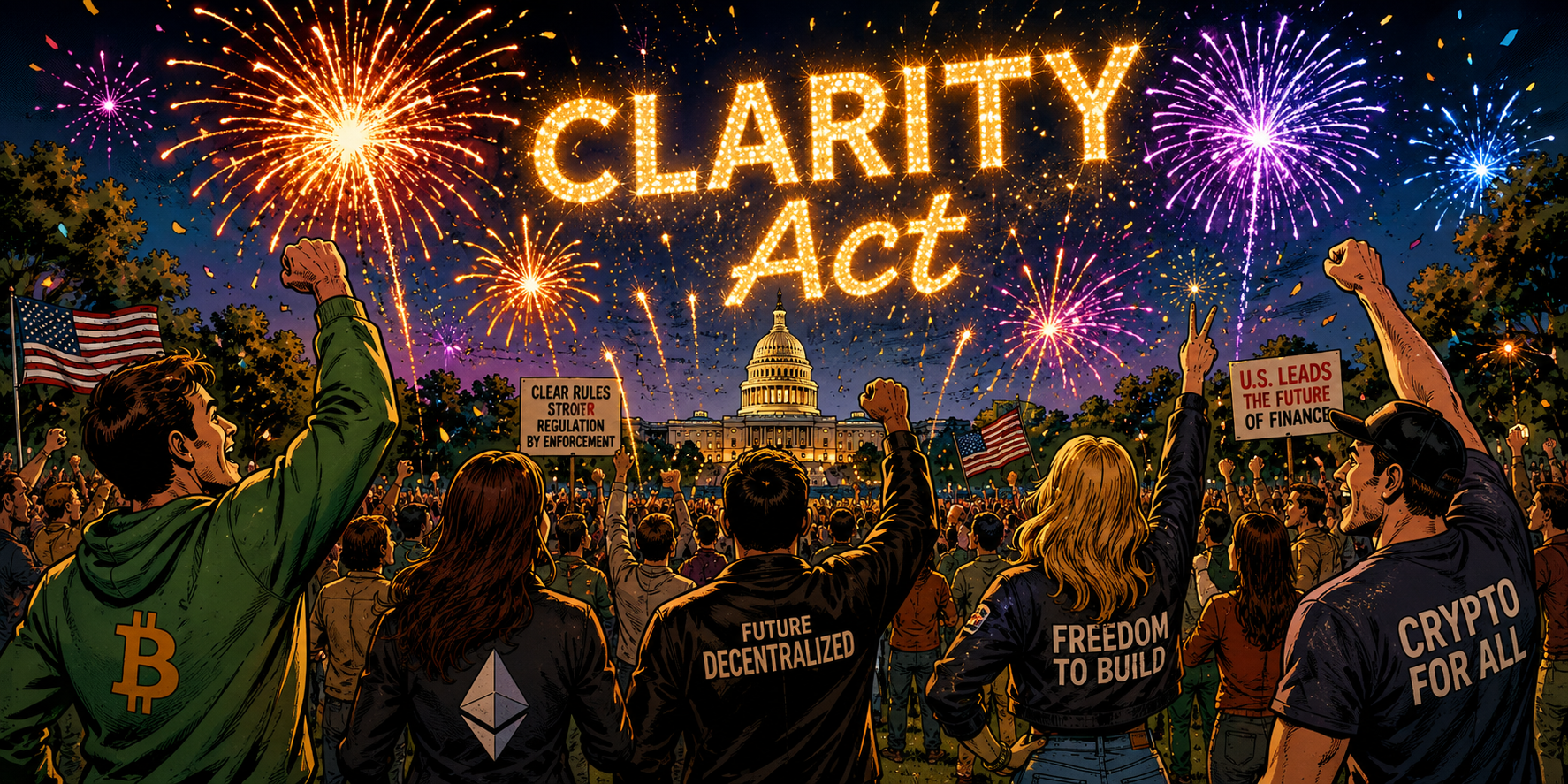
Washington’s crypto debate is moving into one of its most important stretches yet. After years of enforcement actions, agency turf wars and uncertainty over whether digital assets should be treated as securities, commodities or something in between, the CLARITY Act is once again at the center of the U.S. policy conversation. White House crypto adviser Patrick Witt says the coming days could be a “big week” for the bill, with negotiations continuing behind the scenes and the list of unresolved issues getting smaller.
For the crypto industry, that matters. The CLARITY Act is not a minor compliance update or a narrow technical fix. It is a market structure bill designed to answer one of the largest questions hanging over the American digital asset sector: who regulates crypto, under what rules, and how can projects operate without constantly fearing that the rules will change after the fact?
Witt’s latest comments suggest that lawmakers, regulators and industry stakeholders may be closer to a workable compromise than they were earlier in the process. He said the “issue set has narrowed” and that “good faith offers” are being made to close the remaining gaps. But he also warned that “time is of the essence,” a phrase that captures both the opportunity and the danger facing the bill.
Crypto has waited years for regulatory clarity. The question now is whether Congress can deliver it before momentum fades.
Why the CLARITY Act Matters
The CLARITY Act is designed to create a clearer legal framework for digital assets in the United States. At its core, the bill attempts to define when a crypto asset falls under the authority of the Securities and Exchange Commission and when it should be overseen by the Commodity Futures Trading Commission.
That distinction has been one of the most damaging sources of uncertainty in the U.S. crypto market. The SEC has argued that many digital assets should be treated as securities, especially when they are sold to raise capital or promoted with expectations of profit based on the efforts of developers or insiders. The CFTC, meanwhile, has historically overseen commodities and derivatives markets, and many in the crypto industry argue that sufficiently decentralized tokens should be treated more like commodities than securities.
The result has been a regulatory gray zone. Some projects have tried to comply, but found no clear pathway. Others have launched offshore. Exchanges have listed assets without knowing whether regulators would later classify them as unregistered securities. Investors have been left navigating a market where legal status can become a price-moving risk overnight.
The CLARITY Act is meant to move crypto away from this reactive model. Instead of relying mainly on enforcement actions and court rulings, it would create a structured framework for classification, registration, disclosure and oversight.
For the industry, that is the difference between operating under a map and operating under a fog machine.
The Political Window Is Narrow
Patrick Witt’s warning that time is running out is not just rhetorical. Legislative windows are fragile. Even when lawmakers broadly agree that a problem needs to be solved, bills can stall over details, committee schedules, election-year pressure, lobbying campaigns or unrelated political fights.
Crypto market structure legislation is especially difficult because it touches multiple power centers. The SEC, CFTC, banking regulators, stablecoin issuers, exchanges, venture firms, consumer protection groups, banks and national security officials all have an interest in the outcome. A compromise that satisfies one group may alarm another.
That is why Witt’s comment that the “issue set has narrowed” is important. It suggests negotiators are no longer debating every foundational question. Instead, they may be dealing with a smaller number of sticking points. In Washington, that is often the difference between a bill that is merely symbolic and one that has a real chance of moving.
Still, narrowing the issues does not guarantee passage. The final issues are often the hardest. They tend to involve money, jurisdiction, political credit and institutional power.
The Stablecoin Question Still Shadows the Debate
Although the CLARITY Act is broader than stablecoins, stablecoin policy has remained one of the most sensitive issues in the wider crypto legislative package. The reason is simple: stablecoins directly compete with parts of the banking system.
Banks worry that if stablecoin issuers or crypto platforms can offer yield-like rewards, deposits could move out of traditional bank accounts and into digital dollar products. Community banks have been especially vocal about this concern because deposits are central to their lending model. If deposits migrate into stablecoins at scale, banks argue that credit availability could be affected, particularly in local markets.
Crypto companies see the issue differently. They argue that stablecoins are already one of the clearest and most useful applications of blockchain technology. They enable faster settlement, cheaper cross-border payments and easier access to digital dollars. From the industry’s perspective, overly restrictive rules could protect banks at the expense of innovation.
This debate has forced lawmakers to walk a tightrope. They want to encourage U.S. leadership in digital assets, but they do not want to destabilize the banking system or create new consumer risks. Any final CLARITY Act compromise will likely need to reassure banks without suffocating stablecoin growth.
SEC vs. CFTC: The Real Battle Beneath the Bill
The most important structural question remains the division of authority between the SEC and CFTC.
The SEC has deeper experience with investor protection, disclosures and securities markets. Its supporters argue that crypto has repeatedly shown why strong securities-style oversight is needed. Token launches, insider allocations, misleading promotions and exchange failures have all damaged investors. From that perspective, weakening SEC authority could create a lighter-touch system that benefits crypto firms while exposing retail users to new risks.
The industry’s counterargument is that crypto assets do not always fit neatly into securities law. A token may begin as part of a fundraising scheme but later function as a decentralized network asset. Applying the same rules to every stage of a token’s life can make compliance nearly impossible. Crypto builders argue that the law needs a transition mechanism, allowing assets to move from securities treatment toward commodities treatment once networks become sufficiently decentralized.
That transition concept is one of the most important parts of the market structure debate. If written well, it could give projects a path from early-stage development to decentralized operation. If written poorly, it could become either a loophole for regulatory avoidance or a trap that few legitimate projects can actually use.
The CLARITY Act is trying to solve this problem. That is why the bill matters far beyond the current news cycle. It could define how digital assets are launched, traded and governed in the United States for years.
Why the Market Is Paying Attention
Crypto markets do not usually wait for legal fine print. They trade narratives, probabilities and liquidity. The CLARITY Act has become a major narrative because it represents the possibility of a more investable U.S. crypto market.
If the bill advances, investors may interpret it as a signal that the U.S. is moving from hostility and uncertainty toward structured acceptance. That could support exchanges, token issuers, custody firms, stablecoin companies and institutional service providers. It could also improve confidence among venture investors who have been wary of backing U.S.-based crypto projects without clearer rules.
Bitcoin may not be directly affected in the same way as smaller tokens, since it is already widely treated as a commodity by U.S. regulators. But the broader crypto market could benefit from clearer legal categories. Ethereum, DeFi tokens, layer-1 networks, exchanges and tokenized asset platforms all have more at stake.
That does not mean the bill would automatically trigger a bull market. Regulatory clarity can be positive while still imposing new costs. Some projects may discover that compliance is harder, not easier. Some tokens may fail to qualify for favorable treatment. Some exchanges may face stricter listing standards. But for serious players, rules are often preferable to permanent uncertainty.
Institutional capital tends to prefer regulated risk over undefined risk. The CLARITY Act is important because it could convert crypto from a legally ambiguous market into a more standardized financial sector.
The Industry Wants a Win
More than 200 crypto companies, advocacy groups and industry organizations have reportedly called for lawmakers to move the bill forward. That kind of coordination reflects how badly the sector wants a legislative win.
For years, crypto companies have complained that the United States lacks a workable regulatory framework. They have pointed to Europe’s MiCA regime, Asian licensing systems and Middle Eastern digital asset hubs as examples of jurisdictions moving faster. The argument is not that every foreign framework is perfect. It is that other regions have been willing to write rules while the U.S. has relied heavily on enforcement and litigation.
The industry sees the CLARITY Act as a chance to reverse that trend. It would give companies a reason to build in the U.S. instead of routing activity through offshore entities. It could also help American regulators compete for influence over global crypto standards rather than reacting to rules written elsewhere.
That is the strategic case. If digital assets, stablecoins and tokenized financial markets become major parts of the global economy, the U.S. will want those systems shaped by American law, American institutions and dollar-based infrastructure. Delaying legislation does not stop crypto. It may simply push more activity outside U.S. oversight.
Critics Still See Dangerous Gaps
The bill’s opponents and skeptics are not simply anti-crypto. Many are concerned that the legislation could create openings for regulatory arbitrage.
One concern is that projects may try to classify assets as commodities too easily, avoiding securities disclosures even when insiders still control networks or investors rely heavily on centralized teams. Another concern is that exchanges and intermediaries could receive a lighter regulatory regime than traditional financial platforms, creating an uneven playing field.
Consumer protection is also a major issue. Crypto markets have a long history of hacks, collapses, manipulation, insider-driven token launches and misleading claims. Critics argue that any new framework must not become a political bailout for business models that failed under existing law.
There is also the ethics issue. Some lawmakers have raised concerns about political figures, campaign donors and affiliated businesses benefiting from crypto-friendly legislation. In a sector where tokens can move sharply on policy developments, perceptions of conflict of interest can become politically explosive.
These criticisms explain why negotiations are difficult. The industry wants clarity and flexibility. Skeptics want accountability and safeguards. A durable bill must do both.
What “Good Faith Offers” Could Mean
Witt’s reference to “good faith offers” suggests active compromise. In legislative terms, that usually means each side is giving ground on specific provisions rather than simply restating public positions.
Those compromises could involve how decentralization is defined, how exchanges register, how stablecoin-related incentives are treated, how much authority the SEC retains, how quickly the CFTC receives funding and how consumer protection standards are enforced. They may also involve political additions designed to bring hesitant lawmakers on board.
The details matter because crypto legislation can change dramatically through small wording shifts. A single definition can determine whether an asset is treated as a security or commodity. A registration threshold can determine whether a startup can comply or must leave the market. A disclosure rule can determine whether investors receive meaningful information or boilerplate.
That is why the behind-the-scenes phase is so important. Public statements tell the market that progress is being made. The actual text determines whether the bill is workable.
Why Timing Is Everything
If the CLARITY Act moves forward in the coming weeks, it could become one of the most important U.S. crypto policy milestones to date. If it stalls, the industry may be pushed back into the same cycle it has lived with for years: enforcement actions, court fights, agency disputes and offshore migration.
Timing also matters because crypto markets are entering a more institutional phase. Spot Bitcoin ETFs, growing stablecoin adoption, tokenized treasuries, corporate crypto strategies and bank interest in digital assets have changed the policy environment. Crypto is no longer a niche retail speculation story. It is increasingly connected to payments, capital markets and global dollar infrastructure.
That makes the absence of clear rules more costly. The larger the market becomes, the more dangerous regulatory ambiguity gets. Ambiguity may feel flexible in the early stages of innovation, but at scale it becomes a systemic weakness.
For lawmakers, the challenge is to act before the next crisis forces action under worse conditions.
The Bottom Line
The CLARITY Act is entering a crucial week because the politics, policy and market pressure are converging. Patrick Witt’s comments suggest that negotiations have made real progress, with fewer unresolved issues and serious offers on the table. But his warning that time is running out is equally important. Crypto legislation has come close before, only to stall when the final compromises became too difficult.
For the digital asset industry, the bill represents more than regulatory relief. It represents a possible shift from enforcement-first uncertainty toward a market structure framework that could allow legitimate projects to operate inside the United States with clearer obligations. For regulators and skeptics, the bill is a test of whether Congress can support innovation without weakening investor protection or creating new risks in the financial system.
The next stage will determine whether CLARITY becomes the rare crypto bill that survives Washington’s machinery or another near-miss in the long fight over digital asset regulation.
The stakes are large because the outcome will shape more than crypto prices. It will influence where companies build, how tokens are launched, how exchanges operate, how stablecoins evolve and whether the U.S. remains central to the future of digital finance.

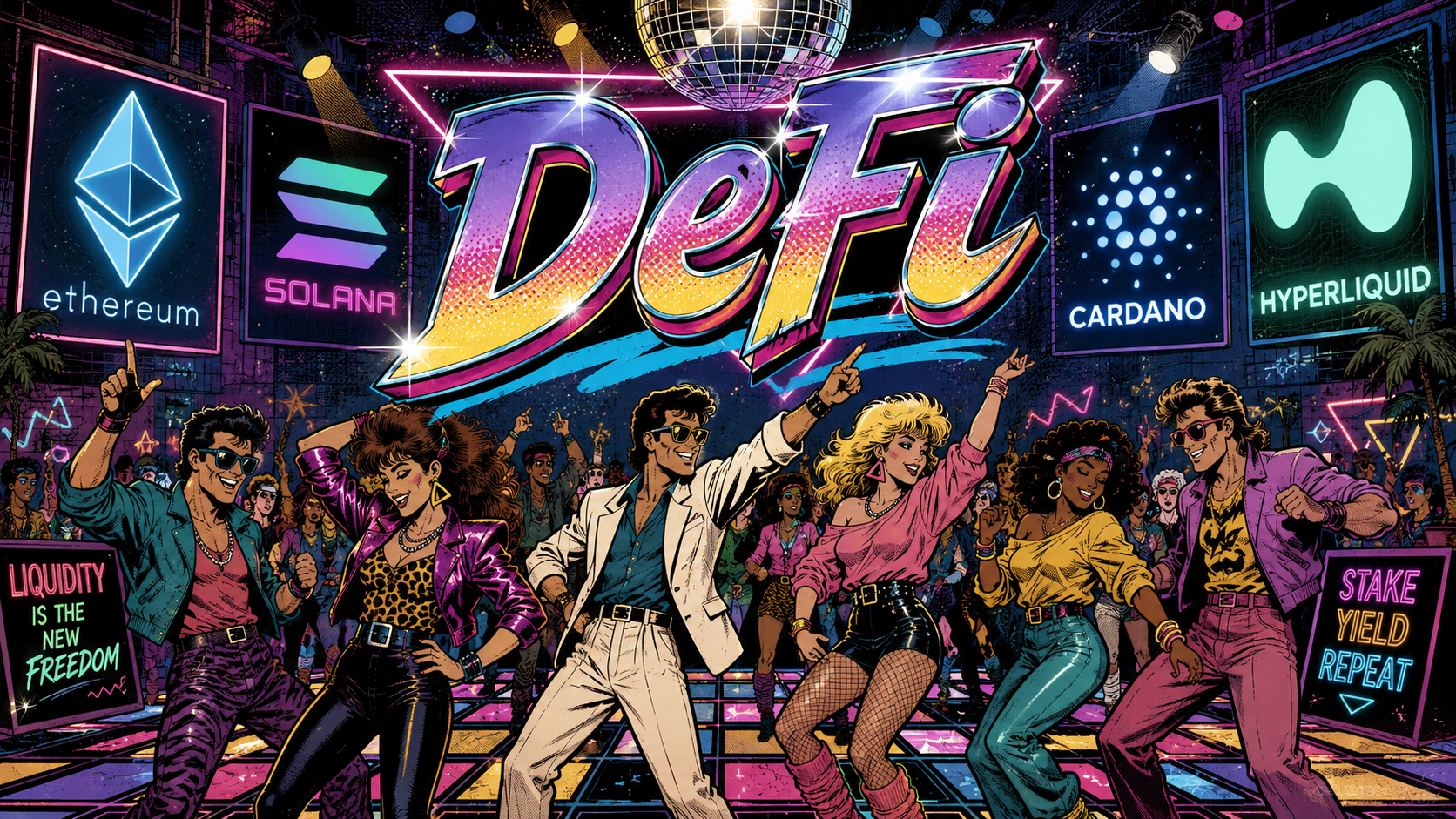
DeFi users are no longer the same crowd that chased triple-digit yields through Ethereum in 2021. The market has survived Terra, FTX, bridge hacks, toxic token emissions, regulatory pressure, and the slow death of the “number go up” liquidity-mining era. Yet DeFi has not disappeared. It has changed shape. The current DeFi user is less likely to be a yield farmer rotating through food-themed tokens and more likely to be a stablecoin mover, onchain trader, lending borrower, points hunter, restaking participant, perp trader, or institution testing tokenized assets. The sector’s all-time highs tell one story. The user behavior underneath tells another.
DeFi’s First ATH Was About Liquidity, Not Mainstream Adoption
The first great DeFi all-time high came in 2021, when total value locked became the industry’s favorite scoreboard. In November 2021, DeFi reached roughly $220 billion in total value locked, while the broader dapp industry hit a then-record of around 2 million daily active wallets. That was the moment when DeFi looked like it might become crypto’s first mass-market financial application. In reality, it was still a capital-heavy but user-light ecosystem. A relatively small group of sophisticated users moved large amounts of money across lending markets, automated market makers, derivatives protocols and liquidity farms.
The 2021 user was highly motivated by yield. Protocols paid users in native tokens to deposit liquidity, borrow assets, stake LP tokens, bridge to new chains and bootstrap ecosystems. The model worked as a growth hack, but it was expensive. Many protocols bought activity with emissions rather than earning loyalty through product-market fit. When token prices fell, yields collapsed, and much of the user base vanished with them.
That does not mean 2021 was fake. It proved that smart contracts could coordinate trading, lending, collateral, liquidations and market making at global scale. But it also showed that “TVL” could be misleading. TVL measured assets sitting in contracts, not necessarily healthy demand, active users, retained revenue or durable financial utility.
The Second ATH Was Stranger: More Users, More Chains, Less Euphoria
By 2024 and 2025, DeFi had entered a different phase. The sector was no longer the only growth engine in crypto. Gaming, AI dapps, social apps, NFTs, memecoins, restaking and infrastructure competed for attention. Yet user activity across the broader dapp industry reached levels that made 2021 look small. DappRadar reported that the dapp industry averaged 24.6 million daily unique active wallets in 2024, while DeFi activity grew sharply and ended the year with about 7 million daily unique active wallets and 32% market dominance.
That was a major shift. DeFi no longer lived almost entirely on Ethereum mainnet. Users had moved to Solana, Base, Arbitrum, BNB Chain, Optimism, Avalanche, Polygon, Sui, Aptos, and newer app-specific environments. Fees were lower, wallets were easier, stablecoins were more liquid, and trading interfaces were less intimidating than in the early Uniswap and Compound era.
But the mood was different from 2021. The market was more cynical. Users had learned that high yields often came with hidden risk. Airdrop farming became a dominant behavior. Many wallets were active not because users loved the product, but because they expected future token rewards. This made raw active-wallet data harder to interpret. A single human could control many wallets. A bot could mimic users. A points campaign could create activity that disappeared after the snapshot.
The result was a paradox: DeFi had more users than ever, but less innocence.
The 2025 Capital ATH Showed DeFi’s Maturity and Its Weakness
The most important recent milestone came in Q3 2025, when DappRadar reported that DeFi TVL hit a record $237 billion across blockchains and protocols. At the same time, the broader dapp industry’s daily unique active wallets fell 22.4% quarter-over-quarter to 18.7 million. In other words, capital was rising while user activity was cooling.
That divergence matters. It suggests DeFi was becoming more institutional and capital-efficient, but not necessarily more consumer-driven. Bigger pools, lending markets and tokenized assets can push TVL higher even if fewer humans are clicking through dapps every day. A market maker, fund, DAO treasury or stablecoin issuer can move more value than thousands of small wallets.
By October 2025, DappRadar reported that DeFi TVL had fallen to $221 billion, down 6.3% month-over-month, while the broader dapp industry averaged 16 million daily active wallets. The direction was clear: the sector was no longer in a simple expansion phase. It was rotating, correcting and becoming more selective.
That is the current DeFi reality. The sector can set records in capital, volume or users, but not always at the same time. The old bull-market assumption that everything rises together no longer holds.
The Current Situation: Smaller TVL, Stronger Infrastructure
As of late May 2026, DeFiLlama’s dashboard showed roughly $79.7 billion in DeFi TVL, a much lower snapshot than the highs reported during 2025. Methodologies vary across data providers, and TVL can shift sharply depending on whether liquid staking, restaking, synthetic assets, bridged assets and double-counted collateral are included. Still, the direction is useful: DeFi has cooled from the 2025 peak, and the market is now more focused on real usage than headline TVL.
Stablecoins are the clearest sign that onchain finance is not dead. DeFiLlama showed total stablecoin market capitalization at about $320.8 billion, with USDT holding roughly 58.8% dominance. Stablecoins are no longer just casino chips for crypto traders. They are becoming settlement assets, dollar access tools, exchange collateral, DeFi liquidity, and cross-border payment rails.
This matters for DeFi users because stablecoins are the sector’s base layer. When users borrow on Aave, provide liquidity on Curve, trade on Uniswap, move funds across chains, or settle perpetual positions, stablecoins are often involved. The rise of stablecoins makes DeFi more useful even when speculative farming is weak.
The lending market also shows a more mature user profile. Aave remains one of the most important DeFi protocols, with DeFiLlama showing active loans above $10 billion in its current dashboard data, while separate Token Terminal reporting said Aave’s average active loans in March 2026 were $16.55 billion, up more than 47% year-over-year. That gap reflects different snapshots and reporting windows, but the broader signal is consistent: lending is still one of DeFi’s strongest product categories.
The New DeFi User Is a Trader First
The strongest user trend is the rise of onchain trading, especially perpetual futures. In 2021, DeFi’s flagship activity was spot swaps and lending. By 2025, perps had become one of the sector’s biggest growth engines. DefiLlama data cited by Cointelegraph showed onchain perp DEX volume reaching $1.36 trillion in October 2025 before falling to $699 billion in March 2026 after five straight monthly declines.
That decline sounds bearish, but the scale is still remarkable. Even after cooling, onchain perpetual exchanges were processing volumes that would have been unimaginable for DeFi a few years earlier. Hyperliquid’s current DeFiLlama page shows cumulative perp volume above $4.5 trillion and open interest above $9.5 billion, placing it at the center of the new onchain trading economy.
This changes the identity of the DeFi user. The most active user is increasingly not a passive liquidity provider. It is a trader using leverage, chasing execution, comparing fees, managing margin, and moving between centralized and decentralized venues. That user cares about speed, liquidity, funding rates, liquidation engines and mobile access. They are less ideological and more performance-driven.
Spot DEXs Are Becoming Financial Infrastructure
Uniswap remains the symbol of spot DeFi. DeFiLlama shows Uniswap cumulative DEX volume above $3.68 trillion, with 24-hour volume around $1.4 billion in the current snapshot. That makes Uniswap less like a speculative experiment and more like standing market infrastructure.
The user experience has also changed. In the early DeFi era, swapping onchain meant paying high Ethereum gas fees, approving tokens manually, worrying about slippage and hoping the transaction would not fail. Now many users interact through aggregators, mobile wallets, chain-specific front ends, intent-based systems and low-fee networks. The complexity has not disappeared, but it has been abstracted.
The next phase will likely be even less visible. Users may not know they are using DeFi at all. A wallet, neobank, trading app or AI agent may route liquidity through decentralized venues in the background. In that future, DeFi user growth will not necessarily look like more people visiting protocol websites. It may look like more financial apps silently using DeFi rails.
RWAs Are Bringing a Different Kind of User
Real-world assets are one of the most important trends for DeFi’s next cycle. RWA.xyz currently shows tokenized U.S. Treasuries at about $10 billion in total value, with nearly 59,000 holders. This is not a retail degen market. It is a yield, collateral and treasury-management market that appeals to institutions, fintechs, DAOs and sophisticated crypto users seeking onchain exposure to traditional assets.
RWAs may not produce the same daily-active-wallet explosion as memecoins or airdrop farms, but they can deepen DeFi’s capital base. Tokenized Treasuries can become collateral in lending markets, backing assets for stablecoins, settlement instruments for institutions, or cash-management tools for crypto-native funds.
The risk is liquidity. Tokenizing an asset does not automatically make it trade actively. Academic research on RWAs has warned that many tokenized assets still suffer from limited secondary markets, regulatory gating, whitelisting and low transfer activity. That means RWA growth is real, but it should not be confused with fully open, liquid, permissionless DeFi.
The Security Problem Has Improved, But It Has Not Gone Away
DeFi users have become more security-aware, but the ecosystem remains dangerous. Immunefi reported that industry-wide DeFi protocol losses fell about 80% from the 2022 peak of $2.62 billion to $534 million in 2024, before rebounding to $680 million in 2025 because of a small number of large incidents. The median loss per incident fell from $6 million in 2022 to $1.5 million in 2025.
That is meaningful progress. Audits, bug bounties, formal verification, monitoring systems, circuit breakers and better risk teams have helped. But DeFi’s composability remains a double-edged sword. Protocols depend on oracles, bridges, collateral assets, liquidity pools, governance systems and external integrations. A failure in one component can move through the stack.
Research has also challenged how DeFi measures itself. Some academic analyses have found that TVL calculations are not always easy to verify and often rely on non-standard methods. Other research has argued that TVL can be inflated through double-counting, wrapping and leverage. This is important for users because a large TVL number can create false confidence.
Where DeFi Users Go Next
The next DeFi cycle will not be defined by one user type. It will split into several layers.
At the retail edge, DeFi will look like mobile trading, memecoin speculation, perp markets, social finance, stablecoin payments and airdrop hunting. These users will care less about decentralization as a philosophy and more about speed, rewards, entertainment and access.
At the professional edge, DeFi will look like structured lending, delta-neutral strategies, market making, collateralized stablecoin loops, basis trades, tokenized Treasuries and onchain derivatives. These users will care about risk engines, liquidity depth, capital efficiency and regulatory clarity.
At the institutional edge, DeFi may become a backend rather than a destination. Banks, fintechs, asset managers and payment companies may use stablecoins, tokenized funds and public-chain settlement while shielding end users from wallets, seed phrases and gas fees.
The most likely prediction is that DeFi user numbers will grow, but the definition of “user” will become harder to measure. Wallet counts will remain noisy. TVL will remain incomplete. Volume will be increasingly dominated by bots, market makers and professional traders. The more meaningful metrics will be retained users, real fees, net protocol revenue, stablecoin settlement, active borrowers, open interest, collateral quality and integrations into mainstream financial apps.
Prediction: DeFi’s Next ATH Will Be Less Loud, But More Important
The next DeFi ATH probably will not feel like 2021. It may not be driven by retail users discovering yield farms on Twitter. It is more likely to arrive through a combination of stablecoin expansion, onchain derivatives, tokenized assets, institutional collateral, better wallets and invisible routing through consumer apps.
TVL can return to and exceed the 2025 highs if crypto asset prices recover, stablecoin supply continues growing, and tokenized assets become more deeply integrated into lending and trading markets. But the healthier sign would be not just a higher TVL number. It would be more real borrowers, more organic trading, more stablecoin settlement, more sustainable protocol revenue and fewer hacks relative to assets secured.
The future DeFi user may not describe themselves as a DeFi user. They may be a trader opening a perp position from a mobile app, a freelancer receiving stablecoins, a fund parking cash in tokenized Treasuries, a borrower using tokenized collateral, or an AI agent executing payments through smart contracts. That is the real direction of the market.
DeFi’s first era was about proving that decentralized financial applications could exist. Its second era was about scaling users across chains. The next era will be about hiding the complexity so effectively that DeFi becomes infrastructure. When that happens, the sector’s most important all-time high may not be TVL. It may be the moment users stop noticing they are using DeFi at all.
-

 Cardano9 months ago
Cardano Breaks Ground in India: Trivolve Tech Launches Blockchain Forensic System on Mainnet
-

 Cardano7 months ago
Solana co‑founder publicly backs Cardano — signaling rare cross‑chain respect after 2025 chain‑split recovery
-

 Cardano9 months ago
Cardano Reboots: What the Foundation’s New Roadmap Means for the Blockchain Race
-

 Altcoins7 months ago
Crypto Goes Mainstream — Bitwise 10 Crypto Index ETF (BITW) Debuts on NYSE Arca
-

 News7 months ago
Crypto on Trial: The $5.5 Billion Pump.fun, Solana & RICO Lawsuit That Could Redefine On‑Chain Liability
-

 News7 months ago
From Memes to Courtrooms: Solana and Jito Execs Named in Explosive RICO Suit Over Pump.fun
-

 Altcoins7 months ago
Algorand’s 2027 Question: Can the Network Survive Without Foundation-Funded Rewards?
-
 Altcoins7 months ago
NYSE Arca Files to Launch Altcoin-Focused ETF