Altcoins
Crypto Fear Hits Extreme Lows — Even as Institutions Keep Buying


- Share
- Tweet /data/web/virtuals/383272/virtual/www/domains/theunhashed.com/wp-content/plugins/mvp-social-buttons/mvp-social-buttons.php on line 63
https://theunhashed.com/wp-content/uploads/2026/02/fear-1000x600.png&description=Crypto Fear Hits Extreme Lows — Even as Institutions Keep Buying', 'pinterestShare', 'width=750,height=350'); return false;" title="Pin This Post">
Why the Fear & Greed Index Is Flashing Panic While Wall Street Keeps Pushing Forward
Crypto sentiment has plunged to one of its lowest readings in recent memory. The Crypto Fear & Greed Index — a widely followed gauge of market psychology — has dropped to extreme fear levels, even as institutional involvement in the sector continues to expand.
At first glance, the contradiction seems stark. How can retail sentiment be collapsing while institutions are steadily building positions?
The answer reveals a deeper structural shift in how this market now functions.
Retail Fear vs. Institutional Patience
The Fear & Greed Index aggregates volatility, trading volume, social media activity, dominance metrics, and other behavioral signals. When it plunges into extreme fear territory, it reflects anxiety among traders — usually triggered by price drawdowns, liquidation cascades, or macro uncertainty.
But today’s crypto market is no longer purely retail-driven.
Institutional flows, particularly through Bitcoin and Ethereum ETFs, have introduced a second layer of demand that operates on a completely different time horizon. Pension funds, asset managers, and endowments are not reacting to daily volatility. They are allocating based on strategic portfolio frameworks.
That divergence is now visible in the data.
Retail sentiment is fragile.
Institutional positioning appears measured.
The ETF Era Changes the Psychology
The approval and growth of spot Bitcoin ETFs fundamentally altered crypto’s capital structure. Large asset managers can now accumulate exposure without interacting directly with exchanges or custody infrastructure. This makes buying less visible and less reactive to short-term fear cycles.
At the same time, DeFi activity has cooled relative to prior bull market peaks. On-chain trading volumes and speculative token rotations have slowed, contributing to the pessimistic sentiment readings.
Yet institutional balance sheets continue to absorb supply in the background.
This creates an unusual setup: public fear without systemic withdrawal of capital.
Why Fear Is So Elevated
Several factors are amplifying anxiety:
Macroeconomic uncertainty and rate policy concerns
Profit-taking after strong prior rallies
Short-term ETF flow volatility
Altcoin underperformance relative to majors
Altcoins, in particular, have struggled to regain speculative momentum. That weakness often drags overall sentiment lower because retail traders disproportionately allocate to higher-beta assets.
Meanwhile, Bitcoin’s relative resilience — supported by institutional buying — is not enough to lift broad market confidence.
The market feels fragile, even if capital inflows suggest otherwise.
DeFi’s Quiet Role
DeFi metrics offer another layer of insight. Total value locked has stabilized but has not returned to euphoric levels. Stablecoin supply growth remains moderate rather than explosive. Yield opportunities are competitive but no longer driven by unsustainable incentives.
In other words, the market lacks mania.
And without mania, the Fear & Greed Index skews conservative.
This is not the fear of systemic collapse. It is the absence of speculative euphoria.
A Structural Transition
Crypto is undergoing a transition from narrative-driven retail cycles to capital-structured institutional phases. During retail-dominated eras, fear often preceded capitulation. In institutionally supported markets, fear may simply reflect emotional lag.
The ETF bid does not panic.
That difference may fundamentally reshape how sentiment indicators should be interpreted going forward.
Extreme fear in a retail-heavy market can signal collapse.
Extreme fear in a dual-structure market might signal opportunity.
What Comes Next?
If institutional flows remain stable while retail sentiment stays depressed, the market could enter a slow grind higher rather than a violent breakout. Alternatively, a macro shock could validate the fear reading and trigger broader risk-off behavior.
The key variable is whether ETF inflows continue offsetting speculative weakness elsewhere.
The paradox is clear: crypto feels scared, but it is not empty.
For seasoned investors, that divergence matters.
When fear is high but capital remains present, the market often surprises to the upside.
The Fear & Greed Index may be flashing red.
But Wall Street hasn’t flinched.
Again, there are short sentences instead of paragraphs. I want article with paragrapsh.
Crypto Fear Collapses to Extreme Lows — Even as Institutional Capital Keeps Flowing
The Fear & Greed Index Is Flashing Panic, but Wall Street Isn’t Acting Like It
Crypto sentiment has fallen to one of its weakest levels in recent memory. The Crypto Fear & Greed Index, a composite measure of market psychology based on volatility, trading activity, social trends, and dominance metrics, has dropped into extreme fear territory despite the continued institutional push into digital assets. On the surface, the divergence looks contradictory. If institutions are still allocating capital, why does the market feel so anxious?
The answer lies in the structural transformation of the crypto market itself. Retail psychology and institutional positioning now operate on different timelines, different incentives, and often different data.
Retail Emotion vs. Institutional Strategy
The Fear & Greed Index primarily reflects retail-driven inputs. It captures volatility spikes, falling prices, reduced social enthusiasm, and slowing speculative activity. When altcoins bleed, when leverage unwinds, and when short-term price action weakens, sentiment indicators react quickly.
Institutional capital, however, does not behave that way. Large asset managers and endowments are not trading hourly candles. Their allocations are driven by portfolio models, diversification logic, and multi-quarter outlooks. The rise of spot Bitcoin and Ethereum ETFs has formalized this shift. Capital can now enter crypto through regulated vehicles without engaging directly with exchanges or on-chain infrastructure.
That structural change creates an unusual scenario: retail fear can intensify even while institutional demand remains stable.
The ETF Effect on Market Dynamics
The introduction of spot ETFs has altered the market’s internal mechanics. Institutional flows through these vehicles are less visible to retail traders and less sensitive to social media cycles. When an asset manager accumulates Bitcoin exposure through an ETF, it does not generate the same on-chain signals that traders traditionally watched.
At the same time, ETF flows tend to be steadier and more measured. They reflect asset allocation decisions rather than momentum trades. This dampens volatility at the top of the market but does not necessarily lift sentiment in the broader ecosystem, particularly among altcoin traders.
As a result, the Fear & Greed Index may be signaling emotional stress in one segment of the market while ignoring the structural capital build-up in another.
Why Fear Is So Elevated
Several factors have amplified caution across the market. Macroeconomic uncertainty continues to weigh on risk assets, particularly as interest rate expectations fluctuate. After strong rallies in previous months, profit-taking has compressed momentum. Altcoins, which traditionally drive speculative excitement, have underperformed relative to Bitcoin, dragging broader sentiment lower.
DeFi activity, while stable, lacks the explosive growth that characterized previous bull cycles. Stablecoin supply expansion has been moderate rather than aggressive. Without rapid expansion in leverage and token speculation, retail enthusiasm cools quickly.
This does not necessarily signal systemic weakness. It signals the absence of mania.
DeFi and On-Chain Signals
On-chain metrics paint a more nuanced picture. Total value locked in DeFi has stabilized, and major protocols continue generating sustainable yields rather than relying on inflationary token emissions. Stablecoin reserves remain substantial, suggesting that liquidity has not exited the system.
What is missing is the reflexive speculative cycle that once propelled sentiment into extreme greed. In prior cycles, DeFi yield farming and altcoin rotations created rapid capital expansion. Today’s environment appears more measured and capital-efficient.
The market feels cautious not because it is collapsing, but because it is no longer euphoric.
A Market in Transition
Crypto is undergoing a structural evolution from retail-dominated speculation to institutionally integrated capital markets. In earlier cycles, extreme fear often preceded capitulation events because liquidity was fragile and leverage was concentrated among retail traders. In today’s environment, institutional allocations through ETFs and structured vehicles provide a stabilizing counterweight.
This does not eliminate downside risk. However, it changes how sentiment indicators should be interpreted. Extreme fear in a purely retail market may signal systemic vulnerability. Extreme fear in a hybrid market structure may instead reflect emotional lag behind structural capital flows.
The divergence between sentiment and institutional behavior is not a contradiction. It is evidence of maturation.
What Comes Next
If institutional inflows continue while retail sentiment remains depressed, the market may grind higher gradually rather than explode into rapid upside. Conversely, a macro shock could validate fear readings and trigger a broader risk-off cycle.
The critical variable is whether capital continues to accumulate beneath the surface. If it does, the current extreme fear reading may ultimately be remembered not as a warning sign, but as an opportunity window.
The Fear & Greed Index is flashing red. Yet institutional allocators appear steady. In a market that is increasingly shaped by capital structure rather than social momentum, that divergence may matter more than sentiment alone.














Allbridge Core has become the latest cross-chain protocol to discover how quickly a liquidity imbalance can turn into a seven-figure loss. An attacker exploited the bridge’s Solana deployment for an estimated $1.65 million, moved the stolen assets from Solana to Ethereum and began routing the funds through mechanisms designed to make the trail more difficult to follow.
Allbridge paused its Core protocol while investigating the incident and urged liquidity providers with funds in the affected pools to withdraw. The company has not yet released a complete technical post-mortem, leaving security researchers and onchain analysts to reconstruct the attack from the transactions visible on Solana and Ethereum.
The early evidence points to a flash-loan-assisted manipulation of a stablecoin liquidity pool rather than a compromise of private keys or the bridge’s validator infrastructure. That distinction explains the mechanics of the attack, but it does little to reduce the consequences for liquidity providers whose capital was exposed to the distorted pool.
A Flash Loan Turned Liquidity Into a Weapon
According to initial analysis from Onchain Lens, the attacker borrowed approximately $1.12 million in USDC through a flash loan from Kamino, a Solana-based liquidity protocol.
A flash loan allows a user to borrow substantial capital without posting traditional collateral, provided that the loan is repaid within the same blockchain transaction. The feature is useful for legitimate arbitrage, refinancing and liquidity management. It also gives attackers access to enough temporary capital to manipulate markets that would otherwise be too expensive to influence.
In this case, the borrowed USDC was reportedly used to execute rapid swaps between USDC and USDT inside an Allbridge Core liquidity pool. Both assets are designed to trade close to one US dollar, but their exchange rate inside an automated pool depends on the pool’s reserves and pricing formula.
By pushing a large amount of capital through the pool in a carefully structured sequence, the attacker appears to have distorted the relationship between the two stablecoins. Once the pool was sufficiently imbalanced, assets could be withdrawn at an exchange rate that no longer reflected their real market value.
The attacker then repaid the flash loan while retaining the extracted value. Blockchain-security firms PeckShield and CertiK estimated the total loss at roughly $1.65 million.
The entire operation demonstrates why flash-loan attacks can be so effective. The attacker does not need to own the capital used to manipulate the pool. They only need to identify a pricing mechanism that can be pushed into an unsafe state and complete the full sequence before the transaction ends.
If any step fails, the transaction can revert and the borrowed funds return to the lender. If the exploit succeeds, the attacker repays the loan and keeps the difference.
Stolen Assets Crossed From Solana to Ethereum
After extracting the funds, the attacker reportedly bridged the stolen assets from Solana to Ethereum and converted them into ETH.
The move was strategically significant. Ethereum provides access to deeper liquidity, a larger collection of decentralized exchanges and a wider range of privacy tools. Moving the assets also complicates recovery efforts because investigators must follow the funds across multiple networks, bridge transactions, token conversions and potentially numerous wallet addresses.
Onchain analysts reported that some of the funds were subsequently directed toward privacy-oriented pools. These protocols can combine deposits from multiple users and make it more difficult to connect the original source of an asset with its eventual destination.
Blockchain transactions remain public, but public does not always mean easily attributable. Investigators can watch funds enter a privacy system without necessarily knowing where the same value later exits.
Speed is therefore critical after an exploit. Security teams may try to contact exchanges, stablecoin issuers, bridge operators and other infrastructure providers before the attacker can disperse the assets. Once the funds have been divided, swapped and routed through privacy services, the chances of a straightforward recovery decrease substantially.
The transfer to Ethereum does not mean the attacker has escaped detection. It does, however, suggest an effort to move beyond the environment where the exploit occurred and gain access to a broader set of laundering options.
Allbridge Pauses Core and Warns Liquidity Providers
Allbridge said it paused the protocol as a precaution while investigating the security incident. The team also told liquidity providers with funds in the affected pools to withdraw immediately.
That warning reflects a second layer of risk created by the exploit. Even after the attacker completes the main extraction, the damaged pool can remain severely imbalanced. Liquidity-provider positions may therefore no longer represent the asset composition or value that depositors originally expected.
Allbridge acknowledged that the imbalance temporarily created a profitable arbitrage opportunity. Traders who noticed the distorted pricing could exchange assets at favorable rates, potentially extracting additional value from the affected pool even without participating in the original exploit.
This creates a complicated recovery problem. Some transactions executed after the attack may have been ordinary arbitrage rather than malicious activity. From the pool’s perspective, however, both can deepen the losses experienced by liquidity providers.
Allbridge asked traders who benefited from the temporary arbitrage window to consider returning the proceeds, saying that recovered funds would be used to compensate affected LPs. The company stated that its objective is to return all affected funds to users.
Whether that is achievable will depend on how much capital can be recovered, the final size of the losses and the technical details revealed by the investigation.
For LPs, the immediate priority is not chasing yield or attempting to trade around the imbalance. It is following the protocol’s official instructions, withdrawing from affected pools where possible and avoiding further deposits until Allbridge has explained the vulnerability and completed its remediation process.
Why Stablecoin Pools Are Not Automatically Stable
The exploit also exposes a persistent misconception surrounding stablecoin liquidity.
USDC and USDT are both intended to maintain a value close to one dollar. That does not mean every exchange between them is protected from manipulation. A decentralized pool calculates prices according to its reserves and smart-contract logic, not according to a universal guarantee that one stablecoin must always equal another.
Stablecoin-focused automated market makers are typically designed to offer low-slippage trades when assets remain close to parity. The efficiency comes from specialized pricing curves that assume the tokens should trade within a narrow range.
That assumption can become dangerous if an attacker can artificially shift the pool’s reserves or exploit a weakness in the way deposits, withdrawals and swaps are calculated. A formula optimized for efficient stablecoin trading may behave unpredictably when subjected to a transaction sequence that its designers did not adequately anticipate.
The key question is not simply whether USDC and USDT remained close to one dollar on external markets. It is whether Allbridge Core’s internal accounting allowed the attacker to create and monetize a temporary discrepancy inside the protocol.
A full technical assessment will need to establish which checks failed, whether the vulnerability was specific to the Solana implementation and whether equivalent attack paths exist in any other Allbridge pools.
A Familiar Problem for Allbridge
This is not the first time Allbridge has faced a flash-loan-related security incident.
In April 2023, an attacker exploited an Allbridge liquidity pool on BNB Chain and drained approximately $573,000. That incident also involved manipulation of a stablecoin pool’s pricing mechanism. Part of the stolen money was later returned after the project offered the attacker an opportunity to act as a white-hat participant.
The similarity does not necessarily mean the same vulnerability survived unchanged for more than three years. The current exploit affected a different blockchain deployment and may involve separate code, assumptions or implementation details.
It does, however, place additional pressure on Allbridge to explain how the latest attack bypassed its defenses. Users will want to know what was changed after the 2023 incident, whether the new exploit shared any underlying design characteristics with the earlier attack and how the protocol plans to prevent a third occurrence.
Security reviews cannot focus only on previously identified lines of vulnerable code. They must also examine the broader economic conditions that made the exploit possible.
A contract can function exactly as written and still produce a catastrophic result if its pricing model, liquidity assumptions or transaction limits allow an attacker to manipulate the system profitably.
Cross-Chain Bridges Remain High-Value Targets
Cross-chain bridges occupy one of the most demanding positions in decentralized finance. They must coordinate assets and messages between networks that operate under different technical rules, while maintaining enough liquidity to make transfers practical.
That concentration of capital makes bridges attractive targets. Their complexity creates numerous places where security can fail, including smart contracts, liquidity pools, price calculations, message validation, privileged accounts and external dependencies.
The Allbridge incident appears to have targeted a liquidity mechanism rather than the bridge’s cross-chain verification system. Nevertheless, the attack reinforces the wider bridge-security problem: an attacker only needs to compromise one economically important component to place user funds at risk.
Audits remain necessary, but they cannot guarantee that every possible transaction sequence has been anticipated. Protocols also need active monitoring capable of detecting unusual pool imbalances, rapid high-value swaps and withdrawals that diverge sharply from normal activity.
Circuit breakers can help by automatically pausing activity when reserves move beyond predefined thresholds. Flash-loan-resistant pricing, withdrawal limits and time-weighted calculations can also reduce the ability of an attacker to create and exploit a temporary price distortion within a single transaction.
These defenses introduce trade-offs. Limits can make markets less efficient, pauses can interfere with legitimate users and slower pricing mechanisms may create other forms of risk. The alternative, however, is a system optimized for speed during normal conditions but unable to defend itself when capital arrives specifically to break its assumptions.
The Investigation Will Determine the Real Damage
The current $1.65 million figure is an estimate from blockchain-security analysts rather than a final loss calculation from Allbridge. The amount could change as investigators distinguish the original extraction from subsequent arbitrage, trace remaining funds and examine the exact condition of affected LP positions.
Allbridge’s next updates will need to address more than the status of the stolen assets. Liquidity providers will expect a clear accounting of losses, a compensation framework and an explanation of which pools were affected.
The protocol will also need to describe how it intends to restore operations safely. Reopening without a detailed diagnosis would leave users dependent on assurances rather than evidence.
A credible recovery process should include a technical post-mortem, independent review of the fix and a clear explanation of the safeguards added to detect similar manipulation. The company’s decision to pause the protocol limits immediate exposure, but the long-term test will be whether the incident leads to a stronger design.
For now, the message to affected liquidity providers is direct: withdraw from the impacted pools and wait for verified information from Allbridge before returning capital.
The attacker has already moved quickly. Allbridge’s challenge is to ensure its investigation is just as decisive—and considerably more transparent.
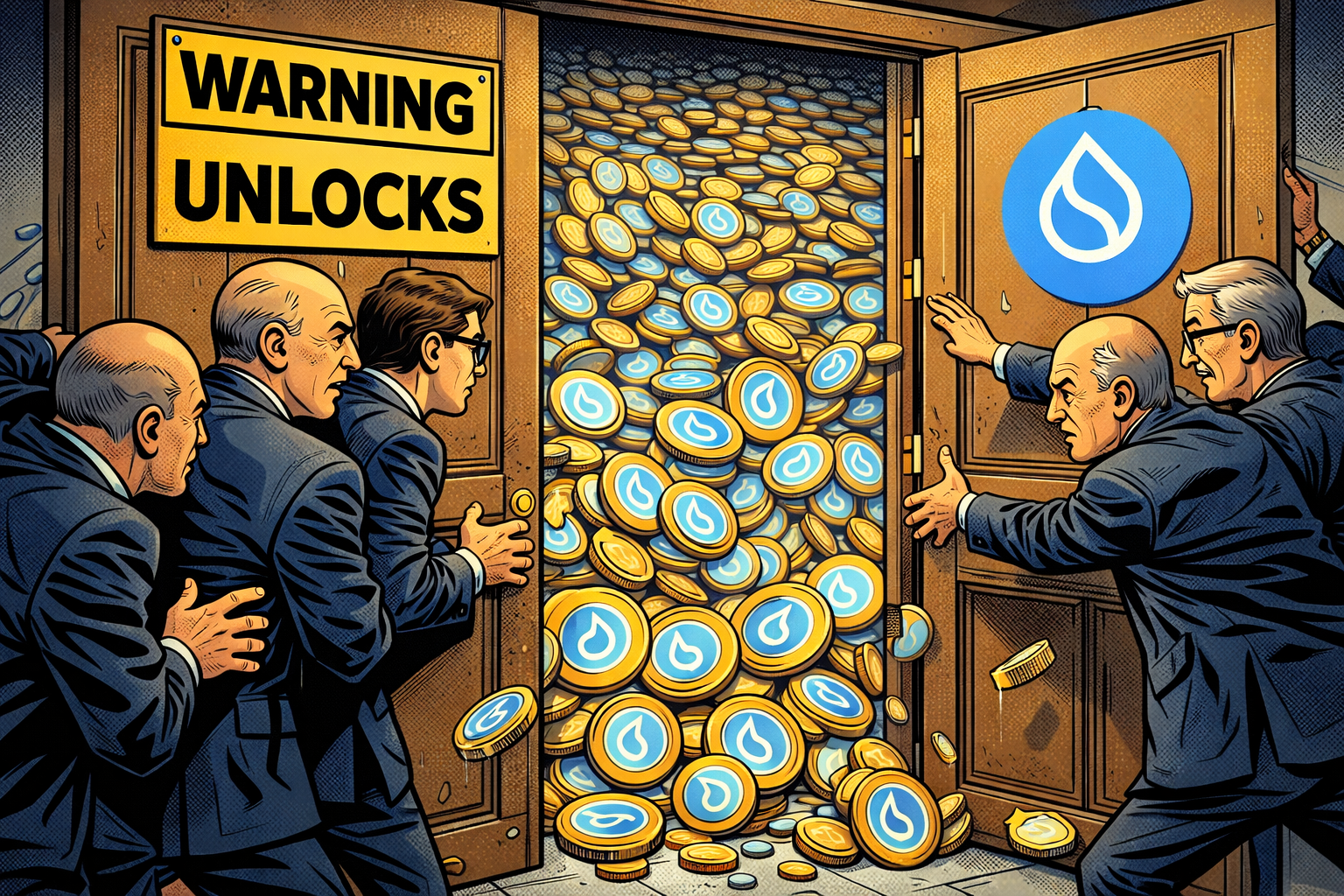
The cryptocurrency market is preparing for one of its most significant liquidity events in recent months. More than $5.8 billion worth of tokens are scheduled to unlock across over 100 crypto projects, creating a sudden surge of supply that could significantly affect prices across the market.
While token unlocks are a routine part of the crypto economy, they often represent a hidden risk for ordinary investors. For venture capital firms, early investors, and project insiders, unlocks frequently represent the moment when profits can finally be realized. For retail investors who bought tokens on public markets, however, unlock events often bring something very different: selling pressure and price declines.
Understanding what token unlocks are and how they work is critical for anyone holding altcoins today.
What Token Unlocks Actually Are
Most cryptocurrency projects do not release their entire token supply immediately after launch. Instead, tokens are distributed gradually according to a vesting schedule.
This schedule determines when different groups receive access to their tokens. These groups usually include founders, team members, venture capital investors, advisors, ecosystem funds, and sometimes early community participants.
When a project launches, a large portion of its tokens are typically locked, meaning they cannot be sold on the market. Over time, these tokens become available through events known as token unlocks.
These unlocks can happen in several forms.
A linear unlock releases tokens gradually over time. A cliff unlock releases a large batch of tokens all at once after a waiting period. Cliff unlocks are particularly important because they can introduce massive amounts of new supply into the market in a single moment.
When millions or even billions of dollars worth of tokens suddenly become liquid, the balance between supply and demand changes immediately.
Why Projects Lock Tokens in the First Place
Token locking serves several purposes when a crypto project launches.
First, it prevents early investors from immediately dumping tokens on the market after the initial listing. Without vesting schedules, insiders could sell large holdings instantly, crashing the price.
Second, vesting schedules are meant to align incentives between the project’s developers, investors, and community. By locking tokens for months or years, projects signal that insiders are committed to long-term development.
Finally, token locking helps manage supply during the early growth phase of a project. If the entire token supply were tradable from day one, price volatility would likely be extreme.
However, while token vesting may help stabilize early markets, the eventual unlocks still arrive. And when they do, the consequences can be dramatic.
The Massive March Unlock Wave
The coming month is expected to bring an unusually large number of unlock events across the crypto ecosystem.
More than $5.8 billion in tokens are scheduled to enter circulation, affecting over 100 different projects. Several unlocks stand out because of their size relative to the existing circulating supply.
Among the most notable are:
- RAIN: Approximately $338 million unlocking on March 10 following a dramatic price run that saw the token increase roughly tenfold.
- WhiteBIT Token (WBT): A potential cliff unlock estimated at more than $4 billion.
- ASTER: Around $56 million becoming liquid.
- SUI: Approximately $48 million scheduled for release.
- HYPE, ENA, ZRO and others: Adding hundreds of millions of dollars in additional supply.
When these tokens unlock, they do not automatically enter the market. But they become available to sell, which can significantly change market dynamics.
Even if only a portion of newly unlocked tokens are sold, the additional supply can place strong downward pressure on prices.
Who Actually Benefits From Unlocks
Token unlocks are often framed as neutral events within project roadmaps, but in practice they frequently benefit certain groups far more than others.
The biggest beneficiaries are typically venture capital investors and early private-sale participants.
These investors often buy tokens long before the public launch at dramatically lower prices. In some cases, VC funds acquire tokens at discounts exceeding 80 or 90 percent compared with the eventual public listing price.
Once vesting periods expire, those investors gain the ability to sell.
If the token price has increased since the early investment rounds, these sales can generate enormous profits.
Project teams can also benefit from unlocks, especially when a portion of tokens is allocated to founders or development funds. While these allocations are usually justified as long-term incentives, they still represent potential sell pressure once vesting periods end.
Retail investors, however, rarely enjoy similar advantages.
Most retail participants buy tokens after the initial listings, often at much higher valuations than early investors paid.
When unlocks occur, they may find themselves holding assets while large early investors suddenly have the opportunity to exit positions.
How Venture Capital Often Exits
The structure of many crypto projects has created a recurring pattern that experienced traders recognize.
First, venture capital funds invest in early rounds when the project is still private. Tokens are allocated at extremely low valuations compared with the eventual public listing.
Next, the project launches on exchanges and attracts retail traders through marketing, narratives, and market excitement.
Prices often rise rapidly during this early stage because circulating supply is relatively small.
But months later, the vesting schedule reaches its first major unlock.
Suddenly, early investors who purchased tokens at extremely low prices gain access to large amounts of liquid supply.
At that point, selling becomes highly attractive.
Even if the price falls significantly after the unlock, venture capital funds can still exit with massive profits because their entry price was so low.
For retail investors who bought near the top, the outcome is very different.
Why Unlocks Often Trigger Price Drops
Token prices are determined primarily by the relationship between supply and demand.
Unlock events dramatically increase supply.
If demand does not increase at the same pace, prices tend to decline.
Markets often anticipate these events in advance. Traders who know a large unlock is approaching may begin selling beforehand to avoid the expected supply shock.
This behavior can cause prices to decline even before the unlock actually occurs.
Once the tokens become liquid, additional selling pressure may follow.
Not every unlock causes a crash, but historically many large unlock events have coincided with short-term price declines.
This pattern is particularly common when the unlocked amount represents a significant percentage of the existing circulating supply.
The Psychological Trap for Retail Investors
One of the most dangerous aspects of token unlocks is that many retail investors are unaware of vesting schedules.
When traders buy tokens on exchanges, they often focus on price charts, market narratives, or social media sentiment. Few carefully examine the tokenomics documents that describe future supply releases.
As a result, investors may believe they are buying into a project with a stable supply, when in reality massive unlocks are scheduled months later.
This information is usually public, but it requires effort to analyze.
Projects rarely highlight upcoming supply expansions in their marketing campaigns.
Retail investors who fail to monitor vesting schedules may find themselves holding assets just as billions of dollars worth of new tokens enter circulation.
When Unlocks Are Not Entirely Negative
Although unlocks often create selling pressure, they are not always purely negative events.
In some cases, tokens unlocked for development funds or ecosystem incentives are used to finance growth. Projects may distribute these tokens through grants, liquidity incentives, or partnerships.
These mechanisms can help expand adoption and build stronger networks.
Additionally, if a project has strong long-term demand and growing user activity, the market may absorb new supply without major price disruptions.
However, these outcomes depend heavily on the strength of the underlying project and the behavior of large token holders.
When early investors decide to take profits aggressively, even fundamentally strong projects can experience significant price volatility.
Why This Month Matters
The upcoming wave of more than $5.8 billion in token unlocks represents one of the largest coordinated supply expansions in recent months.
With over one hundred projects affected, the impact may extend beyond individual tokens.
Large unlock events can influence broader market sentiment, particularly if several major tokens experience price declines simultaneously.
Traders often monitor unlock calendars closely for this reason.
Periods with heavy unlock schedules sometimes coincide with increased market volatility.
A Warning for Token Holders
Token unlocks are one of the most underestimated risks in cryptocurrency investing.
For venture capital funds and early insiders, unlocks often represent the moment when investments finally become liquid.
For retail investors, they frequently mark the beginning of significant selling pressure.
Anyone holding altcoins should understand three key points.
First, token supply is rarely static. Many projects still have large portions of their supply locked and scheduled to unlock over time.
Second, early investors typically have dramatically lower entry prices than public market participants.
Third, large unlock events can change market dynamics quickly, especially when they involve hundreds of millions or billions of dollars.
Ignoring vesting schedules can lead to unpleasant surprises.
The Reality of Crypto Tokenomics
Token unlocks reveal an uncomfortable truth about much of the crypto market.
Many projects are structured around early investment cycles where venture capital funds receive the most favorable terms.
Public market participants often enter later, after valuations have already increased significantly.
When vesting schedules expire, the imbalance between early investors and retail traders becomes visible.
This does not mean every project behaves this way, but the pattern has appeared frequently enough that experienced traders watch unlock calendars carefully.
With more than $5.8 billion in tokens scheduled to unlock, the coming weeks will test how resilient the current market really is.
For investors holding affected tokens, the most important question may not be how strong the project narrative is.
It may simply be how many early investors are waiting for the moment they are finally allowed to sell.
Altcoins
The Battle Over the Clarity Act: Why Trump, Banks, and the Crypto Industry Are Colliding in Washington


The United States is entering one of the most consequential regulatory fights in the history of digital assets. At the center of the conflict is the proposed Clarity Act, a legislative effort designed to define how cryptocurrencies should be regulated in the United States. What might appear at first glance to be a technical regulatory bill has quickly turned into a political and economic struggle between traditional banking institutions, the rapidly growing crypto industry, and political figures who see digital assets as a strategic national priority.
The recent statement attributed to Donald Trump reflects the intensity of this confrontation. His message frames the issue not merely as financial regulation, but as a battle over technological leadership and economic sovereignty. In his view, the United States risks losing control of a transformative industry if legislation such as the Clarity Act is delayed or weakened.
Understanding this dispute requires examining three interlocking forces: the purpose of the Clarity Act, the interests of the crypto industry and its political allies, and the concerns of traditional financial institutions that view the legislation with caution.
What the Clarity Act Is Designed to Do
The Clarity Act is an attempt to solve one of the most persistent problems in the American cryptocurrency market: regulatory ambiguity. For years, companies operating in the digital asset sector have faced uncertainty about which government agencies regulate different types of tokens and blockchain-based financial services.
At present, regulatory authority is fragmented. The Securities and Exchange Commission frequently treats many digital tokens as securities, while the Commodity Futures Trading Commission claims jurisdiction over certain crypto derivatives and commodities. Other agencies, including banking regulators and financial crime enforcement authorities, also impose overlapping rules.
This fragmented system creates a difficult environment for companies attempting to build crypto-based financial products in the United States. Firms often face enforcement actions without clear guidelines explaining how they were expected to comply with regulations in the first place.
The Clarity Act seeks to address this problem by establishing a structured framework for classifying digital assets. The legislation aims to distinguish between tokens that function like securities and those that behave more like commodities or decentralized network assets.
By defining these categories, the act attempts to give companies predictable rules under which they can operate.
The bill also attempts to clarify when blockchain projects transition from centralized development teams to decentralized networks. This distinction is crucial because many regulators argue that tokens initially sold to fund development resemble securities offerings, even if the networks eventually become decentralized.
Supporters of the Clarity Act argue that without these definitions, American crypto companies will continue moving offshore to jurisdictions with clearer regulatory regimes.
Why Trump Is Supporting Crypto Legislation
Donald Trump’s statement reflects a broader political shift in the United States, where cryptocurrency has increasingly become part of economic and geopolitical debates.
His message emphasizes several key ideas.
First, he frames crypto regulation as a competition between the United States and other global powers, particularly China. According to this narrative, if the United States fails to create a supportive regulatory environment for blockchain innovation, the technological leadership associated with digital finance could migrate elsewhere.
Second, Trump portrays the crypto industry as an opportunity for ordinary Americans to generate wealth outside traditional banking systems. His statement suggests that banks are profiting heavily from the existing financial structure while attempting to slow the growth of alternative financial technologies.
Finally, Trump positions the Clarity Act as part of a larger legislative package that includes earlier efforts such as the Genius Act and broader market structure reforms.
In his framing, these policies collectively aim to transform the United States into the global center of digital asset innovation.
Supporters of this view argue that clear regulatory frameworks attract investment, encourage startups to build domestically, and strengthen America’s influence over emerging financial technologies.
Why Banks Are Concerned
While many crypto companies and technology advocates support the Clarity Act, traditional financial institutions have approached the legislation with far greater caution.
Banks do not universally oppose cryptocurrency, but they have several concerns about how rapidly expanding digital asset markets might affect the stability of the financial system.
One concern involves regulatory parity.
Banks operate under strict regulatory frameworks designed to ensure stability, consumer protection, and financial transparency. If crypto companies receive a regulatory environment perceived as lighter or more flexible, traditional institutions worry that the competitive landscape could become uneven.
In other words, banks fear being placed at a disadvantage if crypto firms can offer financial services without meeting equivalent compliance requirements.
Another concern involves financial stability.
Large-scale crypto markets can exhibit extreme volatility. Banking regulators worry that integrating such assets deeply into the financial system without strong oversight could introduce systemic risks.
This concern became particularly visible during past crypto market collapses, when several large platforms failed and billions of dollars in customer funds disappeared.
Banks also worry about anti–money laundering compliance and consumer protection standards. Traditional financial institutions spend enormous resources monitoring transactions for suspicious activity and preventing financial crimes. Regulators want assurance that crypto platforms meet similar standards.
From the perspective of banks, legislation that rapidly expands crypto activity without clearly defined safeguards could expose the financial system to new vulnerabilities.
The Deeper Political Conflict
Although the debate surrounding the Clarity Act is framed as a regulatory issue, it reflects a deeper ideological divide about the future of finance.
On one side are those who view blockchain technology as a transformative infrastructure capable of reshaping global financial systems. They argue that decentralized networks allow individuals to control assets directly, reducing reliance on traditional intermediaries such as banks.
From this perspective, excessive regulation could stifle innovation and push development into countries that offer more supportive environments.
On the other side are institutions that prioritize financial stability and regulatory oversight. Banks and regulators emphasize that financial systems exist within carefully constructed legal frameworks designed to prevent crises, fraud, and systemic collapse.
They argue that rapidly integrating new technologies into finance requires careful supervision rather than aggressive deregulation.
The Clarity Act sits directly between these two visions.
If the legislation strongly favors innovation and market growth, it may accelerate the development of the American crypto sector. However, if regulators believe the bill weakens safeguards, they may resist its implementation or attempt to modify its provisions.
Market Structure Reform and the Genius Act
Trump’s statement also references another legislative effort known as the Genius Act, which forms part of the broader regulatory debate.
The Genius Act aims to establish rules governing stablecoins, which are cryptocurrencies designed to maintain stable values by linking themselves to traditional currencies such as the US dollar.
Stablecoins have become critical infrastructure within the crypto economy because they enable traders to move funds quickly without relying on conventional banking systems.
However, their rapid growth has raised concerns among regulators who fear that poorly backed stablecoins could destabilize financial markets if large issuers collapse.
The Genius Act attempts to address these concerns by establishing standards for reserves, transparency, and regulatory oversight.
Together, the Genius Act and the Clarity Act represent two major pillars of emerging American crypto legislation.
Supporters believe that passing both laws would create a coherent regulatory environment that allows digital asset markets to grow within a defined legal framework.
Why Timing Matters
Trump’s message emphasizes urgency, and this urgency reflects the rapidly evolving global regulatory landscape.
Several countries have already established clearer crypto regulations. Jurisdictions such as Singapore, Switzerland, and parts of the European Union have created frameworks designed to attract blockchain startups.
If American legislation remains uncertain, companies may choose to establish operations abroad.
This concern has already influenced corporate decisions. Many crypto firms have moved significant parts of their operations outside the United States due to regulatory ambiguity.
Supporters of the Clarity Act argue that delaying legislation could accelerate this trend.
From their perspective, establishing legal certainty is necessary not only for domestic innovation but also for maintaining America’s influence over the future of financial technology.
What the Crypto Industry Wants
The crypto industry largely supports legislation that clarifies regulatory responsibilities and limits the ability of agencies to regulate through enforcement actions alone.
Industry leaders argue that companies should know the rules before launching products rather than learning them through lawsuits or penalties after the fact.
They also seek clearer definitions distinguishing decentralized networks from centralized financial companies.
Many blockchain projects argue that once networks become sufficiently decentralized, they should not be regulated in the same way as traditional securities issuers.
The Clarity Act attempts to incorporate this concept by defining thresholds for decentralization and establishing pathways for projects to transition from securities classification to commodity-style regulation.
If implemented as supporters hope, this framework could significantly reduce legal uncertainty for blockchain startups operating in the United States.
What Happens Next
The legislative process surrounding the Clarity Act remains complex.
Congress must negotiate the final structure of the bill, reconcile competing interests, and determine which regulatory agencies will hold primary authority over digital asset markets.
Lobbying from banks, crypto companies, technology firms, and consumer protection organizations continues to shape the details of the legislation.
Political dynamics also play an important role. Cryptocurrency regulation has increasingly become part of broader economic policy debates, particularly as digital assets gain popularity among voters and investors.
As a result, the Clarity Act is not simply a financial bill but also a symbol of how the United States intends to approach emerging technologies.
A Defining Moment for American Crypto Policy
The debate surrounding the Clarity Act represents a turning point in the evolution of digital finance in the United States.
If passed in a form that satisfies both innovation advocates and financial regulators, the legislation could provide the regulatory certainty that the crypto industry has demanded for years.
Such a framework could encourage investment, accelerate blockchain development, and position the United States as a central hub for digital asset innovation.
However, if disagreements between political leaders, regulators, and financial institutions prevent the bill from advancing, the United States may continue operating under a fragmented regulatory structure.
In that scenario, the global center of crypto innovation could shift toward jurisdictions offering clearer rules.
Trump’s statement captures this moment of tension. To supporters of the Clarity Act, the legislation represents an opportunity to secure technological leadership in a rapidly evolving financial landscape.
To critics, it raises concerns about whether the rush to regulate could prioritize growth over stability.
The outcome of this debate will shape not only the future of the American crypto industry but also the broader architecture of global digital finance.
-

 Cardano9 months ago
Solana co‑founder publicly backs Cardano — signaling rare cross‑chain respect after 2025 chain‑split recovery
-

 Cardano11 months ago
Cardano Breaks Ground in India: Trivolve Tech Launches Blockchain Forensic System on Mainnet
-

 Altcoins8 months ago
Algorand’s 2027 Question: Can the Network Survive Without Foundation-Funded Rewards?
-

 Altcoins8 months ago
Crypto Goes Mainstream — Bitwise 10 Crypto Index ETF (BITW) Debuts on NYSE Arca
-

 Cardano11 months ago
Cardano Reboots: What the Foundation’s New Roadmap Means for the Blockchain Race
-

 News8 months ago
Crypto on Trial: The $5.5 Billion Pump.fun, Solana & RICO Lawsuit That Could Redefine On‑Chain Liability
-

 Ethereum9 months ago
Ethereum Breaks TPS Record as Lighter Layer-2 Surges Past 24,000 Transactions per Second
-

 News8 months ago
From Memes to Courtrooms: Solana and Jito Execs Named in Explosive RICO Suit Over Pump.fun