News
Cardano’s Treasury Test: Why the IOG Research Vote Has Become a Governance Flashpoint


- Share
- Tweet /data/web/virtuals/383272/virtual/www/domains/theunhashed.com/wp-content/plugins/mvp-social-buttons/mvp-social-buttons.php on line 63
https://theunhashed.com/wp-content/uploads/2026/06/charles_calling-1000x600.png&description=Cardano’s Treasury Test: Why the IOG Research Vote Has Become a Governance Flashpoint', 'pinterestShare', 'width=750,height=350'); return false;" title="Pin This Post">
Cardano’s governance experiment was supposed to prove that a blockchain treasury could be directed by its community rather than by insiders. Yet the latest controversy around Input Output Research’s funding proposal has exposed a deeper anxiety inside the ecosystem: when founding entities still hold influence, brand power, technical authority, and delegated voting weight, can Cardano governance truly claim to be community-led?
The dispute centers on an Input Output Research proposal connected to Cardano’s long-term research agenda. For supporters, the proposal is a rational investment in the intellectual engine that helped make Cardano what it is: peer-reviewed research, formal methods, cryptography, protocol design, scalability, post-quantum security, and long-horizon infrastructure thinking. For critics, however, the vote has become a symbol of something much larger than research funding. It has become a test of whether the Cardano Treasury is becoming a shared public resource or a funding pipeline for the same founding organizations that already shaped the network’s early history.
The controversy intensified after the Cardano Foundation and EMURGO initially abstained. That position appeared to signal caution. It suggested that even Cardano’s founding institutions recognized the sensitivity of one founding entity asking the Treasury for a major research budget. But shortly before the proposal’s expiration, EMURGO and Yoroi reportedly changed their vote from abstain to yes, making approval significantly more likely.
For many in the community, that shift was not just a technical voting update. It looked like a political moment.
The Vote That Changed the Atmosphere
On-chain governance is unforgiving because every move is visible. A changed vote near the end of a voting window carries a different meaning than a position taken early in the process. It can look strategic. It can look coordinated. And when the actors involved are not ordinary DReps but founding entities or organizations closely connected to them, the optics become even more sensitive.
The IOG research proposal had already faced skepticism from DReps who questioned the size of the request, the structure of accountability, the independence of evaluation, and whether research funding should be granted directly to IOG rather than routed through a more neutral, competitive, community-governed research process.
The late move by EMURGO and Yoroi changed the conversation. It suggested to critics that Cardano’s founding entities may still be capable of stepping in when a major institutional proposal is at risk. Even if the action was procedurally valid, the political message was hard to ignore: when a proposal from a founding entity struggles, another founding entity can help rescue it.
That is precisely the kind of dynamic decentralized governance was meant to overcome.
A Conflict of Interest Hiding in Plain Sight
The phrase “conflict of interest” is often used too casually in crypto governance debates. In this case, however, the concern is not imaginary.
IOG, EMURGO, and the Cardano Foundation are not random ecosystem participants. They are historically central to Cardano. They helped launch, build, promote, and define the project. They have institutional relationships, reputational weight, access to information, technical authority, and large communities around their products and brands.
That does not mean they should be excluded from governance. On the contrary, they have expertise Cardano still needs. But it does mean their participation must be held to a higher standard.
When one founding entity submits a major Treasury proposal and another founding entity votes in favor of it, the community is entitled to ask whether the decision was made entirely on merit or whether institutional alignment played a role. The problem is not only whether there was actual coordination. The problem is whether the governance process creates a reasonable perception that insiders can support each other while ordinary community proposers face a much harder path.
In traditional finance, public companies, grant bodies, and investment committees treat related-party transactions with caution precisely because legitimacy depends on more than formal compliance. A decision can be legal and still damage trust. A vote can be allowed and still appear conflicted.
Cardano should understand this better than most ecosystems. It was built on the language of rigor, verification, and process. Governance should meet the same standard.
Founding Entities Should Not Act Like an Informal Treasury Bloc
The deeper concern is not simply that EMURGO or Yoroi voted yes. DReps have the right to vote. The concern is whether founding entities are gradually forming an informal bloc capable of steering Treasury outcomes toward institutional priorities.
This is where the “takeover” language enters the debate. It does not necessarily mean a hostile takeover in the dramatic corporate sense. It means something subtler: the slow capture of public funding through influence, coordination, reputation, and concentrated voting power.
If the Treasury becomes a mechanism by which founding entities fund each other’s roadmaps, Cardano governance risks drifting away from its community-first promise. The system may still be decentralized on paper, but socially and politically it would remain dependent on the same power centers.
That would be a serious problem. The Treasury is not a corporate budget. It is not IOG’s research department budget. It is not EMURGO’s commercial development budget. It is not the Foundation’s strategic allocation pool. It is a collective resource funded by the protocol and meant to serve the long-term interests of the Cardano ecosystem as a whole.
This distinction matters because Treasury governance is not just about spending money. It defines who gets to shape the network’s future.
Research Is Important — But That Is Not the Whole Question
Defenders of the IOG proposal have a strong argument on substance. Cardano’s identity is inseparable from research. Its consensus design, extended UTxO model, formal methods culture, and governance architecture all come from a research-heavy tradition. Abandoning research would be short-sighted.
The issue is not whether Cardano needs research. It does. The issue is who controls the research agenda, who receives the money, who evaluates success, and whether independent teams get a fair chance to compete.
A serious decentralized research model would not simply ask the community to approve a large package from the incumbent research institution. It would define open research priorities, create independent review boards, require transparent milestone reporting, compare alternative providers, and separate those who request funds from those who evaluate the work.
That separation is essential. Without it, research funding risks becoming self-referential: the same institution that built the historical research pipeline argues that it is uniquely qualified to continue receiving Treasury funding because it built the historical research pipeline.
That may be partly true. It may also be exactly why independent oversight is needed.
The Community Proposal Problem
The controversy becomes sharper when compared with the treatment of smaller community proposals.
Many community-led initiatives are still waiting in parallel processes organized through Intersect or related governance workflows. These proposals often face slower review, tighter scrutiny, lower visibility, and uncertainty around whether they will reach approval. Builders who do not have founding-entity status must explain budgets in detail, prove delivery capacity, persuade DReps one by one, and survive procedural complexity.
Meanwhile, a major proposal from a founding entity can command ecosystem-wide attention, institutional advocacy, and late-stage voting shifts that may push it over the line.
That contrast creates resentment. It suggests a two-tier governance system. In one tier, ordinary builders wait, justify, and hope. In the other, founding entities can mobilize influence when needed.
Even if every vote is formally valid, the effect is corrosive. Community members begin to ask whether the new governance system is truly designed to decentralize decision-making or merely legitimize decisions that powerful actors already prefer.
This is the kind of legitimacy problem that cannot be solved by saying, “The rules allowed it.” In decentralized governance, legitimacy is social before it is procedural.
Abstain Was the More Responsible Position
The original abstention by the Cardano Foundation and EMURGO was arguably the healthier governance signal. Abstaining did not mean rejecting research. It meant recognizing the sensitivity of the situation. It allowed independent DReps to decide whether IOG’s proposal deserved funding without the heavy shadow of founding-entity alignment.
That restraint matters. Founding entities should be careful when voting on proposals submitted by other founding entities, especially when large Treasury withdrawals are involved. Their role should be to strengthen governance legitimacy, not merely to maximize the chance that institutional proposals pass.
By changing from abstain to yes near expiration, EMURGO and Yoroi may have acted within their rights, but they weakened the appearance of neutrality. They turned what could have been a community decision into a founding-entity intervention.
This does not require assuming bad faith. The vote may have been based on a sincere belief that IOG’s research program is valuable. But governance legitimacy is not measured only by intent. It is measured by how decisions are perceived by the people who are supposed to trust the system.
Cardano’s Governance Is Facing Its First Real Maturity Test
Cardano has spent years talking about Voltaire, decentralized governance, and community control. Now those concepts are being tested under real financial pressure.
This is the point where many blockchain governance systems reveal their true character. It is easy to support decentralization when the stakes are abstract. It is much harder when millions of ADA are at issue, when powerful organizations have proposals on the table, and when votes can decide who controls the next phase of development.
The IOG research proposal is therefore bigger than a research budget. It is a mirror held up to Cardano’s governance culture.
Does Cardano want a Treasury where founding entities continue to set the agenda and the community ratifies it? Or does it want a system where founding entities compete under the same expectations as everyone else, with stricter disclosure, conflict-of-interest standards, and independent review?
Those are very different futures.
The Risk of Institutional Capture
Institutional capture rarely happens all at once. It happens through precedent.
One proposal passes because the institution is trusted. Another passes because continuity seems safer than disruption. A third passes because the organization has unique knowledge. Over time, the Treasury becomes dependent on a small group of legacy actors. New entrants remain peripheral. Community governance becomes a performance of decentralization rather than its practice.
Cardano must avoid this path if it wants its governance model to be taken seriously.
The founding entities still have an important role to play. IOG has deep technical expertise. EMURGO has commercial reach. The Cardano Foundation has institutional and regulatory experience. But the more powerful these organizations are, the more careful they must be about using that power in Treasury votes.
A decentralized ecosystem cannot mature if its founding entities behave like permanent guardians with privileged access to public funds.
What Better Governance Would Look Like
The solution is not to attack research or exclude founding entities. The solution is to create governance norms that match the seriousness of the Treasury.
Large proposals from founding entities should face enhanced disclosure. DReps connected to founding entities should explain why they are voting and whether any institutional relationship could influence their decision. Major research programs should be reviewed by independent experts who do not receive funding from the same budget. Competing proposals should be allowed to emerge before a large allocation is locked in. Community proposals should not be left waiting in parallel processes while institutional proposals receive urgent attention.
Most importantly, Cardano needs a stronger norm around abstention in conflicted situations. Abstention is not weakness. In governance, it can be a sign of maturity. It says: “We may have an opinion, but our participation could distort the legitimacy of the outcome.”
That is exactly the kind of restraint founding entities should model.
A Warning for the Treasury Era
The likely approval of the IOG research proposal may be celebrated by those who believe Cardano’s future depends on sustained, high-level research. But it will also leave behind a governance wound if a large portion of the community sees the outcome as institutional self-protection rather than decentralized consent.
Cardano cannot afford that wound to deepen. The Treasury era is only beginning. Future funding rounds will involve infrastructure, wallets, developer tools, marketing, stablecoins, DeFi, governance systems, education, and research. If the community concludes early that insiders have an advantage, participation will decline. DReps will lose credibility. Smaller builders will look elsewhere. Treasury votes will become political battles instead of ecosystem coordination.
The founding entities should be the first to understand this risk. Their legacy depends not only on what they built before Voltaire, but on whether they allow Cardano to become genuinely self-governing after it.
The Real Question
The IOG research vote raises a question Cardano can no longer postpone: who is the Treasury really for?
If it is for the ecosystem, then founding entities must accept limits, scrutiny, and sometimes restraint. If it is for the continuation of legacy roadmaps, then governance risks becoming little more than a funding ceremony wrapped in decentralized language.
Cardano’s community does not need to reject IOG’s research to demand better governance. It can believe research matters while still objecting to the way institutional power is being used. It can respect the founding entities while refusing to let them dominate Treasury outcomes. It can support long-term technical progress while insisting that conflicts of interest be treated seriously.
That is not anti-Cardano. It is the essence of what Cardano governance was supposed to become.
The proposal may pass. But the larger verdict is still open. Cardano is now learning whether decentralized governance can challenge its own founders — or whether, when the vote gets close, the founders still decide.












The stablecoin race has a new contender. While Ethereum, Solana and Base continue to dominate headlines, Robinhood’s blockchain is quietly experiencing one of the fastest growth spurts in the industry. Over the past week alone, the network’s stablecoin market capitalization has jumped by 55%, highlighting growing demand for on-chain dollars within Robinhood’s expanding crypto ecosystem.
According to DefiLlama, the total stablecoin supply on the Robinhood Chain has climbed to approximately $494.5 million. Although that figure remains small compared with established blockchain networks, the pace of growth suggests the platform is rapidly attracting liquidity as it builds out its infrastructure.
The surge also underscores a broader trend across the digital asset industry: stablecoins have become the foundation of nearly every blockchain economy.
Nearly Half a Billion Dollars in Stablecoins
Robinhood Chain’s stablecoin ecosystem is currently concentrated around just two assets.
The dominant token is USDG, the U.S. dollar-backed stablecoin issued by Global Dollar and backed by Paxos. USDG accounts for the overwhelming majority of stablecoin liquidity on the network, making it the primary medium of exchange for users interacting with Robinhood’s blockchain.
The second major stablecoin is Ethena’s USDe, a synthetic dollar designed differently from traditional fiat-backed stablecoins. Instead of relying solely on bank deposits or Treasury holdings, USDe maintains its peg through a hedged crypto-native strategy that combines collateral with derivatives positions.
Together, the two assets currently represent virtually the entire stablecoin economy on Robinhood Chain.
While concentration carries certain risks, it also reflects the network’s early stage of development. Most emerging blockchains initially rely on a limited number of trusted stablecoins before expanding their asset offerings as liquidity deepens.
Why Stablecoins Matter
Stablecoins have evolved far beyond their original purpose as simple trading pairs.
Today they provide the liquidity layer that powers decentralized finance, tokenized assets, lending markets, cross-border payments and increasingly, institutional blockchain activity.
Without stablecoins, most blockchain ecosystems struggle to develop sustainable financial applications.
For users, they offer a familiar unit of account while avoiding the volatility associated with cryptocurrencies such as Bitcoin or Ethereum. Traders use them to move between digital assets, while developers rely on them to build lending platforms, exchanges and payment applications.
As a result, stablecoin market capitalization is often viewed as one of the clearest indicators of a blockchain’s economic activity.
Growing stablecoin balances typically suggest fresh capital entering an ecosystem rather than simply rising token prices.
Robinhood’s Blockchain Strategy
Robinhood has spent recent years transforming itself from a commission-free stock trading platform into a broader financial technology company with ambitions spanning traditional finance and digital assets.
Its blockchain initiatives reflect that strategy.
Rather than competing solely as a cryptocurrency exchange, Robinhood aims to create an ecosystem where digital assets, tokenized securities and payments can coexist within regulated financial infrastructure.
Building a thriving stablecoin economy is an essential step toward achieving that vision.
Stablecoins provide the liquidity necessary for decentralized applications while also creating a bridge between traditional financial products and blockchain-based services.
If Robinhood succeeds in attracting developers and institutional participants, its growing stablecoin base could become the foundation for a much larger on-chain financial ecosystem.
USDG Takes Center Stage
The dominance of USDG is particularly notable.
Issued by Global Dollar and backed by Paxos, USDG is designed as a fully reserved U.S. dollar stablecoin. Its reserves consist of cash and highly liquid assets intended to maintain a one-to-one peg with the dollar.
Unlike algorithmic stablecoins, which rely on market incentives or token economics, fiat-backed models prioritize transparency and reserve backing.
For institutional participants entering a new blockchain ecosystem, that structure can provide additional confidence.
Robinhood’s apparent preference for USDG also aligns with the broader industry trend toward regulated stablecoin issuers capable of meeting increasingly stringent compliance expectations.
As governments around the world develop clearer rules for digital dollars, fully backed stablecoins are expected to play a central role in mainstream adoption.
USDe Adds a Different Dimension
While USDG dominates the network, Ethena’s USDe introduces a different type of exposure.
USDe has become one of the fastest-growing synthetic stablecoins in the cryptocurrency market by combining crypto collateral with hedging strategies designed to maintain price stability.
Its appeal extends beyond maintaining a dollar peg.
Many users view USDe as part of a broader yield-generating ecosystem, making it attractive to decentralized finance participants seeking opportunities beyond simple dollar storage.
Its inclusion alongside USDG gives Robinhood Chain exposure to both traditional reserve-backed stablecoins and innovative crypto-native financial products.
That combination may help attract a broader range of users as the ecosystem expands.
A Small Ecosystem With Fast Momentum
Despite the impressive growth rate, perspective remains important.
A stablecoin market capitalization of roughly $495 million is still modest compared with the largest blockchain ecosystems.
Ethereum hosts well over $100 billion in stablecoins, while networks such as Tron, Solana and Base also maintain significantly larger liquidity pools.
Robinhood therefore remains an emerging player rather than a dominant force.
However, growth rates often matter more than absolute size during the early stages of blockchain adoption.
A 55% increase in stablecoin supply within a single week suggests capital is entering the network at a pace that deserves attention.
If that momentum continues over the coming months, Robinhood Chain could quickly establish itself as a meaningful destination for decentralized finance and tokenized financial products.
Stablecoins Are Becoming Crypto’s Core Infrastructure
The rapid expansion of Robinhood Chain’s stablecoin market reflects a broader shift across the digital asset industry.
Increasingly, stablecoins are no longer viewed as supporting products. They have become the infrastructure upon which modern blockchain economies are built.
Whether users are trading cryptocurrencies, settling tokenized securities, borrowing digital assets or making international payments, stablecoins are typically the starting point.
This growing importance has also attracted institutional interest. Banks, payment companies and fintech firms are all investing heavily in digital dollar infrastructure as regulatory clarity improves across major markets.
Robinhood appears determined to position itself within that transformation.
Looking Ahead
Robinhood Chain’s stablecoin ecosystem is still in its infancy, but its recent growth demonstrates that liquidity is arriving quickly.
With approximately half a billion dollars now circulating across the network and a 55% increase recorded in just seven days, the blockchain is beginning to establish itself as a serious participant in the stablecoin landscape.
The ecosystem currently revolves around two complementary assets—USDG providing regulated fiat-backed stability and USDe offering a more crypto-native alternative.
Whether Robinhood can translate that expanding liquidity into a thriving decentralized finance ecosystem remains to be seen. But one thing is already becoming clear: stablecoins are laying the groundwork for the company’s blockchain ambitions, and investors are paying attention.


Aave is making one of the largest optimization moves in its history. The leading decentralized lending protocol has announced plans to retire six blockchain deployments while removing dozens of underutilized asset reserves, signaling a clear shift toward efficiency over expansion.
The decision affects deployments on Sonic, Scroll, zkSync, Metis, Soneium and Aptos, along with a significant cleanup of inactive markets. While the changes impact nearly $100 million in supplied assets, Aave’s leadership argues the move will strengthen the protocol by reducing complexity and limiting long-term risk.
Rather than pursuing a presence on every emerging blockchain, Aave is now focusing on maintaining liquidity where it matters most.
A Major Cleanup Across the Protocol
The proposal outlines an extensive restructuring of Aave’s ecosystem. In total, the protocol plans to deprecate 50 asset reserves that have seen little user activity across multiple blockchain deployments.
Alongside these removals, Aave will also wind down its deployments on Sonic, Scroll, zkSync, Metis, Soneium and Aptos. These networks will no longer host active Aave markets as the protocol reallocates resources toward ecosystems with stronger demand and healthier liquidity.
The cleanup extends even further. Another 25 asset reserves are scheduled for removal, while 21 matured Pendle Principal Tokens (PTs) will also be eliminated from the protocol after reaching the end of their lifecycle.
According to the proposal, the affected markets currently account for approximately $98.1 million in supplied assets and around $15.6 million in outstanding debt. While those figures are meaningful in absolute terms, they represent only a small fraction of the capital secured across Aave’s broader ecosystem, which manages tens of billions of dollars in total value locked.
Why Aave Is Making the Change
Aave founder Stani Kulechov explained that the initiative is designed to reduce both economic and technical risk across the protocol.
Every blockchain deployment requires ongoing maintenance, governance oversight, security monitoring and infrastructure support. Even markets with minimal activity demand developer attention, regular updates and continued auditing to ensure they remain secure and compatible with protocol upgrades.
As Aave expanded across multiple Layer 2 networks and alternative blockchains over recent years, the operational burden naturally increased. While diversification offered broader market access, it also created a growing number of low-volume markets that contributed little to the protocol’s overall activity.
Removing underperforming deployments allows developers and governance participants to concentrate on ecosystems that consistently generate lending demand, borrowing activity and fee revenue.
The decision also reduces the protocol’s exposure to risks associated with maintaining infrastructure on chains with relatively limited adoption.
Quality Over Quantity
The announcement reflects a broader trend emerging across decentralized finance.
During the previous bull market, many DeFi protocols raced to deploy on as many blockchains as possible. Expanding quickly offered access to new users, liquidity mining incentives and growing ecosystems eager to attract established applications.
That strategy made sense while blockchain competition was accelerating. Nearly every new Layer 1 or Layer 2 network sought flagship DeFi protocols to establish credibility.
Today’s environment looks different.
Many networks have struggled to build sustainable user activity after their initial launches. Liquidity has become increasingly concentrated around a handful of dominant ecosystems, making it more difficult for smaller deployments to justify their operational costs.
For mature protocols like Aave, maintaining dozens of lightly used markets no longer provides the same strategic advantage it once did.
Instead, capital efficiency has become a higher priority than simply maximizing the number of supported chains.
The Challenge of Fragmented Liquidity
One of decentralized finance’s biggest structural issues remains fragmented liquidity.
When a lending protocol operates across numerous independent blockchains, liquidity becomes divided among separate pools. Borrowers and lenders may find fewer opportunities on smaller deployments, resulting in lower utilization rates and less efficient markets.
These fragmented pools often struggle to achieve the scale necessary to attract institutional participants or sophisticated traders.
By reducing its footprint, Aave can encourage liquidity to consolidate within its strongest deployments, improving borrowing conditions and increasing overall capital efficiency.
Larger markets also tend to be more resilient during periods of volatility, as deeper liquidity can absorb larger transactions without creating significant disruptions.
Governance Continues to Mature
The proposal also highlights the evolution of DeFi governance.
In the industry’s early years, governance discussions largely focused on adding new assets and expanding into new ecosystems. Increasingly, proposals now involve simplifying protocols, retiring outdated infrastructure and optimizing existing operations.
This shift reflects the growing maturity of decentralized finance.
Rather than measuring success by the number of supported chains or listed assets, protocols are placing greater emphasis on sustainable economics, security and operational efficiency.
Removing obsolete products is often as important as launching new ones, particularly for protocols managing billions of dollars in user funds.
What It Means for Users
Users with positions on the affected deployments will need to migrate their assets before the wind-down process is completed.
While the protocol intends to retire these markets in an orderly manner, borrowers and lenders should closely monitor governance updates and migration timelines to ensure their positions remain unaffected.
For most Aave users, however, the practical impact will likely be minimal. The protocol’s primary markets across its largest blockchain deployments will continue operating normally, and the vast majority of liquidity remains concentrated in those ecosystems.
The proposal is therefore less about shrinking Aave’s overall presence and more about eliminating parts of the network that no longer justify ongoing maintenance.
A More Focused Future
Aave’s latest restructuring marks an important milestone for one of decentralized finance’s most established protocols.
Instead of continuing to expand indiscriminately, the lending giant is refining its ecosystem by removing low-adoption markets, retiring inactive deployments and concentrating resources where user demand is strongest.
The decision affects approximately $98 million in supplied assets and more than $15 million in outstanding debt, but the broader objective is to create a leaner, more secure and more sustainable protocol.
As competition across blockchain ecosystems intensifies, Aave’s move suggests that the next phase of DeFi growth may be defined not by expansion into every available network, but by disciplined capital allocation and operational efficiency. For a protocol responsible for billions in digital assets, reducing unnecessary complexity could prove just as valuable as launching the next major feature.
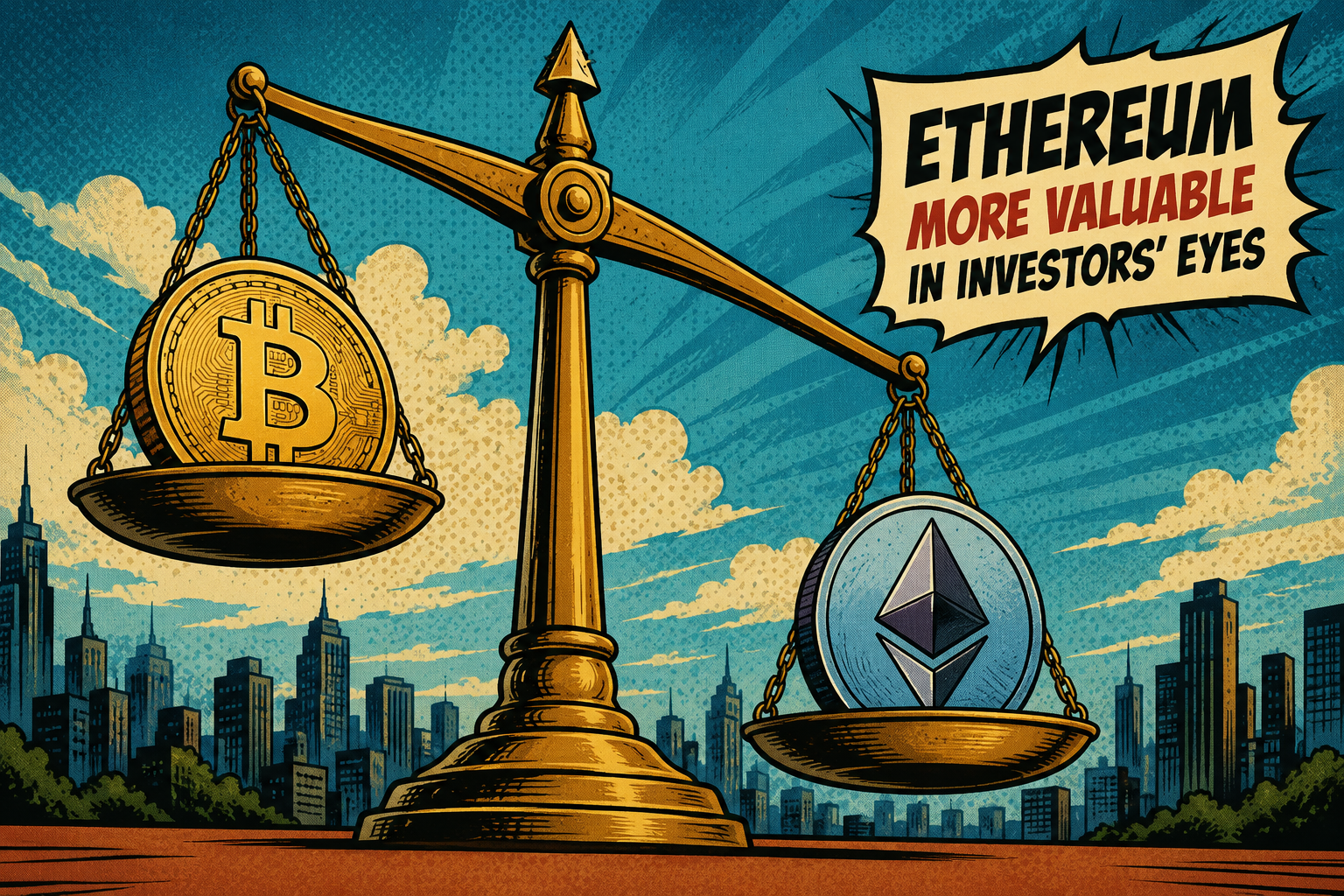
For most of the institutional crypto era, capital has followed a predictable route: enter through Bitcoin, establish a core position and consider everything else later. This week, that sequence briefly changed. BlackRock’s Bitcoin product recorded redemptions while its Ethereum vehicles attracted fresh capital, offering one of the clearest signs yet that professional investors are beginning to treat the two largest digital assets as competing portfolio allocations rather than interchangeable expressions of crypto exposure.
According to Arkham, clients withdrew approximately $60 million from BlackRock’s iShares Bitcoin Trust, or IBIT, during the opening sessions of the week. Over the same period, more than $20 million moved into Ethereum associated with the asset manager’s Ether products.
The numbers are modest relative to BlackRock’s enormous digital-asset holdings, but the direction matters. Institutional investors were not simply reducing cryptocurrency exposure. At least for a brief window, they appeared to be exchanging part of their Bitcoin allocation for Ethereum.
That is a more consequential signal than a conventional risk-off withdrawal. It suggests that the institutional crypto trade is entering a more sophisticated phase—one driven by relative valuation, yield potential and portfolio construction rather than a binary decision between owning Bitcoin and remaining outside the market.
The Rotation That Caught the Market’s Attention
The initial flow pattern emerged during the trading sessions of July 27 and July 28. IBIT recorded combined net outflows of approximately $63.6 million, while BlackRock’s Ethereum products attracted roughly $21.1 million.
Most of the Ethereum allocation entered the iShares Ethereum Trust ETF, known as ETHA, while a smaller portion flowed into the iShares Staked Ethereum Trust ETF, or ETHB. The latter offers exposure not only to Ether’s market price but also to potential staking rewards generated by participating in Ethereum’s proof-of-stake security system.
Arkham’s on-chain monitoring supported the ETF-flow picture. Bitcoin connected to IBIT-related custody moved toward wallets associated with redemption activity, while Ether entered BlackRock-labeled addresses. The parallel movements created the appearance of an active switch from one asset to the other.
That interpretation, however, requires an important qualification. ETF data cannot prove that the exact same investors sold IBIT and purchased ETHA or ETHB. Net flows aggregate the decisions of many market participants, including advisers, hedge funds, wealth platforms, market makers and individual brokerage clients.
The data therefore reveals a rotation at the product level, not a confirmed transaction in which one identifiable institution exchanged Bitcoin for Ethereum.
Even so, simultaneous outflows from one BlackRock crypto product and inflows into another are meaningful. They show that investors are increasingly willing to make relative choices inside the digital-asset category.
A Tactical Move That Quickly Evolved
The most recent completed trading session adds another layer to the story.
On July 29, IBIT attracted approximately $89.8 million in fresh capital, more than reversing its outflows from the previous two sessions. BlackRock’s Ethereum products also continued to receive money, adding approximately $5.2 million, although the broader US Ethereum ETF market ended the day with net redemptions.
Across the first three sessions of the week, IBIT consequently moved back to a net inflow of roughly $26.2 million. BlackRock’s combined Ethereum products collected almost exactly the same amount, approximately $26.3 million.
That updated picture does not invalidate the rotation observed earlier in the week. Instead, it defines its character.
This was not a wholesale migration away from Bitcoin. It was a tactical rebalancing episode in which Ethereum briefly captured capital while Bitcoin was being reduced, followed by renewed demand for both assets.
The distinction is important because crypto markets frequently interpret short-term ETF activity as evidence of a permanent institutional change. A few trading sessions rarely provide enough information to establish a durable trend. Portfolio rebalancing, liquidity management, options hedging, tax considerations and short-term basis trades can all influence daily flows.
A lasting rotation would require persistent Ethereum inflows combined with sustained Bitcoin redemptions over several weeks, preferably across multiple issuers rather than within a single asset manager’s product range.
Why Ethereum Is Receiving a Fresh Institutional Look
Ethereum’s renewed appeal is not difficult to understand.
Bitcoin remains the most established institutional crypto asset, with the clearest monetary narrative and the deepest pool of regulated investment products. Ethereum offers a different proposition. It is simultaneously an asset, a programmable settlement network and the economic foundation for a large segment of decentralized finance, stablecoins and tokenized financial instruments.
For investors, that combination creates several potential sources of value. Ether can appreciate alongside network adoption, function as collateral across on-chain markets and generate staking rewards when committed to network validation.
The arrival of ETHB has made the final component more accessible through conventional brokerage infrastructure. Rather than arranging custody, operating validator infrastructure or selecting a staking provider, investors can obtain exposure through a listed BlackRock product designed to capture Ether’s price movement alongside potential staking income.
That changes the comparison with Bitcoin.
IBIT provides relatively direct exposure to an asset commonly positioned as scarce digital collateral. ETHB presents Ethereum as a productive asset with an embedded income component. For institutional allocators working under return targets, the possibility of yield can become particularly attractive when price appreciation alone is uncertain.
Ethereum has also experienced substantial underperformance. BlackRock’s ETHA showed a year-to-date decline of more than 35% by late July. For momentum investors, that weakness is a warning. For relative-value investors, it can create an entry point—especially when the long-term investment thesis remains intact.
The rotation may therefore reflect less enthusiasm for Ethereum’s immediate price trend than a judgment that its risk-reward profile has improved relative to Bitcoin.
Bitcoin Still Holds the Institutional Center
Any suggestion that Ethereum is replacing Bitcoin in institutional portfolios would be premature.
IBIT held approximately $47 billion in net assets as of July 29. BlackRock’s Ethereum products together controlled roughly $6.1 billion. The Bitcoin vehicle was still almost eight times larger than the asset manager’s combined Ether offering.
That gap illustrates how deeply Bitcoin remains embedded as the default institutional gateway into digital assets.
Bitcoin benefits from a simple investment case. Its fixed supply, extensive liquidity, long operating history and growing recognition as a non-sovereign reserve asset can be explained without requiring an investor to forecast activity across applications, staking markets or scaling networks.
Ethereum demands a more complex analytical framework. Its value depends partly on usage, transaction economics, monetary policy, staking participation, competition among blockchains and the relationship between the main network and its expanding layer-two ecosystem.
That complexity can produce additional upside, but it also introduces more variables.
For conservative allocators, Bitcoin is therefore likely to remain the core position. Ethereum increasingly looks like a satellite allocation capable of adding growth, yield and exposure to blockchain-based financial infrastructure.
The emerging portfolio structure is not necessarily Bitcoin or Ethereum. It is Bitcoin as reserve-style collateral and Ethereum as productive digital infrastructure.
Institutional Crypto Is Becoming a Relative-Value Market
The broader significance of this week’s flows is the transition from crypto access to crypto allocation.
During the first phase of institutional adoption, the main challenge was gaining regulated exposure. Investors focused on custody, market integrity, liquidity and compliance. Once spot exchange-traded products solved much of that operational problem, institutions could begin evaluating digital assets using familiar portfolio-management techniques.
That process is now becoming visible.
Investors can adjust the weighting between Bitcoin and Ethereum, choose between unstaked and staked Ether exposure, seek option income through newer Bitcoin products and manage crypto positions alongside traditional assets from the same brokerage and risk-management systems.
BlackRock itself now offers products covering spot Bitcoin, spot Ether, staked Ether and Bitcoin-related option income. The expansion of that lineup gives investors more ways to express specific views without leaving regulated financial infrastructure.
As the product set becomes more complete, crypto ETF flows are likely to become less directional and more strategic. Capital may rotate according to volatility, valuation, yield, liquidity and macroeconomic conditions, much as it already does between technology stocks, bonds, commodities and defensive equities.
This makes daily fund-flow analysis more complicated, but also more informative. A withdrawal from Bitcoin no longer automatically means an exit from crypto. It may represent a move into Ethereum, a yield-oriented vehicle or another digital-asset strategy.
What Would Confirm a Lasting Ethereum Rotation
The next stage of the story depends on persistence.
Ethereum would need to attract capital through both strong and weak market sessions. Inflows limited to periods of Bitcoin selling could indicate temporary hedging or bargain hunting. Consistent allocations during broader market recoveries would suggest that institutions are building strategic positions.
Demand for ETHB will be particularly revealing. Growth in the staked product would show that investors are not merely speculating on Ether’s price but are embracing its role as an income-generating network asset.
The relationship between Ethereum and Bitcoin prices will also matter. ETF flows can lead price movements, but they can also chase them. A sustained improvement in Ethereum’s performance relative to Bitcoin, supported by rising fund demand and network activity, would provide stronger evidence of a structural shift.
For now, the market has received an early signal rather than a final verdict.
BlackRock clients briefly reduced Bitcoin exposure while adding Ethereum, revealing a willingness to rotate within crypto rather than abandon the asset class. Bitcoin demand then returned, while Ethereum continued to attract incremental capital through BlackRock’s product lineup.
The result is not a changing of the guard. It is evidence that institutional crypto portfolios are becoming more dynamic.
Bitcoin remains the anchor. Ethereum is increasingly becoming the alternative institutions can no longer afford to ignore.
-

 Cardano9 months ago
Solana co‑founder publicly backs Cardano — signaling rare cross‑chain respect after 2025 chain‑split recovery
-

 Cardano11 months ago
Cardano Breaks Ground in India: Trivolve Tech Launches Blockchain Forensic System on Mainnet
-

 Altcoins8 months ago
Algorand’s 2027 Question: Can the Network Survive Without Foundation-Funded Rewards?
-

 Altcoins8 months ago
Crypto Goes Mainstream — Bitwise 10 Crypto Index ETF (BITW) Debuts on NYSE Arca
-
 Cardano11 months ago
Cardano Reboots: What the Foundation’s New Roadmap Means for the Blockchain Race
-

 News8 months ago
Crypto on Trial: The $5.5 Billion Pump.fun, Solana & RICO Lawsuit That Could Redefine On‑Chain Liability
-

 Ethereum9 months ago
Ethereum Breaks TPS Record as Lighter Layer-2 Surges Past 24,000 Transactions per Second
-

 News8 months ago
From Memes to Courtrooms: Solana and Jito Execs Named in Explosive RICO Suit Over Pump.fun