
News
Canton: How a New Tokenization Network Is Reimagining Institutional Finance


- Share
- Tweet /data/web/virtuals/383272/virtual/www/domains/theunhashed.com/wp-content/plugins/mvp-social-buttons/mvp-social-buttons.php on line 63
https://theunhashed.com/wp-content/uploads/2026/01/canton.jpeg&description=Canton: How a New Tokenization Network Is Reimagining Institutional Finance', 'pinterestShare', 'width=750,height=350'); return false;" title="Pin This Post">
When institutions think about tokenization today, the conversation often centers on blockchain as a public ledger full of retail traders and open markets. But what if tokenization could be engineered with institutional-grade privacy, compliance, and interoperability at its core—a network designed not for crypto-native users alone, but for banks, asset managers, and regulated entities? That’s the promise of Canton, a emerging tokenization network aiming to bridge the gap between traditional finance and decentralized infrastructure.
Tokenization has long been touted as the next frontier in financial markets: transforming real‑world assets into programmable digital representations that can settle faster, operate 24/7, and embed compliance directly into their code. Yet, until recently, most tokenization efforts have struggled with either privacy concerns, fragmentation across networks, or the challenge of integrating with legacy systems. Canton’s architecture tackles these problems head on, positioning itself as a permissioned yet interoperable fabric for institutional tokenization.
A New Model for Institutional Tokenization
At its heart, Canton is not just another blockchain. It is a network protocol engineered for regulated participants, where institutions can issue, transfer, and manage tokenized assets while preserving confidentiality and respecting legal constraints. Unlike public blockchains where every transaction is visible to all, Canton introduces privacy‑preserving mechanisms that allow counterparties to transact without exposing sensitive details to the broader network.
This privacy layer isn’t about secrecy for secrecy’s sake; it’s about enabling institutions to adopt tokenization without sacrificing the confidentiality they rely on in traditional markets. For a bank handling high‑value trades or a fund managing proprietary positions, the idea of broadcasting transaction details to an open network raises obvious concerns. Canton’s architecture sidesteps that by allowing transaction visibility only to the involved parties and authorized regulators, not the entire ecosystem.
At the same time, Canton is designed to support regulatory compliance as a first‑class feature. Instead of retrofitting compliance through external tools or off‑chain processes, Canton’s protocol allows for on‑chain governance rules, identity verification, and permissioning. This means issuers can define who is allowed to hold or transfer a tokenized security, and regulators can audit activity with appropriate access—all without exposing confidential trading data.
Interoperability Without Compromise
One of the major sticking points for enterprise adoption of blockchain technology has been fragmentation. Many networks operate as isolated silos, each with its own token standards, consensus mechanisms, and developer ecosystems. For institutions managing assets across jurisdictions or multiple asset classes, this creates operational complexity and costly integration overhead.
Canton addresses this with a modular interoperability framework. Instead of forcing institutions to abandon their existing systems or adopt a single monolithic platform, Canton is designed to interoperate with both traditional financial infrastructure and other blockchain networks where appropriate. Through standardized protocols and secure cross‑domain messaging, Canton allows tokenized assets to move seamlessly across ecosystems without compromising privacy or compliance.
This approach reflects a deeper understanding of how institutional finance actually works. Large institutions rarely operate in isolation; they interact with partners, custodians, exchanges, and regulators. By enabling secure, permissioned interoperability, Canton makes it possible for tokenized assets to move fluidly across these boundaries, unlocking efficiencies without exposing sensitive information.
The Promise of Programmable Assets
At its core, tokenization is about more than just digitizing traditional assets. It’s about making financial instruments programmable, embedding business logic into the assets themselves. On Canton, institutions can design tokenized instruments that automatically enforce contractual terms: think of corporate bonds that self‑settle interest payments, private equity shares that manage transfer restrictions automatically, or real‑estate tokens that embed fractional ownership rules.
For institutional users, this programmability translates into automation and risk reduction. Processes that once required manual reconciliation between counterparties can now be executed as part of the asset’s smart contract logic, reducing operational friction and the risk of settlement errors.
Because Canton supports complex asset classes and compliance constraints at the protocol level, these programmable features are not just theoretical. They can be tailored to real‑world regulatory regimes, making tokenization a practical tool for a broader range of financial products.
Bridging Legacy and Distributed Systems
A key challenge for any enterprise blockchain is integration with legacy financial systems. Most large financial institutions operate on decades‑old infrastructure that wasn’t designed for blockchain, yet they can’t simply rip and replace these systems overnight.
Canton’s architecture acknowledges this reality by providing connectors and integration layers that allow legacy systems to interact with the tokenization network. Rather than forcing institutions to adopt new internal workflows wholesale, Canton enables gradual migration, where tokenized assets coexist with traditional ledgers and processes during a transition period.
This incremental approach can significantly lower adoption barriers. Institutions can experiment with tokenization in controlled environments with selected partners, prove value in pilot programs, and gradually expand usage without disrupting core operations.
Governance Built for Institutions
Public blockchain networks often rely on decentralized governance, where broad stakeholder consensus drives protocol decisions. While this model has its merits, it doesn’t align well with the governance needs of regulated entities, which require clear accountability, legal certainty, and structured decision rights.
Canton addresses this by embedding permissioned governance models into its framework. Institutions participating on the network can define governance policies, access controls, and escalation procedures that align with their internal risk management and regulatory obligations. This allows for a balance between decentralization and institutional control, ensuring that tokenization can scale within the rigorous environments where regulated entities operate.
Use Cases Across Financial Markets
The potential applications for Canton‑based tokenization span a wide range of asset classes:
Institutional Credit Markets: Tokenized bonds, syndicated loans, and credit instruments can be issued and transferred with embedded compliance, reducing settlement times and improving transparency between participating institutions.
Asset Servicing: Custodians and asset servicers can use Canton’s privacy layer to manage holdings without exposing client positions to external parties, while still enabling auditability for regulators.
Derivatives and Structured Products: Complex derivatives with embedded logic can be modeled as tokenized assets, enforcing settlement terms and collateral requirements automatically.
Real Estate and Private Markets: Illiquid assets like real estate or private equity can be fractionally tokenized, enabling new liquidity pathways while ensuring compliance with investor eligibility and transfer restrictions.
These use cases reflect the breadth of opportunity when tokenization is designed not as an afterthought, but as a native feature of financial infrastructure.
Challenges and the Road Ahead
No innovation of this scale is without challenges. Institutional adoption of tokenization will require not just technology, but also regulatory clarity, industry collaboration, and cultural shifts within financial organizations. Canton’s success depends on its ability to demonstrate that tokenization can reduce cost, increase efficiency, and maintain the risk profiles that institutions expect.
There are also technical challenges inherent in balancing privacy with auditability, and interoperability with security. Canton’s engineering choices prioritize these tradeoffs carefully, but real‑world deployment at scale will be the ultimate test.
Despite these hurdles, the landscape is shifting. Regulators around the world are increasingly engaging with tokenization, institutional interest in blockchain is rising, and the limitations of legacy infrastructure are becoming harder to ignore. Against this backdrop, Canton represents a pragmatic next step—one that acknowledges the realities of institutional finance and reimagines tokenization not as a fringe experiment, but as a core pillar of future financial architecture.
Conclusion
Canton’s tokenization network redefines how institutions can interact with digital assets. By embedding privacy, compliance, interoperability, and programmable logic into the very fabric of the network, it offers a blueprint for tokenization that aligns with the stringent requirements of regulated markets.
As financial institutions explore ways to modernize and innovate, Canton could become a central piece of the institutional blockchain puzzle—not by replacing existing systems, but by augmenting them with digital capabilities that unlock new efficiencies, reduce risk, and expand the utility of tokenized assets.
The future of institutional finance may well be tokenized, but it will only succeed if it is secure, compliant, and practical. Canton’s approach suggests precisely that: a network where real‑world finance and decentralized technology converge in a way that’s scalable, credible, and built for the long term.














Washington’s crypto debate is moving into one of its most important stretches yet. After years of enforcement actions, agency turf wars and uncertainty over whether digital assets should be treated as securities, commodities or something in between, the CLARITY Act is once again at the center of the U.S. policy conversation. White House crypto adviser Patrick Witt says the coming days could be a “big week” for the bill, with negotiations continuing behind the scenes and the list of unresolved issues getting smaller.
For the crypto industry, that matters. The CLARITY Act is not a minor compliance update or a narrow technical fix. It is a market structure bill designed to answer one of the largest questions hanging over the American digital asset sector: who regulates crypto, under what rules, and how can projects operate without constantly fearing that the rules will change after the fact?
Witt’s latest comments suggest that lawmakers, regulators and industry stakeholders may be closer to a workable compromise than they were earlier in the process. He said the “issue set has narrowed” and that “good faith offers” are being made to close the remaining gaps. But he also warned that “time is of the essence,” a phrase that captures both the opportunity and the danger facing the bill.
Crypto has waited years for regulatory clarity. The question now is whether Congress can deliver it before momentum fades.
Why the CLARITY Act Matters
The CLARITY Act is designed to create a clearer legal framework for digital assets in the United States. At its core, the bill attempts to define when a crypto asset falls under the authority of the Securities and Exchange Commission and when it should be overseen by the Commodity Futures Trading Commission.
That distinction has been one of the most damaging sources of uncertainty in the U.S. crypto market. The SEC has argued that many digital assets should be treated as securities, especially when they are sold to raise capital or promoted with expectations of profit based on the efforts of developers or insiders. The CFTC, meanwhile, has historically overseen commodities and derivatives markets, and many in the crypto industry argue that sufficiently decentralized tokens should be treated more like commodities than securities.
The result has been a regulatory gray zone. Some projects have tried to comply, but found no clear pathway. Others have launched offshore. Exchanges have listed assets without knowing whether regulators would later classify them as unregistered securities. Investors have been left navigating a market where legal status can become a price-moving risk overnight.
The CLARITY Act is meant to move crypto away from this reactive model. Instead of relying mainly on enforcement actions and court rulings, it would create a structured framework for classification, registration, disclosure and oversight.
For the industry, that is the difference between operating under a map and operating under a fog machine.
The Political Window Is Narrow
Patrick Witt’s warning that time is running out is not just rhetorical. Legislative windows are fragile. Even when lawmakers broadly agree that a problem needs to be solved, bills can stall over details, committee schedules, election-year pressure, lobbying campaigns or unrelated political fights.
Crypto market structure legislation is especially difficult because it touches multiple power centers. The SEC, CFTC, banking regulators, stablecoin issuers, exchanges, venture firms, consumer protection groups, banks and national security officials all have an interest in the outcome. A compromise that satisfies one group may alarm another.
That is why Witt’s comment that the “issue set has narrowed” is important. It suggests negotiators are no longer debating every foundational question. Instead, they may be dealing with a smaller number of sticking points. In Washington, that is often the difference between a bill that is merely symbolic and one that has a real chance of moving.
Still, narrowing the issues does not guarantee passage. The final issues are often the hardest. They tend to involve money, jurisdiction, political credit and institutional power.
The Stablecoin Question Still Shadows the Debate
Although the CLARITY Act is broader than stablecoins, stablecoin policy has remained one of the most sensitive issues in the wider crypto legislative package. The reason is simple: stablecoins directly compete with parts of the banking system.
Banks worry that if stablecoin issuers or crypto platforms can offer yield-like rewards, deposits could move out of traditional bank accounts and into digital dollar products. Community banks have been especially vocal about this concern because deposits are central to their lending model. If deposits migrate into stablecoins at scale, banks argue that credit availability could be affected, particularly in local markets.
Crypto companies see the issue differently. They argue that stablecoins are already one of the clearest and most useful applications of blockchain technology. They enable faster settlement, cheaper cross-border payments and easier access to digital dollars. From the industry’s perspective, overly restrictive rules could protect banks at the expense of innovation.
This debate has forced lawmakers to walk a tightrope. They want to encourage U.S. leadership in digital assets, but they do not want to destabilize the banking system or create new consumer risks. Any final CLARITY Act compromise will likely need to reassure banks without suffocating stablecoin growth.
SEC vs. CFTC: The Real Battle Beneath the Bill
The most important structural question remains the division of authority between the SEC and CFTC.
The SEC has deeper experience with investor protection, disclosures and securities markets. Its supporters argue that crypto has repeatedly shown why strong securities-style oversight is needed. Token launches, insider allocations, misleading promotions and exchange failures have all damaged investors. From that perspective, weakening SEC authority could create a lighter-touch system that benefits crypto firms while exposing retail users to new risks.
The industry’s counterargument is that crypto assets do not always fit neatly into securities law. A token may begin as part of a fundraising scheme but later function as a decentralized network asset. Applying the same rules to every stage of a token’s life can make compliance nearly impossible. Crypto builders argue that the law needs a transition mechanism, allowing assets to move from securities treatment toward commodities treatment once networks become sufficiently decentralized.
That transition concept is one of the most important parts of the market structure debate. If written well, it could give projects a path from early-stage development to decentralized operation. If written poorly, it could become either a loophole for regulatory avoidance or a trap that few legitimate projects can actually use.
The CLARITY Act is trying to solve this problem. That is why the bill matters far beyond the current news cycle. It could define how digital assets are launched, traded and governed in the United States for years.
Why the Market Is Paying Attention
Crypto markets do not usually wait for legal fine print. They trade narratives, probabilities and liquidity. The CLARITY Act has become a major narrative because it represents the possibility of a more investable U.S. crypto market.
If the bill advances, investors may interpret it as a signal that the U.S. is moving from hostility and uncertainty toward structured acceptance. That could support exchanges, token issuers, custody firms, stablecoin companies and institutional service providers. It could also improve confidence among venture investors who have been wary of backing U.S.-based crypto projects without clearer rules.
Bitcoin may not be directly affected in the same way as smaller tokens, since it is already widely treated as a commodity by U.S. regulators. But the broader crypto market could benefit from clearer legal categories. Ethereum, DeFi tokens, layer-1 networks, exchanges and tokenized asset platforms all have more at stake.
That does not mean the bill would automatically trigger a bull market. Regulatory clarity can be positive while still imposing new costs. Some projects may discover that compliance is harder, not easier. Some tokens may fail to qualify for favorable treatment. Some exchanges may face stricter listing standards. But for serious players, rules are often preferable to permanent uncertainty.
Institutional capital tends to prefer regulated risk over undefined risk. The CLARITY Act is important because it could convert crypto from a legally ambiguous market into a more standardized financial sector.
The Industry Wants a Win
More than 200 crypto companies, advocacy groups and industry organizations have reportedly called for lawmakers to move the bill forward. That kind of coordination reflects how badly the sector wants a legislative win.
For years, crypto companies have complained that the United States lacks a workable regulatory framework. They have pointed to Europe’s MiCA regime, Asian licensing systems and Middle Eastern digital asset hubs as examples of jurisdictions moving faster. The argument is not that every foreign framework is perfect. It is that other regions have been willing to write rules while the U.S. has relied heavily on enforcement and litigation.
The industry sees the CLARITY Act as a chance to reverse that trend. It would give companies a reason to build in the U.S. instead of routing activity through offshore entities. It could also help American regulators compete for influence over global crypto standards rather than reacting to rules written elsewhere.
That is the strategic case. If digital assets, stablecoins and tokenized financial markets become major parts of the global economy, the U.S. will want those systems shaped by American law, American institutions and dollar-based infrastructure. Delaying legislation does not stop crypto. It may simply push more activity outside U.S. oversight.
Critics Still See Dangerous Gaps
The bill’s opponents and skeptics are not simply anti-crypto. Many are concerned that the legislation could create openings for regulatory arbitrage.
One concern is that projects may try to classify assets as commodities too easily, avoiding securities disclosures even when insiders still control networks or investors rely heavily on centralized teams. Another concern is that exchanges and intermediaries could receive a lighter regulatory regime than traditional financial platforms, creating an uneven playing field.
Consumer protection is also a major issue. Crypto markets have a long history of hacks, collapses, manipulation, insider-driven token launches and misleading claims. Critics argue that any new framework must not become a political bailout for business models that failed under existing law.
There is also the ethics issue. Some lawmakers have raised concerns about political figures, campaign donors and affiliated businesses benefiting from crypto-friendly legislation. In a sector where tokens can move sharply on policy developments, perceptions of conflict of interest can become politically explosive.
These criticisms explain why negotiations are difficult. The industry wants clarity and flexibility. Skeptics want accountability and safeguards. A durable bill must do both.
What “Good Faith Offers” Could Mean
Witt’s reference to “good faith offers” suggests active compromise. In legislative terms, that usually means each side is giving ground on specific provisions rather than simply restating public positions.
Those compromises could involve how decentralization is defined, how exchanges register, how stablecoin-related incentives are treated, how much authority the SEC retains, how quickly the CFTC receives funding and how consumer protection standards are enforced. They may also involve political additions designed to bring hesitant lawmakers on board.
The details matter because crypto legislation can change dramatically through small wording shifts. A single definition can determine whether an asset is treated as a security or commodity. A registration threshold can determine whether a startup can comply or must leave the market. A disclosure rule can determine whether investors receive meaningful information or boilerplate.
That is why the behind-the-scenes phase is so important. Public statements tell the market that progress is being made. The actual text determines whether the bill is workable.
Why Timing Is Everything
If the CLARITY Act moves forward in the coming weeks, it could become one of the most important U.S. crypto policy milestones to date. If it stalls, the industry may be pushed back into the same cycle it has lived with for years: enforcement actions, court fights, agency disputes and offshore migration.
Timing also matters because crypto markets are entering a more institutional phase. Spot Bitcoin ETFs, growing stablecoin adoption, tokenized treasuries, corporate crypto strategies and bank interest in digital assets have changed the policy environment. Crypto is no longer a niche retail speculation story. It is increasingly connected to payments, capital markets and global dollar infrastructure.
That makes the absence of clear rules more costly. The larger the market becomes, the more dangerous regulatory ambiguity gets. Ambiguity may feel flexible in the early stages of innovation, but at scale it becomes a systemic weakness.
For lawmakers, the challenge is to act before the next crisis forces action under worse conditions.
The Bottom Line
The CLARITY Act is entering a crucial week because the politics, policy and market pressure are converging. Patrick Witt’s comments suggest that negotiations have made real progress, with fewer unresolved issues and serious offers on the table. But his warning that time is running out is equally important. Crypto legislation has come close before, only to stall when the final compromises became too difficult.
For the digital asset industry, the bill represents more than regulatory relief. It represents a possible shift from enforcement-first uncertainty toward a market structure framework that could allow legitimate projects to operate inside the United States with clearer obligations. For regulators and skeptics, the bill is a test of whether Congress can support innovation without weakening investor protection or creating new risks in the financial system.
The next stage will determine whether CLARITY becomes the rare crypto bill that survives Washington’s machinery or another near-miss in the long fight over digital asset regulation.
The stakes are large because the outcome will shape more than crypto prices. It will influence where companies build, how tokens are launched, how exchanges operate, how stablecoins evolve and whether the U.S. remains central to the future of digital finance.

When a blockchain founder says his network can replace Visa, SWIFT and the rest of the traditional payment stack, the claim is easy to dismiss as crypto theater. The industry has heard versions of this promise for more than a decade. Bitcoin was supposed to become peer-to-peer cash. Stablecoins were supposed to make banks obsolete. DeFi was supposed to rebuild Wall Street on-chain. Most of those visions have not disappeared, but they have collided with the brutal reality of regulation, distribution, user experience and trust.
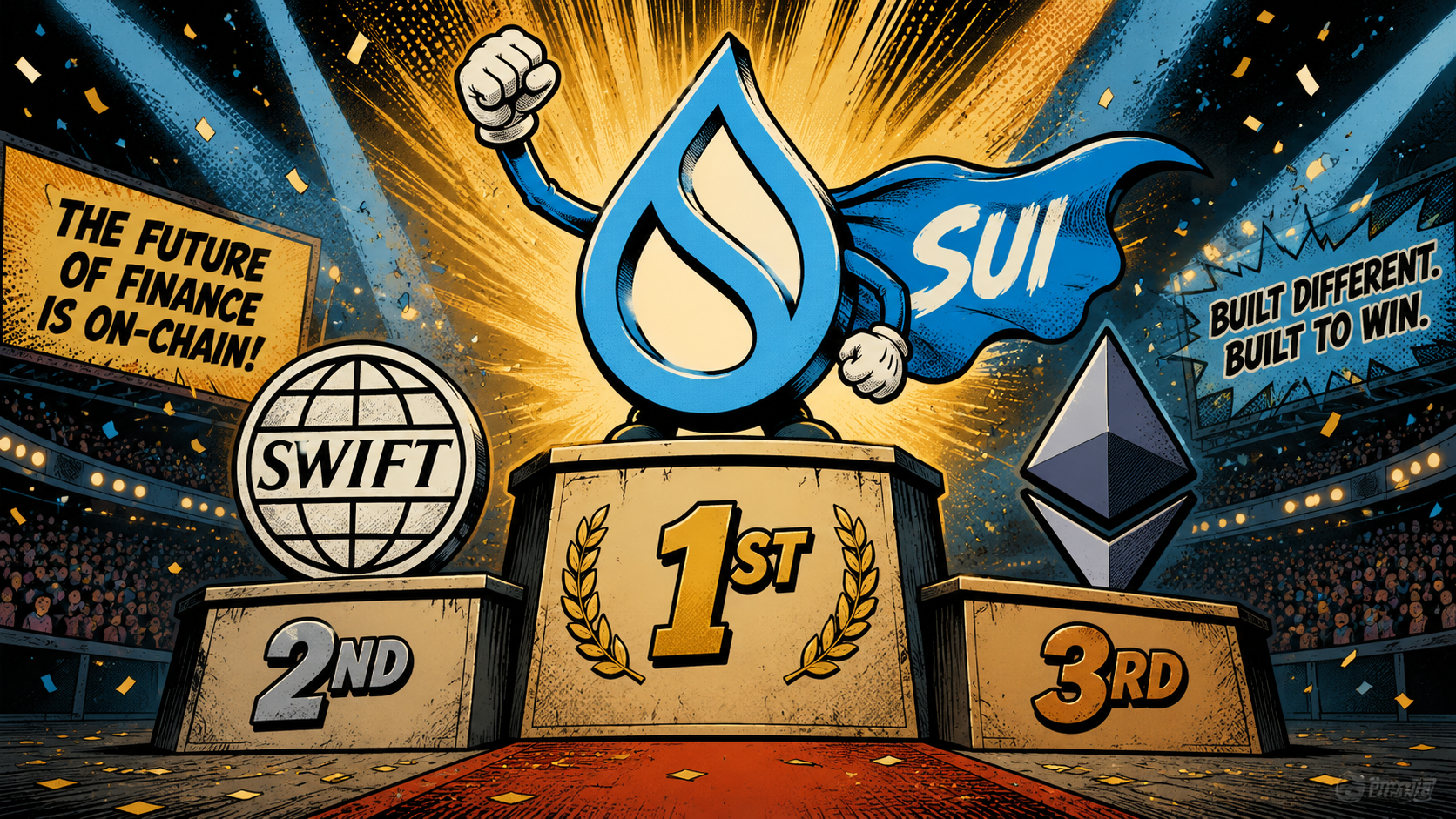
Adeniyi Abiodun, co-founder and chief product officer of Mysten Labs, is now putting Sui into that same arena. His argument is not subtle: Sui can operate the same kind of payment infrastructure that legacy networks provide, but at a fraction of the cost, with greater scale and the privacy needed for mainstream adoption. It is an ambitious claim, and it lands at a moment when stablecoins, AI agents and global payment modernization are converging into one of crypto’s most important battlegrounds.
The question is not whether Sui can process fast transactions on a blockchain. The bigger question is whether it can become a serious payment rail in a world still dominated by banks, card networks, messaging systems, compliance departments and entrenched trust.
Why Sui Is Targeting Payments Now
Sui’s payment narrative is not coming out of nowhere. The network was built by Mysten Labs, a team with roots in Meta’s Libra and Diem projects. That matters because Libra was one of the most serious attempts by a major technology company to build a global digital money network. It failed politically, but it left behind a technical and strategic blueprint: digital money should move like information, but with enough reliability, programmability and compliance compatibility to support mass adoption.
Abiodun has framed Sui as a continuation of that unfinished project. In his own writing, he has described Sui’s endgame as becoming a “global coordination layer” for digital assets, money and identity. In other words, Sui is not merely trying to be another smart contract platform. Its larger pitch is that the internet needs a shared settlement and coordination system where assets can move, applications can interoperate and users can transact without the friction of fragmented private databases.
That vision now has a more concrete commercial target: payments.
The timing makes sense. Stablecoins have become crypto’s clearest product-market fit. They are used for trading, remittances, dollar access, cross-border settlement and increasingly for business-to-business payments. Meanwhile, legacy payment infrastructure remains expensive and fragmented, especially across borders. Card networks work well for consumers in rich markets, but they are not optimized for every use case. SWIFT is powerful as a global bank messaging system, but it is not a real-time universal settlement layer. Correspondent banking remains slow, costly and inaccessible for many smaller institutions and emerging-market users.
Sui is trying to position itself in the gap between old infrastructure and new demand.
The Cost Argument Against Legacy Rails
Abiodun’s most direct attack is on cost. Traditional payment infrastructure often includes multiple intermediaries: issuing banks, acquiring banks, processors, card networks, compliance vendors, correspondent banks, foreign exchange providers and settlement systems. Each layer may provide value, but each also adds cost, latency and complexity.
For domestic card payments, the experience can feel instant to the consumer, but final settlement and merchant economics are more complicated. For cross-border transfers, the pain is even more visible. Fees can be high, settlement can take days, and users may have little transparency into the path their money takes.
This is where blockchain rails have a clean theoretical advantage. A blockchain can settle value directly on a shared ledger. Stablecoins can move across borders without relying on the same correspondent banking chains. Programmable payments can automate logic that would otherwise require contracts, reconciliation and back-office systems.
Sui’s claim is that it can provide this infrastructure at a much lower cost because it removes much of the coordination overhead. Instead of every institution maintaining separate ledgers and reconciling later, participants can operate on a shared state layer.
That is the ideal. The real world is messier.
Payment costs are not only technical costs. They also include fraud management, customer support, compliance, chargebacks, liquidity, sanctions screening, dispute resolution and regulatory reporting. A blockchain can reduce some costs, but it does not erase the need for trust, governance and consumer protection. If Sui wants to compete with Visa and SWIFT, it must prove not only that transactions are cheap, but that the full payment experience is cheaper, safer and easier for businesses and users.
Scale Is the Centerpiece of the Sui Pitch
Sui’s architecture was designed for high throughput and low latency. Unlike traditional account-based blockchains that process many operations sequentially, Sui uses an object-centric model that can process certain transactions in parallel. That design is central to its claim that it can support consumer-scale applications.
Adeniyi Abiodun and Sui supporters have repeatedly emphasized that payment infrastructure must operate at massive scale. A network that wants to compete with Visa cannot merely perform well during quiet market conditions. It has to handle bursts of activity, predictable finality, high uptime and a wide range of transaction types without turning expensive or unreliable when demand spikes.
This is where Sui sees its opening. If payments move increasingly toward stablecoins, tokenized deposits and machine-to-machine settlement, networks will need to handle far more than speculative trading. They will need to support payroll, subscriptions, remittances, merchant payments, microtransactions, gaming economies, AI-agent payments and financial applications that interact continuously.
The payment system of the future may not be built mainly for humans clicking “send.” It may be built for software agents making thousands of small, rules-based transactions in the background. Sui has been leaning into that idea: a network for digital assets, AI agents and real-time programmable commerce.
That is strategically clever. Competing directly with Visa at the point of sale is difficult. Competing for the next generation of payments, where AI agents, stablecoins and programmable wallets interact automatically, gives Sui a more differentiated story.
Privacy Is the Missing Piece
The most important part of Abiodun’s argument may be privacy. Public blockchains have a serious problem as payment systems: they expose too much.
For traders and crypto-native users, transparency can be useful. For ordinary consumers and businesses, it is a nightmare. No one wants their salary, spending habits, vendor relationships or treasury flows visible to the entire internet. A payment rail that turns every bank account into a public feed cannot become mainstream.
Abiodun has made this point directly, arguing that users should not have to operate in a system where their bank account looks like a social media timeline. Sui’s answer is native private transactions. According to recent reports, the network is preparing privacy features designed to make transaction data confidential while still allowing compliance where necessary.
This is a major strategic move. Privacy cannot be an afterthought if blockchain payments are going to challenge traditional rails. It must be built into the user experience. Consumers should not need to understand mixers, shielded pools or separate privacy layers. Businesses should not need to choose between operational secrecy and regulatory compatibility.
The challenge is designing privacy that institutions can actually use. Regulators will not accept payment systems that become black boxes for illicit finance. Enterprises will not use systems that expose sensitive commercial data. The viable middle ground is selective confidentiality: users and businesses get privacy by default, while authorized compliance processes can still function under defined rules.
If Sui can deliver that balance, it would solve one of the oldest weaknesses in public blockchain payments.
Stablecoins Give the Thesis Real Weight
The payment-rail debate changed once stablecoins became mainstream crypto infrastructure. Before stablecoins, blockchain payments were often tied to volatile assets. That made them difficult to use for everyday commerce. A user might send Bitcoin, but both sender and receiver faced price volatility. Merchants had little reason to hold assets that could fall sharply before they converted them.
Stablecoins solved much of that problem by putting familiar units of account on-chain. A dollar stablecoin can move across blockchain rails while preserving dollar pricing. That makes the payment conversation more practical.
Recent coverage reported that Sui processed more than $1 trillion in stablecoin volume since August 2025, a figure that has become central to the network’s argument that it is already moving meaningful value.
Volume alone does not prove replacement of Visa or SWIFT. Crypto volume can include trading, arbitrage and internal market activity rather than real-world commerce. But it does show that Sui is not talking about payments in a vacuum. The network is trying to build on measurable stablecoin traction, then add privacy, lower fees and better user experience.
The stablecoin layer is also where Sui’s competition will be fiercest. Solana, Ethereum layer-2 networks, Tron, Avalanche, Base and other chains are all fighting for payment relevance. Some have deeper stablecoin liquidity. Some have stronger distribution. Some have closer ties to exchanges, fintechs or institutions. Sui must show that its architecture produces a meaningful advantage beyond marketing.
Replacing Visa Is Not the Same as Replacing SWIFT
The phrase “replace Visa and SWIFT” sounds powerful, but the two systems perform different roles.
Visa is a card network that connects consumers, merchants, banks and processors. It is optimized for authorization, acceptance, fraud management and a consumer experience that feels instant. SWIFT is a messaging network used by financial institutions to communicate payment instructions across borders. It does not itself move money in the same way a blockchain settles tokens.
For Sui to replace Visa, it would need to compete at the consumer and merchant layer. That means wallets, point-of-sale integration, fraud protection, dispute handling, merchant acceptance, user onboarding and regulatory compliance. It would need to offer merchants a compelling reason to accept Sui-based payments and consumers a reason to use them.
For Sui to replace SWIFT, it would need to compete in institutional cross-border settlement. That means banks, fintechs, stablecoin issuers, payment companies and regulators would need to trust it as a settlement or coordination layer. It would also need liquidity, identity frameworks, compliance tooling and integration with existing financial systems.
Those are different fights. Sui may have a better chance at first in areas where legacy rails are weakest: cross-border payments, stablecoin settlement, emerging-market dollar access, digital commerce, AI-agent payments and crypto-native financial flows. Replacing every traditional payment rail is a long-term vision. Winning specific high-friction corridors is the realistic starting point.
The AI-Agent Payment Angle
One reason Sui’s thesis feels timely is the rise of AI agents. If software agents begin performing tasks, buying services, booking resources and managing digital assets on behalf of users, they will need payment rails that are programmable, fast and low-cost.
Traditional payment systems were designed around humans, merchants and banks. They were not designed for autonomous software agents making frequent small transactions across digital environments. Card payments can work for subscriptions and purchases, but they are clumsy for high-frequency machine-to-machine commerce. Bank wires are even less suitable.
Blockchain rails are naturally programmable. A smart contract can define conditions, limits, permissions and settlement logic. Wallets can be controlled by software. Stablecoins can move globally without relying on card credentials. This makes AI-agent payments one of the more plausible areas where blockchain infrastructure could leapfrog legacy systems.
Sui’s object-centric design may be especially relevant here because digital assets, permissions and payment logic can be treated as programmable objects. That could make the network attractive for applications where AI agents interact with owned assets, wallets, credentials and financial rules.
But again, the opportunity comes with risk. If AI agents control money, mistakes become expensive. Privacy matters. Reversibility matters. Limits matter. Fraud detection matters. A payment network for AI agents cannot simply be fast; it must be safe when autonomous systems behave unpredictably.
The Regulatory Wall
Every payment network eventually meets regulation. This is where many crypto payment visions fail.
Moving money is not only a technical act. It is a regulated activity tied to anti-money-laundering rules, sanctions law, consumer protection, tax reporting, capital controls and national monetary policy. Visa and SWIFT are embedded in systems that governments understand and influence. A blockchain that wants to replace them must either integrate with regulation or fight a battle it is unlikely to win.
Sui’s privacy ambitions make this more important, not less. Private payments are valuable for users and businesses, but regulators will scrutinize them intensely. The network will need to show that privacy does not mean lawlessness. That may involve selective disclosure, compliance keys, identity layers, regulated intermediaries or application-level controls.
Crypto purists may dislike that direction. But mass payment adoption almost certainly requires it. Consumers want privacy from the public, not necessarily immunity from all legal process. Businesses want confidentiality, not regulatory chaos. Institutions want programmability, but not existential compliance risk.
The winning blockchain payment network will probably not be the most ideologically pure. It will be the one that balances speed, cost, privacy and compliance in a way that real companies can use.
The Business Model Problem
Even if Sui can offer low-cost payments, someone has to build the business layer.
Visa is not just a technology network. It is a global acceptance brand. SWIFT is not just messaging software. It is an institutional standard embedded across thousands of banks. Their power comes from network effects, trust and integration.
Sui needs its own distribution channels. That could mean partnerships with stablecoin issuers, wallets, exchanges, fintech apps, payment processors, gaming platforms, AI-agent platforms and enterprise software providers. Users will not adopt Sui because the blockchain is elegant. They will adopt applications that hide the blockchain while giving them cheaper, faster and more private payments.
This is where Sui’s challenge becomes commercial rather than technical. It must persuade developers and companies to build on it. It must attract liquidity. It must make onboarding painless. It must avoid outages or congestion that damage trust. It must make compliance tooling available. It must turn infrastructure into products.
A blockchain does not replace Visa by announcing that it is cheaper. It replaces pieces of Visa’s market by becoming invisible inside better payment experiences.
Why the Claim Still Matters
It would be easy to say that Sui will not replace Visa or SWIFT anytime soon and leave it there. That would also miss the point.
The more important signal is that blockchain networks are no longer satisfied with being speculative settlement layers for crypto traders. They are moving directly toward the core of financial infrastructure. Stablecoins have made that ambition credible. Privacy upgrades make it more realistic. AI-agent commerce gives it a future-facing use case. High-throughput architecture gives networks like Sui a technical argument.
Sui’s claim is aggressive, but aggressive claims often define market direction. Solana pushed the idea of consumer-scale crypto. Ethereum pushed the idea of programmable money. Bitcoin pushed the idea of sovereign digital scarcity. Sui is now pushing the idea that payment rails should be global, programmable, private and cheap by default.
Whether Sui wins that market is uncertain. But the category itself is real.
The Bottom Line
Adeniyi Abiodun’s claim that Sui can replace Visa, SWIFT and other traditional payment rails should be read less as a near-term prediction and more as a strategic declaration. Sui wants to compete for the future of money movement, not just for DeFi liquidity or token speculation.
The network’s case rests on four pillars: lower cost, high scale, native privacy and programmable stablecoin infrastructure. Each pillar addresses a real weakness in today’s payment system. Cross-border transfers remain expensive. Public blockchains expose too much data. Legacy infrastructure is fragmented. AI-driven commerce may require payment systems that current rails were never designed to support.
But replacing traditional payment rails is not only an engineering problem. It is a trust problem, a regulatory problem, a distribution problem and a user-experience problem. Sui may be able to move value quickly and cheaply, but it still has to prove that businesses, consumers and institutions will trust it with real-world payments at scale.
The most likely path is not a sudden overthrow of Visa or SWIFT. It is gradual encroachment. Sui may first gain traction in stablecoin payments, AI-agent transactions, crypto-native commerce and cross-border corridors where the legacy system is weakest. From there, the question becomes whether the network can compound adoption into a broader payment ecosystem.
The vision is bold. The obstacles are enormous. But in a market where stablecoins are already forcing banks, card networks and fintechs to rethink settlement, Sui’s ambition is no longer fantasy. It is a serious bet that the next global payment rail will look less like a private banking network and more like programmable internet infrastructure.


Arthur Hayes has never been a quiet macro tourist in crypto. The BitMEX co-founder has built his public reputation around bold, theatrical and often uncomfortable market calls. His latest warning is one of his sharper reversals: the artificial intelligence boom, he argues, may now be so overheated that its correction could drag Bitcoin lower before creating the conditions for Bitcoin’s next major rally.
The thesis is not simply that AI stocks are expensive. Hayes is making a broader liquidity argument. In his view, capital has crowded into AI-related equities and private-market narratives with such force that crypto has become vulnerable to a shock outside its own ecosystem. If that AI trade breaks, investors may not immediately rotate into Bitcoin. They may sell whatever is liquid first. In that scenario, Bitcoin does not act like digital gold on day one. It acts like a high-beta risk asset caught in a global margin call.
The AI Trade Becomes a Crypto Risk
For much of the current market cycle, crypto investors have treated artificial intelligence as a tailwind. AI tokens rallied on the promise of machine intelligence, decentralized compute, data networks and identity systems built for a world of autonomous agents. Public equities linked to AI infrastructure pulled in enormous flows, while private-market giants such as OpenAI and Anthropic became symbols of the next technology supercycle.
Hayes now argues that this optimism may have gone too far. His concern is that AI has absorbed so much marginal capital that a disappointment in the sector could damage broader market liquidity. The issue is not whether AI is real. Hayes is not dismissing the technology. His point is that even real technologies can become financial bubbles when expectations move faster than earnings, energy availability and political tolerance.
That distinction matters. The internet was real in 2000. Railroads were real in the nineteenth century. Crypto itself has repeatedly produced genuine innovation wrapped in speculative excess. Hayes is placing AI in that tradition: transformative, but priced as if the transformation will arrive without friction.
For Bitcoin, that creates a dangerous short-term setup. If investors are forced to de-risk from AI stocks, private tech allocations or leveraged exposure to the sector, crypto may be sold to raise cash. Bitcoin could outperform weaker assets on a relative basis and still decline in absolute terms. That is the uncomfortable part of Hayes’ argument. Being right about Bitcoin’s long-term monetary value does not protect holders from a liquidity event.
Oil Is the Variable Hayes Thinks Markets Are Ignoring
The most distinctive part of Hayes’ latest macro view is his focus on oil. In his framework, energy is not a side issue. It is the foundation of the entire investment system, especially the AI trade.
AI is energy-intensive. Data centers require huge amounts of electricity. Training and inference costs are not just about chips, software and talent; they are also about power. If oil and broader hydrocarbon prices rise, the inflationary pressure does not stay contained in one corner of the market. It affects transportation, food, industrial production, monetary policy and the cost base of the infrastructure that supports AI.
Hayes believes markets are too relaxed about this. His argument is that rising energy prices could collide with political pressure around inflation, data centers and the social impact of AI. That could turn AI from a market darling into a political target. If investors begin to believe that governments may tax, restrict or slow AI infrastructure buildouts, the valuation story changes quickly.
This is where the trade becomes reflexive. High energy prices pressure consumers. Consumer pressure creates political pressure. Political pressure can become anti-AI rhetoric or regulation. That rhetoric can puncture investor confidence. Once confidence breaks, capital that previously chased AI growth may rush for the exits.
For crypto investors, the mechanism is familiar. Narratives create flows. Flows create price action. Price action confirms the narrative. Then one piece of the story fails, and the process reverses.
The IPO Concern: OpenAI, Anthropic and SpaceX
Hayes also pointed to potential listings from OpenAI, Anthropic and SpaceX as market risks. The concern is not just that these companies may command enormous valuations. It is that large IPOs can drain liquidity from other parts of the market.
Mega-listings require buyers. If investors want exposure to the biggest AI-adjacent private names, they may sell existing holdings to make room. In a normal environment, that rotation may be manageable. In a fragile environment, it can become destabilizing.
Hayes’ warning is that expectations around these listings may be nearly impossible to satisfy. If investors buy into the idea that every AI-linked mega-listing must surge, even a merely decent performance could feel disappointing. Markets do not crash only when companies fail. They also correct when perfect outcomes are already priced in.
For Bitcoin, this matters because crypto increasingly trades inside the same global liquidity system as technology stocks. The old idea that Bitcoin lives in a separate financial universe is outdated. Spot ETFs, institutional allocators, hedge funds, derivatives desks and macro traders have made Bitcoin more connected to broader risk appetite. That is positive when liquidity is expanding. It is painful when liquidity contracts.
Why Maelstrom Sold Altcoins
Hayes says Maelstrom sold HYPE, NEAR, WLD and ZEC last week. The message is clear: in a turbulence scenario, non-core crypto exposure becomes expendable.
That does not necessarily mean Hayes has abandoned every thesis behind those assets. It means he sees a difference between structural holdings and tactical positions. Bitcoin and Ethereum remain in the portfolio. The altcoins were cut.
This is classic crisis positioning. When investors expect volatility, they usually reduce exposure to assets that depend on strong market breadth, speculative appetite and abundant liquidity. Altcoins often need all three. They can outperform dramatically during risk-on phases, but they also tend to suffer when liquidity narrows and investors retreat toward the most established assets.
The WLD sale is especially notable because Worldcoin has been widely treated as a crypto proxy for the AI economy. If the AI IPO narrative weakens, AI-linked crypto trades may lose their strongest near-term catalyst. Hayes’ exit suggests he does not want to sit through that repricing.
ZEC had a different issue. Hayes linked the sale to concerns around the Orchard Pool bug, making it less of a pure macro call and more of a capital-preservation decision. Still, the broader pattern is obvious. He is cutting positions where the downside could accelerate if liquidity disappears.
Bitcoin and Ether Stay in the Core
The most important part of the portfolio shift is what Hayes did not sell. He continues to hold Bitcoin and Ether.
That says a lot about his actual view. Hayes is not turning structurally bearish on crypto. He is preparing for a drawdown inside a longer bullish framework. His phrase is essentially “dump then pump”: Bitcoin could fall first as the AI bubble deflates, then rise later as policymakers respond with easier liquidity.
This is a deeply Hayes-style thesis. He has long argued that Bitcoin’s strongest rallies come when the financial system demands more liquidity. If an AI-led correction becomes severe enough to threaten credit markets or financial stability, central banks and governments may eventually respond with looser policy, emergency support or renewed money creation. In that environment, Bitcoin could regain its role as a liquidity-sensitive hard-money asset.
The timing is the hard part. Hayes is not saying Bitcoin will avoid pain. He is saying the pain may be the bridge to the next rally. For traders, that is a very different proposition from simple bullishness. It means patience, hedging and position sizing matter more than conviction alone.
Ether receives a less enthusiastic endorsement, but it remains in the portfolio. Hayes’ view appears pragmatic: Ethereum may not have Bitcoin’s monetary clarity, but it remains a functional core asset with deep liquidity, developer activity and institutional relevance. In a market storm, that may be enough to justify holding it over smaller tokens.
Tactical Shorts and the Return of the Trader
Hayes also said derivatives may be used for tactical short positions. That line should not be overlooked. It shows he is not merely moving into cash and waiting. He is preparing to trade the turbulence.
Derivatives allow investors to hedge spot exposure without selling core positions. A fund can keep Bitcoin and Ether while using futures or options to reduce downside risk, express a short-term bearish view or profit from volatility. That is especially useful when the long-term thesis remains bullish but the near-term setup looks dangerous.
For retail investors, this is also the part of the strategy that requires the most caution. Derivatives can protect capital, but they can also destroy it quickly when used without discipline. Hayes has spent his career in derivatives markets; most investors have not. The takeaway is not that everyone should short Bitcoin. The takeaway is that professional crypto capital is preparing for a more complex phase than simple spot accumulation.
What This Means for the Crypto Market
Hayes’ warning lands at an awkward time for crypto. Bitcoin has become more institutionally accepted, but that acceptance has made it more sensitive to macro positioning. ETF flows, treasury adoption and derivatives liquidity have broadened the market, yet they have also tied Bitcoin more closely to global risk cycles.
If the AI trade corrects, the first impact may be psychological. Investors could begin questioning whether the entire growth complex is overextended. That would pressure AI tokens, high-beta altcoins, venture-backed crypto projects and anything dependent on optimistic future adoption.
The second impact would be liquidity. Funds facing losses elsewhere may reduce crypto exposure even if they still like the asset class. This is how cross-asset contagion works. Investors sell what they can, not always what they want to sell.
The third impact would be narrative rotation. If AI-linked assets weaken, Bitcoin may eventually benefit from a return to simpler monetary narratives: scarcity, settlement, censorship resistance and protection against policy response. But that rotation may not happen instantly. Markets often liquidate first and think later.
Hayes’ Call Is a Warning, Not a Certainty
Hayes is influential, but he is not a prophet. His calls can be early, dramatic or wrong. He acknowledges that forecasting is imperfect, and this thesis depends on several moving parts aligning: higher oil prices, political pressure against AI, disappointing mega-listings, tighter liquidity and broad risk-asset repricing.
Any one of those variables could shift. Oil could fall. AI demand could remain strong. IPOs could attract fresh capital rather than drain existing markets. Policymakers could avoid tightening financial conditions. Bitcoin could absorb volatility better than expected.
Still, the value of Hayes’ argument is not that it guarantees a crash. It forces crypto investors to ask a better question: what if Bitcoin’s next major drawdown does not come from crypto at all?
That is the real lesson. The next shock may not be an exchange collapse, a stablecoin crisis or a protocol exploit. It may come from the most crowded trade in global technology.
The Bottom Line
Arthur Hayes is positioning for a world where the AI boom hits a reality test. Rising oil prices, political pressure, stretched valuations and potential mega-IPOs form the core of his concern. In that world, Bitcoin may not be immune. It may fall first as investors de-risk, even if it later benefits from the liquidity response that follows.
Maelstrom’s sales of HYPE, NEAR, WLD and ZEC show that Hayes is treating this as more than an abstract essay. He is cutting non-core crypto risk, holding Bitcoin and Ether, and preparing to use derivatives tactically.
For the market, the message is uncomfortable but useful. Bitcoin can still be the long-term winner in a liquidity-driven world, yet still be vulnerable to the collapse of a different bubble. The AI trade may have pulled capital away from crypto on the way up. If Hayes is right, it could hit crypto again on the way down before Bitcoin finally gets the macro conditions it has been waiting for.
-

 Cardano9 months ago
Cardano Breaks Ground in India: Trivolve Tech Launches Blockchain Forensic System on Mainnet
-

 Cardano7 months ago
Solana co‑founder publicly backs Cardano — signaling rare cross‑chain respect after 2025 chain‑split recovery
-

 Cardano9 months ago
Cardano Reboots: What the Foundation’s New Roadmap Means for the Blockchain Race
-

 Altcoins6 months ago
Crypto Goes Mainstream — Bitwise 10 Crypto Index ETF (BITW) Debuts on NYSE Arca
-

 News6 months ago
Crypto on Trial: The $5.5 Billion Pump.fun, Solana & RICO Lawsuit That Could Redefine On‑Chain Liability
-

 News6 months ago
From Memes to Courtrooms: Solana and Jito Execs Named in Explosive RICO Suit Over Pump.fun
-
 Altcoins6 months ago
NYSE Arca Files to Launch Altcoin-Focused ETF
-

 News5 months ago
Senate Postpones CLARITY Act Vote Amid Crypto Industry Revolt: Inside the Growing Divide