


The Block reported that Starknet opened a seven-day vote on whether to explore an independent Layer 1. The proposal would not authorize an immediate migration. A “Yes” result would begin additional research and lead to more detailed proposals and community votes. A “No” result would leave Starknet’s post-quantum work on its existing Ethereum Layer 2 architecture.
At the time of the report, 177.6 million STRK had been cast, with 99.91% supporting further exploration. That result indicates strong early backing, but it does not settle the more difficult questions about technology, governance or economics. The vote is an authorization to investigate a strategic direction, not a decision to abandon Ethereum.
Why quantum risk is the catalyst
StarkWare says Starknet has a structural advantage in preparing for future quantum threats. Its proving system uses STARKs, which are based on hash functions rather than the elliptic-curve cryptography that underpins many current blockchain signatures.
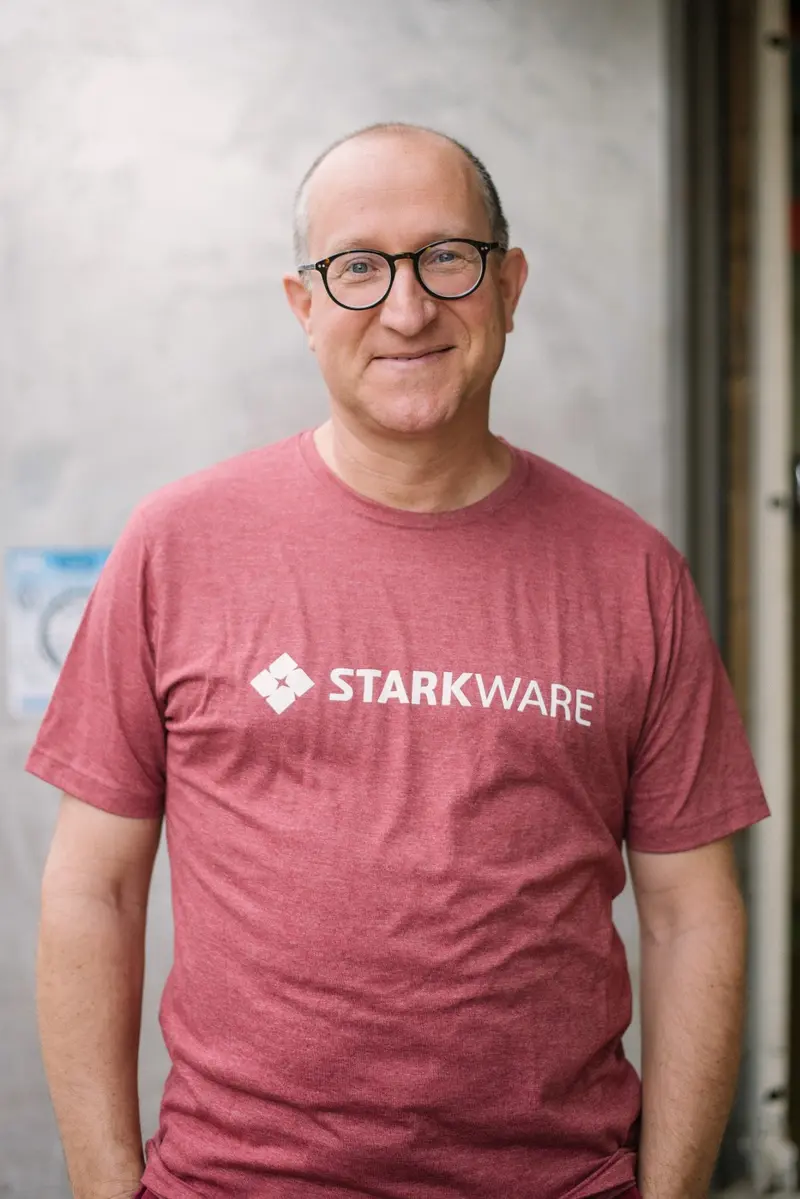
In its quantum readiness roadmap, StarkWare says this design could allow Starknet to preserve its proving system while upgrading other cryptographic components. The company also points to account abstraction, which lets users select and change signing methods through account logic rather than waiting for a protocol-wide hard fork.
That flexibility could make a future transition less disruptive. Starknet accounts can adopt post-quantum signatures, according to StarkWare’s architecture documentation, without replacing the network’s proving system. In practical terms, the network may be able to change how users authorize transactions while retaining the machinery used to prove computation.
The distinction matters because quantum risk is not limited to the chain’s execution layer. A network can use quantum-resistant proofs and still depend on other systems that use vulnerable cryptography.
Ethereum remains the central dependency
Starknet currently operates as an Ethereum Layer 2. Its security model, settlement process and data arrangements therefore depend on infrastructure outside Starknet’s direct control.
StarkWare identifies Ethereum-dependent bridge messaging and blob data availability as remaining quantum-vulnerable surfaces. The bridge is particularly important because it connects assets and messages between Starknet and Ethereum. If the cryptographic assumptions protecting that connection change, Starknet would need Ethereum to upgrade on a compatible timeline.
Blob data availability creates a related dependency. Starknet can harden its own accounts and proving system, but it cannot independently dictate Ethereum’s cryptographic choices, upgrade schedule or long-term data architecture while it remains anchored to the network.
That is the strategic issue behind the vote. Becoming an independent Layer 1 could give Starknet greater control over the timing and design of a complete post-quantum transition. It could also remove some of the constraints created by Ethereum’s governance and technical roadmap.
Independence would not automatically make the network safer. It would shift responsibility for consensus, data availability, settlement and economic security onto Starknet itself. The network would need to determine how validators or other security providers are coordinated, how the chain is funded, and how users and applications are protected during any transition.
A sovereignty question disguised as a security vote
Eli Ben-Sasson, StarkWare’s CEO, supports exploring an independent Layer 1, according to Unchained Crypto’s report. He argues that independence could allow Starknet to pursue full quantum resistance on its own timetable.
No opposing view was identified in the supplied coverage. The absence of a reported objection does not remove the tradeoff, however. Ethereum provides Starknet with an established settlement and security environment. Leaving that structure could increase autonomy while weakening some of the economic assumptions that made the Layer 2 model attractive.
The discussion also comes as StarkWare develops privacy features such as Shadow Accounts, which use persistent pseudonymous identities for decentralized applications. That work reinforces the broader question of what Starknet wants to become: an Ethereum scaling network that inherits Ethereum’s security choices, or a more sovereign chain that controls more of its own future.
The current vote only opens that investigation. Its significance lies in the question it puts before tokenholders: whether Ethereum alignment remains Starknet’s strongest protection, or eventually becomes the constraint that prevents it from responding to a new class of cryptographic threats.
- Natalie Schor · CC BY-SA 3.0


David Smith is not a person. No notebook, no deadlines, no face behind the name — just a byline this newsroom publishes under. Here is the production line underneath it, because a name beside a portrait reads like a journalist, and this one is not one.
The models. Writing: gpt-5.6-luna. Out on the live web: gpt-5.6-luna and gpt-5.6-terra. Pictures: gpt-image-1. Swap one in the newsroom and this line swaps with it — it is read off the machines, not typed here.
How a story is made
- Research. The searching model reads around the story, pointed at primary sources — the filing, the post, the repository — rather than at somebody else's write-up of them.
- Writing. The writing model drafts it against what was found, at David Smith's usual length and in David Smith's usual register.
- The loop. A reviewer reads the draft and sends it back with notes. Then reads it again. A piece can go round several times before it leaves the building.
- Enrichment. A quotation has to appear word for word on the page it is taken from. A chart may only use figures that appear in the source it cites. Whatever fails is dropped, and the reason is kept.
- Fact check. A last pass hunts for claims the article makes and its sources do not.
- A human stop. Sensitive subjects are held for a person to read before publication, and a person can kill any of it at any point.
If that sounds less like a newsroom and more like a factory: quite. It is called Press Factory.
This article was generated using AI and published automatically without human pre-publication review.
Read and checked by admin on 10/16/2026
How this article was made
The article was produced by the Grandmonts Media News Engine using automated research, drafting and verification workflows. No human editor reviewed the article before publication. Grandmonts Media remains responsible for the published content. Errors can be reported at office@grandmonts.cz.