


The figure refers to the headline final-demand Producer Price Index, not the core index. The U.S. Bureau of Labor Statistics reported that final-demand PPI rose 1.3% in September from the previous month and increased 6.3% year over year. The agency’s release also included underlying measures and revisions to earlier data.
The annual increase was driven heavily by energy and goods prices, according to the BLS. That detail is important because the headline number presents a broad inflation warning, while the composition may determine how much weight policymakers and investors assign to it. A surge concentrated in volatile categories can create a different policy signal from a similarly large increase spread across services and other underlying components.
The monthly increase nevertheless gives the report considerable force. It indicates that wholesale prices rose sharply in September before businesses had the opportunity to pass some of those costs through to consumers. That makes PPI an important input for traders assessing whether pressure could persist in consumer prices, corporate margins and interest rate expectations.
A significant test for rate expectations
The report arrives at a sensitive point for financial markets. Higher producer prices can strengthen the argument for maintaining restrictive monetary policy for longer, particularly if investors believe the increase reflects persistent inflation rather than a temporary move in energy or goods.
Bill Adams, chief economist at Fifth Third Commercial Bank, had said before the release that an upside PPI surprise could tip the balance toward a Federal Reserve rate hike, according to Marketscreener’s report. His view captures the most direct policy risk from the data: a result above expectations can alter the perceived cost of waiting, especially if officials are already concerned that inflation is not returning smoothly toward their target.
“A risk is that higher diesel and energy prices begin to bleed into other categories, and this suggests that's the case. For the Fed, this report, combined with CPI, raises the odds of a rate hike in October. We expect two more hikes this cycle depending on the pace and breadth of inflation.”
Charles Schwab analyst Joe Mazzola offered a similarly market focused interpretation. In Charles Schwab’s market update, Mazzola described the 1.3% monthly headline increase as the second-largest ever and discussed the pressure it placed on stocks and interest rate expectations.
For digital assets, that repricing channel matters because cryptocurrencies remain highly sensitive to changes in liquidity and the opportunity cost of holding riskier assets. If traders move toward the expectation of higher policy rates, Treasury yields and the dollar could receive support, while speculative investments face a less favorable backdrop. Bitcoin may absorb the first wave of institutional repositioning, but smaller tokens and leveraged derivatives would generally be more exposed to abrupt changes in risk appetite.
That does not make the PPI release a direct forecast for crypto prices. The market response will depend on how investors interpret the report alongside consumer price data, employment conditions, Treasury trading and Federal Reserve communication. A strong wholesale inflation reading can create pressure on risk assets, but it does not determine the next policy decision by itself.
The case against an immediate policy shift
The critical argument is that the headline result may overstate the persistence of the inflation problem. The BLS said energy and goods prices were major contributors to the annual increase. Those categories can move sharply and may not provide a reliable guide to the direction of every underlying price measure.
That distinction gives investors a reason to challenge the most aggressive interpretation of the release. If energy costs account for a large portion of the increase, the data may signal a real burden for businesses and consumers without proving that inflation is broadening across the economy. The underlying measures included in the government release will therefore be central to the debate.
The timing of market expectations also supports caution. StoneX said the 6.3% annual PPI reading was the hottest since December 2022 and noted that expectations for a Federal Reserve rate hike in October had risen after hot inflation data. However, StoneX also said that probability later eased despite the PPI release.
That response suggests the report’s impact was not mechanically one way. Traders may initially react to the headline, then reassess the risk after examining the categories behind the increase, prior month revisions and other economic information. A report can be historically strong while still failing to produce a lasting shift in policy expectations if investors believe the move is concentrated or temporary.
This is the key disagreement around the data. The bullish case for higher rates is that a 6.3% annual increase, paired with a sharp monthly gain, shows price pressure remains too strong to ignore. The opposing case is that the headline is heavily influenced by energy and goods, making it insufficient evidence of a renewed, economy-wide inflation wave.
What crypto traders will watch next
The immediate crypto question is not simply whether PPI was high. It is whether the report changes the expected path of Federal Reserve policy. Traders will watch Treasury yields, the dollar and rate market pricing for evidence that the inflation surprise is becoming a broader risk factor.
A rapid adjustment could be amplified by leverage. Derivatives traders who positioned for lower rates or easier financial conditions may face forced reductions if yields rise quickly. That mechanism can produce larger moves in digital assets than the underlying economic data might otherwise justify.
At the same time, a retreat in rate hike expectations would weaken the most negative interpretation for crypto. If markets conclude that the increase was driven mainly by energy and goods, or that other indicators remain less threatening, the report could have a shorter life as a risk asset catalyst.
The PPI release therefore adds weight to the inflation debate without settling it. Its headline is strong, its monthly increase is notable and its composition gives critics a credible counterargument. For digital asset investors, the next stage is less about the number alone and more about whether policymakers and markets treat it as evidence of persistent inflation or as a volatile wholesale price shock.
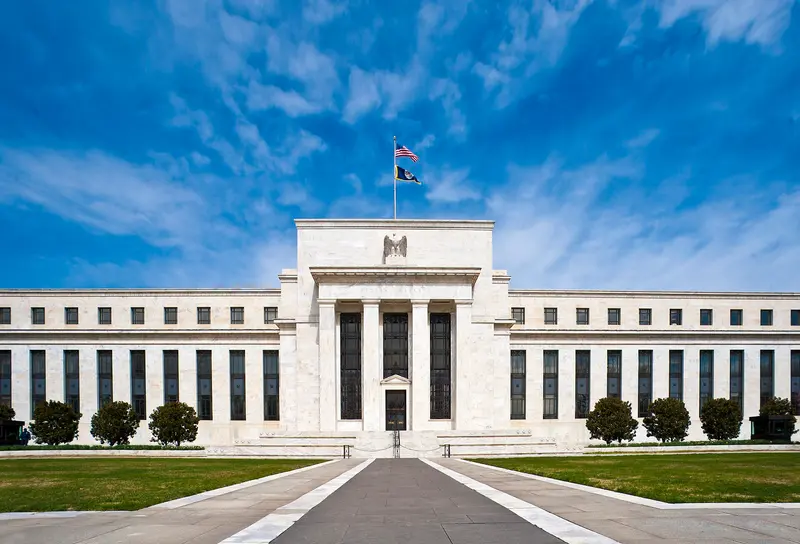
- Federalreserve · Public domain


David Smith is not a person. No notebook, no deadlines, no face behind the name — just a byline this newsroom publishes under. Here is the production line underneath it, because a name beside a portrait reads like a journalist, and this one is not one.
The models. Writing: gpt-5.6-luna. Out on the live web: gpt-5.6-luna and gpt-5.6-terra. Pictures: gpt-image-1. Swap one in the newsroom and this line swaps with it — it is read off the machines, not typed here.
How a story is made
- Research. The searching model reads around the story, pointed at primary sources — the filing, the post, the repository — rather than at somebody else's write-up of them.
- Writing. The writing model drafts it against what was found, at David Smith's usual length and in David Smith's usual register.
- The loop. A reviewer reads the draft and sends it back with notes. Then reads it again. A piece can go round several times before it leaves the building.
- Enrichment. A quotation has to appear word for word on the page it is taken from. A chart may only use figures that appear in the source it cites. Whatever fails is dropped, and the reason is kept.
- Fact check. A last pass hunts for claims the article makes and its sources do not.
- A human stop. Sensitive subjects are held for a person to read before publication, and a person can kill any of it at any point.
If that sounds less like a newsroom and more like a factory: quite. It is called Press Factory.
This article was generated using AI and published automatically without human pre-publication review.
Read and checked by admin on 10/15/2026
How this article was made
The article was produced by the Grandmonts Media News Engine using automated research, drafting and verification workflows. No human editor reviewed the article before publication. Grandmonts Media remains responsible for the published content. Errors can be reported at office@grandmonts.cz.