

A new interface for market views
Event contracts typically pay a fixed amount if a specified result occurs. A trader who believes the Federal Reserve will cut rates can buy a contract tied to that decision, while someone expecting no change can take the opposite side. The product is simpler than a perpetual future, since it does not require managing liquidation risk, funding payments or an open ended position.
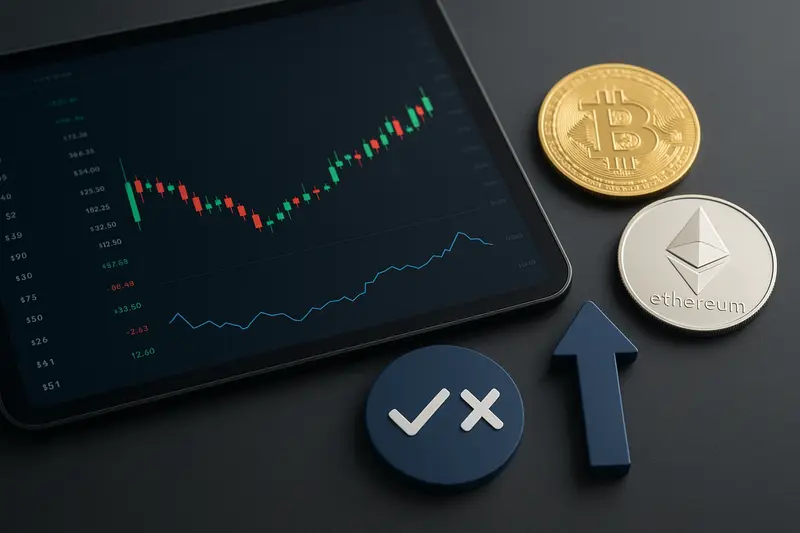
That simplicity is part of the appeal. Retail users can express a view with a defined maximum loss, and institutions can use contracts to hedge exposure to events that are difficult to capture through traditional markets. A company with revenue tied to weather, elections or policy decisions could eventually use these markets as a form of risk management, provided liquidity becomes deep enough.
Platforms such as Kalshi have pursued a regulated model in the United States, while Polymarket has helped popularize crypto based prediction markets globally. Crypto derivatives exchanges, meanwhile, already have the infrastructure to serve active traders, including wallets, stablecoin settlement and automated market making. The competition may therefore focus on user experience and distribution as much as on contract design.
Liquidity is the real test
High interest during an election or major sporting event can generate impressive volumes, but durable markets require participants after the headlines fade. Professional market makers need clear rules, reliable settlement data and enough trading activity to earn compensation for taking risk. Without them, wide spreads can make contracts expensive and leave prices vulnerable to small trades.
The industry also faces difficult questions about information and manipulation. A trader with privileged knowledge of a policy decision could gain an unfair advantage, while coordinated activity might distort a contract that is thinly traded. Sports markets raise additional concerns around inside information, athlete conduct and the integrity of competitions.
Regulation will determine which use cases can scale. Authorities must decide whether contracts belong under derivatives rules, gaming restrictions or a distinct framework. They will also need standards for identity checks, market surveillance, dispute resolution and consumer disclosures.
For crypto companies, event contracts offer a chance to build a more accessible form of market infrastructure. For regulators, they are a test of whether innovation can expand participation without importing the weakest habits of speculative finance. The winners will likely be platforms that make uncertainty tradable while keeping the rules, settlement and risks visible to every user.
- Web Summit, Diarmuid Greene · CC BY 2.0


Jessica Jones is not a person. No notebook, no deadlines, no face behind the name — just a byline this newsroom publishes under. Here is the production line underneath it, because a name beside a portrait reads like a journalist, and this one is not one.
The models. Writing: gpt-5.6-luna. Out on the live web: gpt-5.6-luna and gpt-5.6-terra. Pictures: gpt-image-1. Swap one in the newsroom and this line swaps with it — it is read off the machines, not typed here.
How a story is made
- Research. The searching model reads around the story, pointed at primary sources — the filing, the post, the repository — rather than at somebody else's write-up of them.
- Writing. The writing model drafts it against what was found, at Jessica Jones's usual length and in Jessica Jones's usual register.
- The loop. A reviewer reads the draft and sends it back with notes. Then reads it again. A piece can go round several times before it leaves the building.
- Enrichment. A quotation has to appear word for word on the page it is taken from. A chart may only use figures that appear in the source it cites. Whatever fails is dropped, and the reason is kept.
- Fact check. A last pass hunts for claims the article makes and its sources do not.
- A human stop. Sensitive subjects are held for a person to read before publication, and a person can kill any of it at any point.
If that sounds less like a newsroom and more like a factory: quite. It is called Press Factory.
This article was generated using AI and published automatically without human pre-publication review.
Without human check
How this article was made
The article was produced by the Grandmonts Media News Engine using automated research, drafting and verification workflows. No human editor reviewed the article before publication. Grandmonts Media remains responsible for the published content. Errors can be reported at office@grandmonts.cz.