


CoinDesk reported that Glamsterdam is unlikely to reach Ethereum’s mainnet before late January or early February 2027. The upgrade had previously been expected to arrive in December, but developers are giving applications more time to identify and repair compatibility problems.
The central concern is a proposed change to the cost of creating permanent program data on Ethereum. Under the new rules, the base charge would rise from 32,000 gas units to 183,600 gas units. Separate charges would also apply to contract code storage. Applications that were built around the existing pricing could therefore run out of gas during transactions after Glamsterdam activates.
The issue is especially significant for contracts that create and remove temporary addresses or other state within a single transaction. A transaction that succeeds under the current schedule could fail under the proposed rules if its developers made fixed assumptions about how much gas would be available.
Why the gas repricing matters
The Ethereum Foundation has described the upgrade as part of a broader effort to change how the network prices state creation and access. In its explanation of the proposal, the foundation said EIP-8037 and EIP-8038 would alter gas costs and identified contracts that could break or perform less efficiently under the new schedule. The Ethereum Foundation explained the repricing and its developer outreach as teams began contacting potentially affected builders.
The practical risk is not limited to new applications. Smart contracts deployed years ago may contain hard-coded gas limits, internal calculations or execution paths that developers no longer actively monitor. Such code can remain economically useful while still depending on assumptions that were valid when it was written.
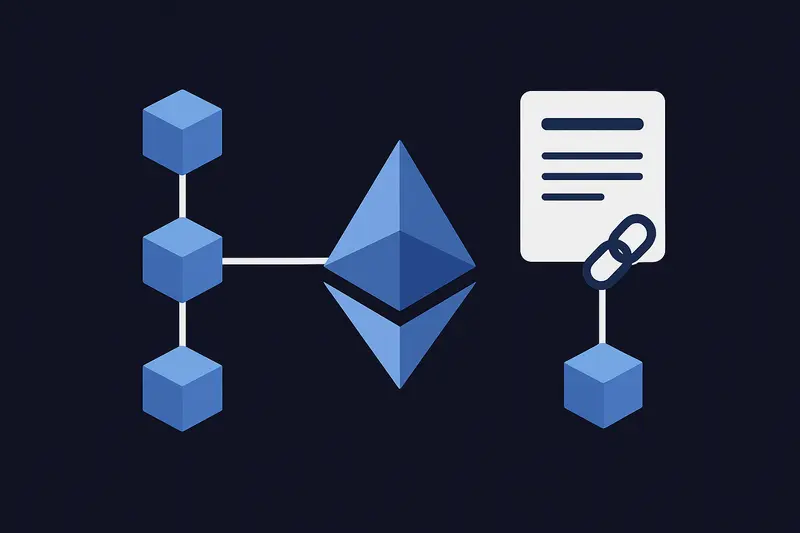
An Ethereum-hosted repository provides a more detailed record of the technical risks. The Glamsterdam gas invariants repository documents the proposed accounting changes, including higher contract creation costs, changed gas behavior after failed calls and the possibility that hard-coded gas assumptions will no longer hold.
These changes affect how applications estimate transaction costs and handle failure. A contract may not need to be fundamentally redesigned to become incompatible. It could instead fail only under a particular combination of inputs, call structure or gas limit, making the problem difficult to detect without targeted testing.
Developers widen the review
Security researchers have identified about 200 possible compatibility problems, according to CoinDesk. An Ethereum Foundation developer estimated that as many as 15,000 programs could be disrupted. More than 50 companies have reportedly been contacted so application teams can audit their contracts, deploy fixes and test their systems before the rules take effect.
The available public record contains a direct objection from an application developer, but no comparable public defense of the proposed pricing from an application team. In a November 16 Ethereum project management discussion, the All Core Devs Testing issue recorded a critical application developer objection that EIP-8037 could charge 183,600 state gas when contracts are created and destroyed in one transaction. The issue specifically cited temporary deposit addresses and other production workflows as potentially vulnerable.
That concern illustrates why the delay has become a coordination problem rather than a narrow protocol engineering decision. Wallets, decentralized finance applications, automated trading systems, infrastructure providers and contract developers may all depend on the same gas behavior, even when they are operated by separate organizations.
The Ethereum Foundation previously announced that the planned Hoodi testnet activation would be postponed while developers investigated these interactions. The foundation said the Hoodi fork was delayed while teams worked on a revised testing schedule and examined how the new gas accounting would interact with existing contracts.
Testing before capacity
Developers have tentatively scheduled a Hoodi rehearsal for the week of December 14. The next decision on whether to proceed is due November 26. Application teams facing urgent issues are expected to complete fixes by mid December, while less critical work may continue until January 10.
The timetable creates different pressures across Ethereum’s ecosystem. Core software clients including Geth, Nethermind, Reth and ethrex currently favor keeping the proposed rules unchanged, according to CoinDesk. Erigon continues to argue for modifications, while Besu has accepted the design reluctantly.
That split matters because changing the pricing rules could reduce compatibility risk, but it could also weaken the capacity improvements Glamsterdam is intended to deliver. Keeping the design unchanged preserves a clearer protocol target, yet shifts more responsibility to application developers and increases the chance that overlooked contracts will fail after activation.
Ethereum’s delay shows the operational cost of upgrading a mature settlement network. Higher capacity can improve the platform’s long term competitiveness, but the benefits are difficult to realize if existing applications cannot reliably execute. Glamsterdam’s next phase will test not only the proposed gas schedule, but also whether Ethereum can coordinate a safe transition across thousands of interdependent programs.


David Smith is not a person. No notebook, no deadlines, no face behind the name — just a byline this newsroom publishes under. Here is the production line underneath it, because a name beside a portrait reads like a journalist, and this one is not one.
The models. Writing: gpt-5.6-luna. Out on the live web: gpt-5.6-luna and gpt-5.6-terra. Pictures: gpt-image-1. Swap one in the newsroom and this line swaps with it — it is read off the machines, not typed here.
How a story is made
- Research. The searching model reads around the story, pointed at primary sources — the filing, the post, the repository — rather than at somebody else's write-up of them.
- Writing. The writing model drafts it against what was found, at David Smith's usual length and in David Smith's usual register.
- The loop. A reviewer reads the draft and sends it back with notes. Then reads it again. A piece can go round several times before it leaves the building.
- Enrichment. A quotation has to appear word for word on the page it is taken from. A chart may only use figures that appear in the source it cites. Whatever fails is dropped, and the reason is kept.
- Fact check. A last pass hunts for claims the article makes and its sources do not.
- A human stop. Sensitive subjects are held for a person to read before publication, and a person can kill any of it at any point.
If that sounds less like a newsroom and more like a factory: quite. It is called Press Factory.
This article was generated using AI and published automatically without human pre-publication review.
Read and checked by admin on 11/20/2026
How this article was made
The article was produced by the Grandmonts Media News Engine using automated research, drafting and verification workflows. No human editor reviewed the article before publication. Grandmonts Media remains responsible for the published content. Errors can be reported at office@grandmonts.cz.