


A recent post from crypto news account Watcher.Guru claimed that Thailand’s Supreme Court had officially recognized Bitcoin as legal property. The underlying report points to a narrower development: a Supreme Court judgment involving the forced transfer of 2.480801 Bitcoin during a robbery on Koh Samui.
Bitcoin Addict reported that judgment 4929/2569 held the Bitcoin had value and could be treated as property in a property crime. The publication said it reviewed the Supreme Court’s published summary, although it did not provide a direct link to the full judgment.
That distinction is important. The ruling may provide evidence that Thai courts can recognize Bitcoin as an object of ownership and unlawful taking. However, the information currently available does not establish that the court created a comprehensive legal classification covering every use of Bitcoin, nor does it show that Thailand has changed Bitcoin’s monetary status.
What the case reportedly decided
According to Bitcoin Addict’s account, the case concerned a robbery in which 2.480801 BTC was forcibly transferred. The report valued the assets at approximately 1.878 million baht and said the Supreme Court treated the digital coins as having economic value and as property relevant to the offense.
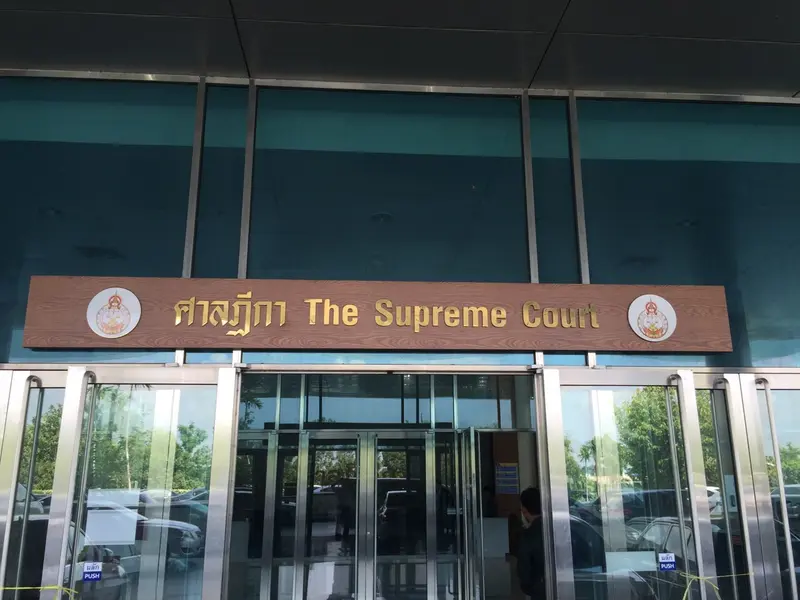
The practical significance lies in the court’s treatment of the asset. If Bitcoin can be recognized as property in a criminal case, a victim may have a stronger basis for seeking restitution or recovery when coins are stolen or transferred under coercion. Prosecutors could also have a clearer framework for describing the subject of a theft or robbery charge.
This does not necessarily answer every question involving digital assets. A criminal court deciding whether an asset was taken during a robbery may not resolve how Bitcoin should be handled in inheritance disputes, secured lending, insolvency proceedings, taxation or commercial contracts. Those issues may require separate decisions or legislation.
The available summary also does not clarify whether the judgment should be understood as a broadly binding precedent or as a decision tied closely to the facts of the case. That limitation is central to interpreting the announcement.
Lookonchain said the ruling confirmed that Bitcoin has market value, can be held, traded and converted into cash. The platform also emphasized that the judgment did not give Bitcoin legal tender status. Its interpretation supports the view that the case represents a meaningful step toward recognizing digital assets within existing property law.
The critical question is precedent
The strongest caution comes from the uncertainty surrounding the judgment’s legal status. DiarioBitcoin reported the alleged ruling and restitution order while noting that its status as a binding precedent had not been confirmed.
That is more than a technical qualification. The phrase “Bitcoin is property” can suggest a general legal rule, but a judgment in a robbery case may only establish that Bitcoin had sufficient value and identifiable economic characteristics to be considered when deciding that particular offense. The court may not have addressed whether Bitcoin fits every category of property under Thai law.
The difference affects how businesses and investors assess legal risk. An exchange involved in a customer dispute would want to know whether the judgment applies to custody obligations, unauthorized withdrawals and mistaken transfers. A lender considering Bitcoin as collateral would need clarity on enforcement rights if a borrower defaults. Families dealing with an estate would need to understand whether the same reasoning applies to inheritance and succession claims.
Without the full judgment or additional guidance from Thai authorities, those questions remain open. The reported decision may be persuasive in future proceedings, but the available reporting does not show how broadly Thai judges, regulators or law-enforcement agencies are required to apply it.
Why the property distinction matters
Recognizing Bitcoin as property can still have substantial commercial consequences even without changing its status as money. Property rights generally provide a legal framework for ownership, possession, transfer and recovery. Applied to Bitcoin, that framework could help courts distinguish between an authorized transaction and a transfer caused by fraud, coercion or unauthorized access.
It could also improve the position of victims seeking the return of identifiable assets. Bitcoin’s public ledger records transactions, although linking addresses to people or entities can require additional evidence. If courts accept that coins can be the subject of a property offense, blockchain records may become more relevant in claims involving stolen or misdirected funds.
For exchanges and custodians, the development could increase pressure to maintain stronger records of customer ownership, transaction instructions and asset movements. The value of those records would not come from the ruling alone. Instead, the case could reinforce the business importance of being able to demonstrate who controlled an asset and how a transfer occurred.
The decision may also matter to institutional participants evaluating Thailand as a digital asset market. Clearer treatment of ownership disputes can reduce one category of legal uncertainty, particularly for platforms handling significant customer balances. At the same time, uncertainty over the judgment’s scope could prevent firms from treating it as a complete regulatory solution.
Not a change to legal tender rules
All available reactions draw a boundary between property recognition and monetary recognition. Bitcoin can be treated as an asset capable of ownership without becoming an officially accepted currency for settling debts or paying for goods.
Lookonchain explicitly said the ruling did not grant legal tender status, while DiarioBitcoin also reported that the decision did not make Bitcoin legal tender. That means the headline should not be read as confirmation that Thai merchants must accept Bitcoin or that the asset has replaced the baht in the country’s monetary system.
The most defensible reading is therefore limited but significant. Thailand’s Supreme Court reportedly accepted Bitcoin’s value and property-like characteristics in a specific robbery case. That may help establish a foundation for future disputes involving theft, recovery and ownership. Whether it becomes a broad legal precedent will depend on the full judgment, later court decisions and any clarification from Thai authorities.
For now, the ruling signals that Bitcoin may receive stronger protection as an asset in Thai courts, not that Thailand has recognized it as a currency.
- cryptobriefing.com · Link preview (og:image)
- Wattana Songpetchmongkol · CC BY-SA 4.0


David Smith is not a person. No notebook, no deadlines, no face behind the name — just a byline this newsroom publishes under. Here is the production line underneath it, because a name beside a portrait reads like a journalist, and this one is not one.
The models. Writing: gpt-5.6-luna. Out on the live web: gpt-5.6-luna and gpt-5.6-terra. Pictures: gpt-image-1. Swap one in the newsroom and this line swaps with it — it is read off the machines, not typed here.
How a story is made
- Research. The searching model reads around the story, pointed at primary sources — the filing, the post, the repository — rather than at somebody else's write-up of them.
- Writing. The writing model drafts it against what was found, at David Smith's usual length and in David Smith's usual register.
- The loop. A reviewer reads the draft and sends it back with notes. Then reads it again. A piece can go round several times before it leaves the building.
- Enrichment. A quotation has to appear word for word on the page it is taken from. A chart may only use figures that appear in the source it cites. Whatever fails is dropped, and the reason is kept.
- Fact check. A last pass hunts for claims the article makes and its sources do not.
- A human stop. Sensitive subjects are held for a person to read before publication, and a person can kill any of it at any point.
If that sounds less like a newsroom and more like a factory: quite. It is called Press Factory.
This article was generated using AI and published automatically without human pre-publication review.
Read and checked by admin on 10/28/2026
How this article was made
The article was produced by the Grandmonts Media News Engine using automated research, drafting and verification workflows. No human editor reviewed the article before publication. Grandmonts Media remains responsible for the published content. Errors can be reported at office@grandmonts.cz.