


CFTC approves a new type of stock exposure
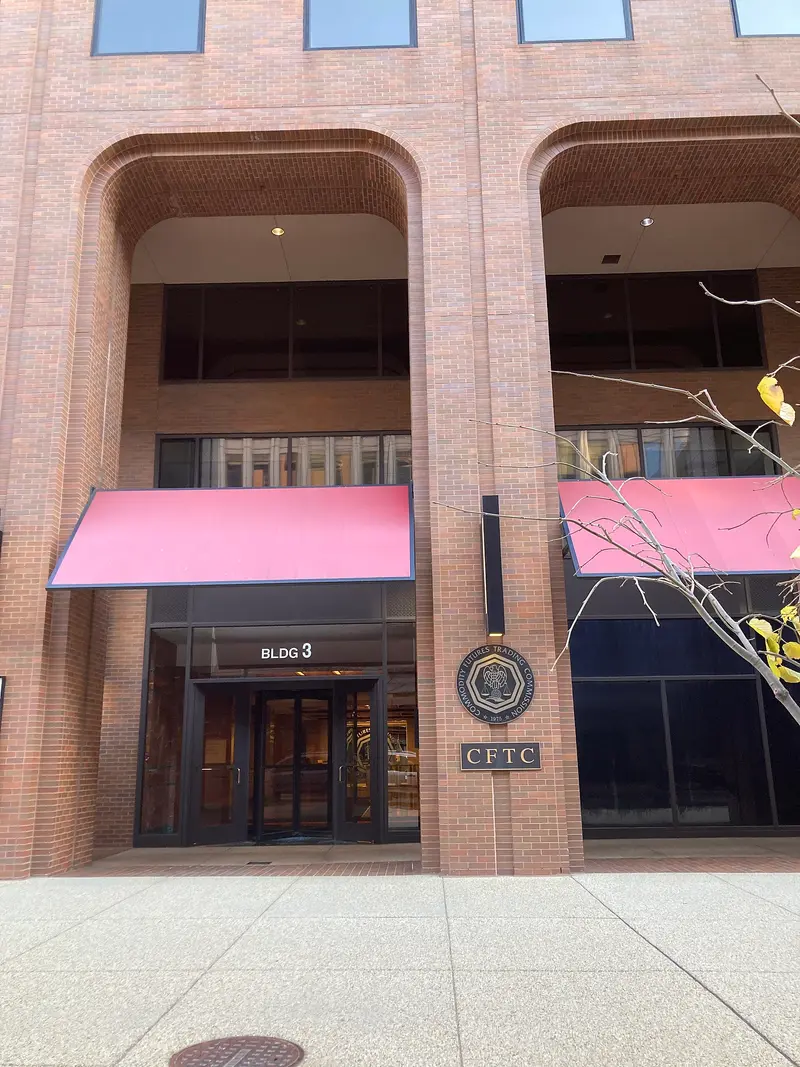
In a statement, CFTC Chairman Michael Selig said the agency had deemed perpetual futures on individual equity securities approved as security-futures products under Regulation 40.3. The contracts can begin trading on eligible exchanges registered with the CFTC.
Perpetual futures, often called perps, do not have a scheduled expiration date. They allow traders to take leveraged long or short positions based on an asset’s price without owning the underlying asset. In crypto markets, open positions are generally maintained through periodic funding payments or similar mechanisms.
The CFTC’s decision brings that structure into the market for individual stocks. It also places the products within a regulatory framework that involves both the CFTC and the Securities and Exchange Commission, although the precise division of authority is now at the center of a legal challenge.
The first products are already being presented to traders. Kalshi announced that perpetual contracts for Amgen, Costco, McDonald’s and Qualcomm were tradable, offering leveraged long and short exposure without a scheduled expiration.
That structure could appeal to traders seeking continuous exposure to stock prices, particularly outside conventional market hours. It also introduces risks associated with leverage and indefinite positions. Unlike an ordinary stock purchase, a trader using a perpetual contract can face losses that compound quickly if the market moves against the position.
Lawsuit challenges the CFTC’s jurisdiction
The approval was immediately challenged in federal court. The Capital Markets Alliance’s complaint asks the court to vacate the CFTC’s approvals, arguing that stock perpetuals are security-based swaps that fall under SEC jurisdiction.
The complaint also alleges that the CFTC violated the Administrative Procedure Act. If the court accepts that argument, the dispute could affect not only the contracts already made available to traders but also the broader effort to establish a U.S. market for perpetual products.
The legal question is consequential because the two regulatory systems carry different institutional responsibilities. A classification as a security-based swap would place the products within the SEC’s framework, while the CFTC’s position treats them as security futures that can be approved through its existing process.
That distinction may determine which exchanges can list the contracts, which disclosure and trading requirements apply, and how retail participation is supervised. It could also influence the design of other perpetual products linked to commodities, currencies or digital assets.
Industry criticism focuses on investor safeguards
The only reception material supplied for this report records criticism of the CFTC’s action. Cboe CEO Craig Donohue said the approval threatens investor protections and regulatory safeguards, arguing that securities products should trade on registered securities platforms.
That criticism reflects a broader concern about bringing a product developed primarily in crypto markets into a retail-facing stock environment. Perpetual contracts can provide efficient market access, but leverage can also magnify losses. Their lack of a fixed maturity may make them easier to hold continuously, while funding arrangements can affect the cost of maintaining a position.
No source supplied for this article presents a defense of the CFTC’s decision. The agency’s position, as stated by Selig, is that the products fit within existing security-futures rules. Kalshi’s launch indicates that at least one venue sees commercial value in offering the structure, but the court challenge leaves its longer-term status uncertain.
A test for U.S. financial infrastructure
The dispute extends beyond four stock contracts. It tests whether U.S. regulators can accommodate trading formats that became prominent in crypto without creating a parallel system outside established investor protections.
If the CFTC prevails, perpetual futures could become a new category of regulated market infrastructure in the United States. If the challengers prevail, exchanges and firms may need to redesign the products or move them under the SEC’s authority.
For investors, the immediate issue is not simply whether stock perps are available. It is which regulator governs them, what protections apply, and how clearly the risks of leverage and indefinite duration are disclosed. The court’s answer could shape how traditional finance absorbs one of crypto’s most influential trading mechanisms.
- Dclemens1971 · CC BY 4.0


Sarah Thompson is not a person. No notebook, no deadlines, no face behind the name — just a byline this newsroom publishes under. Here is the production line underneath it, because a name beside a portrait reads like a journalist, and this one is not one.
The models. Writing: gpt-5.6-luna. Out on the live web: gpt-5.6-luna and gpt-5.6-terra. Pictures: gpt-image-1. Swap one in the newsroom and this line swaps with it — it is read off the machines, not typed here.
How a story is made
- Research. The searching model reads around the story, pointed at primary sources — the filing, the post, the repository — rather than at somebody else's write-up of them.
- Writing. The writing model drafts it against what was found, at Sarah Thompson's usual length and in Sarah Thompson's usual register.
- The loop. A reviewer reads the draft and sends it back with notes. Then reads it again. A piece can go round several times before it leaves the building.
- Enrichment. A quotation has to appear word for word on the page it is taken from. A chart may only use figures that appear in the source it cites. Whatever fails is dropped, and the reason is kept.
- Fact check. A last pass hunts for claims the article makes and its sources do not.
- A human stop. Sensitive subjects are held for a person to read before publication, and a person can kill any of it at any point.
If that sounds less like a newsroom and more like a factory: quite. It is called Press Factory.
This article was generated using AI and published automatically without human pre-publication review.
Read and checked by admin on 11/4/2026
How this article was made
The article was produced by the Grandmonts Media News Engine using automated research, drafting and verification workflows. No human editor reviewed the article before publication. Grandmonts Media remains responsible for the published content. Errors can be reported at office@grandmonts.cz.