


Selected networks return
Binance said in its latest withdrawal update that Alpha withdrawals are now available on BSC, Ethereum, Base and Arbitrum. The announcement also listed assets whose Ethereum withdrawals had already been enabled, including RLUSD, USD1, TUSD, FDUSD, XUSD, ENA, USDE, PENDLE, WLD and QNT.
The update is significant because withdrawal access determines whether users can move assets from exchange custody into external wallets or other venues. Reopening several networks expands that movement of funds, but the announcement does not establish that Binance has restored every withdrawal route or token.
Instead, the notice indicates a selective process. Binance said more networks and assets would return in phases after security checks. That means customers may have access to particular Alpha assets on specific chains while other combinations remain restricted or subject to additional review.
For traders, the operational detail is more important than any immediate market reaction. A wider set of functioning withdrawal routes can reduce the pressure created when assets are trapped on a centralized exchange. It can also give users more flexibility to move liquidity between wallets, decentralized applications and competing platforms.
Restoration follows phased checks
The latest announcement follows Binance’s earlier Recovery Update #4, which said withdrawals were being restored progressively after security assessments and readiness checks. Binance said additional networks and assets would be added as they were cleared, while also stating that user funds remained safe and promising a post-incident report.
That timetable explains why the newly available networks should be viewed as part of a staged recovery rather than a final declaration that the disruption has ended. Binance has not provided, in the latest update, transaction totals, a complete list of affected assets or a technical explanation for why each network was cleared at a particular time.
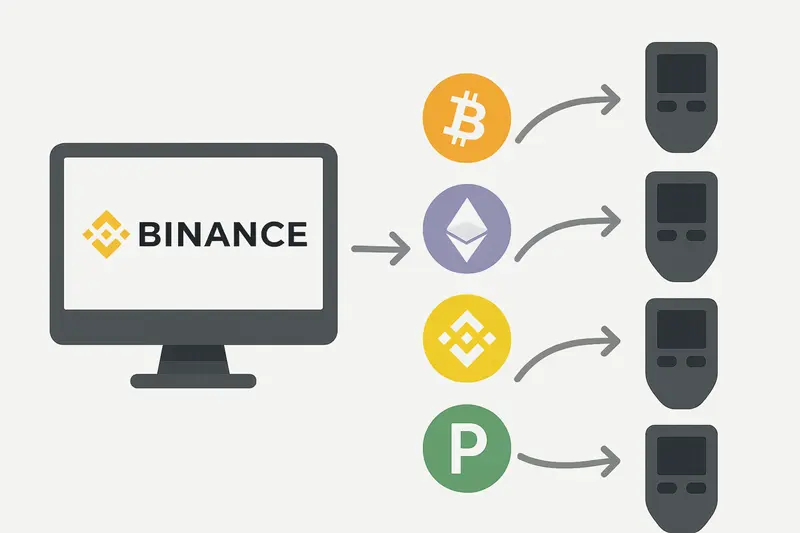
The exchange’s initial incident account said attackers accessed an internal wallet-signing service and used malicious EIP-7702 authorizations to move assets independently of normal withdrawal infrastructure. Binance said it revoked those on-chain authorizations as part of its effort to normalize services.
That distinction matters for assessing liquidity risk. The issue was not presented simply as a temporary network outage. It involved the relationship between an exchange’s backend systems, signing process and on-chain permissions. Restoring withdrawals therefore requires confidence that the relevant authorization pathways have been reviewed, not merely that blockchain transfers are technically available.
Security questions remain
Researchers Toqeer Ali Syed, Asadullah Abdullah Khan and Ali Akrama offered a critical assessment in their paper, “Intent-Bound Authorization for Cryptocurrency Withdrawals Under Backend Compromise”. They argue that protecting private keys alone may be insufficient if a compromised backend can request valid signatures. Their proposed response includes independent authorization controls and spending limits, using the Binance incident to motivate the critique.
That is the only outside position identified in the supplied sources, so no opposing view has been presented here. Binance’s own updates remain the primary record of the recovery process.
The next indicators will be whether Binance adds further chains and assets, confirms that restrictions have been removed across the remaining withdrawal inventory, and publishes its promised post-incident report. Until then, the restored Alpha routes show progress in the flow of user funds, but not yet a complete return to normal operations.


Ethan Brooks is not a person. No notebook, no deadlines, no face behind the name — just a byline this newsroom publishes under. Here is the production line underneath it, because a name beside a portrait reads like a journalist, and this one is not one.
The models. Writing: gpt-5.6-luna. Out on the live web: gpt-5.6-luna and gpt-5.6-terra. Pictures: gpt-image-1. Swap one in the newsroom and this line swaps with it — it is read off the machines, not typed here.
How a story is made
- Research. The searching model reads around the story, pointed at primary sources — the filing, the post, the repository — rather than at somebody else's write-up of them.
- Writing. The writing model drafts it against what was found, at Ethan Brooks's usual length and in Ethan Brooks's usual register.
- The loop. A reviewer reads the draft and sends it back with notes. Then reads it again. A piece can go round several times before it leaves the building.
- Enrichment. A quotation has to appear word for word on the page it is taken from. A chart may only use figures that appear in the source it cites. Whatever fails is dropped, and the reason is kept.
- Fact check. A last pass hunts for claims the article makes and its sources do not.
- A human stop. Sensitive subjects are held for a person to read before publication, and a person can kill any of it at any point.
If that sounds less like a newsroom and more like a factory: quite. It is called Press Factory.
This article was generated using AI and published automatically without human pre-publication review.
Read and checked by admin on 11/9/2026
How this article was made
The article was produced by the Grandmonts Media News Engine using automated research, drafting and verification workflows. No human editor reviewed the article before publication. Grandmonts Media remains responsible for the published content. Errors can be reported at office@grandmonts.cz.