Cardano
Grok’s Bullish Spin on Cardano Sparks Buzz on X


- Share
- Tweet /data/web/virtuals/383272/virtual/www/domains/theunhashed.com/wp-content/plugins/mvp-social-buttons/mvp-social-buttons.php on line 63
https://theunhashed.com/wp-content/uploads/2026/01/x_ada.jpeg&description=Grok’s Bullish Spin on Cardano Sparks Buzz on X', 'pinterestShare', 'width=750,height=350'); return false;" title="Pin This Post">
AI sentiment turns the spotlight back on ADA as a 2026 contender.
A surprising shift in the crypto chatter on X (formerly Twitter) has turned heads: Grok, the AI developed by xAI, is expressing notably bullish sentiment about Cardano’s native token, ADA, predicting it could be a standout performer in the coming years. This comes at a time when the broader market has been volatile and investor confidence in major altcoins has fluctuated.
Grok’s Unexpected Endorsement of ADA
In recent posts on X, users highlighted outputs from Grok suggesting that Cardano could be one of the best investments into 2026, positioning ADA as a strong candidate relative to other cryptocurrencies. The AI’s sentiment doesn’t just forecast modest gains; in some interpretations emerging within the community, Grok has even hinted that Cardano might outperform major assets like Bitcoin, Ethereum, Solana, and XRP this year, partly attributed to emerging technology like the Midnight sidechain — a privacy‑enhancing layer expected to expand Cardano’s appeal.
What’s notable about this narrative is not just the projection itself, but the source: Grok’s outputs are being shared, dissected, and reacted to by traders and analysts on X, turning AI sentiment into another layer of market psychology. Even if the projections are speculative, they reflect growing optimism around Cardano’s technological roadmap and long‑term prospects.
Why This Matters Beyond AI Hype
Cardano’s development story has always been one of methodical, academically grounded progress. Its proof‑of‑stake consensus mechanism, long‑delayed upgrades, and ecosystem expansion efforts have framed ADA as a more deliberate alternative to faster‑moving blockchains. The recent Grok sentiment shift feeds into a broader narrative that the network’s fundamentals might finally be aligning with market interest again.
Supporting factors that enthusiasts point to include improvements in scalability and privacy, potentially enhanced DeFi activity, and a community that has consistently backed the project even when price action has lagged. While AI projections alone aren’t financial advice, they can amplify narratives that already exist in the market — and Grok’s bullish hints on Cardano are doing just that.
Skepticism and Context
Of course, any AI‑generated forecast should be taken with caution. Grok’s predictions about asset performance are ultimately aggregations of available public sentiment and data patterns, and they can change as market conditions evolve. Earlier estimates from Grok and other AI tools have varied widely — at one point suggesting both bullish and bearish scenarios for ADA depending on broader crypto market trends and adoption factors.
Additionally, community reactions on X suggest a mix of excitement and skepticism. Some users celebrate the idea of ADA as a breakout asset, while others emphasize that real‑world adoption, regulatory clarity, and ecosystem growth — not just AI sentiment — will determine whether Cardano lives up to its potential.
The Bigger Picture
Whether investors take Grok’s bullish tones as a sign of institutional interest, retail hype, or simply another prognostic model, the spotlight on Cardano underscores a larger theme in crypto today: AI is influencing market sentiment, not just price charts and fundamental analysis. As more traders reference AI‑generated content to inform their views, platforms like X serve as the arena where technology and finance intermingle in real time.
For Cardano, the renewed attention — even if sparked by an AI model’s projection — could be the catalyst for deeper conversations about its long‑term value proposition and community resilience. As the crypto landscape evolves, stories like this blur the lines between human analysis, automated forecasts, and the narratives that shape investor behavior.









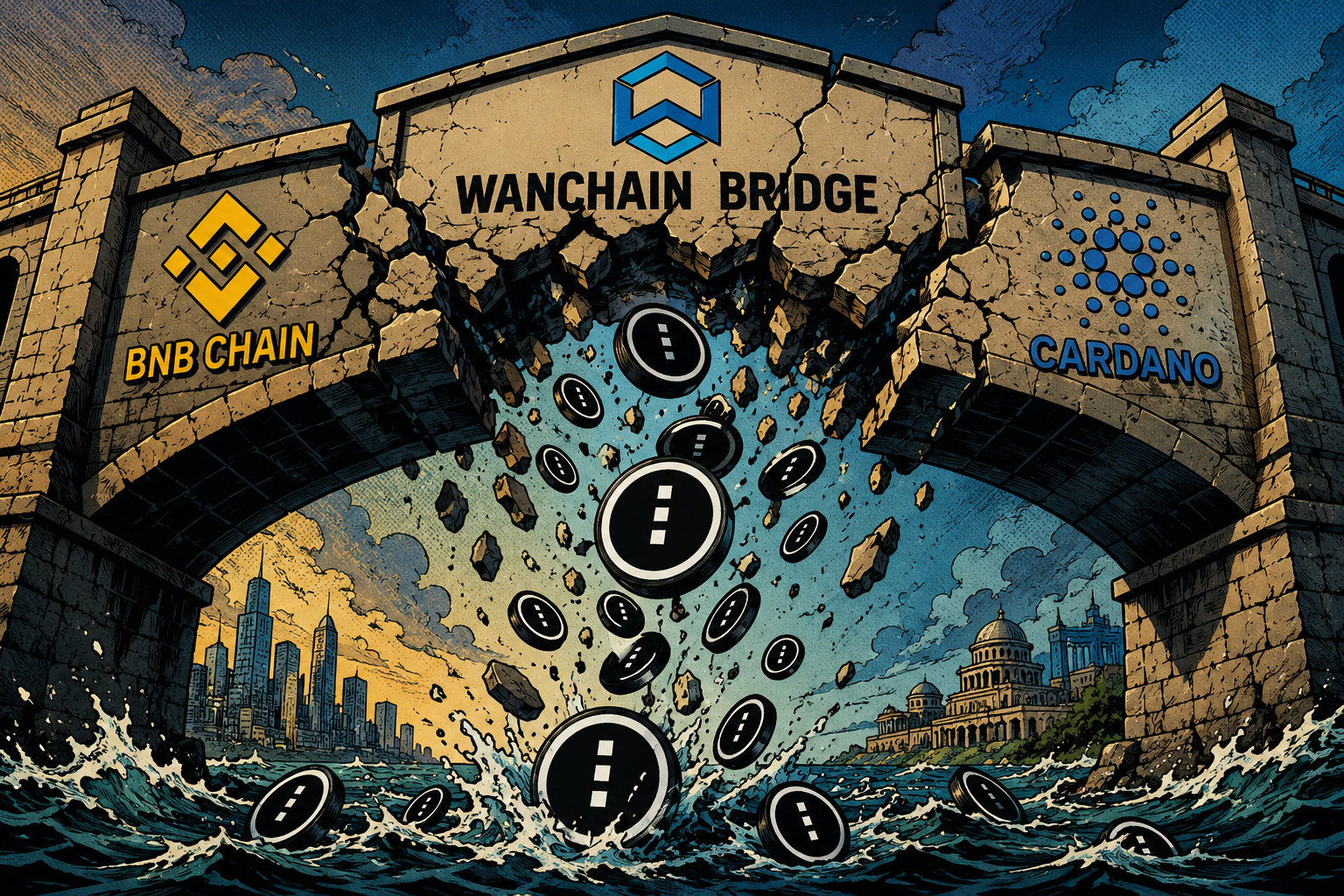
The most dangerous weakness in a cross-chain bridge is not always a stolen private key, a compromised validator or a broken cryptographic algorithm. Sometimes it is something more mundane: two pieces of software disagreeing about what a signed message actually says.
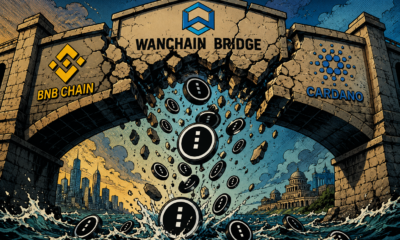
That appears to be the central failure behind the Wanchain bridge incident involving Cardano, BNB Chain and approximately 515.2 million NIGHT tokens. The tokens were removed from a Wanchain-controlled bridge treasury on Cardano in four transactions, creating an estimated loss of roughly $9 million to $10 million at prices reported around the incident.
NIGHT subsequently fell sharply as a large quantity of previously locked tokens entered circulation and selling pressure spread through Cardano’s decentralized exchanges.
The attack has been described in some headlines as a Cardano hack, a BNB Chain hack or even a breach of the Midnight Network. None of those descriptions is technically accurate based on the information currently available.
Cardano continued processing transactions normally. BNB Chain did not suffer a consensus failure. Midnight’s validators, protocol and core infrastructure were not compromised. The vulnerable component appears to have been Wanchain’s Cardano-side bridge logic—the infrastructure responsible for deciding when tokens locked on Cardano could legitimately be released.
A Bridge Failure Between Two Functioning Blockchains
Wanchain operates cross-chain infrastructure connecting networks that cannot natively verify one another’s state. Its bridge between Cardano and BNB Chain allowed NIGHT holders to move economic value between the two ecosystems.
NIGHT exists as a native asset on Cardano. When users wanted to move it to BNB Chain, the bridge used a conventional lock-and-mint process. Native NIGHT was deposited into a treasury contract on Cardano, while a corresponding bridged representation was created on BNB Chain.
When users moved in the opposite direction, the process was supposed to work in reverse. The bridged tokens on BNB Chain would be burned or otherwise removed from circulation, and Wanchain’s bridge nodes would produce an authorization allowing the corresponding native NIGHT to leave the Cardano treasury.
The bridge therefore depended on a simple economic promise: every bridged NIGHT token circulating on BNB Chain should be backed by NIGHT locked on Cardano.
The attacker did not need to break either blockchain. The target was the mechanism enforcing that promise.
Wanchain confirmed that NIGHT was withdrawn from the bridge contract on Cardano and temporarily made WanBridge unavailable. The company said it was investigating the incident and would provide a transparent update after completing its analysis.
At the time of publication, that full postmortem had not appeared.
The Preliminary Root Cause
Blockchain security company BlockSec has published the most detailed preliminary explanation of the exploit.
Its investigation points to a problem called non-injective signed-message encoding inside Wanchain’s TreasuryCheck validator, a Plutus V2 smart contract deployed on Cardano.
The TreasuryCheck validator had an important job. Before allowing NIGHT to leave the treasury, it needed to verify that the withdrawal had been authorized by Wanchain’s bridge node group.
That authorization took the form of a digital signature over transaction data. In principle, the signature was intended to bind together details such as the source-chain transaction, token information, recipient, amount, fees and other bridge parameters.
The problem was apparently not the signature itself. The signature was cryptographically valid.
The problem was how the contract assembled the information before verifying that signature.
According to BlockSec, the validator combined 14 variable-length fields by placing their raw byte representations directly beside one another. It did not consistently place separators between the fields, nor did it encode the length of each field.
This can make a collection of structured values ambiguous.
Imagine a system that signs two numbers by joining them together. The values “12” and “345” produce the combined message “12345.” But the values “1” and “2345” produce the same combined message.
The individual fields are different, yet the final string is identical.
A cryptographic signature cannot protect information that was ambiguously formatted before it was signed. The signature only proves that someone authorized the resulting bytes. It does not independently know where one field was supposed to end and the next was supposed to begin.
This is why the vulnerability is described as non-injective encoding. Multiple distinct sets of input values can map to the same encoded message.
One Authorization, Two Very Different Withdrawals
BlockSec traced the identifier used in one of the attack transactions to a legitimate transaction on BNB Chain.
That original transaction reportedly authorized the release of approximately 3,110 NIGHT. It appears to have been a normal bridge operation carrying a valid authorization from the bridge’s signing system.
The attacker allegedly rearranged or manipulated the boundaries between the encoded fields while preserving the same final byte sequence. Because the bytes being verified had not changed, the original signature remained valid.
The altered Cardano transaction, however, interpreted those bytes differently.
Instead of releasing roughly 3,110 NIGHT, the TreasuryCheck contract authorized the withdrawal of 203,001,692 NIGHT.
That represents an increase of approximately 65,000 times over the amount associated with the legitimate BNB Chain transaction.
The same general technique appears to have been used across four withdrawals. Together, they removed approximately 515.2 million NIGHT from the treasury over about eight minutes.
This was not a conventional replay attack in which the exact same transaction was simply submitted twice. It was more subtle. The attacker appears to have reused valid signed data while changing its semantic interpretation.
The contract saw a valid signature attached to a withdrawal request that satisfied its programmed checks. What it failed to establish was that the structured withdrawal request meant exactly the same thing that the bridge nodes had intended to authorize.
The Hash Function Was Not Broken
It is important to distinguish this failure from a cryptographic hash collision.
A hash collision occurs when two different inputs produce the same hash output despite being represented as different byte sequences. Finding a practical collision against a modern cryptographic hash function would be a major cryptographic breakthrough.
That is not what appears to have happened here.
In the Wanchain case, the two sets of structured fields could be converted into the same byte sequence before hashing. The hash function then received identical input and naturally generated an identical result.
The attacker did not defeat the hash. The bridge handed the hash function an ambiguous message.
The distinction matters because replacing the hash algorithm would not solve the underlying problem. SHA-3, SHA-256 or another secure function would all return the same output when given the same bytes.
The correct fix is unambiguous serialization.
Every field must have a clearly defined type, order and boundary. Variable-length values should include explicit length prefixes or be encoded through a canonical structured format such as CBOR. Cardano’s serialization tools already provide mechanisms that can represent Plutus data with clear boundaries.
BlockSec specifically noted that using structured serialization before hashing could prevent this form of field-splitting and signature reuse.
Why Cardano Was Not Hacked
The malicious withdrawals were executed on Cardano, and the tokens left a Cardano smart contract. That does not mean the Cardano protocol itself failed.
Cardano correctly executed the validator code deployed by Wanchain. The blockchain reached consensus, checked the transaction according to its rules and recorded the resulting state change.
The fault appears to have existed in the application-level contract logic.
This is comparable to a banking application approving an unauthorized payment because of a bug in its internal authorization system. The underlying operating system and database may be working exactly as designed, but the application has still made a disastrous decision.
The incident also does not currently indicate a general vulnerability in Plutus V2. Other Cardano applications are not automatically exposed simply because they use the same smart-contract platform.
The relevant question is whether any other Wanchain contracts reuse the same encoding pattern. The public Wanchain repository describes similar authorization contracts for fungible-token treasuries, token minting and NFT operations.
Until Wanchain publishes a complete scope assessment, users cannot assume that the risk was limited exclusively to NIGHT.
Why BNB Chain Was Involved
BNB Chain appears in the story because the reused authorization originated from a legitimate bridge transaction there.
The attacker needed authentic signed material. A real BNB Chain bridge transaction provided it.
But there is no evidence that BNB Chain accepted an invalid state transition, suffered a validator compromise or produced fraudulent consensus data. The BNB transaction was apparently legitimate for the relatively small NIGHT amount it represented.
The failure occurred when Wanchain’s Cardano validator interpreted the signed information differently from the system that generated it.
That is one of the fundamental dangers of cross-chain infrastructure. A bridge must translate state between networks with different transaction models, data formats and smart-contract environments.
BNB Chain follows an Ethereum-style account model and executes EVM contracts. Cardano uses an extended unspent transaction output model and Plutus validators. The bridge must preserve the precise meaning of an event while translating it between those architectures.
A signature is only useful when both sides agree on exactly what was signed.
Midnight’s Network and Token Supply Were Not Directly Compromised
The Midnight Foundation said the incident involved third-party bridge operations rather than the Midnight Network itself.
There is currently no indication that an attacker took control of Midnight validators, altered Midnight consensus or discovered a vulnerability in the network’s privacy technology.
The NIGHT token contract was not used to create hundreds of millions of new tokens. The attacker withdrew existing NIGHT that had already been locked in Wanchain’s Cardano treasury.
The distinction is technically important, but economically it offers limited comfort.
Tokens that had been immobilized as backing for bridged NIGHT became available to the attacker. A substantial amount was reportedly moved through Cardano trading venues, contributing to a price decline of more than 30% around the incident.
The total NIGHT supply may not have increased, but the liquid supply available to the market changed abruptly.
That can produce many of the same immediate effects as an unauthorized mint: dilution of available liquidity, collapsing prices and uncertainty about who ultimately bears the loss.
The Under-Collateralization Question
The largest unresolved issue is not simply how many tokens the attacker withdrew. It is what remains backing the bridged NIGHT circulating on BNB Chain.
The Cardano treasury existed to collateralize the cross-chain representation. Removing 515.2 million NIGHT potentially leaves a gap between tokens locked on Cardano and bridged claims outstanding elsewhere.
If the corresponding BNB Chain tokens had already been legitimately burned, part of the withdrawal might represent direct theft without leaving an equal amount of circulating bridged liabilities. But if the attacker used small legitimate burns to authorize massively inflated Cardano withdrawals, the bridge treasury could have lost far more collateral than was removed from circulation on BNB Chain.
That would leave the system under-collateralized.
Wanchain needs to publish a complete reserve reconciliation showing the amount of NIGHT still held on Cardano, the quantity of bridged NIGHT outstanding on BNB Chain and the liabilities associated with pending transactions.
Without those numbers, holders of bridged NIGHT cannot independently determine whether every token remains redeemable.
The response may require Wanchain to replace the missing collateral, negotiate a recovery with the attacker, obtain support from ecosystem partners or establish a claims process.
Simply redeploying the vulnerable contract would prevent further withdrawals. It would not repair the balance sheet created by the exploit.
The Uncomfortable Audit Question
The incident is especially significant because Wanchain’s Cardano bridge had undergone multiple security reviews.
Project Catalyst records show that 250,000 ADA was allocated for a second audit of the bridge. The project marked the external-auditor selection, first code review, second review and final audit as completed. Wanchain’s proposal also stated that the bridge had been audited before its original launch.
An exploit after an audit does not automatically mean the auditors were negligent.
The vulnerable code may have been modified after the review. The NIGHT integration may have introduced new data formats. The deployed bytecode may have differed from the reviewed repository. The audit scope may have excluded off-chain message construction or the exact interaction between BNB Chain and Cardano.
It is also possible that the ambiguous encoding existed in the reviewed code but was not identified.
Only the audit reports, reviewed commit hashes and deployment records can resolve that question.
Wanchain’s postmortem should identify the precise vulnerable code version, when it was deployed, whether it was included in either audit and whether recommended changes were fully implemented.
Anything less would leave the most important governance question unanswered.
What Wanchain Must Fix Before Reopening
A safe restart requires more than removing NIGHT from the bridge interface.
The TreasuryCheck message format must be replaced with canonical serialization that preserves the type and length of every field. The new contract should use domain separation so that a signature created for one contract, network, token or action cannot be accepted in another context.
Bridge authorizations should bind themselves to the source-chain identifier, destination chain, contract version, token policy, exact amount, recipient, nonce and expiry. Every identifier should be consumed only once.
Wanchain must also examine its other Cardano validators for the same concatenation pattern. If TreasuryCheck, MintCheck, NFTTreasuryCheck or related contracts share utility code, the vulnerability may have a wider theoretical scope even when no additional exploitation has been observed.
The bridge node group’s signing software must be reviewed alongside the on-chain contracts. Security depends on both sides producing and interpreting exactly the same canonical message.
Finally, the project needs monitoring capable of stopping anomalous withdrawals. A request to release 203 million NIGHT when the corresponding source-chain event represented approximately 3,110 NIGHT should have triggered an automatic circuit breaker, regardless of whether the signature passed.
Cryptographic authorization should not be the only defense against economically impossible behavior.
A Bridge Can Be Decentralized and Still Fail Centrally
Wanchain describes WanBridge as decentralized and non-custodial because no conventional company-controlled wallet manually approves every transfer. Bridge nodes use distributed signing mechanisms, while smart contracts hold and release assets.
The NIGHT incident shows the limits of those labels.
A bridge contract can be non-custodial from the user’s perspective while still becoming a concentrated pool of collateral. It can use decentralized signers while depending on one shared interpretation of a message format. It can avoid a single private key while retaining a single vulnerable verification path.
Decentralization protects against certain failures. It does not automatically prevent software bugs.
The Wanchain exploit appears to have bypassed a sophisticated signing network without compromising any of its signers. The attacker did not need control of the authorization system because the same authorization could be made to mean two different things.
That is a more troubling failure than a simple key leak. Keys can be rotated. Ambiguous protocol semantics can remain unnoticed for years.
The Preliminary Verdict
The leading explanation for the Wanchain NIGHT exploit is now technically coherent and supported by on-chain analysis, but it remains preliminary until Wanchain publishes its own postmortem.
Approximately 515.2 million NIGHT left the Cardano-side bridge treasury in four rapid withdrawals. At least one transaction appears to have reused a legitimate bridge signature associated with a much smaller BNB Chain transfer.
The suspected root cause was raw concatenation of 14 variable-length fields without sufficient boundaries. That allowed different withdrawal parameters to produce the same signed bytes, enabling a valid signature to authorize a transaction the signers never intended.
Cardano was not compromised. BNB Chain was not compromised. Midnight was not compromised.
The bridge between them was.
That distinction matters for technical accuracy, but it does not reduce the seriousness of the failure. Cross-chain bridges exist to preserve value while translating information between incompatible systems. When the translation layer cannot distinguish a 3,110-token withdrawal from a 203-million-token withdrawal, the entire collateral model collapses.
The next test for Wanchain is no longer whether it can identify the flawed encoding. BlockSec has already presented a credible answer.
The real test is whether Wanchain can account for every missing NIGHT token, restore the bridge’s backing, prove that related contracts are safe and explain how a vulnerability this fundamental survived development, deployment and multiple rounds of auditing.
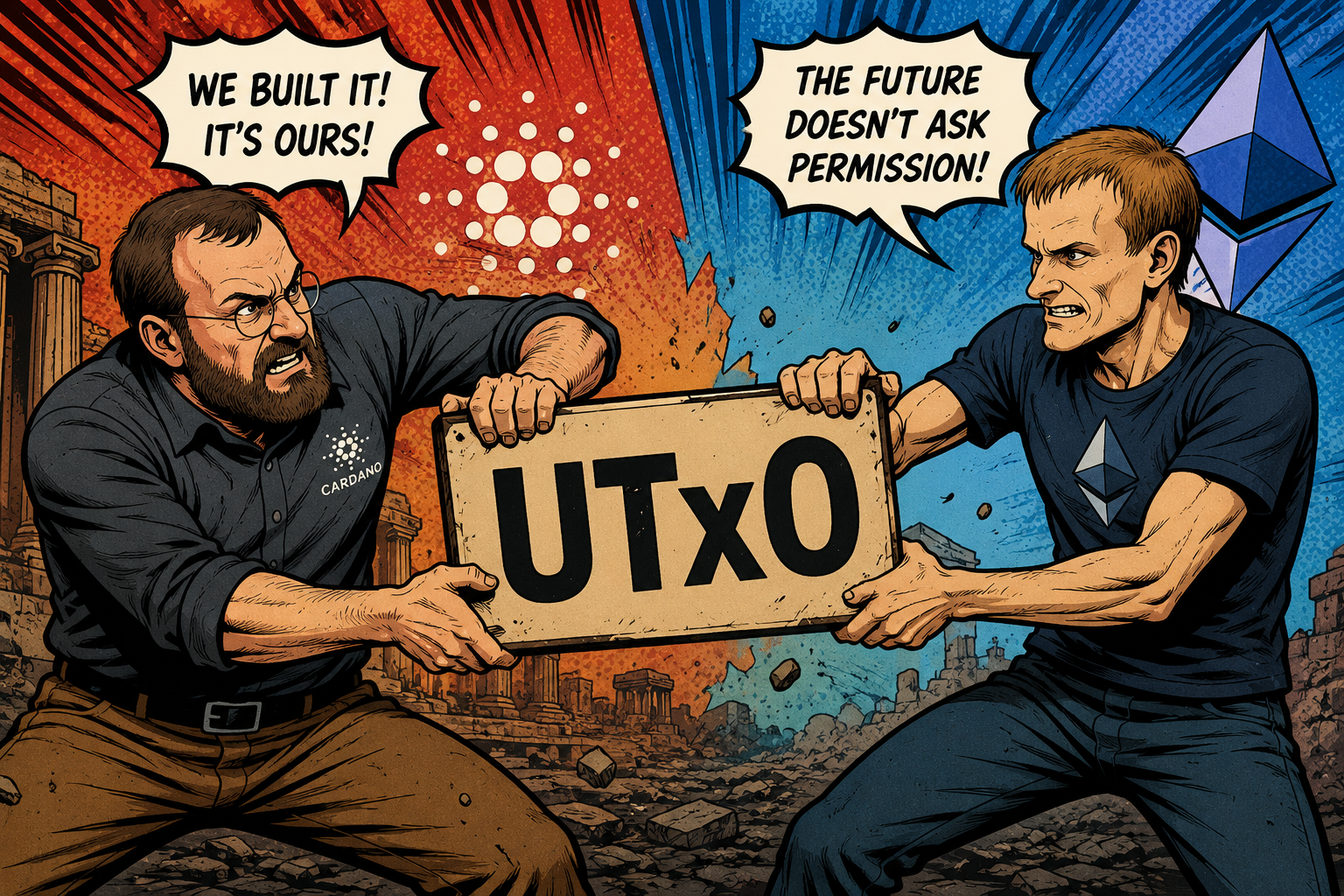
The long-running rivalry between Cardano and Ethereum has flared up once again, this time over one of blockchain’s most fundamental design choices. Charles Hoskinson, founder of Cardano and one of Ethereum’s original co-founders, has accused the Ethereum ecosystem of attempting to adopt Cardano’s Extended UTXO model while refusing to acknowledge where the idea has already been successfully implemented.
His comments followed a new proposal from Ethereum Foundation researcher Toni Wahrstätter, who introduced the concept of bringing native UTXOs to Ethereum. While the proposal is still at an early stage, it immediately reignited a debate that has existed for years: is Ethereum gradually moving toward architectural ideas that Cardano pioneered, or is it simply exploring a different technical path to solve similar problems?
A Familiar Debate Returns
Charles Hoskinson has never been shy about criticizing Ethereum’s design decisions, but his latest remarks were particularly pointed. Responding to discussion surrounding native UTXOs on Ethereum, he argued that the industry is finally recognizing the value of a model Cardano has spent years developing.
According to Hoskinson, Extended UTXO, commonly known as EUTXO, represents the biggest innovation in smart contract architecture over the past decade. He claimed that Cardano has already demonstrated the model at production scale, yet discussions within Ethereum rarely acknowledge Cardano’s contributions.
In a series of public comments, Hoskinson suggested that mentioning Cardano’s technical achievements remains almost taboo within parts of the Ethereum community, arguing that recognition of the project’s innovations is often deliberately avoided despite years of research and real-world deployment.
What Is Extended UTXO?
To understand the disagreement, it’s important to understand what the Extended UTXO model actually is.
Most cryptocurrencies fall into one of two accounting models.
Bitcoin introduced the Unspent Transaction Output, or UTXO, model. Every transaction consumes existing outputs and creates new ones. Rather than updating balances directly, coins move through discrete outputs that can later be spent.
Ethereum took a different approach by adopting an account-based model. Similar to a traditional bank account, balances are updated as transactions occur, making it easier to build complex smart contracts but also introducing challenges around shared state, concurrency and execution.
Cardano’s Extended UTXO architecture expands on Bitcoin’s original model by attaching programmable logic and data to transaction outputs. This allows developers to build sophisticated decentralized applications while preserving many of the advantages of the original UTXO approach.
The result is a system designed to offer greater predictability during transaction execution, improved parallelism and reduced uncertainty around fees and contract behavior.
Supporters argue these characteristics make EUTXO particularly attractive for decentralized finance, high-assurance applications and systems where deterministic execution is critical.
Ethereum Explores Native UTXOs
The latest controversy emerged after Ethereum Foundation researcher Toni Wahrstätter shared a proposal exploring native UTXOs within Ethereum.
The proposal is not intended to replace Ethereum’s account model. Instead, it explores whether introducing native UTXOs could improve specific aspects of transaction processing, scalability and efficiency while maintaining compatibility with Ethereum’s broader ecosystem.
As Ethereum continues evolving following its transition to proof-of-stake and ongoing scalability upgrades, researchers are increasingly investigating architectural improvements that could make the network more efficient under heavy demand.
Adding native UTXO functionality represents one possible avenue for achieving that goal.
Although the proposal remains in the research phase, it immediately drew attention because of its conceptual similarities to ideas that Cardano has promoted for years.
Hoskinson Claims History Is Repeating Itself
For Hoskinson, the proposal represents validation rather than coincidence.
He argues that Cardano invested more than a decade of research into developing and refining Extended UTXO before launching it into production. During that time, the project frequently faced criticism from competitors for moving too slowly and prioritizing academic research over rapid deployment.
Now, Hoskinson believes many of those same critics are embracing concepts they once dismissed.
His frustration appears to center less on Ethereum exploring similar ideas and more on what he views as a lack of recognition for Cardano’s role in advancing smart contract architecture.
According to Hoskinson, innovation should be acknowledged regardless of which blockchain ecosystem ultimately adopts it.
Why the Technical Discussion Matters
The debate extends beyond personal rivalry.
As blockchain networks mature, they increasingly borrow successful ideas from one another. Features that initially distinguish one protocol often become standard across the industry after proving their effectiveness.
Bitcoin pioneered decentralized digital scarcity.
Ethereum popularized programmable smart contracts.
Other networks introduced proof-of-stake innovations, modular architectures, zero-knowledge technology and parallel transaction execution.
Competition frequently leads to cross-pollination, with developers adapting concepts that have demonstrated practical value elsewhere.
In that sense, Ethereum exploring native UTXOs would not be unusual. Blockchain history is filled with examples of networks incorporating ideas originally developed by competitors.
The real question is whether those concepts can be integrated without compromising the architecture that made each blockchain unique in the first place.
Different Philosophies
Cardano and Ethereum have always represented two distinct development philosophies.
Ethereum traditionally prioritizes rapid innovation, allowing developers to experiment and iterate quickly. Its ecosystem has grown into the largest smart contract platform by encouraging open experimentation, even if that occasionally introduces complexity or technical debt.
Cardano has taken a more methodical approach, emphasizing peer-reviewed research, formal methods and carefully planned upgrades before deployment.
These contrasting philosophies have fueled years of debate within the cryptocurrency industry. Supporters of Ethereum often criticize Cardano for its slower pace, while Cardano advocates argue that deliberate engineering produces more robust infrastructure over the long term.
The current disagreement over Extended UTXO reflects those broader differences rather than simply one technical proposal.
Recognition Versus Reinvention
One recurring theme in Hoskinson’s comments is the distinction between adopting an idea and acknowledging its origins.
Technology evolves through collaboration, adaptation and competition. Successful concepts rarely remain exclusive to a single project forever.
However, recognition matters within open-source ecosystems, where years of research and engineering often precede mainstream adoption.
Hoskinson’s argument is that Ethereum should openly recognize Cardano’s work if similar mechanisms eventually become part of Ethereum’s roadmap.
Whether Ethereum developers view the proposal as inspired by Cardano, independently developed, or merely addressing similar technical challenges remains an open question.
Will Ethereum Actually Adopt It?
At this stage, there is no indication that Ethereum intends to replace its account-based architecture with Cardano’s model.
The research proposal explores introducing native UTXOs alongside existing functionality rather than fundamentally redesigning Ethereum itself.
Even if aspects of the proposal move forward, implementation would likely require years of discussion, testing and community consensus.
Ethereum has historically taken a cautious approach to major protocol changes, particularly those affecting its execution layer.
As a result, the proposal should be viewed as an exploration of future possibilities rather than confirmation of a major architectural shift.
The Bigger Picture
The renewed debate highlights how blockchain development has entered a more mature phase.
Instead of competing solely through marketing or token performance, leading networks are increasingly judged by engineering decisions, scalability, developer experience and long-term sustainability.
Ideas once considered unique to individual ecosystems are becoming part of a broader conversation about how decentralized networks should evolve.
Whether Ethereum ultimately adopts native UTXOs or not, the discussion itself illustrates how technical innovations can influence the wider industry regardless of where they originated.
For Cardano supporters, the proposal serves as evidence that years of research into Extended UTXO are gaining broader recognition. For Ethereum developers, it represents another opportunity to explore architectural improvements that could strengthen the world’s largest smart contract platform.
As blockchain technology continues to evolve, competition is unlikely to eliminate these debates. If anything, they will become more frequent as networks increasingly borrow successful ideas from one another. The real winners may ultimately be developers and users, who benefit when proven innovations spread across the industry—even if the argument over who deserves credit never truly ends.
Cardano
Cardano’s $0.139 Shock: ADA Slides to Its Weakest Level Since 2020 as SecondFi Exploit Deepens the Crisis

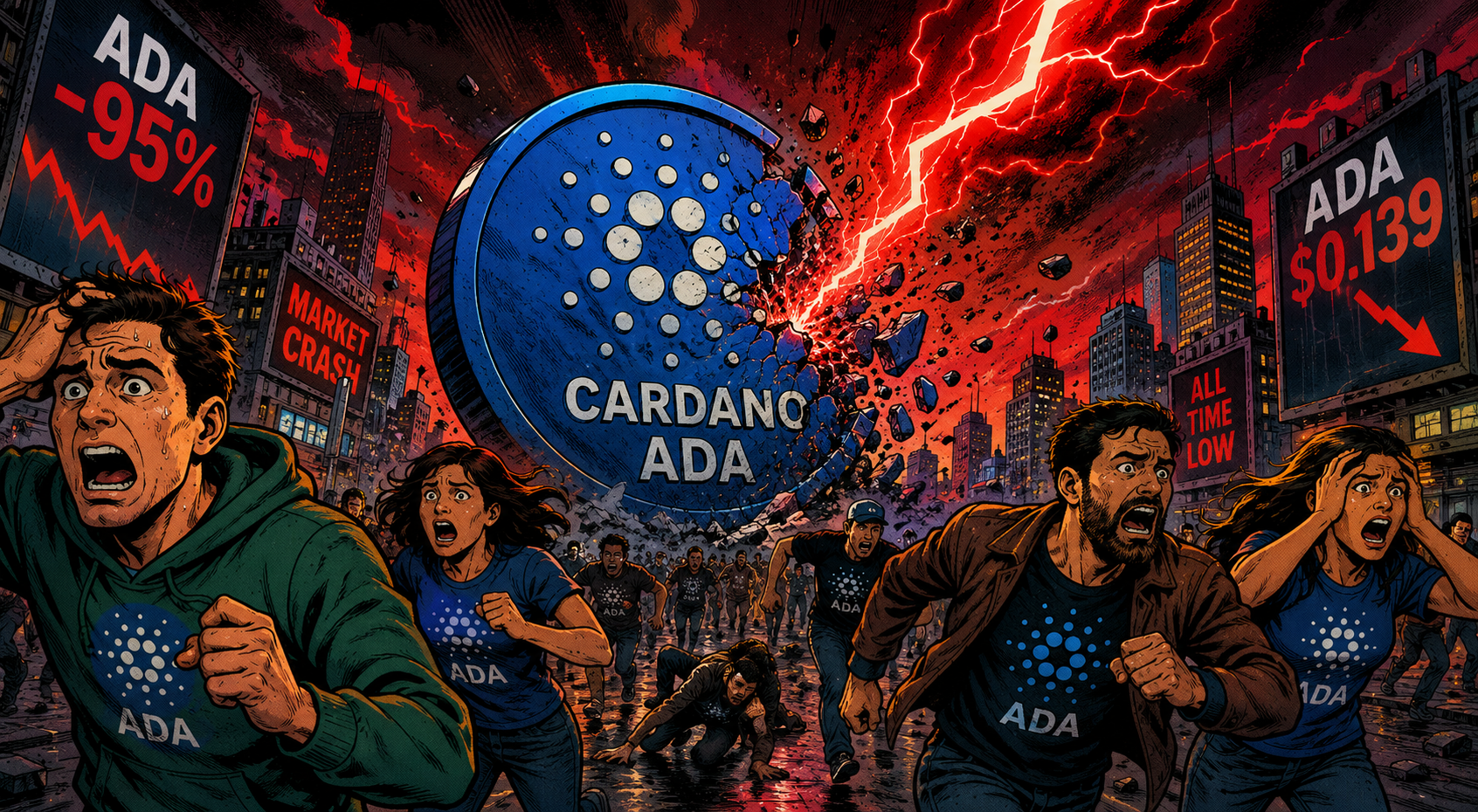
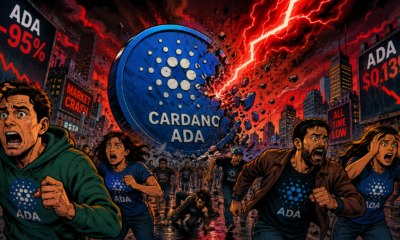
Cardano has entered one of the darkest stretches in its market history. ADA briefly fell to about $0.139, its weakest level since the 2020 cycle, extending a brutal decline that has erased more than 95% of the token’s value from its 2021 peak. The selloff was already painful before the latest security scare. But the reported SecondFi exploit, involving roughly 16 million ADA and potentially wider exposure across user wallets, has turned a long-running confidence problem into an urgent test of trust for one of crypto’s most closely watched networks.
A New Low for an Old Altcoin Giant
ADA is not just another mid-cap token drifting lower in a weak market. Cardano has spent years as one of crypto’s most visible layer-1 projects, backed by a loyal community, an academic development culture, and a long-running narrative around research-driven blockchain design. That history makes the latest price action more than a routine technical breakdown.
At its intraday low near $0.139, ADA was trading at levels not seen since the early stages of the previous crypto bull market. The drop puts the token roughly 95.5% below its all-time high near $3.09, reached during the 2021 mania. For long-term holders, that is not merely a correction. It is a near-total reset of market expectations.
The psychological damage is significant. Cardano’s core community has endured multiple bear markets, delayed product cycles, ecosystem criticism, and periods of underwhelming DeFi activity. But price has a way of compressing every unresolved concern into a single number. When ADA trades near $0.14, the market is no longer pricing Cardano as a future Ethereum rival. It is pricing it as a wounded network that must prove relevance again.
The SecondFi Exploit Adds a Security Shock
The latest pressure comes from reports that SecondFi, the self-custody neofinance platform formerly associated with Yoroi, was hit by a wallet-related vulnerability. CryptoBriefing reported that a flaw in SecondFi’s wallet generation software led to unauthorized withdrawals of about 16 million ADA from 178 users, worth roughly $2.4 million at recent prices. Bloomingbit separately reported that SecondFi attributed the incident to a vulnerability in its Cardano wallet-generation program.
The more alarming figure is not only the confirmed or initially reported 16 million ADA. According to Bloomingbit, SlowMist founder Cos suggested that on-chain analysis showed user losses from the hack could theoretically exceed $20 million, with exposure potentially including as much as 129 million ADA and other tokens, pending the completion of a technical audit.
That distinction matters. A confirmed exploit of 16 million ADA is already serious. A broader theoretical exposure above $20 million would be more damaging because it raises questions about the security assumptions behind wallet generation, key handling, and user protection in self-custody products connected to the Cardano ecosystem.
SecondFi’s own public positioning describes it as a self-custody platform built for spending, trading, earning, and saving, and as the successor to Yoroi. That makes the exploit especially sensitive. Wallet infrastructure is not an optional layer in crypto. It is the front door. When that front door appears compromised, users do not only question one app. They question the safety of the ecosystem around it.
Why the Market Reaction Was So Severe
The exploit did not happen in a vacuum. ADA was already trapped in a weak structure before the SecondFi news hit. The token had been sliding through June, with analysts pointing to poor momentum, weak buying pressure, and a broader collapse in altcoin appetite. Earlier June reports placed ADA around $0.16 to $0.18, already down heavily from previous cycle highs and struggling to show meaningful recovery.
Security incidents often become catalysts when markets are already fragile. In a strong bull market, a project can sometimes absorb bad news if liquidity is deep and buyers are eager. In a weak market, the same news can trigger forced selling, panic exits, and a fresh wave of doubt from investors who were already looking for a reason to reduce exposure.
Cardano’s problem is that the exploit lands directly on its most important remaining asset: trust. The network has long positioned itself as methodical, formal, and security-conscious. That identity helped Cardano survive years of criticism about slow development and limited activity compared with faster-moving rivals. But when users see headlines about a wallet-generation vulnerability and millions of ADA drained, the brand promise becomes harder to defend in market terms.
Technically, the blockchain itself has not been described as the source of the SecondFi issue. The reported vulnerability relates to wallet-generation software, not Cardano’s base protocol. But markets rarely make that distinction cleanly during a panic. For traders, the headline is simpler: ADA is falling, a Cardano-linked wallet platform was exploited, and confidence is weakening.
Cardano’s Deeper Problem: Utility Versus Loyalty
The selloff also exposes a broader question that has followed Cardano for years. Can the network convert its strong community and technical philosophy into sustained user demand?
Cardano has never lacked believers. Its supporters often point to peer-reviewed research, formal methods, staking, governance, and a long-term development roadmap. Yet market performance increasingly depends on measurable usage: stablecoin liquidity, DeFi total value locked, developer momentum, high-value applications, revenue, transaction demand, and institutional traction.
That is where critics have pressed hardest. Competing ecosystems such as Ethereum, Solana, Base, and other high-throughput or liquidity-rich networks have captured much of the developer and user attention in recent cycles. Cardano has continued to evolve, but the market’s patience has clearly thinned.
ADA’s price action reflects that tension. A token can have a committed community and still lose market relevance if capital believes better opportunities exist elsewhere. In the current environment, investors are less willing to reward roadmaps and more focused on traction. They want apps, fees, users, liquidity, and reasons for demand that go beyond historical loyalty.
The Governance Cloud Has Not Helped
Cardano’s recent governance drama has also added to the perception of instability. Earlier in June, CoinDesk reported that a governance vote led to the cancellation of the Cardano Foundation’s flagship summit after a funding proposal failed to secure the required support. The decision was framed by some as proof that Cardano’s governance has teeth, but it also created uncomfortable optics at a time when the ecosystem needed confidence and coordination.
Governance is one of Cardano’s most ambitious experiments. In theory, decentralized decision-making should make the network more resilient and community-led. In practice, governance can also reveal fragmentation, competing priorities, and a lack of unified strategic direction. When prices are rising, those debates can look healthy. When prices are collapsing, they can look chaotic.
The summit cancellation did not cause ADA’s crash. But it contributed to a wider narrative: Cardano appears to be wrestling with identity, funding priorities, ecosystem growth, and market perception at the same time. The SecondFi exploit has now added a security dimension to that list.
SecondFi and the Wallet Trust Problem
Wallet exploits are uniquely damaging because they attack the user relationship at the most personal level. A DeFi protocol hack is painful, but users often understand that smart contracts carry risk. A bridge exploit is damaging, but bridges have long been known as high-risk infrastructure. A wallet-related vulnerability feels different. Wallets are supposed to be where users keep control.
SecondFi’s branding as a self-custody platform makes the incident especially complicated. Self-custody is built on the promise that users do not need to trust a centralized intermediary. But that promise still depends on software integrity. If seed generation, wallet creation, signing flows, or private-key handling are flawed, self-custody becomes a slogan rather than a safety model.
This is the lesson the broader crypto industry has had to relearn repeatedly. Decentralization does not eliminate operational risk. It relocates it. Users may control their assets, but they still rely on wallet software, browser extensions, mobile apps, dependencies, update channels, and security audits. When one of those layers fails, the consequences can be immediate and irreversible.
For Cardano, the priority now is transparency. Users will need a clear technical explanation of what happened, how many wallets were affected, whether the risk is contained, and what remediation is available. Vague reassurances will not be enough. The market has already punished uncertainty.
What ADA Needs to Stabilize
For ADA to find a durable floor, Cardano needs more than a reflex bounce. It needs three forms of repair.
First, the SecondFi incident must be technically contained. That means identifying the vulnerability, confirming the scope of affected wallets, publishing clear user guidance, and ensuring that any related infrastructure is reviewed. In crypto, silence after an exploit often causes more damage than the exploit itself.
Second, ADA needs market structure to improve. A wick to $0.139 can become a capitulation low only if buyers step in with conviction. Without follow-through, the level becomes just another marker in a continuing downtrend. Traders will likely watch whether ADA can reclaim the $0.15 to $0.16 zone and build support there, or whether selling pressure resumes after any short-term relief.
Third, Cardano needs a stronger ecosystem narrative. Security cleanup can stop immediate bleeding, but it does not answer the long-term question of demand. Investors need to see evidence that Cardano can attract meaningful applications, liquidity, users, and developer energy in a market where capital is increasingly selective.
A Crisis of Price, Trust, and Relevance
The ADA crash to $0.139 is not only a market event. It is a referendum on Cardano’s current position in crypto. A token once priced as a major contender in the layer-1 race is now trading near levels associated with a very different era of the industry.
The SecondFi exploit has intensified that pressure because it touches the security layer closest to users. Even if the base Cardano protocol remains unaffected, the market impact is real. Ecosystems are judged not only by their chains, but by the wallets, apps, governance processes, and user experiences built around them.
Cardano still has assets many projects would envy: brand recognition, a large community, years of infrastructure work, and a serious technical culture. But the market is sending a blunt message. Reputation is not enough. Research is not enough. Community loyalty is not enough.
ADA now needs proof. Proof that users are safe. Proof that builders are still engaged. Proof that governance can produce momentum rather than confusion. Proof that Cardano can compete in a crypto cycle increasingly dominated by speed, liquidity, and visible adoption.
Until then, the $0.139 print will stand as more than a price level. It will be remembered as a warning: even the most established crypto networks can be repriced violently when confidence breaks.
-

 Cardano9 months ago
Solana co‑founder publicly backs Cardano — signaling rare cross‑chain respect after 2025 chain‑split recovery
-

 Cardano11 months ago
Cardano Breaks Ground in India: Trivolve Tech Launches Blockchain Forensic System on Mainnet
-

 Altcoins8 months ago
Algorand’s 2027 Question: Can the Network Survive Without Foundation-Funded Rewards?
-

 Altcoins8 months ago
Crypto Goes Mainstream — Bitwise 10 Crypto Index ETF (BITW) Debuts on NYSE Arca
-

 News8 months ago
Crypto on Trial: The $5.5 Billion Pump.fun, Solana & RICO Lawsuit That Could Redefine On‑Chain Liability
-
 Cardano11 months ago
Cardano Reboots: What the Foundation’s New Roadmap Means for the Blockchain Race
-

 Ethereum9 months ago
Ethereum Breaks TPS Record as Lighter Layer-2 Surges Past 24,000 Transactions per Second
-

 News8 months ago
From Memes to Courtrooms: Solana and Jito Execs Named in Explosive RICO Suit Over Pump.fun