
Cardano
Cardano’s Biggest Upgrade Since Smart Contracts Is Coming—and It Could Make the Network 20x Faster

- Share
- Tweet /data/web/virtuals/383272/virtual/www/domains/theunhashed.com/wp-content/plugins/mvp-social-buttons/mvp-social-buttons.php on line 63
https://theunhashed.com/wp-content/uploads/2026/05/Throughput-1000x600.png&description=Cardano’s Biggest Upgrade Since Smart Contracts Is Coming—and It Could Make the Network 20x Faster', 'pinterestShare', 'width=750,height=350'); return false;" title="Pin This Post">
For years, Cardano has faced the same criticism from both investors and developers: strong academic research, impressive security architecture, and loyal community support—but painfully slow execution when it comes to scaling. While rivals like Solana chased raw throughput, Ethereum leaned into rollups, and newer chains marketed themselves as high-speed infrastructure from day one, Cardano often looked like the blockchain equivalent of a cautious engineer refusing to ship unfinished code.
That patience may finally be about to pay off.
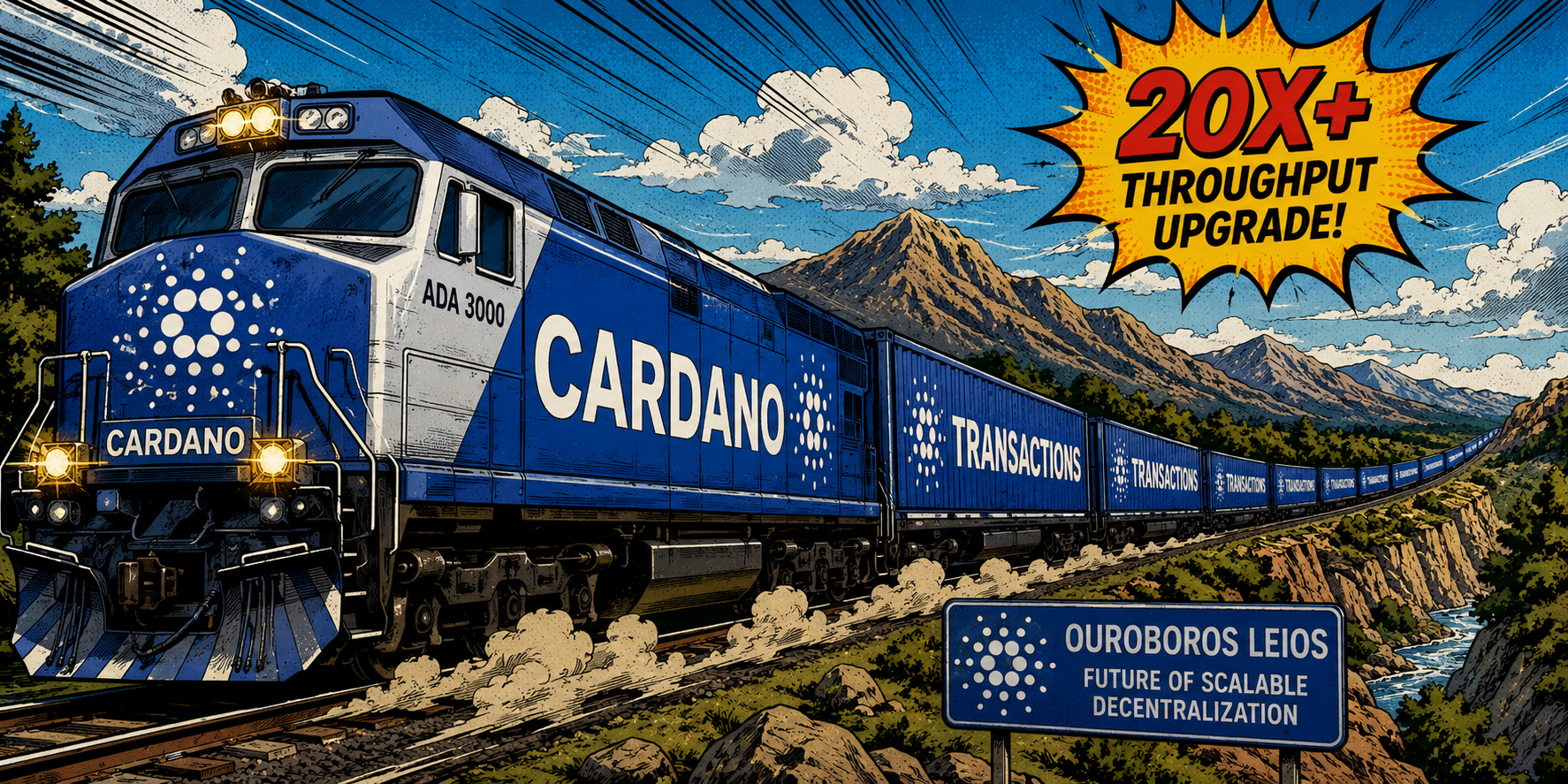
Cardano is now preparing for what could become the most important technical upgrade in its history since smart contracts launched through the Alonzo hard fork: Ouroboros Leios, a major redesign of Cardano’s consensus architecture that aims to increase network throughput by at least 20x—and potentially far beyond that.
According to the latest updates from Input Output, Cardano’s core development company, Leios is moving from theory toward implementation at an accelerated pace. A dedicated public testnet is expected to launch in June 2026, while a broader mainnet rollout is being targeted for the second half of the year. Early simulations suggest throughput improvements ranging from 10x to 65x, with some projections pushing Cardano toward 1,000 transactions per second depending on transaction complexity and network conditions. Internal technical documents have outlined even more aggressive long-term scaling scenarios.
For a blockchain that has often been criticized for being too slow both technically and organizationally, Leios represents something bigger than a simple speed upgrade. It is Cardano’s attempt to prove that scalability does not require sacrificing decentralization.
And if it works, it could fundamentally reshape how the market values ADA.
Why Cardano Needed This Upgrade
Cardano’s current consensus model, Ouroboros Praos, has done exactly what it was designed to do: prioritize security, decentralization, and predictability. The network has maintained impressive uptime, avoided catastrophic failures that have impacted competing chains, and built a reputation for reliability.
But reliability alone does not win developer mindshare.
Cardano’s biggest problem has been throughput limitations that made it difficult to compete with faster ecosystems. While Ethereum increasingly pushed execution toward Layer-2 rollups and Solana aggressively marketed its speed advantage, Cardano remained stuck in an awkward middle ground where it was viewed as secure but too slow for mass adoption.
That created real economic consequences.
Developers often chose alternative chains because transaction throughput directly impacts gaming applications, DeFi protocols, payments infrastructure, AI agent systems, and enterprise applications. Institutions exploring blockchain infrastructure want predictable scalability before committing serious capital.
Cardano understood this risk.
Its broader 2030 roadmap reportedly targets a jump from roughly 800,000 monthly transactions to more than 27 million monthly transactions, and that level of growth simply cannot happen under current architecture.
Leios was designed to solve that problem.
How Ouroboros Leios Actually Works
Most blockchain upgrades increase performance by making bigger blocks, reducing decentralization, or relying heavily on off-chain scaling.
Leios takes a far more complicated approach.
Instead of forcing every transaction through one single block production pipeline, Leios splits responsibilities into multiple layers that can operate in parallel.
The system introduces:
Input blocks that rapidly collect transactions
Endorser blocks that validate those transactions
Ranking blocks that finalize transaction ordering
This architecture separates transaction processing from final settlement.
That may sound like a technical detail, but it is a massive structural shift. Traditional blockchain models often force everything into a single bottleneck. Leios breaks apart that bottleneck and allows multiple parts of the system to process transactions simultaneously.
Think of it as turning a one-lane highway into a multi-lane logistics network.
Input Output says Leios enhances Praos rather than replacing it entirely, allowing Cardano to maintain its existing security model while significantly expanding throughput capacity.
This is particularly important because Cardano has spent years positioning itself as the blockchain that refuses to compromise decentralization for speed.
Leios is effectively Cardano trying to prove that it can have both.
Why The June Testnet Matters
The most important recent development is timing.
After years of research papers, simulations, and theoretical architecture discussions, Leios is finally approaching public testnet deployment.
According to recent updates from Input Output and ecosystem developers, a dedicated Leios public testnet is expected in June 2026.
That is a major milestone because Cardano has historically spent enormous amounts of time in research mode before delivering upgrades to live environments.
This transition moves Leios from academic promise into real-world testing.
The public testnet will measure:
network stability
validator performance
bandwidth demands
stake pool compatibility
transaction throughput under real conditions
ecosystem readiness
This phase matters because scaling upgrades often look impressive in simulations but fail under live network stress.
Cardano appears determined to avoid that mistake by rolling out Leios in phases rather than forcing an aggressive full-scale deployment immediately.
Initial throughput improvements may be relatively conservative before the network gradually unlocks more capacity.
That slower rollout reflects Cardano’s broader philosophy: move slower, break fewer things.
Why Cardano Reorganized Its Entire Roadmap
One of the biggest signals that Leios is now Cardano’s top priority is what the company stopped doing.
Input Output recently paused development on Acropolis and canceled tiered pricing initiatives to redirect resources toward Leios.
That decision reportedly returned millions of ADA to the treasury while consolidating development around scaling.
That move matters because it shows Cardano leadership understands how critical this upgrade has become.
The network can no longer afford to lose developers to faster ecosystems.
Scaling has become existential.
Without Leios, Cardano risks becoming a secure but increasingly irrelevant blockchain in a market that rewards performance.
The Competitive Pressure From Solana and Ethereum
Leios is arriving at a moment when blockchain competition is becoming increasingly brutal.
Solana continues dominating retail trading activity, memecoin launches, and consumer crypto applications due to its speed advantage.
Ethereum remains dominant in institutional finance, tokenization, and stablecoins despite its expensive base layer because Layer-2 ecosystems continue growing.
Meanwhile newer chains are aggressively competing for AI infrastructure, gaming, payments, and enterprise adoption.
Cardano needs a compelling performance narrative.
Leios could become that narrative.
If Cardano can scale toward 1,000 TPS while preserving decentralization and maintaining lower operational risks than competitors, it could become significantly more attractive for developers and institutions.
That remains a big “if.”
But the opportunity is massive.
What This Means for ADA
Crypto markets often price infrastructure upgrades long before they fully launch.
That means Leios could become one of ADA’s biggest narrative catalysts in years.
If the June testnet performs well, investors may begin repricing Cardano’s long-term scalability story.
That does not guarantee immediate price appreciation.
Crypto markets remain heavily influenced by macroeconomic conditions, Bitcoin dominance, ETF flows, and regulatory developments.
But Cardano finally has something investors have demanded for years: a credible scaling roadmap with tangible timelines.
That alone changes the conversation.
Cardano’s Make-Or-Break Moment
Cardano has spent years being underestimated by some investors and overpromised by parts of its own community.
Leios may finally force the market to reassess both narratives.
If the upgrade works, Cardano could emerge as one of crypto’s most scalable decentralized networks without abandoning its core principles.
If it fails, critics will argue the network spent years chasing theoretical perfection while faster competitors captured market share.
That is why Ouroboros Leios may be the most important upgrade in Cardano’s history.
For years, Cardano promised it was building blockchain infrastructure for the long term.
Now it has to prove it.











Cardano
Cardano’s $0.139 Shock: ADA Slides to Its Weakest Level Since 2020 as SecondFi Exploit Deepens the Crisis
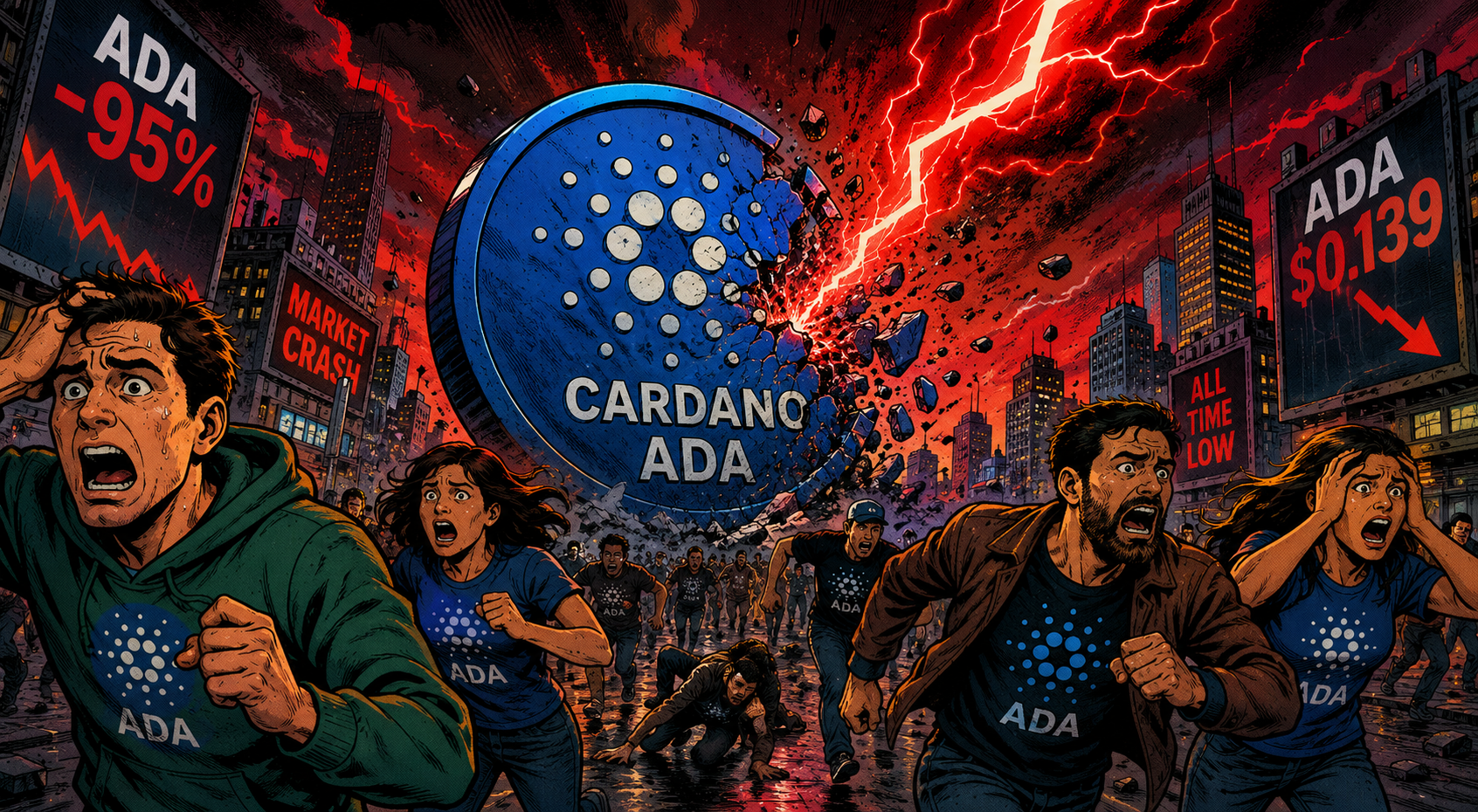
Cardano has entered one of the darkest stretches in its market history. ADA briefly fell to about $0.139, its weakest level since the 2020 cycle, extending a brutal decline that has erased more than 95% of the token’s value from its 2021 peak. The selloff was already painful before the latest security scare. But the reported SecondFi exploit, involving roughly 16 million ADA and potentially wider exposure across user wallets, has turned a long-running confidence problem into an urgent test of trust for one of crypto’s most closely watched networks.
A New Low for an Old Altcoin Giant
ADA is not just another mid-cap token drifting lower in a weak market. Cardano has spent years as one of crypto’s most visible layer-1 projects, backed by a loyal community, an academic development culture, and a long-running narrative around research-driven blockchain design. That history makes the latest price action more than a routine technical breakdown.
At its intraday low near $0.139, ADA was trading at levels not seen since the early stages of the previous crypto bull market. The drop puts the token roughly 95.5% below its all-time high near $3.09, reached during the 2021 mania. For long-term holders, that is not merely a correction. It is a near-total reset of market expectations.
The psychological damage is significant. Cardano’s core community has endured multiple bear markets, delayed product cycles, ecosystem criticism, and periods of underwhelming DeFi activity. But price has a way of compressing every unresolved concern into a single number. When ADA trades near $0.14, the market is no longer pricing Cardano as a future Ethereum rival. It is pricing it as a wounded network that must prove relevance again.
The SecondFi Exploit Adds a Security Shock
The latest pressure comes from reports that SecondFi, the self-custody neofinance platform formerly associated with Yoroi, was hit by a wallet-related vulnerability. CryptoBriefing reported that a flaw in SecondFi’s wallet generation software led to unauthorized withdrawals of about 16 million ADA from 178 users, worth roughly $2.4 million at recent prices. Bloomingbit separately reported that SecondFi attributed the incident to a vulnerability in its Cardano wallet-generation program.
The more alarming figure is not only the confirmed or initially reported 16 million ADA. According to Bloomingbit, SlowMist founder Cos suggested that on-chain analysis showed user losses from the hack could theoretically exceed $20 million, with exposure potentially including as much as 129 million ADA and other tokens, pending the completion of a technical audit.
That distinction matters. A confirmed exploit of 16 million ADA is already serious. A broader theoretical exposure above $20 million would be more damaging because it raises questions about the security assumptions behind wallet generation, key handling, and user protection in self-custody products connected to the Cardano ecosystem.
SecondFi’s own public positioning describes it as a self-custody platform built for spending, trading, earning, and saving, and as the successor to Yoroi. That makes the exploit especially sensitive. Wallet infrastructure is not an optional layer in crypto. It is the front door. When that front door appears compromised, users do not only question one app. They question the safety of the ecosystem around it.
Why the Market Reaction Was So Severe
The exploit did not happen in a vacuum. ADA was already trapped in a weak structure before the SecondFi news hit. The token had been sliding through June, with analysts pointing to poor momentum, weak buying pressure, and a broader collapse in altcoin appetite. Earlier June reports placed ADA around $0.16 to $0.18, already down heavily from previous cycle highs and struggling to show meaningful recovery.
Security incidents often become catalysts when markets are already fragile. In a strong bull market, a project can sometimes absorb bad news if liquidity is deep and buyers are eager. In a weak market, the same news can trigger forced selling, panic exits, and a fresh wave of doubt from investors who were already looking for a reason to reduce exposure.
Cardano’s problem is that the exploit lands directly on its most important remaining asset: trust. The network has long positioned itself as methodical, formal, and security-conscious. That identity helped Cardano survive years of criticism about slow development and limited activity compared with faster-moving rivals. But when users see headlines about a wallet-generation vulnerability and millions of ADA drained, the brand promise becomes harder to defend in market terms.
Technically, the blockchain itself has not been described as the source of the SecondFi issue. The reported vulnerability relates to wallet-generation software, not Cardano’s base protocol. But markets rarely make that distinction cleanly during a panic. For traders, the headline is simpler: ADA is falling, a Cardano-linked wallet platform was exploited, and confidence is weakening.
Cardano’s Deeper Problem: Utility Versus Loyalty
The selloff also exposes a broader question that has followed Cardano for years. Can the network convert its strong community and technical philosophy into sustained user demand?
Cardano has never lacked believers. Its supporters often point to peer-reviewed research, formal methods, staking, governance, and a long-term development roadmap. Yet market performance increasingly depends on measurable usage: stablecoin liquidity, DeFi total value locked, developer momentum, high-value applications, revenue, transaction demand, and institutional traction.
That is where critics have pressed hardest. Competing ecosystems such as Ethereum, Solana, Base, and other high-throughput or liquidity-rich networks have captured much of the developer and user attention in recent cycles. Cardano has continued to evolve, but the market’s patience has clearly thinned.
ADA’s price action reflects that tension. A token can have a committed community and still lose market relevance if capital believes better opportunities exist elsewhere. In the current environment, investors are less willing to reward roadmaps and more focused on traction. They want apps, fees, users, liquidity, and reasons for demand that go beyond historical loyalty.
The Governance Cloud Has Not Helped
Cardano’s recent governance drama has also added to the perception of instability. Earlier in June, CoinDesk reported that a governance vote led to the cancellation of the Cardano Foundation’s flagship summit after a funding proposal failed to secure the required support. The decision was framed by some as proof that Cardano’s governance has teeth, but it also created uncomfortable optics at a time when the ecosystem needed confidence and coordination.
Governance is one of Cardano’s most ambitious experiments. In theory, decentralized decision-making should make the network more resilient and community-led. In practice, governance can also reveal fragmentation, competing priorities, and a lack of unified strategic direction. When prices are rising, those debates can look healthy. When prices are collapsing, they can look chaotic.
The summit cancellation did not cause ADA’s crash. But it contributed to a wider narrative: Cardano appears to be wrestling with identity, funding priorities, ecosystem growth, and market perception at the same time. The SecondFi exploit has now added a security dimension to that list.
SecondFi and the Wallet Trust Problem
Wallet exploits are uniquely damaging because they attack the user relationship at the most personal level. A DeFi protocol hack is painful, but users often understand that smart contracts carry risk. A bridge exploit is damaging, but bridges have long been known as high-risk infrastructure. A wallet-related vulnerability feels different. Wallets are supposed to be where users keep control.
SecondFi’s branding as a self-custody platform makes the incident especially complicated. Self-custody is built on the promise that users do not need to trust a centralized intermediary. But that promise still depends on software integrity. If seed generation, wallet creation, signing flows, or private-key handling are flawed, self-custody becomes a slogan rather than a safety model.
This is the lesson the broader crypto industry has had to relearn repeatedly. Decentralization does not eliminate operational risk. It relocates it. Users may control their assets, but they still rely on wallet software, browser extensions, mobile apps, dependencies, update channels, and security audits. When one of those layers fails, the consequences can be immediate and irreversible.
For Cardano, the priority now is transparency. Users will need a clear technical explanation of what happened, how many wallets were affected, whether the risk is contained, and what remediation is available. Vague reassurances will not be enough. The market has already punished uncertainty.
What ADA Needs to Stabilize
For ADA to find a durable floor, Cardano needs more than a reflex bounce. It needs three forms of repair.
First, the SecondFi incident must be technically contained. That means identifying the vulnerability, confirming the scope of affected wallets, publishing clear user guidance, and ensuring that any related infrastructure is reviewed. In crypto, silence after an exploit often causes more damage than the exploit itself.
Second, ADA needs market structure to improve. A wick to $0.139 can become a capitulation low only if buyers step in with conviction. Without follow-through, the level becomes just another marker in a continuing downtrend. Traders will likely watch whether ADA can reclaim the $0.15 to $0.16 zone and build support there, or whether selling pressure resumes after any short-term relief.
Third, Cardano needs a stronger ecosystem narrative. Security cleanup can stop immediate bleeding, but it does not answer the long-term question of demand. Investors need to see evidence that Cardano can attract meaningful applications, liquidity, users, and developer energy in a market where capital is increasingly selective.
A Crisis of Price, Trust, and Relevance
The ADA crash to $0.139 is not only a market event. It is a referendum on Cardano’s current position in crypto. A token once priced as a major contender in the layer-1 race is now trading near levels associated with a very different era of the industry.
The SecondFi exploit has intensified that pressure because it touches the security layer closest to users. Even if the base Cardano protocol remains unaffected, the market impact is real. Ecosystems are judged not only by their chains, but by the wallets, apps, governance processes, and user experiences built around them.
Cardano still has assets many projects would envy: brand recognition, a large community, years of infrastructure work, and a serious technical culture. But the market is sending a blunt message. Reputation is not enough. Research is not enough. Community loyalty is not enough.
ADA now needs proof. Proof that users are safe. Proof that builders are still engaged. Proof that governance can produce momentum rather than confusion. Proof that Cardano can compete in a crypto cycle increasingly dominated by speed, liquidity, and visible adoption.
Until then, the $0.139 print will stand as more than a price level. It will be remembered as a warning: even the most established crypto networks can be repriced violently when confidence breaks.


CME has spent years giving institutions regulated ways to trade crypto without touching the coins themselves. First came bitcoin futures. Then ether. Then smaller contracts, options, and a gradually expanding digital asset suite. Now the exchange is moving into a broader phase: a single futures product tied to a basket of major cryptocurrencies. That may sound like a technical addition to an already crowded derivatives market, but it signals something more important. Crypto is being packaged less like a speculative single-asset trade and more like a recognized market segment.
The new Nasdaq CME Crypto Index futures are cash-settled, regulated contracts that track a market-cap-weighted crypto index rather than one individual token. In practical terms, this gives institutions a way to hedge or express broad crypto exposure through CME’s established futures infrastructure, without managing wallets, private keys, exchange custody, token transfers or individual spot positions.
That makes the product less dramatic than a new altcoin ETF approval, but potentially more useful for professional trading desks. CME is not selling crypto ideology. It is selling portfolio exposure, risk management and operational familiarity.
The Details Matter
The broad claim is correct: CME has launched Nasdaq CME Crypto Index futures, and trading is officially underway. The product is financially settled, meaning traders do not receive bitcoin, ether or any other underlying token at expiration. They settle in cash based on the value of the relevant index.
This is an important feature for institutional participants. Many funds, banks, asset managers and commodity trading advisers can trade regulated futures more easily than they can hold crypto directly. They may already have futures infrastructure, clearing relationships, risk systems and internal approval processes built around CME products. A cash-settled index future lets them treat crypto exposure more like equity index, commodity or rate exposure.
The basket is also important, but it should not be misunderstood. This is not an equal-weighted index where Solana, XRP, Cardano or Chainlink have the same influence as bitcoin. It is market-cap weighted. That means bitcoin dominates the product, followed by ether, with the rest of the basket representing much smaller shares.
According to Nasdaq index data from March 31, 2026, bitcoin accounted for nearly 77% of the index, while ether represented about 12.7%. XRP was under 6%, Solana just over 3%, and Cardano, Chainlink and Stellar Lumens were all below 1% each. Bitcoin cash appears in the settlement index materials as part of the eight-asset basket.
So while this is a multi-coin crypto future, it is still mostly a bitcoin-led exposure product. That is not a flaw. It is exactly how a market-cap-weighted crypto benchmark would be expected to behave. But it means investors should not confuse “multi-coin” with “balanced altcoin exposure.”
Why CME Is Going Broader
CME’s move reflects a shift in institutional crypto demand. The first wave of regulated crypto derivatives was about bitcoin. That made sense. Bitcoin had the clearest macro narrative, the deepest liquidity, the strongest brand and the easiest institutional framing as “digital gold” or a high-volatility alternative asset.
The second wave brought ether into the picture. Ethereum added a different kind of exposure: smart contracts, DeFi, staking economics and tokenized infrastructure. But even with ether futures, institutional crypto exposure remained narrow. The market itself had become broader than the regulated derivatives toolkit available to many professional participants.
A crypto index future helps solve that problem. Instead of choosing between bitcoin, ether or a complicated basket of individual instruments, traders can use one contract to gain exposure to a wider digital asset benchmark. That is how traditional markets matured. Investors do not only trade Apple or Microsoft. They trade the Nasdaq-100, the S&P 500, sector indices and volatility products. CME and Nasdaq are applying that logic to crypto.
The timing is also notable. Spot crypto ETFs have already changed institutional access to bitcoin and ether. But ETFs are not always the best tool for every professional strategy. Futures can be more capital-efficient, easier to short, better suited for hedging and more practical for tactical exposure. A multi-coin futures contract gives professional traders another instrument in the toolkit.
This Is About Risk Management, Not Just Speculation
Crypto headlines often focus on price direction. Will bitcoin go up? Will Solana outperform? Will XRP rally? CME’s product is more about structure than prediction.
A fund with crypto exposure may want to hedge broad market downside without selling spot holdings. A market maker may need to manage inventory risk across several tokens. A macro trader may want to express a view on crypto beta without selecting individual winners. A portfolio manager may want to adjust digital asset exposure quickly around volatility events, ETF flows, regulatory decisions or liquidity shocks.
An index future can serve all of those use cases. It gives traders a way to manage crypto as a basket, not just as a collection of isolated coins.
This is especially relevant because crypto correlations often rise during market stress. In bull markets, investors debate which token has the best technology, ecosystem or narrative. In selloffs, the whole market often trades like one high-beta risk asset. A broad futures contract is useful because it reflects how crypto frequently behaves in institutional portfolios: not as eight separate philosophical communities, but as one volatile asset class with internal rotations.
The Product Is Regulated, But Crypto Risk Remains
The regulated venue is central to CME’s pitch. The contracts are listed on CME and subject to CME rules. For institutional participants, that means familiar clearing, margining, surveillance and settlement procedures. It also means they do not need to rely on offshore crypto derivatives platforms or unregulated perpetual swaps to gain broad exposure.
This matters because crypto derivatives activity has historically been dominated by offshore venues and perpetual futures. Perpetuals are popular because they trade continuously, offer high leverage and do not expire. But they also introduce funding-rate complexity, liquidation risk and structural differences that many traditional institutions dislike.
CME’s index futures offer a more conventional alternative. They have the familiar mechanics of regulated futures rather than the crypto-native structure of perpetual swaps. That may appeal to institutions that want exposure but do not want the operational or governance risks associated with offshore venues.
Still, regulation does not remove market risk. A regulated crypto index future can still be extremely volatile. It can still experience sharp drawdowns. It can still be affected by liquidity shocks, exchange outages, regulatory headlines, ETF flows, hacks, stablecoin stress and macro risk-off moves. CME reduces infrastructure uncertainty. It does not make crypto safe.
Bitcoin Still Controls the Basket
The most important nuance is the index weighting. Calling the product “multi-coin” is accurate, but the actual exposure is heavily concentrated in bitcoin.
That has strategic consequences. Traders using the contract are mostly expressing a view on broad crypto beta, but bitcoin remains the primary driver. Ether matters meaningfully. XRP and Solana have smaller but visible influence. The remaining assets are far more marginal.
This weighting reflects the structure of the crypto market itself. Bitcoin still commands the largest share of market value and liquidity. A market-cap-weighted index naturally follows that reality. But it also means the product may not satisfy investors looking for pure altcoin exposure.
For example, a trader who is specifically bullish on Solana relative to bitcoin may still prefer SOL futures or spot exposure. A trader who wants a high-beta altcoin basket may need a different product. CME’s new index future is better understood as a regulated crypto market benchmark, not an aggressive altcoin rotation tool.
That could actually make it more attractive to institutions. Most professional allocators do not begin with a desire to pick individual crypto winners. They begin with the question of whether crypto as a sector deserves a place in the portfolio. A bitcoin-heavy index is easier to justify than a speculative equal-weight basket of smaller tokens.
Nasdaq Gives the Product Benchmark Credibility
The Nasdaq partnership matters because institutional markets run on benchmarks. A futures contract is only as useful as the index behind it. Traders need to understand how assets are selected, how weights are calculated, how rebalancing works and whether the methodology is credible.
Nasdaq describes the index as designed to track a diverse basket of USD-traded digital assets, with liquidity, exchange and custody standards applied to eligibility. It is free-float market-cap weighted and rebalanced and reconstituted quarterly. These details may sound dry, but they are what make an index tradable for professional users.
Crypto has always struggled with benchmark quality. Spot markets are fragmented across exchanges. Liquidity varies widely by venue. Some assets have questionable float dynamics. Others have large insider allocations, thin order books or unclear custody support. A credible index methodology helps filter that universe into something institutions can actually trade.
That does not make the index perfect. Crypto indices will always face challenges around market structure, token supply, exchange reliability and asset eligibility. But the involvement of Nasdaq and CME gives the product a level of institutional legitimacy that crypto-native baskets often lack.
A Sign of Crypto’s Maturation
The launch also shows how crypto is becoming more modular in traditional finance. Investors now have spot ETFs, single-token futures, options, perpetual-style products, structured notes, private funds and index exposure. The market is no longer defined by one way of participating.
This is what maturation looks like. Not every new product needs to be revolutionary. Some are plumbing. Some are risk tools. Some are wrappers that make crypto easier to fit into existing financial systems. CME’s multi-coin index future belongs in that category.
For crypto-native traders, this may look less exciting than a new token launch. For institutions, it may be more important. Asset classes become durable when they develop reliable hedging tools, standardized benchmarks and regulated venues. CME’s product does not guarantee more capital will enter crypto, but it lowers the operational friction for capital that already wants exposure.
It also creates new possibilities for relative-value trading. Traders can compare the index future against bitcoin futures, ether futures, spot ETFs or offshore perpetuals. They can hedge basket exposure against individual tokens. They can arbitrage pricing differences between regulated and crypto-native markets. Over time, these strategies can deepen liquidity and improve price discovery.
The Competitive Context
CME is also defending its territory. The crypto derivatives landscape is changing quickly, especially as perpetual futures gain more regulatory attention in the United States. Offshore platforms built enormous businesses around crypto perps because they offered speed, leverage and constant trading. Traditional exchanges now face pressure to show that regulated futures can remain relevant as crypto-native derivatives become more accessible.
The Nasdaq CME Crypto Index futures are part of that response. CME is not trying to imitate offshore perps directly. It is leaning into what it does best: regulated, cleared, institutionally familiar futures products.
That distinction is important. Retail traders may still prefer perpetuals for leverage and simplicity. Institutions may prefer CME for governance, clearing and risk controls. The market can support both. But CME’s broader crypto index product makes its venue more complete and more competitive.
What It Means for the Included Tokens
For bitcoin and ether, inclusion is unsurprising. They are already the institutional core of crypto. For Solana, XRP, Cardano, Chainlink, Stellar and bitcoin cash, inclusion in a CME-linked index is more symbolically important.
It does not mean CME is endorsing the investment case for each asset. It means those assets met the index’s eligibility and market representation criteria. Still, being part of a regulated benchmark can strengthen institutional visibility. Tokens included in recognized indices are easier for analysts, traders and risk committees to monitor. They become part of the professional market map.
Solana’s presence reflects its growing importance as a high-performance smart contract ecosystem. XRP’s weighting reflects its large market capitalization and persistent liquidity. Chainlink’s inclusion recognizes its role as infrastructure for data and oracle services. Stellar and bitcoin cash have smaller weights, but their presence shows the index is not limited to the two dominant assets.
The effect should not be exaggerated. Index inclusion alone does not create fundamental value. But it can influence how assets are perceived and traded within institutional frameworks.
The Bottom Line
CME’s Nasdaq CME Crypto Index futures are not just another crypto listing. They represent a shift from single-coin access toward benchmark-based crypto exposure inside regulated markets.
The product gives institutions a cash-settled, market-cap-weighted way to trade a basket of major cryptocurrencies through CME. It is broader than bitcoin and ether alone, but still heavily driven by bitcoin because of the index’s weighting. That makes it a practical tool for broad crypto beta rather than a pure altcoin bet.
The launch also shows where crypto market structure is heading. The next phase will not be defined only by spot ETFs or individual token speculation. It will be shaped by indices, futures, options, hedging tools and regulated benchmarks that make digital assets easier to integrate into traditional portfolios.
Crypto is becoming less of a coin-by-coin casino and more of an asset class with institutional rails. CME’s new index future is one more sign that the market is growing up — even if bitcoin still sits at the center of the basket.

The closure of TapTools is not just another sad announcement from a crypto startup that ran out of runway. For Cardano, it lands deeper than that. TapTools was one of the ecosystem’s most recognizable analytics platforms: a place where users tracked tokens, projects, portfolios, market data, NFTs, on-chain activity, and the pulse of Cardano’s builder economy. Its decision to wind down operations over the next two weeks is a reminder that bear markets do not only crush prices. They slowly erode the tools, teams, and infrastructure that make an ecosystem usable.
A Painful Goodbye From a Cardano-Native Platform
TapTools framed the announcement with unusual honesty. The team said it was preparing to begin winding down operations after years of building alongside the Cardano community. The reason was not a single failure, but a convergence of operational pressure, leadership departures, technical complexity, and economics that no longer worked.
That matters because TapTools was not a minor experiment. According to its own statement, the platform served more than a million users, supported hundreds of projects through its API, published hundreds of articles, generated hundreds of millions of social impressions, and helped bring visibility to builders across Cardano.
In other words, TapTools was not simply a dashboard. It was part of Cardano’s discovery layer.
Every blockchain ecosystem needs this layer. Users need tools to understand what is happening. Builders need visibility. Traders need data. Projects need analytics. Communities need content. New users need a map. Without that connective tissue, even technically strong networks can feel empty, confusing, or hard to navigate.
TapTools helped reduce that friction for Cardano. Its shutdown therefore creates both a practical gap and a symbolic one.
The Bear Market Does Not Kill Everything at Once
Crypto bear markets are often discussed through price charts. Bitcoin is down. ADA is down. Liquidity is weaker. Volumes are lower. Sentiment is poor. But that is only the visible layer.
The deeper damage happens inside teams.
Revenue slows. Paid memberships shrink. Advertising becomes harder. Token treasuries lose value. Grants become more competitive. Infrastructure bills remain fixed. Cloud costs do not care about market cycles. Developers still need to be paid. Customer support still needs to respond. APIs still need to stay online. Security still needs to be maintained. Data pipelines still need to run.
That is the brutal math TapTools described.
The team said infrastructure costs, development costs, and support costs are real, and that operating a platform at ecosystem scale is expensive. This is the part of Web3 that slogans often ignore. Decentralization does not magically remove operational costs. Community goodwill does not pay backend bills. A passionate user base does not automatically create sustainable revenue.
In a bull market, these problems are easier to hide. Growth covers inefficiency. Token prices inflate treasuries. New users arrive. Partnerships generate excitement. Investors tolerate experiments.
In a bear market, every weak point becomes visible.
Leadership Losses Made the Situation Worse
The economic pressure was only part of the story. TapTools also pointed to a leadership and technical continuity problem.
Earlier this year, the platform experienced the departure of two co-founders, including its CTO and COO. The team tried to adapt. A backend developer stepped into the CTO role, and TapTools worked to reduce infrastructure costs, improve operational efficiency, develop new products, and move toward a more sustainable model.
For a while, the team believed it had a path forward. Then the new CTO also decided to move on.
That appears to have been the breaking point. TapTools said the technical knowledge required to responsibly operate and maintain the platform could not be replaced overnight.
This is one of the least glamorous but most important lessons in crypto infrastructure. Many projects look larger from the outside than they really are internally. A platform may serve hundreds of thousands of users, integrate APIs, provide market data, and support an entire ecosystem, while still depending on a very small number of people who understand how the system actually works.
When those people leave, continuity becomes fragile.
The crypto industry often celebrates decentralization, but many of its most important applications are still highly dependent on concentrated human expertise. TapTools’ closure shows how dangerous that can be.
Cardano Loses More Than a Product
For Cardano users, TapTools’ shutdown is inconvenient. For Cardano builders, it is more serious.
Analytics platforms are not just consumer tools. They are visibility engines. They help projects get discovered. They help communities track momentum. They help investors and users compare assets. They create shared reference points for what is happening across the ecosystem.
When a tool like TapTools disappears, the ecosystem becomes harder to read.
This is especially painful for Cardano because the network has long fought a visibility battle. Cardano has a deeply loyal community, a serious research culture, and a large market presence, but it has often struggled to project the same application-layer energy seen in ecosystems such as Solana, Ethereum, or Base. Tools like TapTools helped Cardano tell its own story through data, articles, dashboards, and social content.
Without them, the burden shifts elsewhere.
Other platforms may fill the gap. Community developers may build alternatives. Existing explorers and analytics tools may expand their feature sets. But replacement takes time, and trust is not instant. Users build habits around tools. Projects build workflows around APIs. Communities build narratives around data sources.
When a platform closes, the loss is not only technical. It is cultural.
This Is Not Only a Cardano Problem
It would be easy for critics to frame TapTools as a Cardano-specific failure. That would be too simplistic.
The broader crypto industry is going through a consolidation cycle. Across multiple ecosystems, apps, wallets, NFT platforms, data services, governance tools, and infrastructure projects have shut down, entered maintenance mode, pivoted, or reduced services. Some were overfunded during the bull market. Some were too dependent on token incentives. Some never found durable revenue. Some built useful products for audiences that were simply too small to support a full business.
Cardano has felt this pressure with JPG Store, once a major NFT marketplace for the ecosystem, also sunsetting its platform. But similar stress has appeared outside Cardano as well, with reports of closures and pivots across DeFi, wallets, infrastructure, gaming, NFT, and tooling projects.
That broader pattern matters. The bear market is not selectively punishing one chain. It is testing the business model of Web3 applications everywhere.
The question is not whether a blockchain has passionate users. Many do. The question is whether useful applications can generate enough revenue to survive when speculation fades.
That is the hard test.
The Hidden Weakness of “Public Goods” in Crypto
TapTools’ story also exposes a recurring contradiction in blockchain ecosystems: everyone wants public goods, but not everyone wants to pay for them.
Analytics, explorers, dashboards, documentation, APIs, developer tools, education, indexing, and community media are all crucial. They make ecosystems usable. But many of these products are difficult to monetize directly. Users expect them to be free. Projects expect coverage. Developers expect reliable APIs. Communities expect constant updates.
That creates a public-goods problem.
If the tool is valuable to everyone but paid for by too few people, the economics eventually break. Grants can help, but they are often temporary. Pro memberships can help, but only if enough users convert. Sponsorships can help, but they decline when market sentiment weakens. Token models can help, but they can also introduce volatility and misaligned incentives.
TapTools tried to build for the ecosystem. The ecosystem clearly used the product. But usage and sustainability are not the same thing.
This is one of the most uncomfortable truths for Web3. Decentralized ecosystems often depend on centralized teams running essential tools with fragile revenue models.
What Cardano Should Learn From This
The lesson is not that Cardano is dead, weak, or uniquely broken. The lesson is that infrastructure needs funding models that survive down cycles.
If an ecosystem depends on a tool, it should not wait until the tool is near collapse to discuss sustainability. Critical infrastructure needs early support, diversified revenue, technical redundancy, open-source continuity plans, and clear ownership structures.
That may mean more ecosystem funding for tooling. It may mean community-backed subscriptions. It may mean treasury-funded infrastructure programs. It may mean acquisitions by better-capitalized teams. It may mean open-source handoffs. It may mean DAOs designed specifically to fund analytics, APIs, and public goods.
But whatever the model, the current approach is not enough.
Crypto ecosystems cannot afford to treat infrastructure as background scenery. Dashboards, data platforms, wallets, explorers, marketplaces, and APIs are not optional accessories. They are how users experience the chain.
If those tools vanish, the chain may still technically work, but the ecosystem becomes less navigable.
Could TapTools Still Be Saved?
TapTools left one door open. The team said that if a credible path emerges through acquisition or through resources necessary to sustainably continue operating the platform, it remains open to conversations.
That is important.
A platform with more than a million historical users, API integrations, brand recognition, ecosystem trust, and accumulated data infrastructure still has value. The question is whether that value can be reorganized into a sustainable structure.
An acquisition could make sense if another Cardano-native company, infrastructure provider, or ecosystem-aligned organization sees TapTools as strategically important. A grant-backed rescue could also be possible, though it would need more than emergency funding. It would require technical continuity, governance, operating discipline, and a realistic plan for revenue.
The worst outcome would be a temporary rescue that delays the same problem by a few months. The best outcome would be a transition that preserves the useful parts of TapTools while rebuilding the operating model around long-term sustainability.
That is easier said than done.
Bear Markets Decide What Was Real
The crypto industry often says bear markets are for building. That phrase is true, but incomplete.
Bear markets are also for discovering what could not survive.
They reveal which teams were overextended. Which products had real demand. Which business models were dependent on speculation. Which ecosystems had enough active users to support applications. Which founders could keep going when attention disappeared. Which communities were willing to fund the tools they claimed to value.
TapTools’ closure is painful because it was useful. This was not an empty hype project disappearing after a token failed. It was a functioning platform that many Cardano users relied on. That makes the story more serious.
If useful products cannot survive, the industry has a structural problem.
The next generation of crypto applications must be built with this in mind. Not every product needs a token. Not every tool can depend on grants. Not every service can be free forever. Not every team can run mission-critical infrastructure with fragile staffing and uncertain revenue.
The industry needs fewer slogans and stronger operating models.
The Impact on Users and Builders
For everyday users, the immediate concern is continuity. Any platform winding down should prompt users to review what data, dashboards, subscriptions, API dependencies, alerts, or workflows they rely on. Builders using TapTools’ API will need alternatives or migration plans. Projects that depended on TapTools for visibility may need to strengthen their own analytics, reporting, and communication channels.
For Cardano builders, the larger concern is discovery. If users cannot easily see what is happening across the ecosystem, projects become harder to evaluate. That affects liquidity, attention, trust, and onboarding.
For investors and traders, the loss of analytics tools can increase friction. Markets become less transparent when data is fragmented. In smaller ecosystems, that friction can matter.
For the Cardano community, TapTools should become a case study. The question should not be, “Why did they fail?” The better question is, “Which tools do we depend on, and how are they funded?”
A Moment of Respect, Not Just Criticism
It is easy to analyze closures from a distance. It is harder to build something people actually use.
TapTools deserves credit for what it became. The team built through multiple market cycles, supported projects, created content, served users, and helped make Cardano easier to explore. Its shutdown statement was not written like a team looking for sympathy. It read like a group trying to be honest about the limits of what they could responsibly continue operating.
That honesty matters.
In crypto, teams often disappear quietly, abandon products without explanation, or pretend everything is fine until users discover otherwise. TapTools chose a more direct path. It told the community what happened, why it happened, and what might still be possible.
That should be acknowledged.
The Bigger Message for Crypto
TapTools winding down is another sign that the crypto industry is moving from hype-cycle abundance into operational realism.
The next phase will not be kind to projects that cannot explain who pays, why users return, how teams survive, and what happens when core contributors leave. It will favor leaner teams, clearer business models, stronger ecosystems, and products that solve painful problems for users willing to pay.
This does not mean innovation is over. It means the easy era is over.
For Cardano, the closure is a warning but not a death sentence. Strong ecosystems survive losses by learning from them. They identify critical gaps, support necessary infrastructure, and make sure the next generation of tools is more resilient than the last.
TapTools helped Cardano become more legible. Its departure makes the ecosystem harder to read, but it also makes one thing extremely clear: in crypto, infrastructure is not free, bear markets are not temporary inconveniences, and community appreciation must eventually become sustainable support.
The projects that survive the next cycle will not simply be the ones with the loudest communities. They will be the ones that can turn belief into durable economics.
-

 Cardano9 months ago
Cardano Breaks Ground in India: Trivolve Tech Launches Blockchain Forensic System on Mainnet
-

 Cardano7 months ago
Solana co‑founder publicly backs Cardano — signaling rare cross‑chain respect after 2025 chain‑split recovery
-

 Cardano9 months ago
Cardano Reboots: What the Foundation’s New Roadmap Means for the Blockchain Race
-

 Altcoins7 months ago
Crypto Goes Mainstream — Bitwise 10 Crypto Index ETF (BITW) Debuts on NYSE Arca
-

 News7 months ago
Crypto on Trial: The $5.5 Billion Pump.fun, Solana & RICO Lawsuit That Could Redefine On‑Chain Liability
-

 News7 months ago
From Memes to Courtrooms: Solana and Jito Execs Named in Explosive RICO Suit Over Pump.fun
-

 Altcoins7 months ago
Algorand’s 2027 Question: Can the Network Survive Without Foundation-Funded Rewards?
-
 Altcoins7 months ago
NYSE Arca Files to Launch Altcoin-Focused ETF