News
The latest in News.

MetaMask Expands Wallet Security as AI Supercharges Crypto Scams
MetaMask is rolling out transaction reversal protection, targeted scam warnings and AI-assisted threat detection as personalized crypto fraud exposes the limits of traditional self-custody wallets.

Symbiosis Exploit Shows Why Minted Tokens Are Not the Same as Lost Funds
Symbiosis recovered 15 BTC after an attacker minted 46.1 billion unbacked syBTC tokens, exposing bridge liquidity limits, containment challenges and broader crypto security risks for users.

Coinbase’s Wallet Reset Puts Base’s Distribution Advantage to the Test
Coinbase’s decision to rename Base App as Coinbase Wallet tests whether Base can retain its distribution advantage as the wallet expands across competing networks and trading products.

UK Lords backs amendment calling for a national cryptocurrency strategy
The UK House of Lords backed an amendment seeking a national cryptocurrency strategy, but the proposal still faces parliamentary scrutiny and creates no immediate changes for crypto businesses, investors or consumers.

Bitwise’s Dogecoin ETF Closure Tests the Economics of Crypto’s Long Tail
Bitwise will close its Dogecoin ETF after less than a year, exposing the challenges altcoin funds face when launch excitement fades and trading demand weakens.

Ethereum Frames Split the Transaction, and the Power Behind It
Ethereum’s planned Frame Transactions could separate authorization, nonce management, gas payment and execution, enabling sponsored stablecoin use while raising new questions about privacy, relayers, permissions and transaction governance.

Polygon’s Austin and Kyoto Fixes Put Validator Resilience to the Test
Polygon’s Austin and Kyoto hard forks patched Bor and Heimdall vulnerabilities, but the network’s real resilience test is validator adoption, checkpoint health, block continuity and recovery.

Schwab’s AVAX Listing Will Test Whether Wall Street Can Build Real Demand
Charles Schwab’s planned AVAX listing could reveal whether Wall Street creates lasting Avalanche adoption or merely shifts speculative trading into brokerage accounts and closed-platform exposure.

Coinbase Puts Tokenized Stocks on Base to Test DeFi’s Collateral Thesis
Coinbase’s tokenized Apple and Nvidia shares on Base are putting DeFi’s collateral thesis to the test, with liquidity, lending, custody and redemption risks under scrutiny.
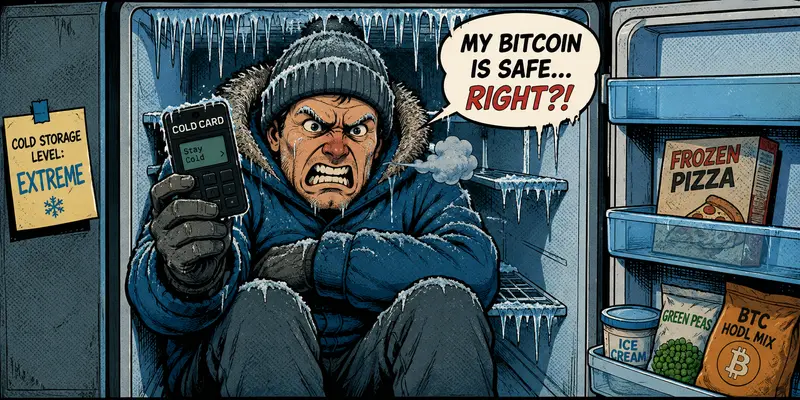
The Coldcard Hack Changed the Meaning of Cold Storage: Bitcoin Security Starts With Entropy
The 2026 Coldcard hack exposed how weak seed entropy can defeat offline security, allowing attackers to reconstruct wallets and steal bitcoin, revealing why randomness, not just hardware isolation, is the foundation of self-custody.

Coldcard Theft Put Seed Entropy, Not Cold Storage, at the Center of Security
The Coldcard theft exposed a seed entropy failure, not a cold-storage breach, allowing attackers to enumerate predictable wallets and sweep Bitcoin without device or PIN access.

BNB Chain’s Agentic Trading L1 Puts Its No-Mempool Design Under Scrutiny
BNB Chain is developing a high-speed Layer 1 for AI agents and trading, but its no-mempool design raises questions about validator power, censorship and MEV.