Bitcoin
The latest in Bitcoin.

Bitcoin Miners Face a Harder Test as Grid Demand Accelerates
Bitcoin miners are pitching curtailment as grid relief, but contracts, transmission constraints, household costs and competition from AI data centers will test that promise at scale.

Bitcoin Options Surge Puts Dealer Hedging at the Center of the Next Crypto Swing
Bitcoin’s growing options market is reshaping price dynamics as dealer hedging, gamma exposure, expirations and implied volatility influence rallies, selloffs, liquidity, institutional trading and regulatory oversight across crypto venues.

Bitcoin Miners Enter a New Contest for Scarce Grid Capacity
Bitcoin miners are competing for scarce grid capacity as utilities weigh flexible demand, infrastructure costs, reliability and rising competition from factories, data centers and artificial intelligence workloads.
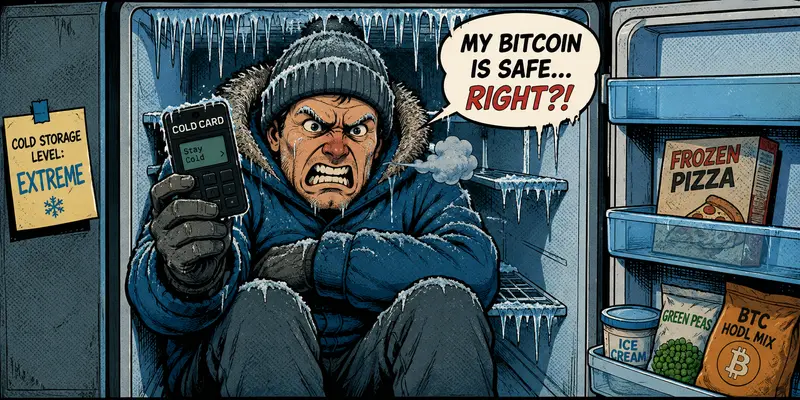
The Coldcard Hack Changed the Meaning of Cold Storage: Bitcoin Security Starts With Entropy
The 2026 Coldcard hack exposed how weak seed entropy can defeat offline security, allowing attackers to reconstruct wallets and steal bitcoin, revealing why randomness, not just hardware isolation, is the foundation of self-custody.

Coldcard Theft Put Seed Entropy, Not Cold Storage, at the Center of Security
The Coldcard theft exposed a seed entropy failure, not a cold-storage breach, allowing attackers to enumerate predictable wallets and sweep Bitcoin without device or PIN access.

In-Kind Crypto ETF Settlement Could Rewire Institutional Liquidity
In-kind settlement could reshape Bitcoin ETFs by reducing forced sales, trading costs and tax friction, while testing custodial controls, broker-dealer capital, market-maker capacity and weekend liquidity across digital asset markets.

BIP-110 Fork Puts Bitcoin’s Miner Power and Node Governance to the Test
Bitcoin’s BIP-110 fork exposed tensions between miner power, node validation and economic consensus after a minority chain quickly lost hash rate and stalled at two blocks.

BIP-110 Shows When a Bitcoin Minority Can, and Cannot, Enforce a Soft Fork
BIP-110’s soft-fork dispute over inscriptions and OP_RETURN reveals why minority nodes need miners and economic infrastructure to turn stricter rules into Bitcoin’s practical consensus for everyone.

Bitcoin’s Quantum Risk Is Becoming a Deadline Problem
Bitcoin developers are weighing quantum-resistant signatures, migration deadlines and consensus risks as Shor’s algorithm could eventually expose public keys, threatening dormant coins and testing decentralized governance.

Bitcoin’s August Test: Liquidity, Macro Signals and the New Institutional Risk Playbook
Bitcoin enters August facing thinner liquidity, shifting rate expectations and uncertain flows. ETF demand, derivatives leverage, dormant wallets and corporate treasury strategies could determine whether momentum holds or reverses.

Bitcoin Miners Reprice Power as AI Data Centers Challenge Their Core Business
Bitcoin miners are reassessing the value of their power assets as AI data centers compete for electricity, creating new opportunities and risks in mining, infrastructure leasing and hybrid computing strategies.

Why Crypto Treasuries Are Recasting Small Companies as Bitcoin Proxies
Crypto-treasury companies are turning public stocks into indirect bitcoin proxies, but dilution, leverage, custody, accounting and regulatory risks could reshape how investors value these corporate wrappers.