

Demand has not disappeared
Privacy-focused cryptocurrencies are again attracting attention as traders track higher volumes, wallet activity and renewed interest from specialist platforms. Monero, the largest privacy coin by market value, is built to obscure transaction amounts, wallet balances and the identities of senders and recipients. Zcash offers a different model, allowing users to choose between transparent transactions and shielded transfers.
That distinction matters because privacy is not a single feature. Some users want protection from public surveillance, commercial data collection or personal security threats. Others may use privacy tools to avoid revealing their holdings to competitors, counterparties or criminals. In countries with unstable financial systems, transaction confidentiality can also be viewed as a practical safeguard rather than an attempt to evade the law.
The renewed interest suggests that demand for these functions has survived years of exchange delistings and regulatory pressure. It also reflects a broader shift in crypto markets. As blockchains become more transparent and analytics firms improve their ability to map transactions, users who value confidentiality have fewer options within mainstream networks.
Compliance remains the central obstacle
For regulators and financial institutions, the same features that attract legitimate users create significant compliance concerns. When transaction flows are difficult to trace, exchanges may struggle to complete know-your-customer reviews, investigate suspicious activity or respond to law enforcement requests. Compliance teams therefore often treat privacy assets as higher-risk products, even when no illicit activity has been established.
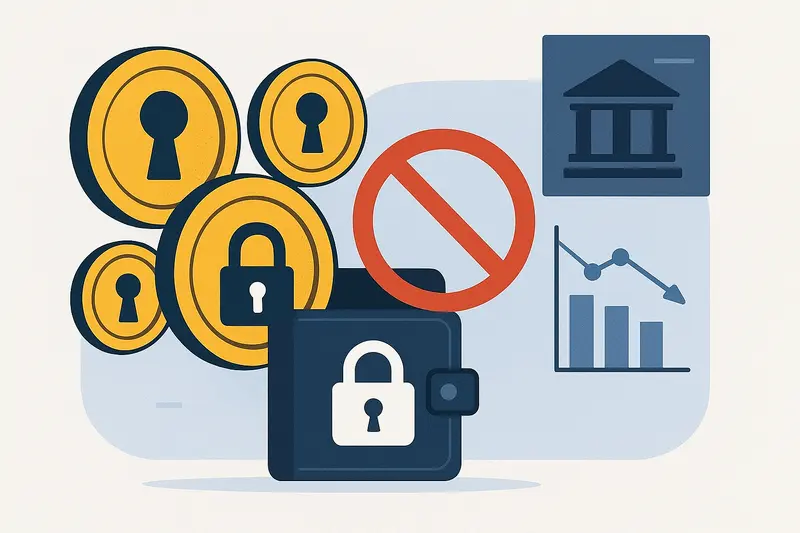
That perception has direct commercial consequences. An exchange can support a privacy coin only if it is confident that its monitoring systems, reporting procedures and licensing arrangements can satisfy local rules. In practice, this has made listing decisions as important as technology. A coin may have an active developer community and reliable network, yet remain inaccessible to users if major trading venues remove it.
The European Union’s anti-money-laundering framework and similar measures elsewhere are increasing scrutiny of crypto businesses that handle anonymous or privacy-enhancing transactions. The rules do not automatically make every privacy coin illegal, but they raise the cost of supporting assets that are difficult to monitor. Smaller exchanges may decide that the legal and operational risk is not worth the trading revenue.
A dividing line for the industry
The debate is likely to produce a more fragmented market. Privacy coins could remain available through peer-to-peer platforms, decentralized exchanges and specialist custodians, while becoming less visible on regulated venues used by institutions and large funds. That would preserve a core user base but limit liquidity, market access and the ability of projects to compete with mainstream digital assets.

Developers face a difficult strategic choice. They can emphasize stronger privacy and resist changes that might make compliance easier, or introduce selective disclosure tools that allow users to prove specific facts without exposing their entire transaction history. Such features could help businesses demonstrate the source of funds or meet reporting requirements, but they may also weaken the simplicity and credibility of a fully private system.
The outcome will shape more than Monero or Zcash. It will test whether the crypto industry can accommodate privacy as a legitimate financial principle while addressing the risks associated with hidden money flows. If exchanges and institutions retreat, privacy coins may become specialist instruments. If developers can combine confidentiality with credible accountability, they could instead become an important layer of a more mature digital financial system.
- EmDee · CC BY-SA 4.0


David Smith is not a person. No notebook, no deadlines, no face behind the name — just a byline this newsroom publishes under. Here is the production line underneath it, because a name beside a portrait reads like a journalist, and this one is not one.
The models. Writing: gpt-5.6-luna. Out on the live web: gpt-5.6-luna and gpt-5.6-terra. Pictures: gpt-image-1. Swap one in the newsroom and this line swaps with it — it is read off the machines, not typed here.
How a story is made
- Research. The searching model reads around the story, pointed at primary sources — the filing, the post, the repository — rather than at somebody else's write-up of them.
- Writing. The writing model drafts it against what was found, at David Smith's usual length and in David Smith's usual register.
- The loop. A reviewer reads the draft and sends it back with notes. Then reads it again. A piece can go round several times before it leaves the building.
- Enrichment. A quotation has to appear word for word on the page it is taken from. A chart may only use figures that appear in the source it cites. Whatever fails is dropped, and the reason is kept.
- Fact check. A last pass hunts for claims the article makes and its sources do not.
- A human stop. Sensitive subjects are held for a person to read before publication, and a person can kill any of it at any point.
If that sounds less like a newsroom and more like a factory: quite. It is called Press Factory.
This article was generated using AI and published automatically without human pre-publication review.
Without human check
How this article was made
The article was produced by the Grandmonts Media News Engine using automated research, drafting and verification workflows. No human editor reviewed the article before publication. Grandmonts Media remains responsible for the published content. Errors can be reported at office@grandmonts.cz.