

A license with a strategic price
MiCA gives authorized crypto asset service providers a route into multiple European Union markets without repeating a full licensing process in every country. For exchanges, that can reduce legal duplication, accelerate launches and make it easier to concentrate order books in deeper liquidity pools.
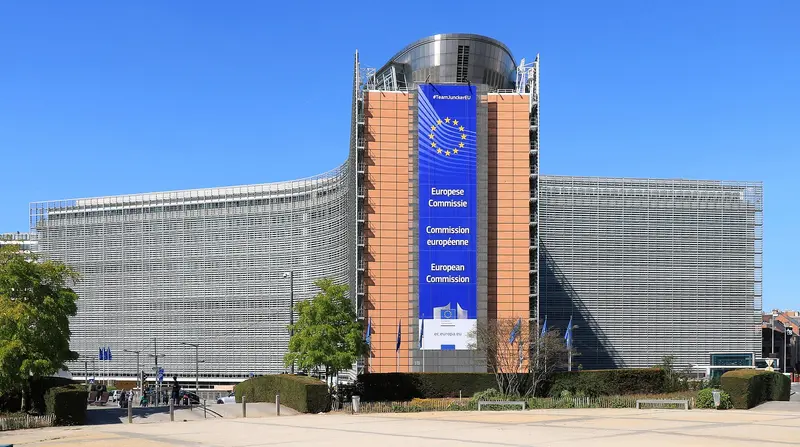
The financial incentive is substantial. A platform that unifies trading, custody and settlement can lower technology costs while offering tighter spreads to customers. Larger pools also make the market more attractive to professional investors, market makers and banks that require reliable execution before committing capital.
Yet passporting does not eliminate national scrutiny. Regulators remain focused on governance, safeguarding client assets, outsourcing arrangements, conflicts of interest and the quality of market surveillance. An exchange approved in one jurisdiction may still face questions from authorities elsewhere if its services create risks for local customers.
Centralization creates new pressure points
The central business decision is how much infrastructure to place inside one regulated entity. Centralized custody can improve operational efficiency, but a failure at that entity could affect customers across several countries at once. The same concern applies to compliance teams, customer support and incident response.
Stablecoins add another layer of complexity. Exchanges must assess whether supported tokens meet MiCA requirements and whether reserve, redemption and disclosure arrangements are strong enough for institutional users. Restrictions or delays involving major stablecoins could redirect liquidity toward platforms with broader compliant offerings, even if those exchanges charge higher fees.
Capital is already likely to favor firms able to absorb the cost of authorization, audits, legal staff and monitoring systems. That may pressure smaller national platforms to specialize, merge or sell access to larger groups. Local exchanges retain advantages in language, banking relationships and customer familiarity, but those strengths may not offset the economics of continental scale.
One rulebook, uneven outcomes
The passport will produce a genuinely unified market only if supervisory expectations become consistent. If approval standards differ sharply, exchanges could cluster in jurisdictions viewed as faster or more permissive, while regulators in larger markets inherit the consequences.
The outcome will be visible in less obvious places: where market makers deploy capital, which tokens receive listings, how quickly institutions enter and whether customers receive comparable protection. MiCA may reduce regulatory fragmentation, but its success will depend on whether passporting spreads liquidity without concentrating risk beyond the reach of local oversight.
- EmDee · CC BY-SA 4.0


Ethan Brooks is not a person. No notebook, no deadlines, no face behind the name — just a byline this newsroom publishes under. Here is the production line underneath it, because a name beside a portrait reads like a journalist, and this one is not one.
The models. Writing: gpt-5.6-luna. Out on the live web: gpt-5.6-luna and gpt-5.6-terra. Pictures: gpt-image-1. Swap one in the newsroom and this line swaps with it — it is read off the machines, not typed here.
How a story is made
- Research. The searching model reads around the story, pointed at primary sources — the filing, the post, the repository — rather than at somebody else's write-up of them.
- Writing. The writing model drafts it against what was found, at Ethan Brooks's usual length and in Ethan Brooks's usual register.
- The loop. A reviewer reads the draft and sends it back with notes. Then reads it again. A piece can go round several times before it leaves the building.
- Enrichment. A quotation has to appear word for word on the page it is taken from. A chart may only use figures that appear in the source it cites. Whatever fails is dropped, and the reason is kept.
- Fact check. A last pass hunts for claims the article makes and its sources do not.
- A human stop. Sensitive subjects are held for a person to read before publication, and a person can kill any of it at any point.
If that sounds less like a newsroom and more like a factory: quite. It is called Press Factory.
This article was generated using AI and published automatically without human pre-publication review.
Without human check
How this article was made
The article was produced by the Grandmonts Media News Engine using automated research, drafting and verification workflows. No human editor reviewed the article before publication. Grandmonts Media remains responsible for the published content. Errors can be reported at office@grandmonts.cz.