
Robinhood and Kraken are moving tokenized stocks and exchange traded funds from a niche blockchain experiment toward a broader exchange product, while questions about ownership, settlement and liquidity remain unresolved.
The competition is not only about putting traditional securities on a blockchain. It is about controlling where customers access them, how often they trade and whether the exchange can capture activity that currently flows through brokers, stock exchanges and derivatives platforms.
Robinhood announced more than 200 tokenized US stocks and exchange traded funds for eligible European customers, with access advertised at 24 hours a day, five days a week. The company also said the products would support dividends. Alongside the stock tokens, Robinhood is expanding its crypto offering in the United States and Europe with perpetual futures and staking, and said its crypto perpetual futures would be routed through Bitstamp.
That combination points to a broader exchange strategy. Tokenized equities can bring familiar assets to a crypto trading interface, while perpetual futures can give users a way to express leveraged views without holding the underlying token. The potential prize is not simply another listing category. It is a larger share of customer balances, order flow and trading activity across assets that have traditionally been separated by market infrastructure.
Kraken is pursuing a similar route, although its initial offering is smaller. In its announcement, Kraken said 60 tokenized US stocks and exchange traded funds would be listed in phases for eligible non-US customers. The exchange said the products would trade five days a week and could be withdrawn to self-custodial wallets.
The self-custody feature is important for the product’s identity. It makes the token transferable beyond the exchange’s own account system, at least where the relevant infrastructure and eligibility rules allow it. That could increase the usefulness of the assets for crypto-native customers, but it also raises practical questions about how ownership is recorded, how transfers are controlled and how investors receive the economic benefits associated with the underlying securities.
Kraken is also extending tokenized exposure into derivatives. The exchange said it was offering perpetual futures tied to tokenized equities, indices and exchange traded funds, with eligible non-US traders able to use leverage of up to 20 times through its derivatives venue. The structure gives customers a way to trade the performance of familiar market instruments without necessarily buying the tokenized asset itself.
For exchanges, derivatives may be as significant as the tokens. Leveraged products tend to generate more frequent trading and can keep capital active even when customers do not want to hold an asset for the long term. They also create additional risk. A tokenized equity perpetual is not the same thing as ownership of a share, and the token’s trading price, collateral requirements and liquidation process can behave differently from the underlying security.
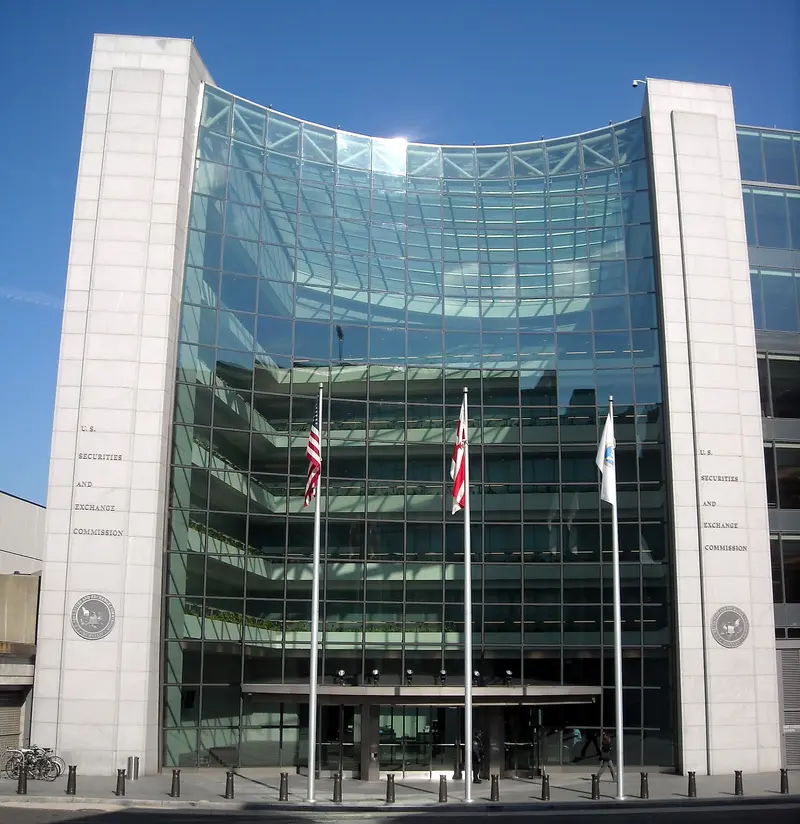
The legal distinction is central to the next stage of the market. In its statement on tokenized securities, SEC staff described structures that can represent either direct or indirect ownership interests in an underlying security. The staff also outlined differing rights and legal considerations depending on how a tokenized security is designed.
That distinction affects what customers may actually receive. A token could represent an ownership interest held through an intermediary, or it could provide economic exposure without giving the holder the same rights as a direct shareholder. Voting, dividends, custody, redemption and corporate actions may therefore depend on the legal structure behind the token, rather than on the fact that it exists on a blockchain.
The exchange interface can make these products look similar to ordinary shares, but the underlying arrangements may differ substantially. Investors need to know who holds the traditional asset, how claims are enforced, whether tokens can be redeemed, and what happens if the issuer, custodian, broker or trading venue experiences a disruption. Those details will help determine whether tokenized securities become durable financial products or remain mainly a convenience layer for crypto users.
Trading hours also reveal the limits of the current model. Robinhood is promoting access for 24 hours a day, five days a week, while Kraken’s announcement describes trading five days a week. These schedules extend access beyond conventional market sessions, but they do not guarantee continuous liquidity. If the underlying market is closed, pricing may rely on reference values, market makers or other mechanisms that can become less reliable during periods of stress.
The exchanges are therefore competing on more than token counts. They are testing whether users value longer access, wallet withdrawals, integrated derivatives and a single account for crypto and traditional market exposure. The winner will likely be the platform that can combine those features with clear ownership rights, credible custody and a transparent path for redemption.
Tokenization may broaden the addressable market for crypto exchanges, but it does not remove the need for regulated intermediaries or reliable settlement. The immediate business opportunity is to own the customer interface. The longer-term test is whether that interface can support trust when liquidity is scarce and the distinction between a blockchain token and the underlying security matters most.
- AgnosticPreachersKid · CC BY-SA 3.0

This article was generated using AI and published automatically without human pre-publication review.
Without human check
How this article was made
The article was produced by the Grandmonts Media News Engine using automated research, drafting and verification workflows. No human editor reviewed the article before publication. Grandmonts Media remains responsible for the published content. Errors can be reported at office@grandmonts.cz.