Uncategorized
Bittensor’s TAO Rally Shows Why Decentralized AI Is Suddenly Back in the Market’s Imagination

- Share
- Tweet /data/web/virtuals/383272/virtual/www/domains/theunhashed.com/wp-content/plugins/mvp-social-buttons/mvp-social-buttons.php on line 63
https://theunhashed.com/wp-content/uploads/2026/06/bittensor-1000x600.png&description=Bittensor’s TAO Rally Shows Why Decentralized AI Is Suddenly Back in the Market’s Imagination', 'pinterestShare', 'width=750,height=350'); return false;" title="Pin This Post">
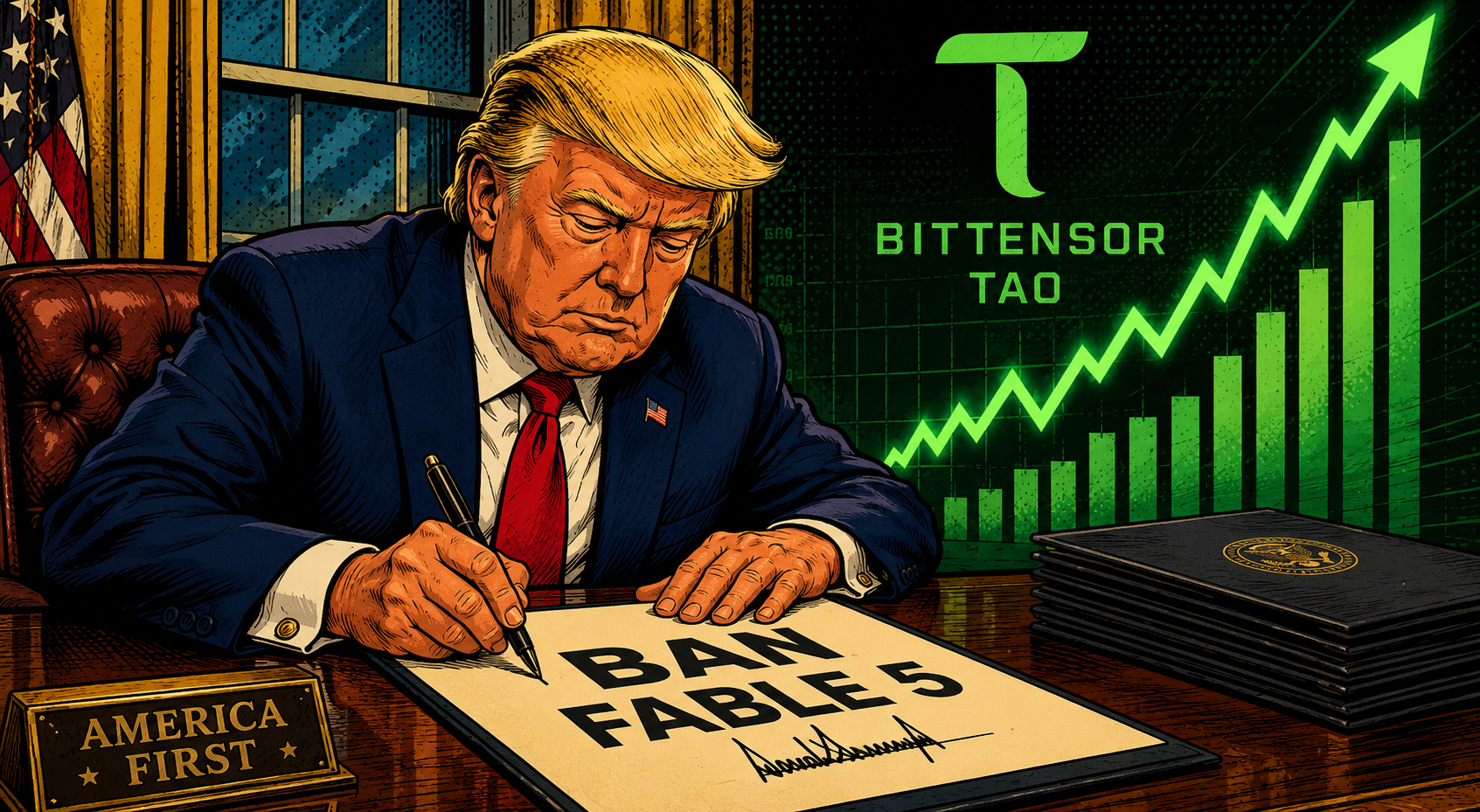
Bittensor’s TAO did not rally because traders suddenly discovered artificial intelligence. Crypto has been chasing the AI narrative for more than a year. TAO rallied because the Anthropic shock gave that narrative a sharper political edge. After the U.S. government ordered Anthropic to suspend access to its Fable 5 and Mythos 5 models for foreign nationals, the market was reminded that centralized AI is not just a technology stack. It is a jurisdictional asset. Access can be restricted. Models can be taken offline. National security can override commercial availability. In that moment, decentralized AI stopped sounding like a futuristic slogan and started sounding like a hedge against platform control.
The Anthropic Shock Repriced the AI Narrative
The key market reaction was not simply that TAO moved higher. It was the speed and symbolism of the move. Following the U.S. directive against Anthropic’s most advanced models, Bittensor’s native token charged sharply, rising more than 25% on the week and more than 13% on the day at the time of the original market commentary. For a token that had already become one of crypto’s clearest proxies for decentralized AI, the rally was not random. It was narrative rotation with a catalyst.
Anthropic’s own statement said the U.S. government, citing national security authorities, had issued an export-control directive requiring access to Fable 5 and Mythos 5 to be suspended for any foreign national, including foreign-national employees inside Anthropic. Because the company could not practically enforce that restriction without broader consequences, it disabled access to the models for all customers. That is an extraordinary moment for the AI industry. A frontier model was not merely rate-limited, region-gated, or temporarily paused because of internal safety testing. It was pulled back under state pressure.
For traders, the implication was immediate. If the most advanced AI systems are controlled by a handful of U.S. companies, and if those companies are subject to sudden government intervention, then access to frontier intelligence becomes politically fragile. That fragility is exactly what decentralized AI projects claim to solve, or at least reduce. Bittensor sits at the center of that argument.
Why TAO Was the Obvious Market Target
Bittensor is not the only decentralized AI project in crypto, but it is the one with the strongest claim to being the sector’s flagship asset. TAO is liquid enough to attract serious capital, large enough to represent the category, and conceptually clean enough for traders to understand quickly. When centralized AI access became the story, TAO became the obvious token to buy.
Bittensor’s core idea is that machine intelligence can be coordinated through an open, incentive-driven network rather than produced only inside closed corporate labs. Participants contribute useful model outputs, compute, data, or specialized services through subnets, while TAO functions as the economic layer that rewards valuable contributions and coordinates network incentives. In theory, this creates a market for intelligence that is more open, modular, and resistant to centralized shutdowns.
That theory is exactly why the Anthropic incident mattered. A closed model provider can be ordered to restrict access. A centralized API can be switched off. A cloud-hosted service can be governed by export law, corporate policy, political pressure, and internal risk committees. A decentralized network is harder to control in the same way. It may still face regulatory pressure at exchanges, wallets, front ends, validators, miners, hosting providers, and fiat ramps, but the intelligence layer itself is less dependent on one corporate gatekeeper.
That does not make Bittensor immune to regulation. No serious investor should believe that decentralization creates magical legal invisibility. But it does change the control surface. Instead of one company operating one closed model behind one commercial API, Bittensor attempts to distribute AI production and evaluation across a network. In a world where governments are beginning to treat frontier AI as strategic infrastructure, that difference has market value.
Decentralized AI Becomes a Sovereignty Trade
The TAO rally should be understood as part of a broader sovereignty trade. The Anthropic order did not only affect crypto sentiment. It reinforced a larger geopolitical anxiety: countries, companies, and users do not want critical AI access to depend entirely on U.S. corporate platforms. If a model can be blocked for foreign nationals, then even allies must ask whether their AI infrastructure is truly theirs.
This is the same logic driving sovereign AI efforts in Europe, India, the Gulf, Singapore, and other regions. Governments want domestic compute, domestic models, local data controls, and independent AI capacity. The reasons vary, from privacy to economic strategy to national security, but the conclusion is similar. Dependency on someone else’s model stack is a vulnerability.
Bittensor offers a crypto-native version of that thesis. Instead of building one national champion, it imagines an open intelligence market where many contributors compete and coordinate through token incentives. That makes TAO attractive not only as an AI token, but as a bet on the market’s discomfort with centralized AI chokepoints. The more Washington, Brussels, Beijing, and other governments treat AI as controlled infrastructure, the more investors may search for alternatives that look harder to fence in.
This is why the move in TAO felt so reflexive. Anthropic’s restriction created fear around centralized AI access. That fear strengthened the decentralized AI narrative. The stronger narrative attracted buyers into TAO. The price move then validated the narrative, pulling in more attention. Crypto markets thrive on loops like this, especially when the story is simple enough to travel quickly: centralized AI can be shut down; decentralized AI cannot be so easily contained.
The Bull Case Is Bigger Than One News Event
It would be a mistake to reduce TAO’s rally to a single headline. The Anthropic catalyst helped, but Bittensor’s bull case has been forming for much longer. AI remains one of the biggest investment themes in global markets. Nvidia, cloud infrastructure, model labs, inference providers, data-center operators, and AI application companies have absorbed enormous capital because investors believe artificial intelligence will reshape the economy. Crypto has been looking for its own credible way to express that theme.
Many AI tokens have struggled because their connection to actual AI demand is weak. Some are branding exercises. Some are compute marketplaces with limited traction. Some are data-labeling or agent projects that sound compelling but remain early. Bittensor stands out because it offers a more ambitious primitive: an incentive network for machine intelligence itself. Whether it succeeds fully is still an open question, but the scope of the idea gives TAO a premium narrative.
The token also benefits from scarcity psychology. TAO has a Bitcoin-like maximum supply structure of 21 million tokens, which makes it easier for crypto investors to frame as a scarce asset tied to a growing network. That comparison should not be stretched too far. Bitcoin is monetary infrastructure with a radically different risk profile, history, and adoption curve. Bittensor is an experimental AI network with far more technical and economic complexity. Still, scarcity matters in crypto storytelling, and TAO’s supply design helps investors understand the asset.
The combination is powerful: AI macro narrative, decentralized infrastructure, token scarcity, and now a political catalyst showing why centralized model access can be fragile. That does not guarantee long-term success, but it explains why the market responded so aggressively.
The Hard Question: Does Bittensor Actually Solve the Problem?
The most important part of the TAO debate is whether Bittensor’s architecture can deliver enough real utility to justify its valuation. Decentralized AI sounds compelling, but building it is brutally difficult. Frontier AI requires enormous compute, high-quality data, sophisticated training methods, model evaluation, alignment work, inference infrastructure, and constant iteration. Centralized labs are powerful because they can coordinate these resources at scale. Decentralized networks must prove they can produce useful intelligence without collapsing into inefficiency, gaming, or uneven quality.
Bittensor’s subnet model is designed to address this by letting specialized markets emerge inside the network. Different subnets can focus on different tasks, from inference to data to search to model services. Validators evaluate outputs, miners compete to provide value, and rewards are distributed through the protocol. In principle, that allows the network to evolve as demand changes. In practice, it creates difficult questions about measurement. How does the network reliably determine which AI output is most valuable? How does it prevent participants from gaming validators? How does it ensure rewards flow to genuine utility rather than stake concentration, social coordination, or short-term optimization?
Academic and technical critics have raised concerns about incentive alignment, reward concentration, and the challenge of measuring useful intelligence in decentralized markets. These concerns do not invalidate Bittensor, but they do matter. A decentralized AI network must be judged not only by its ideology, but by the quality of its outputs and the robustness of its incentive system. If it cannot consistently reward real value, the token becomes narrative without foundation.
That is the central tension for TAO. The market is buying the possibility that Bittensor becomes a core layer of decentralized AI. The technology still has to prove that it can turn that possibility into durable demand.
Why Centralized AI’s Weakness Is Not Automatically Bittensor’s Strength
Another risk is that the failure mode of centralized AI does not automatically validate every decentralized alternative. Anthropic being forced to restrict access shows that centralized model providers face political risk. It does not prove that Bittensor can match frontier model quality, attract enterprise-scale users, or become the default infrastructure for open intelligence. Markets often jump from one conclusion to the next too quickly.
There are also practical chokepoints around decentralized AI. TAO trades on exchanges. Users rely on wallets, interfaces, documentation, infrastructure providers, and liquidity venues. Regulators may not be able to shut down the entire network easily, but they can pressure the layers where users enter and exit. If decentralized AI becomes strategically important, it will not be ignored by governments. It will attract more scrutiny, not less.
The better bull case is not that Bittensor is untouchable. It is that Bittensor is harder to control in the same clean way as a corporate AI platform. That distinction matters. Decentralization is not absolute immunity; it is a different distribution of risk. In a world where AI access is becoming politicized, that difference may be enough to attract capital.
TAO as a Sentiment Barometer for Open AI
TAO is increasingly becoming a sentiment barometer for decentralized AI. When investors believe open, permissionless intelligence networks will matter, TAO tends to benefit. When the market rotates back toward centralized AI equities, Bitcoin, Ethereum, or more liquid meme-driven trades, TAO can cool quickly. That makes it a high-beta expression of a very large but still immature thesis.
The Anthropic news gave the thesis emotional force. Traders did not need a complex model to understand the message. A leading AI company lost control over access to its top systems because the state intervened. That is exactly the type of event decentralized AI advocates have warned about. Whether those advocates are fully right is less important in the short term than whether the market believes the warning became more credible.
This is why TAO’s move matters beyond its daily chart. It shows that the market is beginning to price AI governance risk into crypto assets. Until now, many AI-token rallies were based on excitement about compute demand or general AI hype. This one was different. It was about control. Who owns the model? Who can access it? Who can shut it down? Who decides whether a user is allowed to use intelligence?
Those are not technical questions alone. They are political questions. Bittensor’s rally suggests traders are starting to value networks that offer a different answer.
The Case for Being Bullish Now
The bullish argument for TAO is strongest if one believes three things. First, that artificial intelligence will remain the dominant technology theme of this cycle. Second, that centralized AI platforms will face increasing regulatory, geopolitical, and access-control pressure. Third, that crypto networks can provide credible alternatives for at least part of the AI stack. If those assumptions hold, then TAO is one of the cleanest assets through which to express the trade.
The Anthropic episode strengthens the second assumption dramatically. It shows that even the most sophisticated AI companies cannot guarantee global access to their own models once governments decide the systems are strategically sensitive. That makes decentralized infrastructure more attractive as a hedge. It does not need to replace Anthropic, OpenAI, Google DeepMind, or xAI overnight. It only needs to become more relevant as users, developers, and capital search for systems with fewer centralized chokepoints.
There is also a liquidity argument. In crypto, narratives need tradable assets. “Decentralized AI” is a broad concept, but TAO is the ticker most investors associate with it. When the narrative heats up, flows often concentrate in the category leader first. That leadership premium can be powerful, especially during periods of sharp rotation.
The Case for Caution
The cautious argument is equally important. TAO’s sharp move may reflect short-term narrative chasing as much as long-term conviction. A 25% weekly jump can pull forward a lot of optimism. If the Anthropic story fades from headlines, if broader crypto risk appetite weakens, or if traders take profits after the initial impulse, TAO can retrace quickly.
Investors should also separate decentralization as a value proposition from decentralization as a completed product. Bittensor is still evolving. Its subnets, incentive mechanisms, validator behavior, and actual commercial usefulness need constant scrutiny. The network’s long-term value depends on whether it can attract meaningful AI work, produce competitive outputs, and sustain demand for TAO beyond speculative cycles.
The regulatory angle cuts both ways as well. The more important decentralized AI becomes, the more attention it will receive from policymakers. If governments are worried about centralized frontier models being misused, they may eventually become even more worried about open networks that are harder to govern. That does not kill the thesis, but it complicates it.
The Bottom Line
Bittensor’s TAO rally after the Anthropic news is not just another altcoin pump. It is a market signal. Traders saw a centralized AI provider forced to restrict access to its most advanced models and immediately rotated into the token most closely associated with decentralized intelligence. That reaction says something important about where the AI narrative is going.
The future of AI may not be purely open or purely closed. It will likely be a contested landscape where corporate model labs, national AI programs, open-source communities, decentralized networks, and regulated infrastructure all compete for relevance. In that world, Bittensor does not need to win everything to matter. It only needs to prove that part of intelligence production can be coordinated outside traditional centralized platforms.
Is now the time to be bullish on decentralized AI? The better answer is that the market has been given a stronger reason to take the thesis seriously. TAO’s rally reflects the belief that access to intelligence will become one of the defining control battles of the next decade. If centralized AI can be fenced off by governments, then decentralized AI becomes more than a crypto narrative. It becomes a strategic alternative.
For TAO, that is the opportunity. For investors, it is also the risk. The story is powerful because it touches the future of AI, sovereignty, and open networks. But the token still has to prove that Bittensor can turn that story into lasting utility. Right now, the market is betting that it can.

Uncategorized
Open USD Arrives With a 140-Company Coalition and a Direct Challenge to the Stablecoin Giants

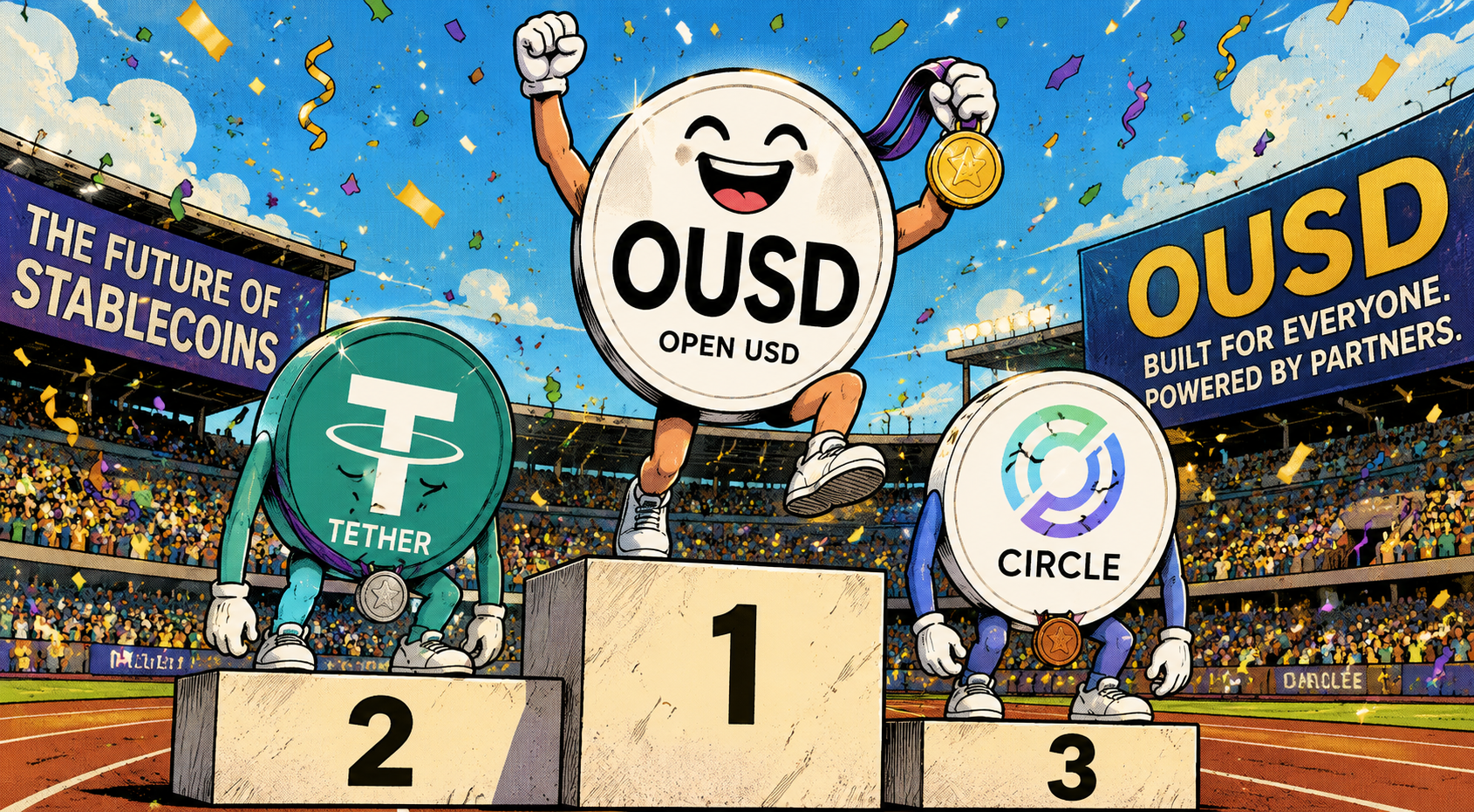
The stablecoin market has spent years consolidating around two names: Tether and Circle. USDT became the liquidity engine of crypto trading, while USDC became the cleaner, more regulated dollar token for institutions, fintechs, and U.S.-aligned exchanges. Now a new challenger has entered the field with a very different pitch. Open USD, or OUSD, is not being sold as another single-issuer stablecoin. It is being framed as shared financial infrastructure, backed by a coalition of banks, payment networks, fintechs, crypto companies, asset managers, and technology platforms that want stablecoins to become useful beyond trading screens.
A Stablecoin Built Around Shared Incentives
Open USD is the flagship product of Open Standard, an independent company formed to operate and govern the new dollar-backed stablecoin. The basic idea is familiar: OUSD will be pegged to the U.S. dollar and backed by regulated reserves. The strategic design, however, is more unusual.
Most large stablecoin businesses make money from reserve income. Users hold the token, the issuer holds safe assets such as cash and Treasury bills, and the yield on those reserves becomes a major revenue stream. That model has been extremely profitable for leading issuers, especially in a higher-rate environment.
Open USD is trying to flip that structure. Instead of keeping nearly all reserve economics at the issuer level, Open Standard says most of the earnings generated from OUSD reserves will flow back to the companies that adopt and distribute the stablecoin, minus a management fee. That means the businesses using OUSD are not just customers or integration partners. They are intended to participate in the economics of the network itself.
For payments companies, marketplaces, banks, exchanges, and fintech platforms, that could be a powerful incentive. Stablecoins have often promised faster settlement and lower costs, but many businesses have been reluctant to build deeply around assets controlled by another company’s roadmap and profit model. Open USD is trying to answer that hesitation with collaborative governance and shared revenue.
Who Is Behind Open USD?
The partner list is the reason Open USD is being taken seriously from day one. Open Standard says more than 140 companies are part of the ecosystem. The names include some of the most important players in global payments, crypto infrastructure, banking, and enterprise technology.
Visa and Mastercard bring global payment-network credibility. Stripe adds one of the world’s most influential internet-payments platforms. Coinbase brings crypto distribution and infrastructure. BlackRock gives the project an asset-management heavyweight. BNY, Standard Chartered, BBVA, DBS, American Express, Google, Shopify, Ripple, Aave, Anchorage Digital, Adyen, Affirm, Brex, Fireblocks, Bitso, Bybit, Aptos Labs, Base, and many others point to a coalition that spans both traditional finance and crypto-native markets.
This mix is the real story. Stablecoin projects often have strong crypto partners but weak traditional-finance participation, or strong banking alignment but limited crypto liquidity. Open USD is trying to bridge both worlds at once. The presence of card networks, banks, cloud and commerce platforms, crypto exchanges, wallet providers, DeFi protocols, and institutional infrastructure firms suggests a strategy aimed at payments, settlement, trading, treasury management, marketplaces, and eventually autonomous commerce.
The coalition is not simply broad. It is strategically layered. Payment networks can help with acceptance and settlement. Banks can support regulated money movement and reserves. Crypto platforms can create liquidity. Infrastructure providers can make custody and compliance easier. Commerce platforms can create real user demand. If those pieces work together, OUSD could become more than another token listing.
How Big Is This Launch?
By market capitalization, OUSD is not big yet because it has not launched. Its importance comes from the scale of the coalition and the size of the market it is targeting.
The stablecoin sector is now worth roughly $300 billion to $310 billion, depending on the data provider and daily market movement. Tether’s USDT remains the clear leader, with about $184 billion in circulation and close to 60% market dominance. Circle’s USDC is second, with roughly $73 billion to $74 billion in circulation. Together, the two tokens still control the overwhelming majority of the market.
That concentration is exactly what Open USD wants to challenge. The existing stablecoin market has liquidity, but it is still heavily tied to crypto trading. The bigger prize is global money movement: merchant settlement, cross-border payments, platform payouts, treasury operations, remittances, tokenized capital markets, and machine-to-machine payments.
Open Standard is pitching OUSD as infrastructure that can handle billions of transactions and eventually support financial workloads measured in trillions of dollars. That is ambitious, but not random. Stablecoin transaction volumes are already large enough to make banks, card networks, and payment processors pay close attention. The market question is whether that activity can move from crypto-native trading into everyday commercial settlement.
Why Businesses May Care
The stablecoin market has always had a distribution problem. Crypto traders use stablecoins constantly. But many mainstream businesses still see them as complicated, risky, or economically misaligned.
Open USD is designed to solve three practical complaints. First, it promises no-cost minting and redemption for businesses, without artificial volume limits. That matters because enterprise payment flows cannot be built around unpredictable conversion costs. If a platform is moving millions or billions of dollars, small fees and operational friction become major barriers.
Second, OUSD offers shared reserve economics. That gives partners a reason to promote the token rather than simply tolerate it. In today’s dominant model, the issuer captures most of the reserve yield while distribution partners provide users and volume. Open Standard’s model says the companies growing the network should share in the upside.
Third, Open USD is being governed collaboratively. The project is not supposed to be controlled by one issuer making unilateral decisions. Open Standard will have its own independent management and governance structure, with partner involvement intended to keep the system aligned with the businesses that depend on it.
For large companies, this could be the difference between integrating a vendor’s token and joining a network.
Circle’s View: Competition, but USDC Still Has the Trust Argument
Circle is the company most directly exposed to the Open USD story. USDC is the largest U.S.-based stablecoin and a core part of Circle’s business. When Open USD was announced, Circle’s stock fell sharply, reflecting investor concern that a revenue-sharing stablecoin backed by Visa, Mastercard, Stripe, Coinbase, BlackRock, Google, and others could pressure USDC’s growth and economics.
Circle’s public stance has been confident rather than defensive. CEO Jeremy Allaire emphasized that USDC remains widely trusted, deeply adopted, and institutional-ready. The company also welcomed competition in the stablecoin sector, framing the rise of more dollar tokens as evidence that the market is expanding rather than shrinking.
That response makes sense. Circle’s strongest argument is not that competitors cannot launch. It is that stablecoins are trust products. Liquidity, regulatory posture, redemption history, integrations, reserve transparency, and institutional familiarity matter enormously. USDC already has years of operational history, broad exchange support, and deep integration across crypto and fintech systems.
Still, Open USD attacks one of Circle’s biggest economic advantages: reserve income. If major distributors can earn more by pushing OUSD than by supporting USDC, Circle may need to defend its relationships more aggressively. The stablecoin war may shift from “which token is safest?” to “which token gives platforms the best combination of trust, liquidity, compliance, and economics?”
Tether’s View: Calm, Maybe Even Amused
Tether appears less immediately threatened, at least from a market-position standpoint. Paolo Ardoino, Tether’s CEO, reacted with the kind of confidence expected from the company that still dominates global stablecoin liquidity. His message was essentially that a new player has entered the game.
That tone matters. Tether’s strength is not U.S. institutional branding. It is global distribution, deep exchange liquidity, and adoption in regions where dollar access is difficult. USDT is entrenched across centralized exchanges, emerging markets, offshore trading desks, and crypto-native settlement. Open USD may become a serious competitor in regulated business payments, but dislodging USDT’s liquidity network is a much harder task.
Tether may also see Open USD as a validation of its core thesis: dollar tokens are becoming one of the internet’s most important financial products. If Visa, Mastercard, Stripe, banks, and asset managers are building around stablecoins, then Tether’s early bet on tokenized dollars looks less fringe and more foundational.
The bigger challenge for Tether is regulatory and institutional. As stablecoins move further into mainstream payments, the market may increasingly reward reserve transparency, compliance architecture, and regulated access. Open USD is designed for that world. Tether remains dominant in the current world. The fight between those two realities may define the next phase of stablecoins.
What Is Planned for OUSD?
Open USD is expected to launch later this year. The initial plan is to make it available as a dollar-backed stablecoin for global payments and settlement, with a focus on business use rather than retail speculation.
The planned use cases are broad. Financial institutions could use OUSD for on-chain transactions through regulated partners. Payment service providers, card issuers, and merchants could settle faster and simplify how they accept or pay out funds. Fintechs could use it for transfers and money movement. Exchanges and DeFi platforms could use it as a neutral trading asset. Platforms and marketplaces could use it to pay users across more markets. Open Standard also points to agentic commerce, where AI agents may need to make instant programmatic payments.
That last point is especially important. Stablecoins are becoming part of the AI-commerce conversation because software agents need a payment layer that is fast, programmable, and internet-native. Credit cards were built for humans and merchants. Bank rails were built for institutions. Stablecoins may be better suited for automated software interacting with other automated software.
OUSD is therefore not just a crypto product. It is a bet on the future of money movement across digital platforms.
The Strategic Threat to USDC and USDT
Open USD does not need to replace USDT or USDC to matter. It only needs to capture enough enterprise and payment volume to change the economics of stablecoin distribution.
For USDC, the threat is direct because the target market overlaps. Circle has spent years building USDC as a regulated, institutional, payment-friendly digital dollar. Open USD is making a similar institutional pitch, but with a more partner-aligned economic model. If major platforms can earn reserve-linked revenue by adopting OUSD, USDC may face pressure in exactly the markets where Circle expects future growth.
For Tether, the threat is more indirect. OUSD is unlikely to immediately replace USDT as the dominant trading pair across global crypto exchanges. But if stablecoin growth shifts from exchange liquidity to regulated payments, corporate treasury, card settlement, and platform payouts, Tether could face a new kind of competition from coalitions that are more acceptable to banks and regulators.
That is why Open USD should be seen as a structural challenge, not just a token launch. It is testing whether stablecoins become issuer-led products or network-governed infrastructure.
The Execution Risk
A partner list is not the same as adoption. Open USD still has to prove liquidity, reliability, regulatory durability, redemption quality, blockchain availability, security, and real-world usage.
Consortium-backed financial projects can be powerful, but they can also become slow. The more partners involved, the harder governance can become. Every bank, payments company, exchange, and platform has different incentives. Some will want low fees. Some will want compliance controls. Some will want liquidity. Some will want influence over technical standards. Some will want economics.
Open Standard’s biggest challenge will be turning broad support into coordinated usage. If OUSD launches but partners treat it as a side experiment, it will struggle. If major platforms actually route meaningful payment, settlement, and treasury flows through it, the market will pay attention quickly.
Liquidity is another obstacle. Stablecoins become more useful as they become more liquid. USDT and USDC benefit from enormous network effects. Traders, market makers, exchanges, DeFi protocols, wallets, and institutions already know how to use them. OUSD must create enough supply and demand to become a default option, not just a press-release asset.
A New Phase of the Stablecoin Race
Open USD arrives at a moment when stablecoins are moving from crypto infrastructure into mainstream financial strategy. The U.S. regulatory environment has become more supportive. Banks are experimenting. Payment giants are looking for faster settlement rails. Fintechs want cheaper cross-border transfers. AI companies are beginning to think about programmable payments.
That makes OUSD timely. The market is ready for a stablecoin designed less around speculation and more around business-scale money movement. The question is whether Open Standard can execute faster than incumbents adapt.
Circle will defend USDC with trust, regulation, and existing integrations. Tether will defend USDT with liquidity, global reach, and first-mover dominance. Open USD will compete with alignment: shared economics, collaborative governance, and a partner network that already includes many companies capable of moving serious volume.
The result could be a more fragmented stablecoin market, but also a more useful one. Different stablecoins may specialize. USDT could remain dominant in crypto liquidity and emerging-market dollar access. USDC could remain the institutional and regulated digital dollar. OUSD could become the shared settlement asset for businesses that want both stablecoin efficiency and participation in the network’s economics.
The Bottom Line
Open USD is one of the most serious stablecoin launches in years, not because it has circulation today, but because of who is standing behind it and how its incentives are designed. A coalition of more than 140 companies is trying to build a dollar stablecoin that behaves like open financial infrastructure rather than a closed issuer product.
That puts pressure on Circle, which must defend USDC’s institutional lead while facing a rival with powerful distribution partners and a revenue-sharing model. It also puts Tether on notice that the next stage of stablecoin growth may be shaped by regulated payments, banks, fintechs, and platform commerce rather than crypto trading alone.
OUSD is planned for launch later this year. Its promise is simple: no-cost minting and redemption, shared reserve economics, collaborative governance, and infrastructure built for large-scale global money movement. Its challenge is equally clear: turning a heavyweight coalition into real liquidity and daily usage.
If Open Standard succeeds, Open USD could become a new template for stablecoins. Not just a token issued by one company, but a financial network owned, governed, and monetized by the businesses that use it.
Uncategorized
Cardano’s Founder Steps Back as ADA Falls Into Its Harshest Confidence Crisis in Years


Charles Hoskinson has never been a quiet founder. For nearly a decade, the Cardano architect has been part technologist, part evangelist, part combatant, and part lightning rod. His public presence has often been inseparable from the identity of the chain itself. So when Hoskinson posted four short words — “I’m taking a break. TTYL” — the market did not treat it like an ordinary social media update. It treated it like a signal.
ADA dropped roughly 10% after the message, sliding below $0.20 for the first time in more than five years, according to CoinDesk market data. The token is now down around 70% over the past year. For a project that once marketed itself as one of crypto’s most academically rigorous and long-term oriented ecosystems, the sell-off exposed something deeper than price weakness. It exposed a crisis of confidence around whether Cardano’s governance, treasury, and developer economy can support the kind of growth its community still expects.
Hoskinson’s break came after he warned that Cardano could face a “wave of failures,” pointing to the shutdown of TapTools, one of the ecosystem’s most recognized analytics platforms, and the failed community vote to fund the 2026 Cardano Summit. His frustration was clear: in his view, the ecosystem is not willing to spend enough treasury capital on growth, business development, and survival.
That is the real story. This is not only about one founder taking time away from X. It is about whether Cardano’s decentralized governance model can make hard economic decisions before more projects run out of time.
The Four Words That Shook ADA
Crypto markets are famously emotional, but they are not irrational in the way critics often suggest. When a founder posts that he is “taking a break” during a period of ecosystem stress, traders immediately start pricing uncertainty. With Cardano, that reaction is amplified because Hoskinson remains the network’s most visible figure, even though governance has formally moved beyond founder control.
His message landed at the worst possible moment. ADA was already under pressure from a broader altcoin downturn, weak liquidity, and growing doubts about ecosystem momentum. Then came the TapTools shutdown, the failed summit funding vote, and Hoskinson’s warning that more Cardano projects could collapse if conditions did not improve.
The market interpreted the break as more than personal fatigue. It looked like founder frustration. In crypto, that matters. Networks may be decentralized at the protocol level, but narratives are still human. Investors do not just buy code; they buy conviction, leadership, and the belief that an ecosystem has enough momentum to survive bad cycles.
ADA’s drop below $0.20 was therefore symbolic. Price thresholds matter because they compress years of emotion into a single number. For long-term holders, falling below a level not seen in more than five years feels like a verdict on the last cycle’s promises. For skeptics, it confirms the argument that Cardano has struggled to convert research, community loyalty, and technical ambition into durable market demand.
The TapTools Shutdown Was a Warning Shot
TapTools was not just another small application disappearing from a blockchain ecosystem. It was one of Cardano’s most visible data and analytics platforms, used by traders, project teams, and community members to track tokens and activity. Its decision to wind down operations after multiple senior departures sent a blunt message: building infrastructure for Cardano may no longer be economically sustainable for some teams.
That is dangerous because analytics tools are part of the basic commercial layer of any crypto ecosystem. They help users understand markets. They help projects gain visibility. They help liquidity form around assets. When a chain loses such tools, it does not simply lose a website. It loses part of the connective tissue that turns a protocol into a usable economy.
Hoskinson’s response reflected that concern. He argued that difficult market conditions would lead to failures unless the ecosystem became more willing to support projects. His warning was not abstract. It was about the business model of Cardano itself. Can builders make money? Can infrastructure teams survive? Can community governance fund public goods? Can the treasury be deployed aggressively enough to defend the ecosystem during a downturn?
These questions are uncomfortable because Cardano has long positioned itself as a methodical, principled alternative to faster-moving chains. Its supporters often argue that Cardano does not chase hype. But in a brutal market, patience alone does not pay server bills, salaries, audits, marketing costs, or exchange integrations.
A blockchain can have elegant architecture and still lose its builders if the economy around it does not work.
The Failed Summit Vote Exposed a Governance Problem
The failed vote to fund the 2026 Cardano Summit may turn out to be more important than the market initially understood. Conferences are easy to dismiss as branding exercises, especially in crypto, where lavish events often look disconnected from real product adoption. But ecosystem summits serve a practical purpose. They bring builders, investors, developers, exchanges, institutions, wallet providers, and community members into the same room. They create momentum. They help projects raise capital and form partnerships. They remind the market that a chain is alive.
When the community rejected treasury funding for the summit, the message was not necessarily that Cardano holders oppose growth. Many may have had valid concerns about cost, execution, accountability, or whether the proposed budget was justified. Decentralized treasuries should not become blank checks for insiders or event organizers.
But the outcome still revealed a larger tension: Cardano’s governance may be cautious at precisely the moment when the ecosystem needs urgency.
This is one of the hardest problems in decentralized systems. If governance spends too freely, the treasury becomes a political prize and capital is wasted. If governance becomes too conservative, projects starve, infrastructure disappears, and the ecosystem slowly loses relevance. The ideal balance is disciplined aggression: enough scrutiny to avoid waste, enough speed to fund growth.
Cardano appears to be struggling with that balance.
Hoskinson’s Frustration Is About More Than One Vote
Hoskinson’s frustration seems rooted in a broader concern that Cardano’s community wants ecosystem growth without accepting the cost of ecosystem growth. Every major blockchain spends money. Some spend through foundations. Some spend through venture-backed labs. Some spend through grants. Some spend through market incentives. Some spend through aggressive business development funded by insiders or token treasuries.
There is no free version of adoption.
If Cardano wants more applications, more liquidity, more developers, more institutional relationships, more media attention, and more user-facing infrastructure, someone has to fund it. The treasury exists partly for that reason. But the existence of funds does not guarantee the ability to deploy them. A decentralized treasury can become powerful, but it can also become paralyzed by distrust, politics, voter fatigue, and ideological disagreement.
That is the dilemma Cardano now faces. It has embraced decentralized governance, but the market is asking whether decentralized governance can act like a growth engine.
Hoskinson’s comments suggest he believes the ecosystem is underinvesting in itself. The ADA price reaction suggests traders fear he may be right.
Cardano’s Old Strength Has Become a Market Weakness
Cardano’s brand was built on rigor. Peer-reviewed research, formal methods, slow development, academic roots, and careful protocol design were presented as strengths. In earlier cycles, that differentiated Cardano from chains that moved fast, broke things, and sometimes broke themselves.
But crypto’s competitive landscape has changed. Solana has turned speed, consumer apps, and developer energy into a powerful narrative. Ethereum has leaned into modular scaling, institutional adoption, staking, and layer-2 ecosystems. Bitcoin has become stronger as a monetary asset. Newer chains are competing with incentives, performance, and app-specific focus.
In that environment, Cardano’s methodical style can look less like discipline and more like inertia. This may be unfair at the engineering level, but markets trade perception before they trade technical nuance. A chain can be robust, decentralized, and thoughtfully built while still losing the narrative war.
ADA’s decline reflects that problem. Investors are not only asking whether Cardano works. They are asking whether Cardano matters enough in the next phase of crypto.
That is a harsher question.
The ADA Price Collapse Is a Narrative Collapse Too
A 70% yearly decline does not happen in isolation. It reflects both macro conditions and project-specific doubts. Altcoins across the market have been under pressure, but ADA’s fall below $0.20 carries special weight because Cardano has one of the most loyal retail communities in crypto. When an asset with that kind of base keeps falling, it usually means new buyers are not arriving fast enough to absorb discouraged holders.
The market is essentially saying that belief alone is no longer enough.
ADA needs demand. That demand can come from DeFi activity, stablecoins, tokenized assets, payments, staking conviction, institutional products, developer growth, or speculative momentum. But it must come from somewhere. A blockchain’s native asset cannot rely indefinitely on legacy community loyalty. At some point, usage, revenue, liquidity, and cultural energy have to reinforce the price.
Cardano has made progress over the years, but the market appears unconvinced that progress is translating into enough economic gravity. That is why the TapTools shutdown and summit vote hit so hard. They seem to confirm the bearish story that Cardano’s ecosystem is not expanding with enough force.
Is Cardano Actually Failing?
Calling Cardano a failed project would be premature. The network still has a large global community, active staking, a significant treasury, ongoing development, and years of infrastructure behind it. It has survived multiple cycles and remains one of the most recognized blockchain brands in the world.
But Cardano is clearly in a dangerous phase.
The danger is not that the protocol disappears tomorrow. Serious blockchains rarely die quickly. The danger is slow marginalization. A chain can remain operational while losing developer mindshare, liquidity, media relevance, and institutional attention. It can keep producing upgrades while users migrate elsewhere. It can maintain a passionate community while the broader market moves on.
That is the risk Cardano must confront. In crypto, survival is not the same as leadership.
Hoskinson’s “wave of failures” warning is therefore not just pessimism. It is a recognition that ecosystems are made of companies, tools, founders, liquidity providers, and users. If enough of those actors leave, the chain becomes smaller even if the protocol remains technically sound.
The Founder Paradox
Hoskinson’s break also highlights a paradox at the center of many supposedly decentralized networks. Cardano governance may no longer be controlled by Hoskinson, and he has repeatedly emphasized that he does not have unilateral power over the chain. But the market still reacts strongly to his mood, statements, and presence.
That is because decentralization has layers. A protocol can be decentralized in validation and governance but still centralized in narrative. Hoskinson remains Cardano’s main public interpreter. He explains the roadmap, defends the ecosystem, criticizes opponents, rallies supporters, and gives the project a recognizable voice.
When that voice sounds exhausted, the market notices.
This does not mean Cardano needs Hoskinson to function. But it does mean the ecosystem has not fully decentralized its public identity. If one founder’s short post can trigger a sharp sentiment shock, then Cardano still has work to do in distributing leadership across builders, founders, applications, institutions, and community representatives.
The healthiest version of Cardano would not depend on Hoskinson’s daily presence. It would have enough independent momentum that a founder break feels normal, not alarming.
Treasury Politics Will Define the Next Phase
The most important issue now is treasury deployment. Cardano has resources, but resources only matter if governance can convert them into growth. That requires clearer priorities.
Should the treasury fund developer grants? Should it support major events? Should it subsidize infrastructure like analytics platforms, wallets, stablecoin liquidity, bridges, and developer tooling? Should it focus on enterprise adoption? Should it incentivize DeFi? Should it preserve capital during a bear market?
There are no easy answers. But avoiding the decision is itself a decision. If Cardano’s governance becomes too slow or too suspicious of spending, the market may conclude that the treasury is a locked vault rather than a strategic weapon.
The strongest ecosystems in crypto understand that capital allocation is part of protocol strategy. Ethereum has foundations, client teams, layer-2 businesses, venture funding, and a massive developer network. Solana has aggressive ecosystem support, consumer-focused energy, and a strong foundation-driven growth machine. Bitcoin does not need the same kind of treasury politics because its thesis is monetary rather than application-driven.
Cardano, by contrast, wants to be both principled infrastructure and a competitive smart-contract ecosystem. That requires funding the builders who make the ecosystem useful.
What Cardano Needs to Prove Now
Cardano does not need a new slogan. It needs evidence.
It needs to show that its governance can fund growth without becoming wasteful. It needs to show that important ecosystem tools can survive. It needs to attract builders who are not only ideologically aligned but commercially viable. It needs deeper liquidity, stronger DeFi activity, better user experiences, and more reasons for people outside the existing community to care.
It also needs to make the treasury conversation less emotional. Spending on growth should not be treated as betrayal of decentralization. At the same time, skepticism toward proposals should not be treated as sabotage. Mature governance requires both ambition and accountability.
The failed summit vote and TapTools shutdown should become case studies, not just grievances. Why did voters reject the summit proposal? Was the ask too large? Was the value proposition unclear? Was trust too low? Why could TapTools not sustain itself? Was the market too small? Was monetization weak? Did the ecosystem fail to support a public good?
Answering those questions matters more than arguing about blame.
The Market Is Demanding Urgency
Cardano has always asked the market for patience. For years, supporters accepted that bargain because they believed careful development would eventually produce superior infrastructure. But patience has limits when price, adoption, and ecosystem activity fail to match expectations.
The market is now demanding urgency.
That does not mean Cardano should abandon its principles or copy every faster-moving chain. It means the ecosystem has to act like competition is real. Builders have choices. Liquidity has choices. Users have choices. Developers can deploy on many chains. Investors can rotate into assets with stronger momentum.
Cardano’s challenge is not only to be technically correct. It is to be economically compelling.
Hoskinson’s break may be temporary, but the issues behind it are not. Whether he returns tomorrow or next month, Cardano still faces the same test: can a decentralized community make strategic decisions quickly enough to compete in one of the most ruthless markets in technology?
The Bottom Line
Charles Hoskinson’s four-word post did not create Cardano’s problems. It revealed them.
ADA’s fall below $0.20, TapTools winding down, the failed 2026 Summit vote, and warnings of a coming “wave of failures” all point to the same underlying issue: Cardano’s ecosystem is under pressure at the business layer. The protocol may still be running, the community may still be loyal, and the treasury may still exist, but confidence is weakening because the market wants proof of growth.
Cardano is not dead. It is not finished. But it is no longer enough for the project to be theoretically strong, academically rigorous, or ideologically committed to decentralization. It has to show that its governance can support builders, its treasury can be used intelligently, and its ecosystem can generate enough activity to make ADA relevant again.
Hoskinson stepping back may become a healthy reset if it forces Cardano to distribute leadership and confront hard truths. But if the break becomes a symbol of founder exhaustion, governance paralysis, and ecosystem contraction, the market will keep punishing ADA.
The next Cardano cycle will not be decided by promises of what the network can become. It will be decided by whether the community is willing to fund, build, and defend the ecosystem it says it believes in.
Uncategorized
Mastercard Brings Stablecoin Settlement Onchain, and Solana Is Now Part of the Payments Stack

For years, stablecoins were treated as crypto’s back-office miracle: useful, liquid, global, but still largely trapped inside the trading economy. That is changing. Mastercard’s move to support stablecoin settlement across its global payments network marks one of the clearest signs yet that tokenized dollars are no longer just a DeFi primitive or exchange asset. They are becoming settlement infrastructure. And with Solana included among the supported blockchain networks, one of the world’s largest payment companies is acknowledging what crypto builders have argued for years: fast, always-on public blockchains can become part of serious financial plumbing.
The Big Shift: Settlement Is Moving Toward 24/7
Mastercard’s announcement is not about letting a consumer tap a card and pay directly with a memecoin. It is more important than that.
This is about settlement.
In payments, authorization is what users see. A card is tapped. A transaction is approved. A receipt appears. But settlement is the machinery underneath: the movement of money between issuers, acquirers, merchants, processors, banks, and networks after the transaction has been accepted.
Traditional settlement is still shaped by banking hours, regional cutoffs, correspondent relationships, liquidity buffers, weekends, holidays, and batch processing. Even in a world where consumers expect instant payments, institutional money movement often remains slower and more fragmented than the user experience suggests.
Stablecoins attack that gap directly.
A regulated dollar stablecoin can move onchain at any hour, including nights, weekends, and holidays. That does not automatically solve every compliance, accounting, or operational problem. But it gives payment companies a new rail for moving value when traditional systems are closed or slow.
Mastercard is now bringing that optionality into its settlement architecture.
Why Solana’s Inclusion Matters
The announcement is multi-chain. Mastercard named several supported blockchain networks, including Ethereum, Base, Polygon, Arbitrum, Canton, Tempo, XRPL, and Solana. So this should not be read as a Solana-only deal.
But Solana’s presence matters because it reinforces the chain’s growing role in payments and stablecoin infrastructure.
Solana has spent the last few years positioning itself as one of the fastest and lowest-cost public blockchains for consumer and payment use cases. Its core argument is straightforward: if crypto is going to support high-volume payments, tokenized dollars, merchant flows, trading, remittances, and financial applications, the underlying network must be fast, inexpensive, and capable of handling large transaction volumes without making users think about gas fees.
That is the exact category where stablecoin settlement becomes interesting.
For a card network or payment processor, a blockchain used for settlement cannot behave like a speculative toy. It needs uptime, throughput, cost efficiency, predictable infrastructure, wallet and custody support, compliance integrations, and institutional-grade operational tooling. Solana’s inclusion in Mastercard’s list does not mean all settlement will move there. It means Solana is considered one of the rails worth supporting as payment networks experiment with onchain money movement.
For Solana, that is strategically significant.
Stablecoins Are Becoming Payment Infrastructure
The stablecoin market has already proven product-market fit. Dollar tokens are used across exchanges, DeFi protocols, remittance apps, treasury operations, OTC desks, and emerging-market payment flows. But mainstream financial adoption has required more than liquidity. It needs trusted issuers, regulatory clarity, compliance controls, custody infrastructure, risk management, and integrations with existing financial systems.
That is why Mastercard’s language around “regulated stablecoins” is important.
The company is not presenting this as a free-for-all. It is supporting stablecoins such as USDC, PayPal USD, Paxos-issued assets, Ripple’s RLUSD, and SoFiUSD. These are not anonymous experimental tokens. They are issued through companies trying to operate within regulated frameworks and institutional expectations.
This is where the stablecoin story changes. The first phase was crypto-native trading liquidity. The second phase was DeFi composability. The third phase is settlement, treasury, and payments.
Mastercard’s move belongs to that third phase.
The Real Use Case: Liquidity Management
For banks, fintechs, issuers, and acquirers, the most immediate benefit is not ideology. It is liquidity.
Payment companies care about when money moves because timing affects working capital. If settlement is delayed over weekends or holidays, institutions need buffers. If cross-border transfers take longer, companies must manage trapped capital. If settlement windows are narrow, treasury teams must plan around cutoffs. All of this creates friction.
Stablecoin settlement can make these flows more flexible.
An acquirer could receive settlement faster. An issuer could manage funds outside normal banking windows. A fintech operating across regions could reduce delays between markets. A processor could support clients that want digital-dollar settlement without forcing every transaction through old rails.
The point is not that stablecoins replace all fiat settlement overnight. The point is that they become an additional option.
That optionality is powerful. The future of payments is likely multi-rail: fiat rails, card rails, account-to-account systems, real-time payment networks, tokenized deposits, stablecoins, and public blockchains all operating in different contexts. Mastercard is preparing for that world.
Why This Is Not Just Crypto Hype
Crypto markets will naturally turn this into a chain narrative. Solana holders will see validation. Stablecoin issuers will see distribution. DeFi investors will see another step toward onchain finance. Those interpretations are not wrong, but the deeper story is more structural.
Mastercard is not chasing a short-term token trade. It is defending and extending its position in global payments.
Stablecoins are a potential threat to card networks because they allow value to move globally without relying on traditional intermediaries. But they are also an opportunity. If Mastercard can integrate stablecoins into its own network, it can remain relevant as money movement changes.
This is the strategic play: do not let stablecoins bypass the network; bring them into the network.
That is why the company has been investing in stablecoin infrastructure, wallet partnerships, compliance tools, and onchain settlement capabilities. The message is clear. Mastercard wants to be a bridge between traditional payments and blockchain-based settlement, not a victim of the transition.
What Changes for Merchants and Payment Firms
For merchants, the immediate impact may be invisible. A customer might still pay with a card, and the checkout experience might look exactly the same.
The difference happens behind the scenes.
A merchant acquirer or payment processor may eventually settle certain flows using stablecoins. A fintech may use tokenized dollars to manage funds faster. Cross-border merchants may benefit from faster access to liquidity. Payment providers serving Latin America, emerging markets, or global commerce corridors may find stablecoins especially attractive because they can reduce delays and improve treasury flexibility.
This is why early participants matter. Mastercard named firms including ARQ, CBW Bank, Cross River, Lead Bank, and Nuvei as expected early supporters in the United States and Latin America. These are the types of institutions that can turn a network capability into real payment flows.
If the early integrations work, the next phase is scale.
The Solana Payments Thesis Gets Stronger
Solana has already become a major home for stablecoin activity, DePIN experiments, consumer apps, high-frequency DeFi, and payment-oriented applications. Mastercard’s support adds another institutional proof point to the Solana payments thesis.
The thesis is simple: payments need speed, low costs, and reliability at scale.
Solana’s advantage is that it was designed with high-throughput execution in mind. That makes it attractive for use cases where small transactions, frequent settlement, and real-time movement matter. While Ethereum remains the deepest smart-contract economy and institutional settlement layer in many areas, Solana competes strongly when the use case prioritizes consumer-grade speed and low fees.
The most likely future is not one-chain dominance. Mastercard’s own multi-chain approach supports that view. Different networks will serve different institutional, technical, and regulatory needs. Solana’s win is not exclusivity. Its win is being included in the institutional shortlist.
That alone is meaningful.
What This Could Mean for Stablecoins
Stablecoins are moving from crypto exchanges into the heart of financial infrastructure.
For years, critics argued that stablecoins were mostly useful for speculation. That critique is becoming harder to sustain. Stablecoins now sit at the center of several serious payment categories: cross-border settlement, remittances, merchant payouts, treasury operations, DeFi collateral, dollar access, and now card-network settlement optionality.
Mastercard’s support gives stablecoins another layer of legitimacy. When a global payment network integrates regulated stablecoins into settlement, it signals that these assets are becoming operational tools, not just trading chips.
This will likely increase competition among stablecoin issuers. USDC, PYUSD, RLUSD, Paxos-issued assets, and bank or fintech-issued stablecoins are all fighting for distribution. The winners will not be decided only by market cap. They will be decided by trust, regulatory positioning, liquidity, integrations, redemption reliability, and network acceptance.
Settlement is where stablecoins become serious.
The Regulatory Layer
The word “regulated” will define this market.
Payment networks cannot build large-scale settlement systems on assets that lack compliance standards, reserve transparency, issuer accountability, or clear redemption paths. Banks and payment processors will demand assets that satisfy internal risk committees, regulators, auditors, and clients.
This is why the next stablecoin cycle will look different from the last one. The winners will need more than liquidity and exchange listings. They will need licenses, banking relationships, disclosures, integrations, and institutional trust.
For public blockchains, this creates a new challenge. They can provide open settlement infrastructure, but the assets and access points around them will become more regulated. The chain may be permissionless, but the institutional flows using it will often be controlled, monitored, and compliance-heavy.
That is not a contradiction. It is the likely shape of mainstream onchain finance.
What It Means for Banks
Banks should pay close attention.
Stablecoin settlement could reduce some of the friction that banks currently monetize or manage. At the same time, banks can participate in the new model by issuing, custodying, settling, or integrating stablecoin flows. The institutions that adapt can use stablecoins to improve treasury management, cross-border services, merchant settlement, and programmable payment products.
The institutions that ignore the shift risk becoming slower infrastructure in a faster financial system.
This does not mean banks disappear. In fact, regulated banks may become even more important as stablecoin settlement scales. They can provide custody, compliance, fiat conversion, reserve management, client onboarding, and risk controls. The question is whether they become active participants or defensive observers.
Mastercard’s move gives banks a strong signal: stablecoin settlement is moving from pilot language into payment-network architecture.
What It Means for Crypto
For crypto, this is the kind of adoption that matters more than a celebrity endorsement or another speculative cycle.
Onchain settlement is real utility. It does not require users to care about blockchain ideology. It does not depend on retail traders chasing tokens. It solves a boring but enormous problem: moving money efficiently across institutions.
That is the most powerful kind of crypto adoption because it disappears into the background. Users may not know whether a payment was settled through USDC on Solana, PYUSD on another network, or fiat through a traditional rail. They may only notice that money moves faster, costs fall, and financial products become more available.
Crypto’s biggest victories may not look like crypto at all.
They may look like settlement upgrades inside companies such as Mastercard.
The Risks and Limits
This development is important, but it should not be exaggerated.
Mastercard is not moving its entire network onto Solana. It is not abandoning fiat settlement. It is not turning every card transaction into an onchain transaction. It is adding stablecoin settlement optionality alongside existing systems.
There are also real risks. Stablecoin settlement depends on issuer reliability, reserve quality, redemption access, smart-contract security, custody controls, compliance processes, blockchain uptime, operational resilience, and legal clarity across jurisdictions.
Public blockchains can move value 24/7, but institutions operate under rules. Settlement systems must handle disputes, errors, sanctions screening, reporting, reconciliation, accounting, and regulatory supervision. The blockchain transaction is only one part of a much larger machine.
The hard part is not proving that a stablecoin can move quickly. Crypto already proved that. The hard part is integrating that movement into global financial operations without breaking compliance, trust, or consumer protection.
The Bigger Picture: Always-On Finance
The phrase “always-on finance” captures the real shift.
Markets move 24/7. Crypto trades 24/7. Consumers expect instant access. Businesses operate globally across time zones. But much of the financial system still behaves as if money should rest on weekends.
Stablecoins challenge that assumption.
If settlement can happen onchain, across regulated assets and supported networks, then payment infrastructure starts to become more continuous. Intraday settlement, weekend settlement, holiday settlement, and blockchain-based settlement all point toward the same destination: money that moves when the economy moves.
That is what Mastercard is preparing for.
Solana’s inclusion shows that high-speed public chains are part of the conversation. Stablecoins show that tokenized money has found its killer institutional use case. Mastercard’s scale shows that traditional finance is no longer watching from the sidelines.
The Bottom Line
Mastercard’s stablecoin settlement expansion is one of the clearest signs that onchain finance is moving into the payments mainstream.
The announcement is broader than Solana, but Solana’s role is important. It confirms that fast public blockchains are being evaluated as real settlement rails by the largest players in global payments. Mastercard is not replacing its existing network with crypto. It is expanding the network’s settlement options to include regulated stablecoins and supported blockchain rails.
That is how major financial transitions usually happen. Not with one dramatic switch, but with optionality, pilots, integrations, and gradual scaling.
For stablecoins, this is another step toward becoming core payment infrastructure. For Solana, it is validation of its payments-focused architecture. For Mastercard, it is a strategic move to remain central as money movement becomes faster, more programmable, and increasingly onchain.
The consumer may never see the blockchain.
But the settlement layer underneath global payments is starting to change.
-

 Cardano9 months ago
Cardano Breaks Ground in India: Trivolve Tech Launches Blockchain Forensic System on Mainnet
-

 Cardano7 months ago
Solana co‑founder publicly backs Cardano — signaling rare cross‑chain respect after 2025 chain‑split recovery
-
 Cardano9 months ago
Cardano Reboots: What the Foundation’s New Roadmap Means for the Blockchain Race
-

 Altcoins7 months ago
Crypto Goes Mainstream — Bitwise 10 Crypto Index ETF (BITW) Debuts on NYSE Arca
-

 News7 months ago
Crypto on Trial: The $5.5 Billion Pump.fun, Solana & RICO Lawsuit That Could Redefine On‑Chain Liability
-

 News7 months ago
From Memes to Courtrooms: Solana and Jito Execs Named in Explosive RICO Suit Over Pump.fun
-

 Altcoins7 months ago
Algorand’s 2027 Question: Can the Network Survive Without Foundation-Funded Rewards?
-
 Altcoins7 months ago
NYSE Arca Files to Launch Altcoin-Focused ETF