Ethereum
Linea’s TVL Slide Raises Hard Questions for Consensys’ Layer 2 Ambitions


- Share
- Tweet /data/web/virtuals/383272/virtual/www/domains/theunhashed.com/wp-content/plugins/mvp-social-buttons/mvp-social-buttons.php on line 63
https://theunhashed.com/wp-content/uploads/2026/06/tvl_hill-1000x600.png&description=Linea’s TVL Slide Raises Hard Questions for Consensys’ Layer 2 Ambitions', 'pinterestShare', 'width=750,height=350'); return false;" title="Pin This Post">
Linea was supposed to be one of Ethereum’s most institutionally credible Layer 2 bets: a zkEVM network backed by Consensys, tied to the MetaMask ecosystem, and marketed around Ethereum alignment rather than speculative detours. But the latest DeFi data tells a much colder story. Linea’s total value locked has fallen by more than 30% over the past month, with DeFiLlama showing TVL near $33 million, a dramatic retreat from earlier peak levels reported above $1.6 billion.
For any Layer 2 network, TVL is not the whole story. It can be distorted by incentives, token farming, temporary liquidity campaigns, and volatile asset prices. But when a network once associated with billion-dollar liquidity falls toward tens of millions in active DeFi value, the market reads it as more than a statistical correction. It becomes a referendum on whether users are staying after the rewards, speculation, and launch narrative fade.
A Sharp Drop From a Much Bigger Story
Linea’s decline looks severe because of the scale of the comparison. At its height, the network attracted large amounts of capital, helped by excitement around Consensys, the broader zkEVM narrative, and expectations that early users might benefit from future token-related incentives. That formula has powered many Layer 2 growth cycles. Users bridge assets, interact with protocols, generate activity, and hope that participation will be rewarded later.
The problem is that this type of liquidity is often mercenary. It arrives quickly when incentives are implied or explicit, then leaves just as quickly when the opportunity looks exhausted.
That appears to be the central issue facing Linea. The network still exists, still processes transactions, and still carries strategic value because of its Consensys backing. But the DeFi footprint has contracted sharply. Current DeFiLlama figures place Linea’s DeFi TVL around $33 million, while the same dashboard shows bridged TVL significantly higher than native DeFi TVL. That distinction matters. Assets can be bridged to a chain without necessarily being productively deployed in its DeFi ecosystem.
In other words, Linea may still have users and assets moving through the network, but its core DeFi liquidity base has weakened.
The Difference Between Bridged Capital and Sticky Capital
Layer 2 networks often advertise big numbers during growth phases, but not all capital is equal. A user bridging funds to farm points is not the same as a long-term liquidity provider. A protocol attracting deposits through temporary yield is not the same as a protocol with durable product-market fit. A spike in activity before a token event is not the same as recurring economic demand.
This is why Linea’s TVL drop matters. It suggests that a meaningful portion of earlier liquidity was not deeply committed to the ecosystem. It may have been chasing incentives, preparing for a token launch, or testing another chain in an increasingly crowded Layer 2 market.
The broader Ethereum scaling landscape has become brutally competitive. Base has built strong consumer and developer momentum. Arbitrum remains a major DeFi hub. Optimism has turned its Superchain strategy into a wider ecosystem play. zkSync, Scroll, Starknet, Mantle, Blast, Mode, and others have all competed for liquidity, developers, and attention. In that environment, a Consensys brand name alone is not enough.
Liquidity follows yield, trust, applications, and network effects. If users do not find compelling reasons to stay, they leave.
The Post-Incentive Problem
Linea’s situation fits a familiar pattern across crypto infrastructure. A chain launches with a strong narrative. Early adopters arrive. Activity rises. TVL climbs. Speculation builds around a token or rewards program. Then the incentive cycle changes, and the market discovers how much organic demand was really there.
This is not unique to Linea. It has happened across Layer 1s, Layer 2s, DeFi protocols, NFT marketplaces, and restaking projects. Crypto growth is often front-loaded by financial expectation. The harder test comes later, when users must decide whether the product is useful without an obvious reward.
For Linea, the question is whether the network can convert technical credibility into real ecosystem gravity. Consensys has enormous reach through MetaMask and deep Ethereum infrastructure expertise. In theory, that should give Linea advantages many Layer 2 rivals cannot easily match. In practice, the TVL data suggests those advantages have not yet translated into a dominant DeFi environment.
The market is not asking whether Linea can exist. It is asking whether Linea can matter.
Token Launches Can Cut Both Ways
Linea’s token strategy has also shaped market perception. The LINEA token was designed differently from many governance-first crypto assets. According to Linea’s own tokenomics, LINEA is not used as gas, since ETH remains the gas token. The token also launched without conventional on-chain governance rights, and the model included mechanisms connected to ecosystem incentives and buy-and-burn dynamics.
That design was meant to reinforce Ethereum alignment and avoid some of the governance theater seen elsewhere. But it also creates a more complicated story for investors and users. If a token is not gas and does not initially govern the protocol, the market must believe in other value drivers: ecosystem demand, burn pressure, long-term network revenue, developer adoption, and liquidity growth.
A falling TVL weakens that story. It does not destroy it, but it makes the burden of proof heavier.
When DeFi liquidity contracts, token holders often worry that the ecosystem is losing depth. Lower TVL can reduce trading opportunities, lending liquidity, collateral options, and protocol revenue. That can create a feedback loop: less liquidity leads to less activity, which leads to fewer builders prioritizing the network, which leads to even less liquidity.
Breaking that loop requires more than branding. It requires applications that users cannot easily find elsewhere.
TVL Is Imperfect, But Still Symbolic
It is fashionable to say TVL is overrated, and in many ways that criticism is correct. TVL can be inflated through looping, recursive lending, wrapped assets, and temporary incentives. It does not automatically measure real users, revenue, decentralization, security, developer quality, or long-term value.
But dismissing TVL entirely is also a mistake. In DeFi, liquidity is infrastructure. Without enough locked value, lending markets are thin, decentralized exchanges become less efficient, yield strategies become less attractive, and new protocols struggle to launch with confidence. TVL is not the whole economy, but it is one of the clearest signals of whether capital trusts a chain enough to remain there.
For Linea, the symbolism is damaging. A Consensys-backed Layer 2 sitting around $33 million in DeFi TVL does not match the scale of its original expectations. The gap between the narrative and the current liquidity base is now the story.
What Linea Still Has Going for It
The bearish interpretation is obvious, but it would be too simple to write Linea off entirely. The network still has several structural advantages.
First, Consensys remains one of the most important companies in the Ethereum ecosystem. Its infrastructure, developer relationships, and MetaMask distribution give it strategic channels that many competitors would envy.
Second, Linea remains part of the broader zkEVM thesis. Zero-knowledge scaling is still viewed by many Ethereum researchers and builders as an important long-term direction, even if market attention has shifted repeatedly between optimistic rollups, appchains, modular infrastructure, and high-throughput Layer 1s.
Third, low TVL can sometimes create a reset. A network that sheds mercenary liquidity may be forced to focus on higher-quality growth: better native applications, deeper integrations, clearer developer incentives, and more sustainable user acquisition.
The challenge is that resets only work if they lead to visible execution. Otherwise, they become slow declines dressed up as discipline.
The Bigger Layer 2 Warning
Linea’s TVL crash is not just a Linea story. It reflects a wider issue across Ethereum Layer 2s: there may be more blockspace than there is sticky demand.
The market has spent years funding scaling infrastructure. Now the question is whether enough consumer apps, DeFi primitives, games, payment systems, identity tools, and institutional use cases will emerge to justify the number of chains competing for users. Many Layer 2s are technically impressive, but users rarely choose networks based on architecture alone. They choose where liquidity, apps, communities, and opportunities already exist.
That creates a harsh power law. A few networks can become major hubs. Many others may remain technically functional but economically peripheral.
Linea does not want to be peripheral. Its backers, branding, and Ethereum-native positioning were supposed to place it among the serious contenders. The recent TVL collapse shows that the market is not granting that position automatically.
What Comes Next
The next phase for Linea will depend on whether the team can rebuild organic activity rather than temporary attention. That means attracting protocols with real utility, giving users reasons to deploy capital beyond airdrop speculation, and converting MetaMask and Consensys distribution into measurable on-chain engagement.
It also means being honest about what the TVL decline represents. The number does not mean Linea is dead. It does mean the network’s DeFi economy is much smaller than its earlier peak suggested. It means users have withdrawn capital. It means the post-hype phase is here.
For investors, builders, and users, the key metric is no longer how high Linea once climbed. It is whether the network can stabilize, grow from a lower base, and prove that its ecosystem has durable demand.
The Layer 2 market is entering a more unforgiving era. Narratives still matter, but liquidity is becoming more selective. Users are no longer willing to park capital on every new chain simply because it is well funded, well branded, or attached to a major crypto company.
Linea still has the technical pedigree and institutional support to recover. But after a 30% monthly TVL slide and a collapse from reported billion-dollar peaks to roughly $33 million, the message from the market is unmistakable: credibility gets a network launched, but only real usage keeps capital locked.











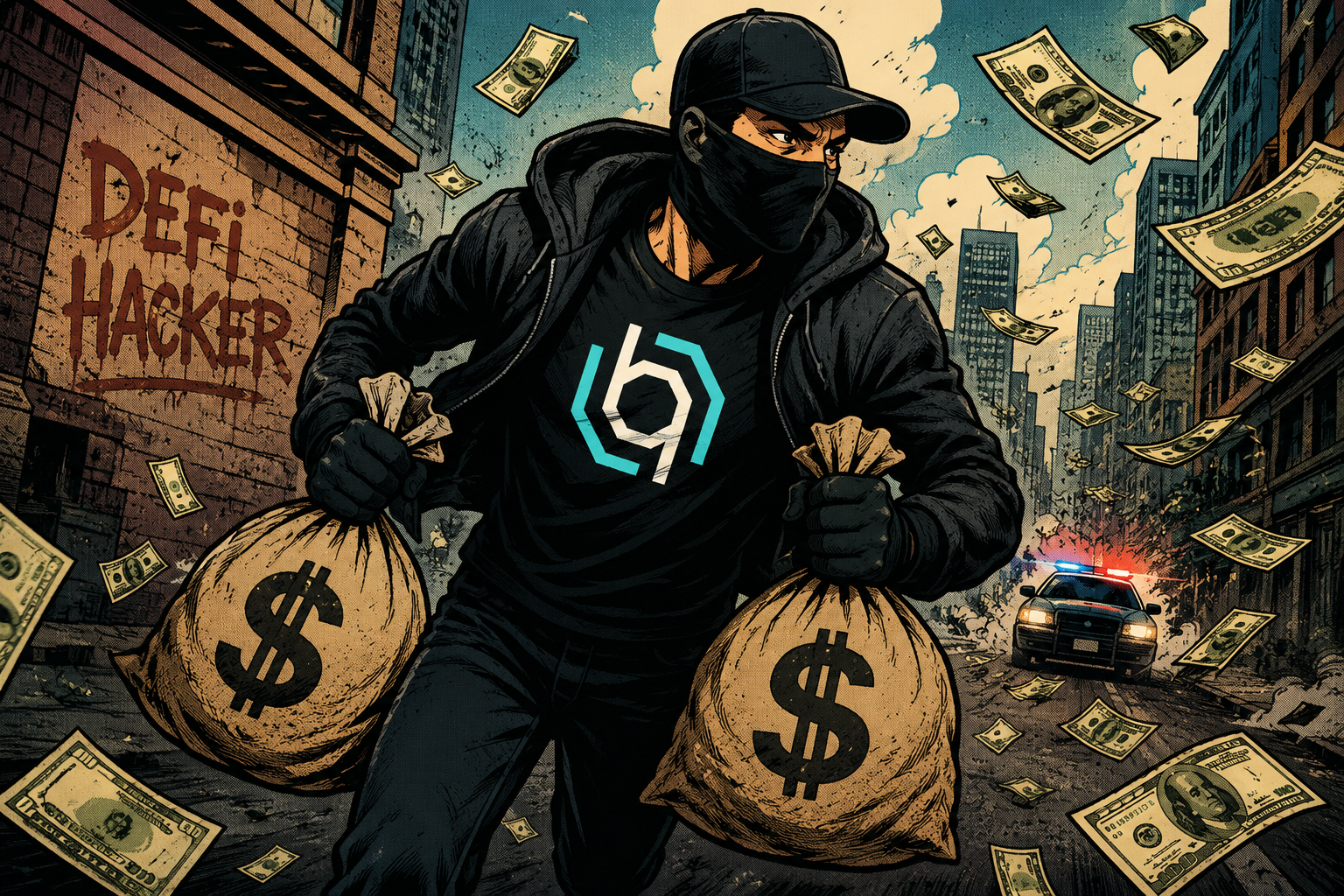
Allbridge Core has become the latest cross-chain protocol to discover how quickly a liquidity imbalance can turn into a seven-figure loss. An attacker exploited the bridge’s Solana deployment for an estimated $1.65 million, moved the stolen assets from Solana to Ethereum and began routing the funds through mechanisms designed to make the trail more difficult to follow.
Allbridge paused its Core protocol while investigating the incident and urged liquidity providers with funds in the affected pools to withdraw. The company has not yet released a complete technical post-mortem, leaving security researchers and onchain analysts to reconstruct the attack from the transactions visible on Solana and Ethereum.
The early evidence points to a flash-loan-assisted manipulation of a stablecoin liquidity pool rather than a compromise of private keys or the bridge’s validator infrastructure. That distinction explains the mechanics of the attack, but it does little to reduce the consequences for liquidity providers whose capital was exposed to the distorted pool.
A Flash Loan Turned Liquidity Into a Weapon
According to initial analysis from Onchain Lens, the attacker borrowed approximately $1.12 million in USDC through a flash loan from Kamino, a Solana-based liquidity protocol.
A flash loan allows a user to borrow substantial capital without posting traditional collateral, provided that the loan is repaid within the same blockchain transaction. The feature is useful for legitimate arbitrage, refinancing and liquidity management. It also gives attackers access to enough temporary capital to manipulate markets that would otherwise be too expensive to influence.
In this case, the borrowed USDC was reportedly used to execute rapid swaps between USDC and USDT inside an Allbridge Core liquidity pool. Both assets are designed to trade close to one US dollar, but their exchange rate inside an automated pool depends on the pool’s reserves and pricing formula.
By pushing a large amount of capital through the pool in a carefully structured sequence, the attacker appears to have distorted the relationship between the two stablecoins. Once the pool was sufficiently imbalanced, assets could be withdrawn at an exchange rate that no longer reflected their real market value.
The attacker then repaid the flash loan while retaining the extracted value. Blockchain-security firms PeckShield and CertiK estimated the total loss at roughly $1.65 million.
The entire operation demonstrates why flash-loan attacks can be so effective. The attacker does not need to own the capital used to manipulate the pool. They only need to identify a pricing mechanism that can be pushed into an unsafe state and complete the full sequence before the transaction ends.
If any step fails, the transaction can revert and the borrowed funds return to the lender. If the exploit succeeds, the attacker repays the loan and keeps the difference.
Stolen Assets Crossed From Solana to Ethereum
After extracting the funds, the attacker reportedly bridged the stolen assets from Solana to Ethereum and converted them into ETH.
The move was strategically significant. Ethereum provides access to deeper liquidity, a larger collection of decentralized exchanges and a wider range of privacy tools. Moving the assets also complicates recovery efforts because investigators must follow the funds across multiple networks, bridge transactions, token conversions and potentially numerous wallet addresses.
Onchain analysts reported that some of the funds were subsequently directed toward privacy-oriented pools. These protocols can combine deposits from multiple users and make it more difficult to connect the original source of an asset with its eventual destination.
Blockchain transactions remain public, but public does not always mean easily attributable. Investigators can watch funds enter a privacy system without necessarily knowing where the same value later exits.
Speed is therefore critical after an exploit. Security teams may try to contact exchanges, stablecoin issuers, bridge operators and other infrastructure providers before the attacker can disperse the assets. Once the funds have been divided, swapped and routed through privacy services, the chances of a straightforward recovery decrease substantially.
The transfer to Ethereum does not mean the attacker has escaped detection. It does, however, suggest an effort to move beyond the environment where the exploit occurred and gain access to a broader set of laundering options.
Allbridge Pauses Core and Warns Liquidity Providers
Allbridge said it paused the protocol as a precaution while investigating the security incident. The team also told liquidity providers with funds in the affected pools to withdraw immediately.
That warning reflects a second layer of risk created by the exploit. Even after the attacker completes the main extraction, the damaged pool can remain severely imbalanced. Liquidity-provider positions may therefore no longer represent the asset composition or value that depositors originally expected.
Allbridge acknowledged that the imbalance temporarily created a profitable arbitrage opportunity. Traders who noticed the distorted pricing could exchange assets at favorable rates, potentially extracting additional value from the affected pool even without participating in the original exploit.
This creates a complicated recovery problem. Some transactions executed after the attack may have been ordinary arbitrage rather than malicious activity. From the pool’s perspective, however, both can deepen the losses experienced by liquidity providers.
Allbridge asked traders who benefited from the temporary arbitrage window to consider returning the proceeds, saying that recovered funds would be used to compensate affected LPs. The company stated that its objective is to return all affected funds to users.
Whether that is achievable will depend on how much capital can be recovered, the final size of the losses and the technical details revealed by the investigation.
For LPs, the immediate priority is not chasing yield or attempting to trade around the imbalance. It is following the protocol’s official instructions, withdrawing from affected pools where possible and avoiding further deposits until Allbridge has explained the vulnerability and completed its remediation process.
Why Stablecoin Pools Are Not Automatically Stable
The exploit also exposes a persistent misconception surrounding stablecoin liquidity.
USDC and USDT are both intended to maintain a value close to one dollar. That does not mean every exchange between them is protected from manipulation. A decentralized pool calculates prices according to its reserves and smart-contract logic, not according to a universal guarantee that one stablecoin must always equal another.
Stablecoin-focused automated market makers are typically designed to offer low-slippage trades when assets remain close to parity. The efficiency comes from specialized pricing curves that assume the tokens should trade within a narrow range.
That assumption can become dangerous if an attacker can artificially shift the pool’s reserves or exploit a weakness in the way deposits, withdrawals and swaps are calculated. A formula optimized for efficient stablecoin trading may behave unpredictably when subjected to a transaction sequence that its designers did not adequately anticipate.
The key question is not simply whether USDC and USDT remained close to one dollar on external markets. It is whether Allbridge Core’s internal accounting allowed the attacker to create and monetize a temporary discrepancy inside the protocol.
A full technical assessment will need to establish which checks failed, whether the vulnerability was specific to the Solana implementation and whether equivalent attack paths exist in any other Allbridge pools.
A Familiar Problem for Allbridge
This is not the first time Allbridge has faced a flash-loan-related security incident.
In April 2023, an attacker exploited an Allbridge liquidity pool on BNB Chain and drained approximately $573,000. That incident also involved manipulation of a stablecoin pool’s pricing mechanism. Part of the stolen money was later returned after the project offered the attacker an opportunity to act as a white-hat participant.
The similarity does not necessarily mean the same vulnerability survived unchanged for more than three years. The current exploit affected a different blockchain deployment and may involve separate code, assumptions or implementation details.
It does, however, place additional pressure on Allbridge to explain how the latest attack bypassed its defenses. Users will want to know what was changed after the 2023 incident, whether the new exploit shared any underlying design characteristics with the earlier attack and how the protocol plans to prevent a third occurrence.
Security reviews cannot focus only on previously identified lines of vulnerable code. They must also examine the broader economic conditions that made the exploit possible.
A contract can function exactly as written and still produce a catastrophic result if its pricing model, liquidity assumptions or transaction limits allow an attacker to manipulate the system profitably.
Cross-Chain Bridges Remain High-Value Targets
Cross-chain bridges occupy one of the most demanding positions in decentralized finance. They must coordinate assets and messages between networks that operate under different technical rules, while maintaining enough liquidity to make transfers practical.
That concentration of capital makes bridges attractive targets. Their complexity creates numerous places where security can fail, including smart contracts, liquidity pools, price calculations, message validation, privileged accounts and external dependencies.
The Allbridge incident appears to have targeted a liquidity mechanism rather than the bridge’s cross-chain verification system. Nevertheless, the attack reinforces the wider bridge-security problem: an attacker only needs to compromise one economically important component to place user funds at risk.
Audits remain necessary, but they cannot guarantee that every possible transaction sequence has been anticipated. Protocols also need active monitoring capable of detecting unusual pool imbalances, rapid high-value swaps and withdrawals that diverge sharply from normal activity.
Circuit breakers can help by automatically pausing activity when reserves move beyond predefined thresholds. Flash-loan-resistant pricing, withdrawal limits and time-weighted calculations can also reduce the ability of an attacker to create and exploit a temporary price distortion within a single transaction.
These defenses introduce trade-offs. Limits can make markets less efficient, pauses can interfere with legitimate users and slower pricing mechanisms may create other forms of risk. The alternative, however, is a system optimized for speed during normal conditions but unable to defend itself when capital arrives specifically to break its assumptions.
The Investigation Will Determine the Real Damage
The current $1.65 million figure is an estimate from blockchain-security analysts rather than a final loss calculation from Allbridge. The amount could change as investigators distinguish the original extraction from subsequent arbitrage, trace remaining funds and examine the exact condition of affected LP positions.
Allbridge’s next updates will need to address more than the status of the stolen assets. Liquidity providers will expect a clear accounting of losses, a compensation framework and an explanation of which pools were affected.
The protocol will also need to describe how it intends to restore operations safely. Reopening without a detailed diagnosis would leave users dependent on assurances rather than evidence.
A credible recovery process should include a technical post-mortem, independent review of the fix and a clear explanation of the safeguards added to detect similar manipulation. The company’s decision to pause the protocol limits immediate exposure, but the long-term test will be whether the incident leads to a stronger design.
For now, the message to affected liquidity providers is direct: withdraw from the impacted pools and wait for verified information from Allbridge before returning capital.
The attacker has already moved quickly. Allbridge’s challenge is to ensure its investigation is just as decisive—and considerably more transparent.

The most dangerous person inside a cryptocurrency company may not arrive through a phishing email, a zero-day exploit or a compromised server. They may arrive through a calendar invitation, pass a technical interview and receive access credentials from human resources.
That is the unsettling lesson from a security incident involving Consensys, the company behind MetaMask. A software developer using the alias “Tyler Knapp” reportedly worked on MetaMask-related code for approximately one month before being identified as a persona linked to North Korea.
Consensys says the contractor was removed quickly, releases were suspended during the investigation and no user funds, sensitive data or production systems were compromised. The company also says no malicious code was deployed.
That makes the episode a near miss rather than a confirmed wallet hack. Yet the absence of stolen cryptocurrency should not obscure the seriousness of what happened. An individual associated with a hostile state reportedly passed through a trusted supplier, entered the development environment of one of the world’s most important crypto wallets and contributed to software used in its wider ecosystem.
The attack did not begin with code. It began with trust.
A Developer With a False Identity
According to the information disclosed about the incident, the contractor operated under the name Tyler Knapp and used the GitHub account “imyugioh.” Contributions associated with the persona began on March 9, 2026, and ended in April, when Consensys terminated the individual’s access.
The developer was reportedly introduced through an established third-party service provider rather than recruited through Consensys’ normal direct-hiring process. That distinction matters because it reveals how security standards can weaken as responsibility moves across organizational boundaries.
A company may apply intensive identity checks, background screening and technical monitoring to its own employees while assuming that an external staffing partner has performed equivalent checks. Attackers look for precisely these differences.
The contractor reportedly worked on code connected to MetaMask’s core platform, its mobile application and features involving conversions between cryptocurrencies and conventional currencies through external payment providers. There is no public evidence that the person gained access to users’ seed phrases or private keys, and Consensys says its investigation found no theft of assets or information.
Still, access to a wallet codebase is valuable even when it does not provide immediate control over funds. A sophisticated attacker does not always need to steal something on the first day. They may study internal processes, identify weak dependencies, observe release procedures, map privileged accounts or wait for an opportunity to introduce a carefully concealed vulnerability.
In a software supply-chain attack, the target is not simply one computer. The target is the mechanism through which trusted software reaches thousands or millions of other computers.
MetaMask Was Not Hacked, but the Risk Was Real
Describing the incident accurately is important. MetaMask itself was not publicly confirmed to have been hacked. No malicious wallet update has been identified, and there is no indication that users need to move their funds because of this event alone.
What was compromised was the assumption that everyone legitimately working inside the development process had been properly identified.
That is not a semantic difference. It is the difference between a completed breach and an attempted infiltration that was detected before measurable damage occurred.
Consensys reportedly responded by revoking access, freezing relevant product releases and launching a wider investigation. Suspending releases was a particularly important step because it prevented potentially affected code from moving further through the deployment pipeline while engineers reviewed the contractor’s work and surrounding systems.
A release freeze does not prove that malicious code existed. It is a containment measure designed to reduce uncertainty. When a developer’s identity cannot be trusted, every action taken through that identity must be treated as potentially hostile until it has been independently verified.
The company says it also contacted law enforcement and began reviewing how engineering contractors supplied by outside organizations are vetted.
The response appears to have prevented a serious security event. The uncomfortable question is how the individual reached the codebase in the first place.
North Korea’s Developers Are an Attack Vector
North Korean cyber operations are often associated with destructive malware, exchange hacks and groups such as Lazarus. However, publicly available information about the MetaMask incident does not establish that the contractor belonged to Lazarus or any other specifically named unit.
The more accurate description is that the persona was linked to the Democratic People’s Republic of Korea. Any stronger attribution would require evidence that has not been released publicly.
North Korea’s fraudulent IT-worker operations are broader than conventional hacking groups. Thousands of technically capable workers are believed to seek remote employment using stolen identities, fabricated résumés and misleading location data. Some appear primarily focused on earning salaries that can be redirected to the North Korean state. Others have been accused of stealing intellectual property, installing malware or extorting former employers.
Crypto companies are particularly attractive targets. They combine remote work, globally distributed teams, open-source software and direct proximity to liquid digital assets. A developer may be paid in stablecoins, interact with blockchain infrastructure and contribute code to products that authorize financial transactions.
The business model can therefore produce several forms of value simultaneously. The operative can collect a salary, gain technical intelligence and potentially create access for a future theft.
False identities are supported by an increasingly professional infrastructure. Workers may use virtual private networks to conceal their location, stolen identification documents to pass background checks and remotely controlled computers physically located in the country where they claim to live.
So-called laptop farms allow a company-issued computer to sit inside the United States or another approved jurisdiction while the actual worker controls it from abroad. From the employer’s perspective, the device appears to be connecting from an ordinary domestic internet connection.
Artificial intelligence has made parts of the deception easier. Résumés can be generated and customized at scale, voices can be modified, faces can be manipulated during video calls and candidates can receive real-time assistance during technical interviews.
The result is an attacker who does not need to break through the firewall. The company creates an account for them.
The Contractor Gap
The MetaMask case highlights a persistent weakness in technology companies: external workers frequently receive meaningful access without facing the same scrutiny as permanent employees.
This is partly a consequence of speed. Crypto companies operate in a market where product cycles move quickly, specialized engineers are expensive and distributed development is normal. Contractors allow teams to add capacity without waiting through a lengthy recruitment process.
The operational convenience can create hidden security debt.
A reputable staffing vendor may verify employment history and legal documentation but lack the expertise to detect synthetic identities, manipulated interviews or infrastructure associated with state-backed remote-worker networks. Meanwhile, the hiring company may assume the vendor has completed the necessary investigation.
Both parties believe the other has handled the risk.
The answer is not to treat every international developer as suspicious. Global and remote hiring are fundamental to modern software development. The answer is to stop treating identity verification as a one-time administrative exercise.
Verification should continue throughout the employment relationship. Access locations, working patterns, device behavior and account activity should be evaluated against the employee’s claimed identity and role. A developer who suddenly connects through unfamiliar infrastructure or behaves differently from their established pattern should trigger a review.
External engineers should also begin with the minimum access required for their assignment. Access to repositories, internal documentation, cloud systems and release tools should be separated rather than granted as a broad package.
A developer who can modify code should not automatically be able to approve it. A developer who can approve code should not automatically be able to publish a release. Critical changes should require review from multiple trusted maintainers, with cryptographic signing and reproducible build processes creating an auditable path from source code to user installation.
These controls are designed around a simple principle: a legitimate credential can still be controlled by an illegitimate person.
Open Source Is Not a Complete Defense
MetaMask’s open-source development model provides transparency. Researchers and independent developers can inspect large parts of the software, review changes and identify suspicious behavior.
However, open source should not be confused with automatic security.
A malicious contribution can be small, technically valid and difficult to distinguish from an ordinary bug. The most effective backdoors are rarely labelled as backdoors. They may appear as error-handling logic, dependency updates, analytics code or adjustments to a payment integration.
Reviewers are also human. They operate under deadlines and may trust contributors who have already passed internal onboarding.
Security therefore depends not only on whether code is visible but on how changes are reviewed, tested, built and released. Public repositories can help expose malicious behavior, but they do not replace internal controls.
The strongest defense combines transparent code with restricted privileges, independent review, automated security testing and monitoring of the people and systems participating in development.
What MetaMask Users Should Do
There is currently no public indication that MetaMask users lost funds because of this contractor or that a compromised version of the wallet was distributed. Users should not interpret the incident as evidence that their private keys have been exposed.
The normal security rules remain more relevant than panic-driven action. Seed phrases should never be entered into websites, shared with support representatives or stored in cloud documents. Transactions and token approvals should be reviewed carefully, and large holdings are better protected when signing is separated from an internet-connected browser.
The event is primarily a warning for companies rather than an emergency for individual wallet holders.
For users, the most important issue is whether Consensys can demonstrate that the contractor’s contributions were comprehensively reviewed and that the pathways used to introduce the individual have been strengthened. Trust will depend less on reassuring statements than on visible improvements to access control, contractor screening and release security.
Crypto’s Next Security Battle Is Organizational
The crypto industry has spent years hardening smart contracts, auditing bridges and teaching users to protect private keys. Attackers have responded by moving toward the softer layers surrounding the technology.
Recruiters, support teams, contractors and business partners now form part of the attack surface. A protocol can have formally verified contracts and still be exposed by a developer with fraudulent credentials. A wallet can use strong encryption and still face danger from someone authorized to modify its code.
MetaMask appears to have escaped without user losses. That is significant, but it should not be interpreted as proof that the system worked perfectly. Detection prevented the worst outcome after the attacker had already crossed an important boundary.
The deeper lesson is that hiring can no longer be separated from cybersecurity. For companies controlling financial infrastructure, every new employee or contractor is both a potential contributor and a potential privileged access point.
The next major crypto hack may not begin when someone clicks a malicious attachment.
It may begin when someone says, “Welcome to the team.”
Ethereum
Base Finally Has a Viral Memecoin—How DOJI Turned Eight Months of Silence Into a 400x Explosion


For months, the memecoin spotlight has belonged almost entirely to Solana. Explosive launches, relentless speculation and deep liquidity have made the network the undisputed home of crypto’s latest viral tokens. Meanwhile, Coinbase-backed Base has struggled to produce a breakout success capable of capturing the market’s imagination.
That changed almost overnight.
DOJI, a memecoin inspired by crypto personality Cobie’s dog and a social media post dating back to 2021, suddenly erupted after nearly eight months of inactivity. Within just 24 hours, the token reportedly climbed more than 40,000%, briefly delivering returns approaching 400x for early holders and pushing its market capitalization above $1 million.
While the numbers alone attracted traders, the story behind the rally may be even more interesting. DOJI’s unexpected resurgence highlights how quickly dormant tokens can become speculative narratives and suggests the memecoin market is entering another phase driven by internet culture rather than traditional project fundamentals.
A Forgotten Token Suddenly Returns
The cryptocurrency market has seen countless memecoins disappear shortly after launch. Most experience an initial burst of attention before fading into obscurity as liquidity dries up and traders move on to the next trend.
DOJI appeared destined for the same outcome.
After months with little visible activity, few market participants were paying attention to the token. Then momentum arrived almost instantly. Trading volumes accelerated, social media discussions multiplied and price action became increasingly aggressive.
Within hours, a token that many had written off became one of the most talked-about assets on Base.
The speed of the rally is characteristic of today’s memecoin environment. Markets increasingly react not to technical innovation but to cultural relevance. Once enough traders identify a compelling narrative, liquidity can arrive faster than traditional valuation models can explain.
Why Cobie’s Dog Became a Memecoin
Unlike many newly launched tokens, DOJI wasn’t built around an artificial story created specifically to attract investors.
Its identity traces back to a social media post made by Cobie in 2021 featuring his dog. Cobie remains one of crypto’s most recognizable commentators, and over the years his online presence has become deeply woven into crypto culture.
That historical connection gave traders something familiar to rally around.
Memecoins rarely succeed because of utility. Instead, they thrive when they represent a recognizable joke, personality or shared internet reference. The stronger the cultural identity, the easier it becomes for communities to spread the story across social media.
DOJI fits that formula.
Rather than inventing a mascot from scratch, the token revived an existing piece of crypto history that many long-time market participants already recognized.
The Return of Narrative Trading
The crypto market frequently cycles between periods dominated by infrastructure and periods dominated by speculation.
During infrastructure cycles, investors focus on scaling solutions, decentralized finance, tokenization, artificial intelligence or blockchain adoption. During speculative cycles, narratives become the primary driver of price action.
Recent months have shown increasing signs that narrative trading is accelerating once again.
Memecoins require little explanation. A humorous image, recognizable personality or viral social media post can become sufficient to attract thousands of traders within hours. Once liquidity begins flowing, price appreciation itself becomes part of the marketing.
Every large green candle attracts more attention.
Every screenshot shared online creates new curiosity.
Every new buyer reinforces the perception that something important is happening.
This feedback loop has powered countless memecoin rallies across multiple market cycles, and DOJI appears to be following the same pattern.
Is Base Finally Becoming a Memecoin Destination?
Despite its rapid growth in decentralized finance and consumer applications, Base has often played second fiddle to Solana in the memecoin ecosystem.
Solana’s low fees, fast transaction speeds and highly active retail community created an ideal environment for speculative trading. Many of the market’s biggest meme launches originated there, establishing a network effect that proved difficult for competitors to overcome.
Base has been developing steadily but lacked a defining breakout token capable of drawing widespread speculative attention.
DOJI could become one of the first examples of a community-driven memecoin achieving viral status on the network.
Whether that momentum proves sustainable remains uncertain, but successful memecoins often create spillover effects. Traders who arrive for one token frequently begin exploring other opportunities on the same blockchain, increasing overall activity and liquidity.
If additional projects benefit from the renewed attention, DOJI’s impact could extend well beyond its own market capitalization.
The Psychology Behind Dormant Tokens
One of the most fascinating aspects of the rally is that the token was not brand new.
In traditional financial markets, prolonged inactivity often signals declining investor interest.
Memecoins can behave differently.
Dormant projects sometimes develop an unusual appeal because their supply distribution is already established, speculative expectations have largely disappeared and any unexpected catalyst creates an imbalance between demand and available liquidity.
When buyers suddenly return, relatively modest capital inflows can generate extraordinary percentage gains.
This dynamic helps explain why older memecoins occasionally produce explosive rallies despite having been ignored for months.
The token itself may not have changed.
The market’s willingness to tell a new story around it has.
Social Media Still Moves Crypto Faster Than Fundamentals
Few asset classes react to online conversations as quickly as cryptocurrencies.
A single viral post can redirect enormous attention toward an overlooked token within minutes. Influential personalities, community engagement and meme culture often matter more than revenue models or development roadmaps when traders are searching for short-term opportunities.
DOJI’s resurgence reinforces this reality.
The rally wasn’t driven by a major technological breakthrough or a groundbreaking protocol upgrade. Instead, it emerged from a combination of nostalgia, internet culture and renewed community interest.
For many traders, that is enough.
In the memecoin sector, attention has become one of the market’s most valuable commodities.
Extraordinary Returns Come With Extraordinary Risk
A move exceeding 40,000% naturally attracts headlines, but it also highlights the extreme volatility that defines the memecoin market.
Assets capable of delivering 400x returns are equally capable of suffering dramatic collapses once momentum fades.
Liquidity can disappear rapidly, early holders may begin taking profits and speculative enthusiasm can shift toward the next trending token without warning.
History has repeatedly shown that the majority of viral memecoins struggle to maintain their peak valuations over extended periods.
That does not diminish the significance of rallies like DOJI’s.
Instead, it illustrates the unique characteristics of one of crypto’s most unpredictable sectors, where cultural momentum often outweighs conventional investment analysis.
A Reminder That Crypto Never Stops Producing Surprises
Every market cycle creates assets that seem impossible in hindsight.
Sometimes they emerge from cutting-edge technology.
Sometimes they emerge from artificial intelligence.
And sometimes they emerge from an old photograph of a dog posted years earlier.
DOJI’s remarkable return demonstrates that crypto remains one of the few financial markets where forgotten projects can suddenly become center stage, powered almost entirely by collective attention and online culture.
Whether DOJI develops into a lasting Base ecosystem icon or becomes another short-lived chapter in memecoin history remains to be seen.
What is already clear is that Base has finally produced the kind of viral memecoin capable of making the entire crypto market pay attention.
-

 Cardano10 months ago
Cardano Breaks Ground in India: Trivolve Tech Launches Blockchain Forensic System on Mainnet
-

 Cardano8 months ago
Solana co‑founder publicly backs Cardano — signaling rare cross‑chain respect after 2025 chain‑split recovery
-
 Cardano10 months ago
Cardano Reboots: What the Foundation’s New Roadmap Means for the Blockchain Race
-

 Altcoins7 months ago
Crypto Goes Mainstream — Bitwise 10 Crypto Index ETF (BITW) Debuts on NYSE Arca
-

 News7 months ago
Crypto on Trial: The $5.5 Billion Pump.fun, Solana & RICO Lawsuit That Could Redefine On‑Chain Liability
-

 Altcoins7 months ago
Algorand’s 2027 Question: Can the Network Survive Without Foundation-Funded Rewards?
-

 News7 months ago
From Memes to Courtrooms: Solana and Jito Execs Named in Explosive RICO Suit Over Pump.fun
-

 Ethereum9 months ago
Ethereum Breaks TPS Record as Lighter Layer-2 Surges Past 24,000 Transactions per Second