News
$344 Million Frozen: Tether Moves at the Command of US Authorities

- Share
- Tweet /data/web/virtuals/383272/virtual/www/domains/theunhashed.com/wp-content/plugins/mvp-social-buttons/mvp-social-buttons.php on line 63
https://theunhashed.com/wp-content/uploads/2026/04/usdt_frozen-1000x600.png&description=$344 Million Frozen: Tether Moves at the Command of US Authorities', 'pinterestShare', 'width=750,height=350'); return false;" title="Pin This Post">
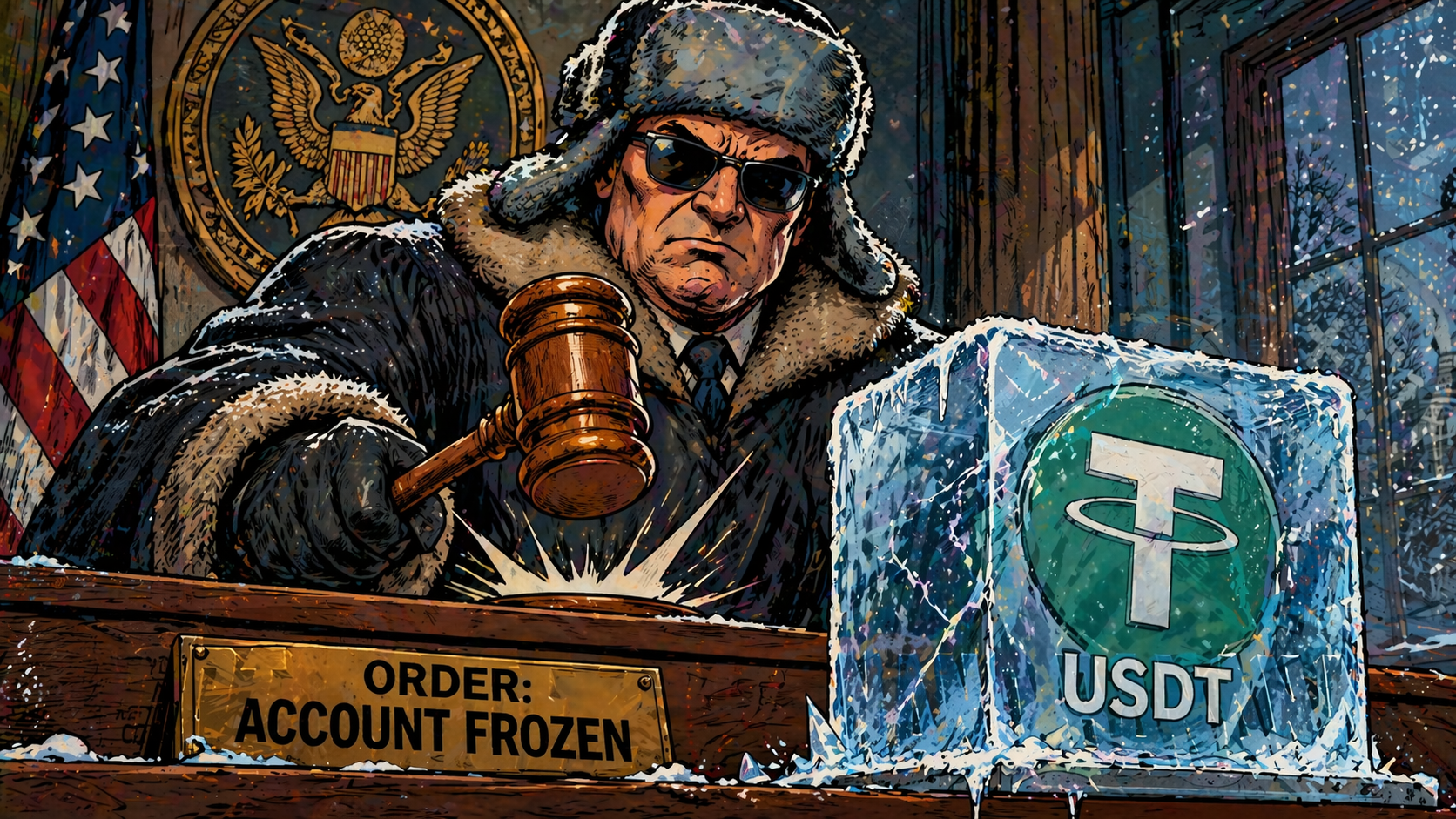
In a market built on decentralization narratives, moments of centralized control still carry the most shock value. The latest example arrived with force: Tether has frozen $344 million worth of Tether USDt following requests from US law enforcement.
For an industry that often frames itself as resistant to state intervention, the move is a stark reminder of where power actually resides when it comes to stablecoins. This is not just a compliance story—it is a signal about control, infrastructure, and the future shape of digital finance.
A Freeze That Echoes Across the Market
The scale of the freeze matters. $344 million is not a rounding error, even in crypto’s trillion-dollar ecosystem. It represents liquidity that has been instantly immobilized—rendered unusable with a single administrative action.
Unlike traditional asset seizures, which often involve lengthy legal processes and jurisdictional friction, stablecoin freezes operate at the protocol issuer level. When Tether flags an address, the funds are effectively locked in place, unable to move, trade, or interact with DeFi protocols.
This is both efficient and controversial.
On one hand, it enables rapid response to illicit activity. On the other, it reinforces the reality that stablecoins—despite existing on decentralized blockchains—are fundamentally centralized instruments.
How Tether Executes a Freeze
To understand the implications, it’s important to unpack the mechanics. Tether maintains administrative control over USDT smart contracts across multiple blockchains. This allows the company to blacklist specific wallet addresses when required.
Once an address is blacklisted, any USDT held within it becomes frozen. Transfers are blocked at the contract level, meaning even if the private keys remain in the hands of the holder, the funds are effectively unusable.
This capability has been used before, often in response to hacks, scams, or regulatory directives. But the size and timing of this particular action elevate its significance.
The Role of US Law Enforcement
The involvement of US law enforcement adds another layer to the story. While details remain limited, the phrase “following requests” suggests a coordinated effort rather than a unilateral decision by Tether.
This reflects a broader trend: increasing collaboration between crypto infrastructure providers and government agencies. Over the past few years, regulators and enforcement bodies have become more sophisticated in tracking blockchain activity, leveraging analytics tools to identify illicit flows.
Stablecoin issuers, positioned at a critical junction between crypto and fiat systems, are natural partners in these efforts.
The result is a hybrid model—decentralized rails with centralized checkpoints.
Stablecoins: The Illusion of Neutrality
Stablecoins like USDT are often perceived as neutral liquidity layers. They are used across exchanges, DeFi protocols, and cross-border transactions, acting as the connective tissue of the crypto economy.
But neutrality is an illusion.
Because stablecoins are issued by centralized entities, they inherit the legal and regulatory obligations of those entities. This includes compliance with law enforcement requests, sanctions regimes, and financial regulations.
The $344 million freeze is a clear demonstration of this dynamic. It shows that while transactions may occur on decentralized networks, the assets themselves remain subject to centralized control.
Market Reactions: Quiet but Telling
Interestingly, the market response has been relatively muted. There has been no widespread panic or liquidity crisis triggered by the freeze.
This suggests that participants have largely internalized the risks associated with centralized stablecoins. The ability to freeze funds is no longer a surprise—it is an accepted feature.
However, acceptance does not eliminate long-term implications.
For institutional players, this event reinforces confidence in compliance mechanisms. The ability to act quickly against illicit funds is seen as a positive signal, aligning crypto infrastructure more closely with traditional financial standards.
For decentralization purists, it raises familiar concerns. If assets can be frozen at will, how different are they from bank deposits?
A Strategic Tool, Not Just a Safeguard
It would be a mistake to view this freeze purely as a defensive measure. It is also a strategic tool.
By demonstrating responsiveness to law enforcement, Tether strengthens its position within the regulatory landscape. This is particularly important as scrutiny around stablecoins intensifies globally.
Governments are increasingly focused on stablecoins due to their role in payments, remittances, and financial markets. Issuers that can show cooperation and control are more likely to maintain operational freedom.
In this sense, the freeze is as much about signaling as it is about enforcement.
The Broader Trend: Programmable Compliance
The concept of programmable money often focuses on innovation—automated payments, smart contracts, and new financial primitives. But programmability also enables enforcement.
Freezing funds is just one example. In theory, stablecoins could incorporate a wide range of compliance features, from transaction limits to automated reporting.
This raises important questions about the future of digital assets. Will they evolve toward greater decentralization, or toward more sophisticated forms of centralized oversight?
The answer may not be binary. Instead, we may see a spectrum, with different assets offering different levels of control and freedom.
Lessons for Crypto Users
For users, the implications are straightforward but significant.
Holding USDT is not the same as holding a permissionless asset. While it offers stability and liquidity, it also comes with the risk of intervention.
This does not make it inherently problematic. For many use cases—trading, payments, hedging—these trade-offs are acceptable.
But it does require awareness.
Understanding the nature of the assets you hold is critical in a landscape where decentralization is often assumed rather than guaranteed.
The Competitive Angle: USDT vs Alternatives
Events like this inevitably reignite discussions about alternatives. Other stablecoins, particularly those with different governance models, may position themselves as more decentralized options.
However, decentralization often comes with trade-offs of its own, including reduced liquidity, higher volatility, or regulatory uncertainty.
USDT’s dominance is not accidental. It is built on deep liquidity, wide adoption, and integration across the crypto ecosystem.
The ability to freeze funds, while controversial, is part of the infrastructure that supports this dominance.
What Comes Next
The immediate aftermath of the freeze will likely involve continued investigation and potential recovery efforts. Whether the frozen funds are eventually seized, returned, or remain locked will depend on legal processes.
More broadly, this event will contribute to ongoing debates about the role of centralized actors in crypto.
As the industry matures, the tension between decentralization and compliance will only intensify. Stablecoins sit at the center of this tension, acting as both enablers of innovation and instruments of control.
Conclusion: Control Is the Hidden Layer of Crypto
The $344 million USDT freeze is not an anomaly—it is a feature of the current system.
It reveals a hidden layer of control that operates beneath the surface of decentralized networks. A layer where companies like Tether and institutions like US law enforcement intersect.
For some, this is a necessary evolution, bringing crypto closer to mainstream acceptance. For others, it is a compromise that undermines the original vision of financial sovereignty.
What is clear is that these moments matter. They shape perceptions, influence strategies, and ultimately determine how the next phase of the crypto ecosystem will unfold.
In a space defined by code, the most powerful commands may still come from outside the blockchain.













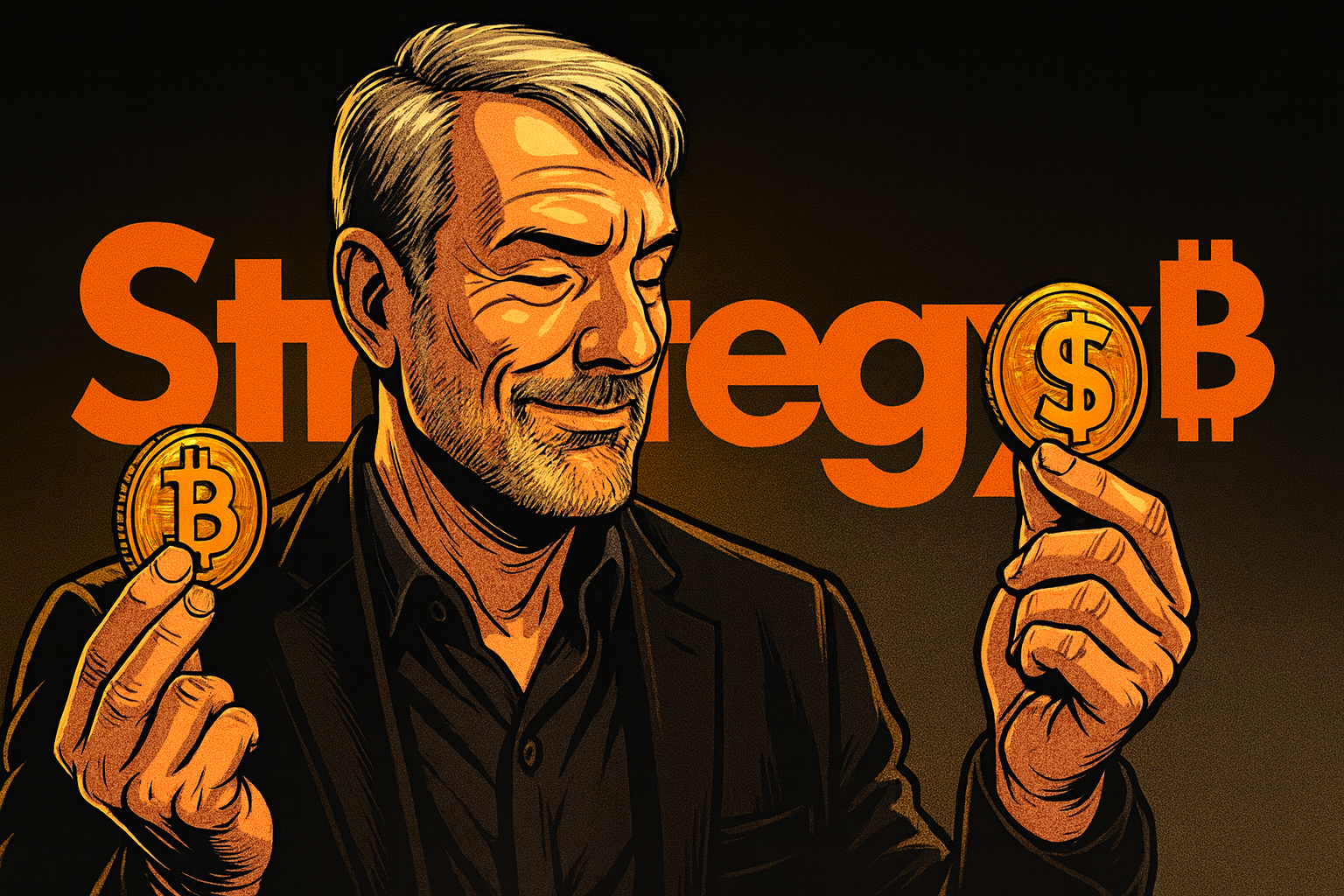
For the past several years, one company has stood above all others in shaping institutional demand for Bitcoin. Strategy, formerly known as MicroStrategy, transformed itself from an enterprise software company into the world’s largest corporate Bitcoin holder, inspiring dozens of firms to follow a similar path. Every major purchase by the company became a market event, fueling headlines and reinforcing the narrative that Bitcoin was entering corporate treasuries at an unprecedented pace.
But according to Bitwise Chief Investment Officer Matt Hougan, that era may be coming to an end.
Hougan believes Strategy is unlikely to remain Bitcoin’s dominant buyer following recent turmoil surrounding its STRC preferred stock. Instead, he expects a new class of investors—including banks, asset managers, pension funds, insurance companies, and sovereign wealth funds—to become the primary drivers of Bitcoin demand over the coming years.
If his prediction proves correct, Bitcoin’s next bull market could look fundamentally different from the last one.
Strategy Changed the Bitcoin Investment Playbook
Few companies have had a greater impact on Bitcoin adoption than Strategy.
Beginning in 2020, Executive Chairman Michael Saylor made the bold decision to convert significant portions of the company’s treasury into Bitcoin. What initially appeared to be a controversial corporate finance experiment gradually evolved into one of the largest institutional Bitcoin accumulation strategies ever seen.
Strategy repeatedly raised capital through debt offerings, convertible notes, equity sales, and preferred stock issuances to acquire even more Bitcoin.
Each new purchase reinforced investor confidence while encouraging other publicly traded companies to consider similar treasury strategies.
The company’s influence extended well beyond its own balance sheet.
For many institutional investors, Strategy became a proxy for Bitcoin exposure before spot Bitcoin exchange-traded funds were approved in the United States.
Its stock often traded as a leveraged Bitcoin investment, attracting investors seeking amplified exposure to the cryptocurrency’s price movements.
Few organizations have done more to normalize Bitcoin as a corporate treasury asset.
Why STRC Changed the Conversation
The latest debate surrounding Strategy stems from recent turbulence involving its STRC preferred stock.
While Strategy remains financially committed to Bitcoin, the market reaction highlighted the challenges associated with continually raising capital to finance additional purchases.
Preferred shares, debt financing, and equity offerings have allowed the company to expand its Bitcoin holdings far beyond what traditional cash flows would support.
However, these financing mechanisms are not without limits.
Investor appetite can fluctuate, borrowing costs can rise, and market sentiment can shift rapidly during periods of heightened volatility.
According to Hougan, those dynamics suggest Strategy’s ability to dominate Bitcoin purchases may gradually diminish.
Importantly, this does not imply that Strategy will stop buying Bitcoin.
Instead, Hougan expects the company to remain a consistent net buyer while exercising significantly less influence over overall market demand than it has during previous cycles.
The Next Buyers May Look Very Different
If Strategy’s relative influence declines, who replaces it?
Hougan’s answer is straightforward: traditional finance.
Banks, asset managers, pension funds, insurance companies, sovereign wealth funds, family offices, and large institutional allocators are increasingly entering the Bitcoin market.
Unlike corporate treasury buyers, these institutions manage enormous pools of capital.
Even relatively small portfolio allocations could generate demand that exceeds anything individual companies have previously contributed.
For example, a pension fund allocating just one percent of a multi-billion-dollar portfolio to Bitcoin could purchase more Bitcoin than many publicly traded companies have accumulated over several years.
The scale is simply different.
Rather than relying on highly visible corporate acquisitions, future demand may arrive through thousands of institutional allocation decisions spread across global financial markets.
Spot Bitcoin ETFs Changed Everything
One reason institutional demand is expected to accelerate is the growing success of spot Bitcoin exchange-traded funds.
Before ETFs, gaining Bitcoin exposure often required navigating cryptocurrency exchanges, private custodians, or specialized investment products.
Many institutional investors faced compliance restrictions that made direct ownership difficult or impossible.
Spot ETFs dramatically simplified the process.
Asset managers can now add Bitcoin exposure using familiar investment vehicles that fit within existing compliance, custody, and reporting frameworks.
Pension funds, registered investment advisers, wealth managers, and institutional portfolios no longer need to build entirely new operational systems to access Bitcoin.
That accessibility changes the investment landscape.
Instead of a handful of corporate buyers dominating headlines, demand may increasingly flow through diversified financial products managed by traditional institutions.
Sovereign Wealth Funds Could Become a Major Force
Among the most closely watched potential buyers are sovereign wealth funds.
These government-owned investment vehicles collectively manage trillions of dollars in assets.
Historically, sovereign funds have invested across equities, fixed income, real estate, infrastructure, commodities, and private markets.
Bitcoin has remained largely absent from most sovereign portfolios.
That could gradually change as digital assets become increasingly accepted within institutional finance.
Even modest allocations by a handful of sovereign funds would represent enormous inflows relative to Bitcoin’s fixed supply.
Unlike corporate treasury purchases, sovereign investments could also carry symbolic significance, signaling growing governmental acceptance of Bitcoin as a long-term reserve asset.
Although widespread sovereign adoption remains uncertain, many analysts view it as one of Bitcoin’s largest untapped sources of demand.
Pension Funds Are Slowly Entering the Market
Pension funds represent another potentially transformative group.
These institutions prioritize long-term capital preservation rather than speculative trading.
Their investment processes tend to be slow, deliberate, and highly regulated.
That cautious approach has delayed widespread Bitcoin adoption.
However, regulatory clarity, improving custody solutions, and the success of spot ETFs are gradually lowering barriers.
For pension managers, Bitcoin is increasingly being evaluated not as a speculative asset but as a potential portfolio diversifier with unique return characteristics.
Even if allocations remain relatively small, the sheer size of pension assets means incremental adoption could generate meaningful demand.
The pace may be slow, but the long-term impact could be substantial.
Why Strategy Still Matters
Although Hougan expects Strategy’s dominance to fade, the company remains uniquely positioned within the Bitcoin ecosystem.
It still holds one of the largest Bitcoin treasuries in the world and continues to view Bitcoin as its primary long-term strategic asset.
Michael Saylor has repeatedly emphasized that the company intends to continue acquiring Bitcoin whenever opportunities arise.
Strategy also remains an important symbol.
Its aggressive accumulation strategy demonstrated that public companies could successfully integrate Bitcoin into corporate finance.
Many firms considering similar treasury strategies continue looking to Strategy as a blueprint.
Even if its relative influence decreases, its historical role in institutional Bitcoin adoption is unlikely to be forgotten.
Bitcoin’s Demand Story Is Becoming More Diverse
One of the most important implications of Hougan’s outlook is diversification.
Previous Bitcoin cycles often depended heavily on specific categories of buyers.
Retail investors dominated early adoption.
Later cycles saw growing participation from hedge funds, venture capital firms, crypto-native institutions, and publicly traded companies.
The next cycle may involve a much broader coalition.
Banks may offer Bitcoin products to clients.
Asset managers may incorporate Bitcoin into diversified portfolios.
Insurance companies may allocate reserve assets.
Pension funds may introduce modest long-term positions.
Sovereign wealth funds could begin strategic allocations.
Corporate treasuries may continue purchasing Bitcoin, albeit at a slower pace than Strategy once did.
This diversification could make Bitcoin demand more resilient over time.
Instead of relying heavily on one class of buyer, the market would benefit from multiple independent sources of capital.
Institutional Adoption Is About More Than Buying
Institutional participation extends beyond simply purchasing Bitcoin.
Banks are developing custody services.
Asset managers are expanding digital asset investment products.
Financial advisers are educating clients about Bitcoin allocations.
Payment companies continue integrating digital assets into broader financial infrastructure.
Regulatory frameworks are becoming increasingly defined across major markets.
Each development contributes to Bitcoin’s growing legitimacy within traditional finance.
As infrastructure improves, barriers to institutional participation continue falling.
The result is a market that increasingly resembles traditional financial ecosystems while retaining Bitcoin’s decentralized foundation.
Could Strategy Regain Its Dominance?
While Hougan believes Strategy’s relative influence will diminish, that outcome is not guaranteed.
If capital markets remain supportive and investor demand for Strategy’s financing vehicles recovers, the company could continue expanding its Bitcoin holdings aggressively.
Michael Saylor has consistently demonstrated a willingness to pursue innovative financing structures in order to acquire additional Bitcoin.
Markets have repeatedly underestimated the company’s ability to raise capital.
It would therefore be premature to conclude that Strategy’s accumulation phase has ended entirely.
However, even if Strategy continues buying aggressively, it may simply be competing against much larger institutional flows than in previous years.
The market itself may be evolving beyond reliance on any single buyer.
A Sign of Bitcoin’s Maturity
Perhaps the most significant aspect of Hougan’s comments is what they imply about Bitcoin’s evolution.
Markets become more mature as participation broadens.
No single investor, company, or institution remains the defining source of demand indefinitely.
Bitcoin appears to be approaching that stage.
The conversation is shifting away from whether corporations should buy Bitcoin toward how large institutional investors will integrate digital assets into diversified portfolios.
That represents a meaningful transition.
Rather than depending on bold corporate treasury strategies, Bitcoin’s future may increasingly rest on steady allocations from some of the world’s largest financial institutions.
The Next Chapter Is Bigger Than One Company
Strategy helped rewrite the institutional narrative around Bitcoin. Its accumulation strategy inspired corporations, influenced investors, and demonstrated that Bitcoin could become a legitimate treasury reserve asset.
That legacy remains secure regardless of what happens next.
But every market eventually evolves.
Matt Hougan believes the next phase of Bitcoin adoption will be defined not by one company’s balance sheet but by the collective purchasing power of global finance.
Banks, pension funds, sovereign wealth funds, insurance companies, and asset managers oversee trillions of dollars in assets. If even a small fraction of that capital begins flowing into Bitcoin, Strategy’s purchases—even if they continue—could represent a much smaller share of overall demand.
If that transition unfolds as expected, it would mark more than the end of Strategy’s dominance as Bitcoin’s largest buyer.
It would signal that Bitcoin has entered a new era—one where institutional adoption is no longer driven by a single visionary company but by the mainstream financial system itself.


The stablecoin race is entering a new and increasingly aggressive phase. What was once a battle over market share is rapidly becoming a contest between competing business models, ecosystem incentives, and visions for the future of digital dollars.
At the center of the latest dispute is Circle CEO Jeremy Allaire, who has pushed back against growing enthusiasm surrounding Open USD (OUSD), a new stablecoin initiative backed by Coinbase and more than 140 companies. While supporters argue that OUSD could fundamentally reshape how stablecoins distribute value, Allaire insists the underlying concept is far from revolutionary. In fact, he says Circle has already explored a similar approach—and discovered why it struggled.
His comments reveal a deeper divide over how stablecoin networks should operate. Should issuers keep most of the revenue generated by reserve assets, as Circle does with USDC, or should they share those profits across an ecosystem of partners to accelerate adoption? The answer could determine which digital dollar dominates the next generation of crypto finance.
A New Challenger Emerges
Open USD has quickly attracted attention because of the companies supporting its launch. More than 140 firms, including Coinbase, have aligned themselves with the initiative, giving it immediate credibility within the cryptocurrency industry.
Unlike traditional stablecoins, OUSD is built around a radically different economic model.
Rather than allowing the issuer to retain most of the revenue generated by reserve assets, OUSD intends to distribute nearly all of its profits back to ecosystem participants.
The idea is straightforward.
Every exchange, wallet, payment provider, fintech platform, or infrastructure company that helps grow the stablecoin ecosystem could receive a share of the economic benefits generated by the network.
Supporters believe this creates powerful incentives for adoption.
Instead of competing to integrate one stablecoin over another without meaningful financial upside, ecosystem participants become direct beneficiaries of OUSD’s growth.
In theory, everyone wins together.
That concept has generated considerable excitement across the crypto industry, particularly as stablecoins become one of blockchain’s fastest-growing sectors.
Allaire Says He’s Seen This Before
Jeremy Allaire, however, is not convinced.
Responding to growing enthusiasm around OUSD, the Circle CEO argued that the business model is far from new.
According to Allaire, Circle explored a similar structure years ago.
His conclusion was blunt.
The model, he said, “ran into endless challenges.”
Although he did not elaborate extensively on every obstacle, the statement suggests that distributing stablecoin economics across a broad network of participants proved far more difficult in practice than it appeared in theory.
Stablecoins operate within an increasingly complex regulatory environment while also requiring careful reserve management, compliance procedures, banking relationships, liquidity coordination, and operational stability.
Sharing profits among dozens—or potentially hundreds—of ecosystem partners introduces additional legal, financial, and governance complexities.
Those challenges may explain why Circle ultimately pursued a different strategy with USDC.
Two Very Different Business Models
The disagreement highlights fundamentally different philosophies about how stablecoin ecosystems should grow.
Circle’s model centers on building trusted financial infrastructure.
Revenue generated from reserve assets helps fund compliance, product development, international expansion, security, partnerships, and new financial services.
The company has consistently positioned USDC as institutional-grade infrastructure designed for banks, payment providers, fintech firms, and enterprise customers.
OUSD proposes something far more collaborative.
Instead of concentrating economic rewards within the issuing company, it seeks to spread value across its ecosystem.
That approach resembles open-source software economics more than traditional financial infrastructure.
Participants are rewarded not simply for using the network but for helping expand it.
The distinction could influence how developers, exchanges, payment companies, and fintech platforms decide which stablecoin to prioritize in the coming years.
Why Profit Sharing Matters
Stablecoins have become one of crypto’s most profitable business categories.
Issuers generate substantial revenue by investing reserves backing their digital currencies into relatively safe interest-bearing assets, particularly U.S. Treasury securities.
As interest rates increased over the past several years, reserve income became an increasingly valuable source of revenue.
For major issuers, these earnings can reach billions of dollars annually.
The key question is who should benefit from those profits.
Traditional issuers retain most of the income while using it to expand their businesses and improve infrastructure.
OUSD argues that ecosystem participants deserve a much larger share because they help create the network’s value.
That debate mirrors broader discussions taking place across technology.
Should platforms capture most of the economics themselves, or should they distribute value more broadly among contributors?
Crypto has frequently favored the second approach.
Whether stablecoins will follow that path remains uncertain.
Coinbase’s Role Adds Weight
Coinbase’s support dramatically increases OUSD’s visibility.
As one of the world’s largest cryptocurrency exchanges, Coinbase has enormous influence over stablecoin adoption, trading activity, and developer ecosystems.
The exchange already maintains a close relationship with USDC.
Its decision to support a competing initiative therefore represents a notable shift in the industry’s competitive landscape.
Rather than simply backing an alternative stablecoin, Coinbase appears to be supporting an alternative economic model.
If successful, that model could encourage more companies to participate directly in expanding the OUSD ecosystem.
For Circle, this creates competitive pressure not only around market share but also around incentives.
Circle Isn’t Backing Down
Despite the growing coalition behind OUSD, Allaire made clear that Circle has no intention of changing course.
He emphasized that Circle will continue supporting multiple products, networks, and infrastructure initiatives—even when they directly compete with the company’s own offerings.
That reflects a strategy Circle has followed for years.
USDC operates across numerous blockchain ecosystems rather than remaining tied to a single network.
Circle has consistently expanded interoperability, payment infrastructure, developer tools, and institutional integrations regardless of broader market competition.
Allaire also delivered perhaps his strongest message.
“And we do not intend to slow down.”
Rather than viewing OUSD as an existential threat, Circle appears focused on accelerating its own roadmap.
The Stablecoin Market Is Becoming Crowded
The timing of this debate is significant.
Stablecoins have evolved from niche crypto assets into one of digital finance’s most important infrastructure layers.
They facilitate trading, decentralized finance, cross-border payments, tokenized assets, treasury management, and increasingly, real-world financial applications.
Global transaction volumes involving stablecoins continue to rise, attracting growing attention from regulators, banks, fintech firms, payment companies, and technology giants.
As adoption expands, competition naturally intensifies.
Issuers are no longer competing solely on liquidity or exchange listings.
They now compete on regulatory credibility, developer experience, payment infrastructure, ecosystem incentives, international availability, transparency, and financial partnerships.
Business models themselves are becoming competitive advantages.
Why Distribution Could Matter More Than Technology
Technologically, many stablecoins are remarkably similar.
Most maintain a one-to-one peg with the U.S. dollar while operating across multiple blockchain networks.
The real differences increasingly lie in governance, economics, partnerships, and distribution strategies.
OUSD’s profit-sharing approach aims to create network effects by aligning incentives among participants.
Circle’s strategy relies on trusted infrastructure, regulatory compliance, operational excellence, and institutional relationships.
Both approaches seek widespread adoption.
They simply attempt to achieve it through different mechanisms.
History offers examples supporting both philosophies.
Some technology platforms have grown by tightly controlling infrastructure and reinvesting profits.
Others have succeeded by distributing value broadly across developer communities and ecosystem partners.
Stablecoins may soon provide another major test case.
Regulation Remains the Biggest Wild Card
Regardless of business model, every stablecoin issuer faces the same overarching challenge: regulation.
Governments worldwide are developing new frameworks governing reserve management, licensing requirements, disclosure standards, consumer protections, and operational oversight.
Any stablecoin hoping to achieve global scale must satisfy increasingly demanding regulatory expectations.
This could complicate aggressive revenue-sharing models.
Profit distribution mechanisms may attract additional regulatory scrutiny depending on how they are structured and who ultimately receives economic benefits.
Circle has spent years positioning itself as a compliance-focused financial infrastructure provider.
That experience could become increasingly valuable as stablecoin regulation matures.
At the same time, regulatory clarity may also create opportunities for innovative new models like OUSD if they can demonstrate appropriate governance and transparency.
The Battle Is About Ecosystems, Not Just Stablecoins
The larger story extends beyond USDC versus OUSD.
The crypto industry is entering an era where ecosystems matter more than individual products.
Winning may depend less on creating the best stablecoin and more on building the strongest network of developers, exchanges, payment providers, wallets, financial institutions, and enterprise partners.
Every integration strengthens network effects.
Every partner increases liquidity.
Every application expands utility.
That explains why OUSD places such emphasis on sharing economic rewards.
It also explains why Circle continues investing heavily in infrastructure even while facing growing competition.
Both sides understand that stablecoins are becoming foundational layers for digital finance.
Who controls those layers could shape the future of payments and tokenized assets.
The Competition Is Just Beginning
Jeremy Allaire’s response makes one thing clear: Circle does not view OUSD’s model as an untested breakthrough. From his perspective, it is an idea the company has already examined and ultimately rejected after encountering significant practical obstacles.
Supporters of OUSD see the situation very differently.
They believe aligning financial incentives across an entire ecosystem could unlock faster adoption than traditional issuer-controlled models ever achieved.
The market will ultimately determine which vision proves more sustainable.
If ecosystem rewards drive rapid network expansion, OUSD could force established issuers to rethink how they distribute value.
If operational complexity and regulatory challenges outweigh those benefits, Circle’s more centralized approach may continue to dominate.
Either outcome would have implications far beyond two competing stablecoins.
As stablecoins become essential infrastructure for global payments, decentralized finance, tokenized securities, and digital commerce, the battle over how they generate—and distribute—economic value may become one of the defining competitive struggles of the crypto industry’s next chapter.

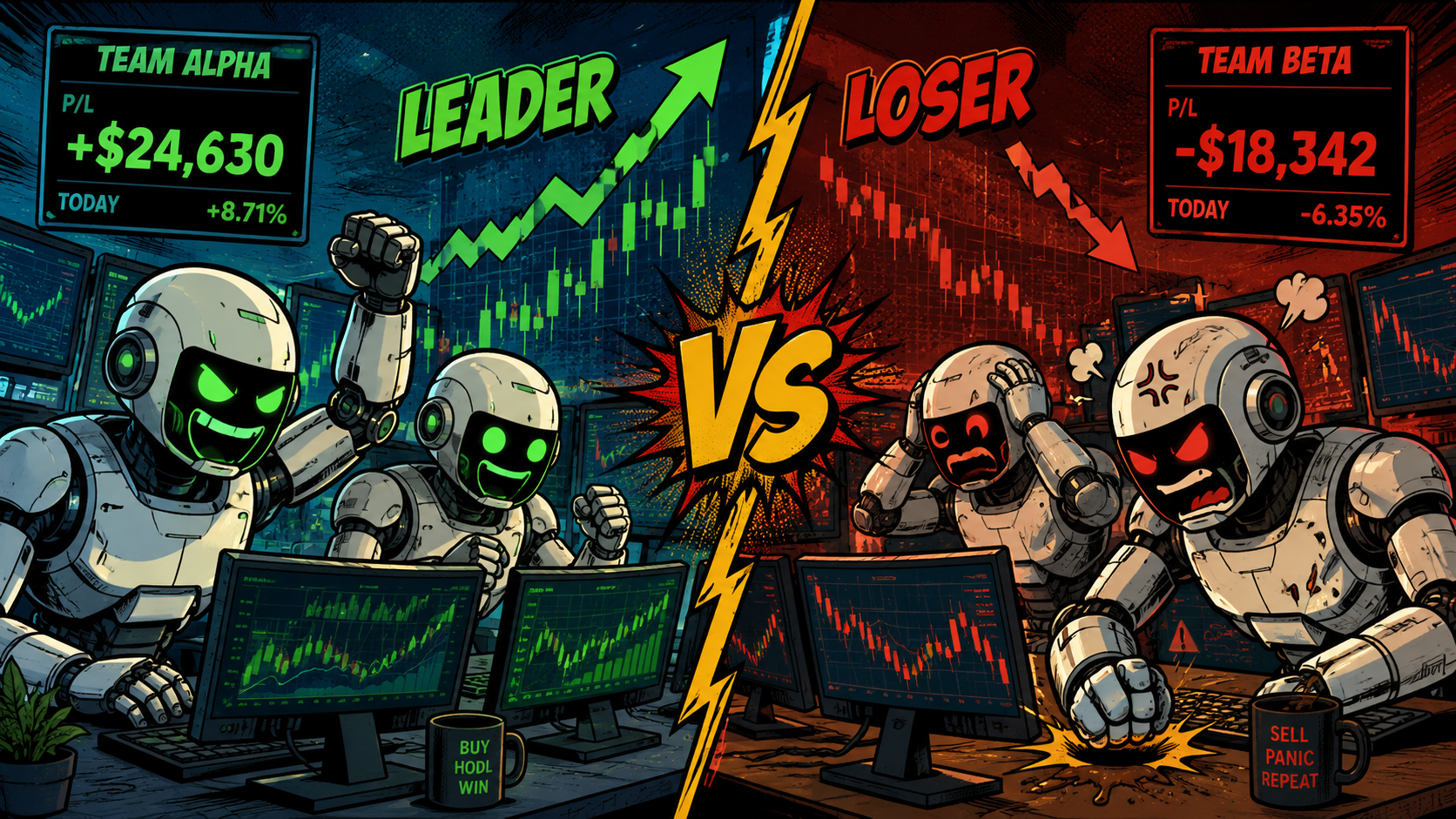
Artificial intelligence has already transformed financial markets behind the scenes, but the next wave of innovation could put institutional-grade trading capabilities into the hands of everyday investors. That is the vision outlined by Robinhood CEO Vlad Tenev, who believes AI agents will eventually be capable of performing every task that human traders can accomplish.
His comments reflect a broader trend reshaping Wall Street. AI is no longer just a tool for analyzing historical data or generating investment ideas. It is rapidly evolving into autonomous software capable of researching markets, monitoring portfolios, executing trades, managing risk, and adapting strategies in real time. If Tenev’s prediction proves accurate, the distinction between human traders and AI-powered investment agents could become increasingly blurred over the next decade.
AI Is Already Running a Large Share of Financial Markets
For many retail investors, AI-powered trading still sounds futuristic. In reality, artificial intelligence has been deeply embedded in financial markets for years.
Large hedge funds, quantitative trading firms, and investment banks have long relied on sophisticated algorithms to execute trades at speeds that no human could ever match. High-frequency trading systems process enormous volumes of market information within milliseconds, identifying opportunities and reacting to changing conditions almost instantly.
According to Tenev, a significant portion of today’s trading activity is already powered by AI-driven systems. The difference is that these technologies have traditionally been reserved for institutions with massive computational resources and specialized teams of engineers.
Retail investors, meanwhile, have largely been limited to basic charting tools, news feeds, and simplified brokerage platforms.
That imbalance may not last much longer.
AI Agents Are Becoming More Than Trading Bots
Traditional algorithmic trading systems follow predefined rules. They buy and sell assets based on mathematical formulas, technical indicators, or statistical models created by human developers.
AI agents represent a fundamentally different approach.
Rather than executing fixed instructions, advanced AI agents are increasingly capable of reasoning through complex situations, gathering information from multiple sources, adapting to new market conditions, and making decisions with minimal human intervention.
A future trading agent could wake up before markets open, scan thousands of earnings reports, monitor geopolitical developments, analyze central bank announcements, review options positioning, examine blockchain activity, evaluate social sentiment, and continuously update a portfolio strategy—all before an individual investor has finished breakfast.
Throughout the trading day, the same AI could monitor changing conditions, identify emerging risks, rebalance positions, and explain every decision in plain language.
This is the type of autonomous capability companies across the AI industry are racing to build.
Matching Human Traders Is About More Than Speed
One of Tenev’s most striking statements was that “every capability that a human can do will be available to an AI agent.”
That prediction extends far beyond executing buy and sell orders.
Professional traders perform a wide variety of tasks that require experience and judgment. They evaluate macroeconomic conditions, interpret corporate guidance, understand investor psychology, identify structural market changes, and manage portfolios according to constantly evolving objectives.
Modern AI systems are beginning to tackle many of these responsibilities simultaneously.
Large language models can summarize complex financial documents within seconds. Machine learning systems identify hidden relationships across enormous datasets. Reinforcement learning algorithms continuously refine trading strategies through experience. Agentic AI frameworks combine these capabilities into software that can plan, execute, evaluate outcomes, and improve over time.
While today’s systems still require human oversight, the trajectory is clear.
Instead of replacing isolated tasks, AI agents are increasingly learning complete workflows.
Democratizing Wall Street’s Advantages
Perhaps the most important aspect of Tenev’s vision is not automation itself but accessibility.
Institutional investors have enjoyed enormous technological advantages for decades. They employ teams of analysts, economists, quantitative researchers, software engineers, and portfolio managers while also investing heavily in proprietary data and computing infrastructure.
Individual investors cannot realistically compete with those resources.
AI has the potential to narrow that gap.
Rather than hiring an entire investment team, a retail investor could eventually rely on a sophisticated AI agent capable of performing many of the same analytical functions.
Tenev described the long-term objective as giving everyday investors “the same tools, the same computation, the same power that institutional investors have been enjoying for decades.”
If achieved, this could represent one of the biggest democratizations of financial technology since the rise of commission-free trading.
The competitive advantage would shift away from simply having access to better information and toward making better decisions.
The Rise of the Personal Investment Agent
The concept of a personal AI investment assistant is quickly becoming more realistic.
Instead of opening multiple websites, reading analyst reports, watching interviews, tracking economic calendars, and manually updating spreadsheets, investors could simply instruct an AI agent to manage much of the process.
An investor might ask:
“Monitor my portfolio for emerging risks.”
“Alert me if Bitcoin volatility exceeds historical averages.”
“Find undervalued AI infrastructure companies.”
“Rebalance my retirement portfolio based on my risk tolerance.”
“Explain why my holdings declined today.”
Rather than receiving static answers, an advanced AI agent could continuously perform these tasks in the background.
This shift mirrors what AI assistants are beginning to accomplish across productivity software, programming, research, and customer service.
Finance may simply be the next major frontier.
Crypto Could Become AI’s Ideal Playground
The cryptocurrency market may become one of the first environments where AI agents demonstrate their full potential.
Unlike traditional markets with limited trading hours, crypto markets operate continuously around the globe.
Prices react instantly to on-chain activity, macroeconomic events, regulatory developments, token unlocks, exchange inflows, whale transactions, developer updates, and social sentiment.
No individual trader can realistically monitor every relevant signal twenty-four hours a day.
AI agents can.
They can continuously analyze blockchain data, observe liquidity conditions across decentralized exchanges, monitor governance proposals, detect unusual wallet behavior, and execute strategies around the clock.
As decentralized finance grows increasingly sophisticated, autonomous AI systems could eventually interact directly with blockchain protocols without requiring constant human input.
This possibility has already sparked growing interest in AI-native crypto projects focused on autonomous agents and decentralized decision-making.
Human Judgment Still Matters
Despite the excitement surrounding AI agents, human expertise remains essential.
Markets are influenced by unpredictable events, political decisions, regulatory surprises, natural disasters, and shifts in public psychology that cannot always be modeled accurately.
AI systems also inherit limitations from their training data.
They can misinterpret information, overlook unusual circumstances, or become overly confident in statistical relationships that no longer hold.
Professional investors understand that successful investing involves managing uncertainty rather than eliminating it.
Risk management, emotional discipline, and long-term strategic thinking remain critical regardless of how advanced AI becomes.
For the foreseeable future, the most effective investors are likely to combine AI-generated analysis with human oversight instead of relying entirely on autonomous systems.
Regulation Will Shape AI Trading
As AI agents become more autonomous, regulators will inevitably face new challenges.
Questions surrounding accountability, transparency, market manipulation, and systemic risk become significantly more complex when software is making increasingly independent decisions.
Should AI agents disclose how they reached an investment conclusion?
Who bears responsibility if an autonomous system executes harmful trades?
How should regulators distinguish between legitimate automated investing and manipulative market behavior?
These questions remain largely unanswered.
Financial regulators worldwide are only beginning to develop frameworks capable of addressing increasingly autonomous AI systems.
The pace of technological development may outstrip regulation for several years.
The Competitive Landscape Is Changing Rapidly
Robinhood is far from the only company pursuing AI-powered investing.
Major financial institutions are integrating generative AI into research, portfolio management, customer support, and risk analysis. Fintech companies are developing increasingly sophisticated AI assistants for retail investors. Large AI companies continue improving reasoning models capable of handling complex financial analysis.
Meanwhile, startups are building autonomous investment agents that can analyze markets, monitor portfolios, and automate increasingly sophisticated workflows.
Competition is accelerating on multiple fronts.
Rather than replacing financial professionals overnight, AI is steadily becoming another layer of intelligence embedded throughout the investment process.
The Future May Look More Collaborative Than Competitive
The phrase “AI will match human traders” naturally raises concerns about replacement.
A more realistic outcome may be collaboration.
Professional investors will likely work alongside AI agents that handle research, data collection, portfolio monitoring, and routine execution while humans focus on strategy, creativity, relationship management, and high-level decision-making.
Retail investors may experience an even larger transformation.
Instead of navigating financial markets largely alone, they could have access to intelligent assistants capable of explaining risks, identifying opportunities, automating routine tasks, and helping them make more informed decisions.
In that environment, AI becomes less of a competitor and more of an always-available financial partner.
A Turning Point for Everyday Investors
Vlad Tenev’s prediction reflects a much broader shift occurring across both artificial intelligence and financial technology.
Markets have relied on automation for years, but the next generation of AI is moving beyond simple algorithms toward systems capable of reasoning, planning, adapting, and acting with increasing independence.
If AI agents eventually achieve capabilities comparable to experienced human traders, one of Wall Street’s longest-standing advantages—access to superior analytical resources—could become widely available to millions of individual investors.
That would not eliminate investment risk or guarantee better returns. Financial markets will always involve uncertainty, and no AI can predict the future with perfect accuracy.
What it could do is fundamentally change who has access to sophisticated financial intelligence.
For decades, institutional investors have benefited from technology that ordinary traders could never afford. AI agents may finally level that playing field, giving retail investors tools that were once reserved for the largest firms on Wall Street.
If that vision becomes reality, the biggest disruption will not be that AI learns to trade like humans. It will be that millions of humans suddenly gain access to capabilities that once belonged exclusively to the financial elite.
-

 Cardano9 months ago
Cardano Breaks Ground in India: Trivolve Tech Launches Blockchain Forensic System on Mainnet
-

 Cardano7 months ago
Solana co‑founder publicly backs Cardano — signaling rare cross‑chain respect after 2025 chain‑split recovery
-

 Cardano9 months ago
Cardano Reboots: What the Foundation’s New Roadmap Means for the Blockchain Race
-

 Altcoins7 months ago
Crypto Goes Mainstream — Bitwise 10 Crypto Index ETF (BITW) Debuts on NYSE Arca
-

 News7 months ago
Crypto on Trial: The $5.5 Billion Pump.fun, Solana & RICO Lawsuit That Could Redefine On‑Chain Liability
-

 News7 months ago
From Memes to Courtrooms: Solana and Jito Execs Named in Explosive RICO Suit Over Pump.fun
-

 Altcoins7 months ago
Algorand’s 2027 Question: Can the Network Survive Without Foundation-Funded Rewards?
-
 Altcoins7 months ago
NYSE Arca Files to Launch Altcoin-Focused ETF